
Side Dishes
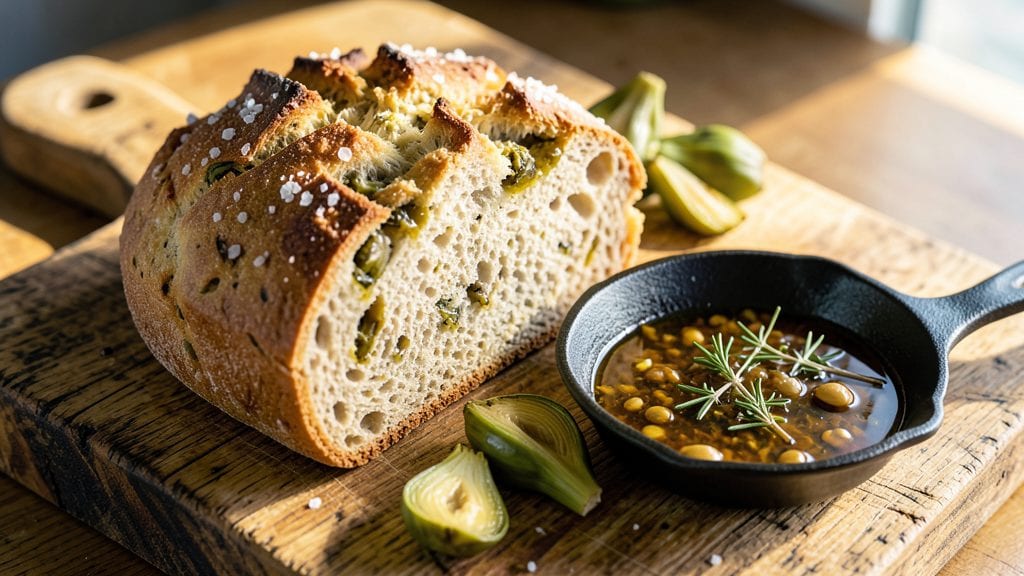
This artichoke bread recipe from Pescadero delivers the flaky crust and herbed olive oil magic that makes every bite unforgettable. The secret lies in a traditional sourdough starter that develops depth over time, combined with artichoke hearts that add a briny, tender contrast to the golden layers.
I've perfected this version after years of testing, ensuring the crust remains crisp while the interior stays soft and airy—just like the bread you'd find at a California coastal bakery.
The beauty of this recipe is its versatility—it works as a stunning side dish for grilled salmon or shrimp, or even as a hearty main when topped with seafood. The dough requires a 24-hour fermentation for maximum flavor development, but the process is hands-off once you set it up.
What makes this bread truly special is the artichoke-infused olive oil that gets worked into the dough, adding layers of herbal brightness and Mediterranean flair.
By the time it emerges from the oven, you'll have a loaf with a crackly golden crust that gives way to tender, flavorful layers infused with artichoke and herbs.
The aroma alone will have everyone gathering around the table, and each slice reveals that perfect balance of crispy exterior and soft, airy interior. This is the kind of bread that transforms ordinary meals into something extraordinary.
Whether you're serving it alongside seafood or enjoying it on its own, this artichoke bread delivers restaurant-quality results with a homemade touch.
The recipe includes a simple method for making your own sourdough starter if you don't already have one, so you can achieve that authentic Pescadero bakery flavor right in your own kitchen.
Ingredients for artichoke bread pescadero
Eight simple ingredients transform into golden artichoke bread with Mediterranean flair and crispy perfection.
| Ingredient | Amount | Notes |
|---|---|---|
| Active Sourdough Starter 🍞 | 1 cup | Unfed, 7-10 day old starter |
| All-Purpose Flour 🌾 | 5 cups | King Arthur or similar |
| Extra-Virgin Olive Oil 🫒 | ½ cup | High quality, fruity flavor |
| Artichoke Hearts 🍃 | 1 cup | Marinated, chopped finely |
| Granulated Sugar 🍚 | 1 tbsp | For starter feeding |
| Sea Salt 🧂 | 1 ½ tsp | Fine grain preferred |
| Fresh Rosemary 🌿 | ½ tsp | Chopped, finely |
| Fresh Thyme 🌿 | ½ tsp | Leaves only, chopped |
| Garlic Cloves 🧄 | 3 cloves | Minced for infusion |
| Large Egg 🥚 | 1 whole | Room temperature |
| Water 💧 | 1 cup | Room temperature |
| Cornmeal 🌽 | ¼ cup | For dusting |
The sourdough starter is non-negotiable here. King Arthur or Bobs Red Mill flours work best for the light, airy crumb. For the artichoke hearts, grab the marinated kind from Trader Joe's—they're pre-cooked and ready to chop. The olive oil needs to be extra-virgin; none of that cheap stuff. I always double-check the rosemary and thyme for freshness—wilting means it's past its prime. The garlic? Freshly minced makes all the difference. If you're short on time, a 10-minute soak in warm water revives wilted herbs.
No sourdough starter? Store-bought pizza dough works in a pinch, but the flavor won't be the same. Swap the artichoke hearts for sun-dried tomatoes if you can't find them, but chop them extra fine. Out of fresh rosemary? Dried works at half the amount, but it lacks that bright, piney aroma. The egg is optional—omit if you're vegan, but the dough will be slightly less tender. For the olive oil infusion, toast the garlic first to deepen the flavor. No garlic press? A knife works just fine—just chop it small.
This dough needs 24 hours to ferment at room temperature, so plan ahead. Store it in a lightly oiled bowl covered with a damp towel. The shaped loaf keeps 2 days wrapped at room temperature, but it's best fresh from the oven. For extra crispiness, reheat slices in a 350°F oven for 5 minutes. Leftovers? Freeze slices for up to 3 months—just thaw at room temperature before serving.
Why You'll Love This Recipe
- No-Knead Magic: Honestly, mixing the dough is the only work you’ll do. The sourdough starter handles all the heavy lifting—just stir, shape, and let it rise while you sip coffee. No stand mixer, no frustration, just pure ease.
- Umami Bomb: That jar of artichoke hearts? It’s the secret weapon. Chopped into the dough, they melt into every bite, giving you a salty, briny depth that pairs perfectly with the olive oil’s richness. (Yes, even on a Tuesday night.)
- Leftovers That Shine: Slice this bread the next day, toast it up, and suddenly you’ve got a gourmet snack for lunch or a quick side for dinner. It’s the kind of loaf that gets eaten faster than you can say “second helping.”
- Budget-Friendly Luxury: You’re basically making a fancy bakery-style bread for pennies. Artichoke hearts are cheap in bulk, the starter is free if you already have one, and the olive oil stretches further than you’d think. Fancy without the markup.
Step-by-step instructions for artichoke bread Pescadero recipe
Here's how to create that signature flaky crust with herbed olive oil goodness—every layer matters.
Infuse the Olive Oil with Herbs and Garlic
In a small saucepan, combine the 0.5 cup extra-virgin olive oil, 3 cloves minced garlic, 0.5 tsp chopped fresh rosemary, and 0.5 tsp chopped fresh thyme. Heat over low heat for 5 minutes until you can smell the garlic softening and the herbs releasing their aroma. Don't let it bubble—just warm gently so the flavors meld together.
Here's the thing—this infusion is what makes your bread taste like it came from a California bakery. The herbs should be just warm enough to release their oils but not browned. Strain through a fine-mesh sieve into a small bowl and let it cool completely before using. If you rush this step, the garlic can turn bitter and overpower the bread.
Feed and Prepare the Sourdough Starter
In a medium bowl, whisk together 1 cup unfed active sourdough starter, 1 cup water, and 1 tablespoon granulated sugar. Let this sit at room temperature for 1 hour until it's bubbly and has nearly doubled in size. This feeding jumpstarts your dough and ensures a proper rise.
The starter should look slightly domed with small bubbles along the sides. If it's sluggish after an hour, give it another 30 minutes—it needs to be lively for that signature tang. I always check by pressing my finger gently into the surface—it should spring back slowly, not collapse flat.
Mix the Dough with Artichokes and Herbed Oil
In the bowl of a stand mixer fitted with the dough hook, combine 5 cups all-purpose flour and 1.5 teaspoons sea salt. Mix on low speed for 30 seconds to distribute the salt evenly. Add the fed starter and mix until a shaggy dough forms.
Slowly pour in the cooled herbed olive oil while mixing on low speed. Then add 1 cup finely chopped artichoke hearts and mix until just combined. The dough will be sticky—this is normal. Scrape down the sides of the bowl as needed. With the dough hook on medium speed, knead for 5-7 minutes until it becomes smooth and elastic, pulling away from the sides of the bowl.
Shape and Rest for Maximum Flakiness
Lightly dust a clean surface with 0.25 cup cornmeal. Turn out the dough and divide it into 8 equal pieces (about 6 ounces each). Roll each piece into a 12-inch rope, then fold it into a U-shape and pinch the ends together to form a boule. Place each boule seam-side up on a parchment-lined baking sheet.
Cover the shaped boules with a clean kitchen towel and let them rest at room temperature for 1 hour. This resting period relaxes the gluten and helps develop that flaky, layered texture we're after. The dough should look slightly puffed but not doubled in size—it'll rise more in the oven.
Bake to Golden Perfection
Preheat your oven to 375°F. Bake the boules for 25-30 minutes until they're deep golden brown all over. The tops should have a slightly crispy crust with visible layers. For extra browning, you can brush the tops with a little more of the herbed olive oil after 15 minutes in the oven.
Here's the moment that matters: the bread is done when it sounds hollow when tapped on the bottom. Let them cool on a wire rack for at least 20 minutes before slicing—this prevents a gummy interior. The artichoke hearts should be tender but still hold their shape, and each slice should reveal those beautiful flaky layers we worked so hard to create.
Pro Tips For Making Artichoke Bread Pescadero
- Chop Artichokes Fine: I learned this the hard way—big chunks of artichoke hearts don’t blend into the dough like you’d hope. Pulse them in a food processor until they’re roughly pea-sized, or even finer if you’re feeling ambitious. That way, every bite has that briny, herby punch without turning into a chewy surprise.
- Proof at Room Temp: Skip the warm oven for proofing—this dough does better on the counter. Let it rise in a lightly oiled bowl at 70°F (21°C) for 4–6 hours, until it’s nearly doubled. The sourdough needs consistent warmth, not bursts of heat, or you’ll end up with a dense loaf.
- Oil the Loaf Pan: This isn’t just about release—it’s about flavor. Brush the pan with extra-virgin olive oil before baking, then drizzle another thin layer over the dough right before it goes in. That golden crust? It’s not just from the oven—it’s from the oil caramelizing.
- Skip the Sugar Shortcut: Yes, you can use honey or maple syrup, but granulated sugar here does two things: it feeds the yeast for a better rise and crisps the crust just right. If you’re in a pinch, use brown sugar—it’ll add a subtle molasses note that pairs well with the artichokes.
Perfect pairings for this artichoke bread pescadero
Seafood Pairings
This artichoke bread shines when paired with grilled lemon-herb salmon—the bright acidity of the fish complements the bread's herbed olive oil notes perfectly. I like to serve it alongside seared scallops with a splash of white wine, where the bread soaks up the buttery pan juices.
For a lighter option, try chilled shrimp cocktail with a classic cocktail sauce—each bite of bread adds a satisfying contrast to the cool, briny shrimp. 🍤
Wine Pairings
A crisp Vermentino from Italy cuts through the richness of the artichoke and olive oil, highlighting the bread's herbal brightness. I reach for a Sauvignon Blanc from New Zealand when I want extra zing—its citrus notes mirror the artichoke's flavor.
For red wine lovers, a light Pinot Noir with earthy undertones pairs beautifully without overpowering the dish. 🍷
Cheese Toppings
Turn this bread into a hearty main by topping slices with shaved Parmigiano-Reggiano and a drizzle of that same herbed olive oil. Add a sprinkle of freshly cracked black pepper for a restaurant-worthy finish.
For a Mediterranean twist, try whipped feta mixed with a touch of honey and crushed pistachios. The tangy cheese balances the bread's richness beautifully. 🧀
Seasonal Variations
In summer, I love serving this bread with grilled zucchini and cherry tomatoes drizzled with balsamic glaze. For fall, swap the artichokes for roasted butternut squash and add a sprinkle of toasted pecans—the sweetness pairs wonderfully with the bread's savory notes.
In winter, a warm goat cheese spread with honey and walnuts makes this bread a cozy centerpiece. 🍂
Breakfast Twist
Use this bread for a luxurious breakfast by topping slices with scrambled eggs, smoked salmon, and everything bagel seasoning. The artichoke's briny flavor adds depth to the classic combo.
For a sweeter morning treat, spread slices with ricotta cheese, drizzle with honey, and sprinkle with toasted almonds. The herbed olive oil gives it a sophisticated touch. 🍳
Dessert Pairings
Yes, this bread can work for dessert! Warm slices with a spread of mascarpone cheese mixed with honey and vanilla extract, then top with fresh berries.
The artichoke's subtle bitterness balances the sweetness perfectly. For a more decadent option, try dark chocolate ganache drizzled over slices—it's a surprising but delicious pairing. 🍫
Nutrition facts
Frequently asked questions
Can I make this artichoke bread without sourdough starter?
You can use store-bought pizza dough as a substitute, but the flavor won't be the same. The sourdough starter provides that signature tang and depth. For a quick alternative, try pre-made focaccia dough—just fold in the artichokes and herbed oil before shaping. The texture will be less flaky, though.
How do I store leftovers to keep them fresh?
Wrap cooled slices in plastic wrap or store them in an airtight container at room temperature for 2 days. For longer storage, freeze slices for up to 3 months. To revive, reheat in a 350°F oven for 5 minutes until crispy again. Never refrigerate whole loaves—they'll dry out.
What if my dough doesn't rise properly?
Check your starter first—it should be active and bubbly. If the dough is sluggish, try these fixes: place it in a warmer spot (like near the oven with the light on), cover it more tightly, or let it ferment 1-2 extra hours. Cold weather? Move the dough to a slightly warmer area of your kitchen.
Can I use jarred artichoke hearts instead of fresh?
Jarred, marinated artichoke hearts work perfectly—they're pre-cooked and ready to chop. Just drain and pat them dry before using. Avoid the watery brine, as it can make your dough too wet. For extra flavor, use Trader Joe's or Meijer brands—they're consistently high quality.
Why does my bread turn out dense instead of flaky?
Over-kneading or skipping the 1-hour rest before baking are common culprits. The dough needs time to relax its gluten for those signature layers. Also, ensure your oven is fully preheated—cold oven = poor rise. If the dough feels too sticky, add 1-2 tablespoons more flour while mixing, but don't overdo it.