
Side Dishes
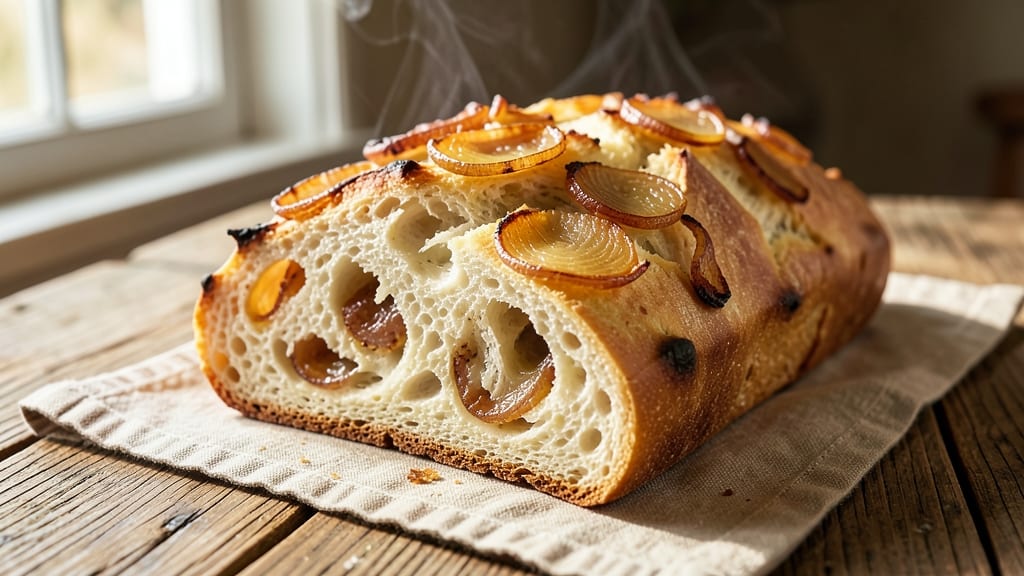
This artisan onion bread recipe transforms simple ingredients into a masterpiece with layers of sweet caramelized onions and a perfectly crisp crust. The secret lies in slow-cooked onions that melt into the dough, creating pockets of savory-sweet flavor with every bite.
After years of perfecting this technique, I’ve cracked the code for achieving that signature crusty exterior and chewy interior that makes it worth every minute of prep.
What sets this bread apart is the balance of textures—crispy on the outside, tender and airy within, with caramelized onions distributed throughout. The dough requires patience, with a 2-hour rise and 30-minute bake, but the results are restaurant-quality without the fuss.
Whether you’re serving it warm with butter or saving slices for sandwiches, this bread becomes the star of any meal.
For those who love customization, you can enhance the flavor with garlic, fresh herbs, or even a sprinkle of cheese before baking. The onions can be swapped for shallots or leeks if preferred, though caramelized yellow onions remain the classic choice.
This recipe delivers a loaf so good, you’ll want to bake it weekly.
Let’s get started on creating bread that tastes like it came from a Parisian bakery, right in your own kitchen. The process is straightforward, but the reward—a golden, fragrant loaf—is unforgettable.
Ingredients for artisan onion bread
Simple ingredients transform into golden, caramelized onion bread with crisp crust and chewy interior.
| Ingredient | Amount | Notes |
|---|---|---|
| Yellow Onions 🧅 | 3 large | Yellow or sweet onions preferred |
| Unsalted Butter 🧈 | ½ cup | Cold for caramelizing onions |
| All-Purpose Flour 🌾 | 4 cups | Plus 1 tbsp for dusting bowl |
| Instant Yeast 🍞 | 2 tsp | Or active dry yeast (use 1.5 tsp) |
| Granulated Sugar 🍚 | 1 tbsp | For yeast activation |
| Salt 🧂 | 1 ½ tsp | Kosher or sea salt preferred |
| Warm Water 💧 | 1 cup | 110°F for yeast activation |
| Large Egg 🥚 | 1 whole | Room temperature |
| Extra-Virgin Olive Oil 🫒 | 1 tbsp | For dough handling |
| Cornmeal 🌽 | 1 tbsp | For dusting loaf pan |
| Coarse Sea Salt 🧂 | 1 tsp | For sprinkling crust |
| Fresh Garlic 🧄 | 2 cloves | Minced, optional enhancement |
The onions are everything here—yellow or sweet onions caramelize best. Sweet onions from Whole Foods or Trader Joe's have the perfect balance of sweetness. Look for onions that are firm and dry, not soft or sprouting. The butter should be unsalted and cold—it needs to melt slowly for proper caramelization. If you're short on time, frozen onions work too, but fresh gives that unmatched depth. I usually buy a big bag of onions and keep them in the fridge for weeks of baking.
No sweet onions? Yellow onions work fine, just expect slightly less sweetness. Running out of butter? Olive oil in a pinch, though it won't caramelize as beautifully. The yeast is non-negotiable—instant yeast is easiest, but if you have active dry, just proof it in warm water first. For extra flavor, add 1 tsp dried thyme or rosemary to the dough. The garlic is optional but worth it—fresh is best, but powdered works if you're in a hurry. The cornmeal is key for that crisp crust—don't skip it even if you're not using a loaf pan.
This dough needs time—at least 2 hours of rising. If you're short on time, let it rise overnight in the fridge for even better flavor. The caramelized onions can be made 2 days ahead and stored in the fridge. The finished loaf keeps well at room temperature for 3 days, wrapped in a clean towel. For longer storage, freeze slices wrapped in parchment—perfect for quick sandwiches. Reheat in a toaster or oven for that fresh-baked taste.
Why You'll Love This Recipe
- No-Knead Magic: I swear by this dough—just mix, let it rise, and bake. The yeast does all the work while you sip coffee or scroll through your phone. Honestly, the only effort is slicing those onions thin enough to caramelize properly.
- Sweet-Savory Crunch: That first bite? Buttery, crispy crust with jammy onions and a whisper of sugar—it’s like a hug for your taste buds. The caramelized onions stick to the bread like glue, making every pull-apart moment worth it.
- Weeknight Hero: Toss a loaf in the oven while you prep dinner—it’s ready when you are. My kids grab slices straight from the pan (yes, even on a Tuesday night), and it pairs with soup, cheese, or just butter.
- Budget-Friendly Staple: Flour, yeast, onions, butter—all pantry basics that stretch farther than store-bought. A single batch feeds four for days, and the leftovers? Toast them into crispy perfection the next morning. (Between us, this is my secret weapon for lazy mornings.)
Step-by-step instructions for artisan onion bread
Here's how to create a loaf with perfectly caramelized onions and a crispy crust.
Caramelize the Onions
Slice the 3 large yellow onions into thin, even rounds—about ⅛-inch thick. Melt the 0.5 cup unsalted butter in a large skillet over medium heat. Add the onions and sprinkle with a pinch of salt. Cook for 20-25 minutes, stirring occasionally, until they turn deep golden brown and sweet. You'll know they're ready when they're soft enough to mash slightly between your fingers and have a rich caramel color.
Here's the thing—don't rush this step. If the onions start to stick, reduce the heat slightly. The goal is to develop that deep, sweet caramelization that will infuse your bread with incredible flavor. Once fully caramelized, remove from heat and let cool completely before adding to the dough. This prevents the yeast from activating too quickly and keeps your dough from becoming too sticky.
Mix the Dough
In a large mixing bowl, combine the 4 cups all-purpose flour, 2 teaspoons instant yeast, 1 tablespoon granulated sugar, and 1.5 teaspoons salt. Stir to distribute the yeast and sugar evenly throughout the flour. This creates an ideal environment for the yeast to activate once the wet ingredients are added.
Make a well in the center of the dry ingredients and add the 1 whole large egg, 1 tablespoon extra-virgin olive oil, and the cooled caramelized onions. Using a wooden spoon, gradually incorporate the wet ingredients into the flour mixture, mixing until a shaggy dough forms. Then, add the 1 cup warm water (around 110°F) and continue mixing until the dough comes together. The dough should be soft but not sticky—if it's too wet, add a tablespoon more of flour; if too dry, add a splash of warm water.
Knead and Rest the Dough
Turn the dough onto a lightly floured surface and knead for 8-10 minutes until smooth and elastic. You'll know it's ready when it springs back slowly when poked. If the dough feels too sticky, add a little more flour as needed, but don't overdo it—too much flour can make the bread dense.
Place the dough in a lightly oiled bowl, cover it with a damp towel, and let it rise in a warm place for 1-2 hours, or until it has doubled in size. The dough should feel light and airy when pressed gently with your finger. This resting period allows the gluten to relax and the yeast to ferment, creating a lighter, fluffier loaf. If your kitchen isn't warm, place the bowl near a slightly warm oven with the light on to help the dough rise.
Shape and Second Rise
Punch down the risen dough to release any air bubbles, then shape it into a loaf. For extra flavor, fold the 2 cloves minced fresh garlic into the dough before shaping. Place the shaped loaf seam-side down in a 9x5-inch loaf pan that has been lightly dusted with 1 tablespoon cornmeal. This helps prevent sticking and gives the bread a nice texture.
Cover the loaf pan with a damp towel and let the dough rise again for another 30-45 minutes, until it has risen about halfway up the sides of the pan. The dough should look puffy and feel slightly springy to the touch. Preheat your oven to 375°F during this time to ensure it's ready for baking when the dough is fully proofed.
Bake to Perfection
Brush the top of the loaf with a little water or olive oil, then sprinkle generously with 1 teaspoon coarse sea salt. Bake in the preheated oven for 30-35 minutes, until the top is deep golden brown and the internal temperature reaches 190°F. You'll know it's done when the bread sounds hollow when tapped on the bottom.
Remove the bread from the oven and let it cool in the pan for 10 minutes before transferring it to a wire rack. This resting period allows the bread to set and prevents it from becoming gummy. Slice it while still warm to enjoy the perfect balance of crispy crust, tender crumb, and sweet, caramelized onion layers. Serve with butter or your favorite soup for the ultimate comfort food experience.
Pro Tips For Making Artisan Onion Bread
- CARAMELIZE ONIONS LOW: I learned this the hard way—skipping the low-and-slow approach means you’ll end up with bitter, watery onions instead of sweet, jammy layers. Simmer them uncovered on medium-low for at least 30 minutes, stirring occasionally, until they’re deep golden and syrupy. (Yes, even if you’re impatient like me.)
- COOL DOUGH BEFORE SHAPING: That dough is hot after kneading, and shaping it while warm guarantees a dense, gummy loaf. Let it rest in the bowl for 10–15 minutes until it’s cool enough to handle—your future self will thank you when the crumb comes out light and airy.
- SALT THE WATER: The dough absorbs liquid like a sponge, and if your water’s bland, so will your bread. Use 1 teaspoon of salt per quart of water for the dough—it balances the sweetness of the caramelized onions and tightens the gluten for a better rise.
- BRUSH BUTTER COLD: Slather that unsalted butter on the baked loaf while it’s still piping hot, but not straight from the fridge. Let it sit at room temp for 10 minutes first—cold butter won’t melt properly, and you’ll end up with a sad, greasy crust instead of a golden, buttery finish.
Flavor customization for artisan onion bread
Sweet vs. Savory
Balance the sweetness of caramelized onions with savory elements like garlic or herbs. For a richer flavor, add 1 tsp dried thyme or 1 tbsp chopped fresh rosemary to the dough.
If you prefer a tangier twist, stir 1 tbsp apple cider vinegar into the warm water before mixing with the flour. 🧄
Cheese Variations
Swap out some flour for ½ cup grated Gruyère or Parmigiano-Reggiano for a nutty, umami depth. I love adding ¼ cup crumbled feta to the dough for a briny contrast. For a melty surprise, fold ¼ cup shredded mozzarella into the caramelized onions before mixing into the dough.
Spicy Kick
Add heat with ½ tsp smoked paprika or ¼ tsp cayenne pepper to the dough for subtle warmth. For a bold flavor, stir 1 tbsp hot honey into the caramelized onions before cooling.
If you love spice, sprinkle ½ tsp crushed red pepper flakes on top before baking for a crispy, fiery crust.
Herb-Infused Twist
Brighten the flavor with 2 tbsp chopped fresh chives or 1 tbsp dried dill mixed into the dough. For a Mediterranean touch, add 1 tbsp chopped fresh oregano and 1 tsp lemon zest to the caramelized onions. Fresh herbs add a vibrant contrast to the rich, sweet onions.
Alternative Onions
Swap yellow onions for shallots or leeks for a milder, sweeter profile. For a bolder flavor, use red onions and add ½ tsp black pepper to the dough. Caramelize shallots with 1 tbsp balsamic vinegar for an extra layer of depth. 🧅
Sweet Glaze Finish
Brush the baked loaf with a honey-mustard glaze (mix 2 tbsp honey with 1 tbsp Dijon mustard) for a sticky-sweet finish. For a richer glaze, melt 1 tbsp brown sugar with 1 tbsp butter and brush it on top before baking. This adds a caramelized crust with every bite.
Nutrition facts
Frequently asked questions
What makes this onion bread "artisan" compared to regular bread?
The term "artisan" here refers to the slow-cooked caramelized onions and the hands-on dough development. Unlike quick breads, this recipe requires proper kneading, proofing, and baking time to create that signature crisp crust and open crumb structure. The onions are cooked until deeply sweet and jammy, which sets it apart from breads with raw or lightly sautéed onions.
Can I make this bread without a loaf pan?
Yes! Shape the dough into a free-form loaf or round and bake on a baking sheet lined with parchment. For extra crispiness, bake at 425°F for 20-25 minutes instead of 375°F. Brush with olive oil before baking and sprinkle with coarse salt. The texture will be slightly different but still delicious.
Why did my bread turn out dense instead of light and airy?
Dense bread usually happens from over-kneading, underproofing, or too much flour. Make sure to knead only until the dough is smooth (about 8-10 minutes) and let it rise until it doubles in size. Also, avoid adding extra flour unless absolutely necessary—it can weigh down the structure. A warm kitchen helps with proper rising.
How do I store or reheat leftover slices?
Wrap cooled slices in a clean kitchen towel and store at room temperature for up to 3 days. For longer storage, freeze slices in an airtight bag for up to 3 months. To reheat, wrap in foil and warm in a 350°F oven for 5-7 minutes or toast in a toaster until crispy. The crust reheats beautifully!
What's the best way to caramelize the onions for maximum flavor?
Use medium-low heat and cook the onions for 20-25 minutes until deeply golden and soft. Stir occasionally to prevent burning. For extra depth, add 1 tbsp balsamic vinegar or 1 tsp brown sugar during cooking. Let them cool completely before mixing into the dough to avoid activating the yeast too quickly.