
Side Dishes
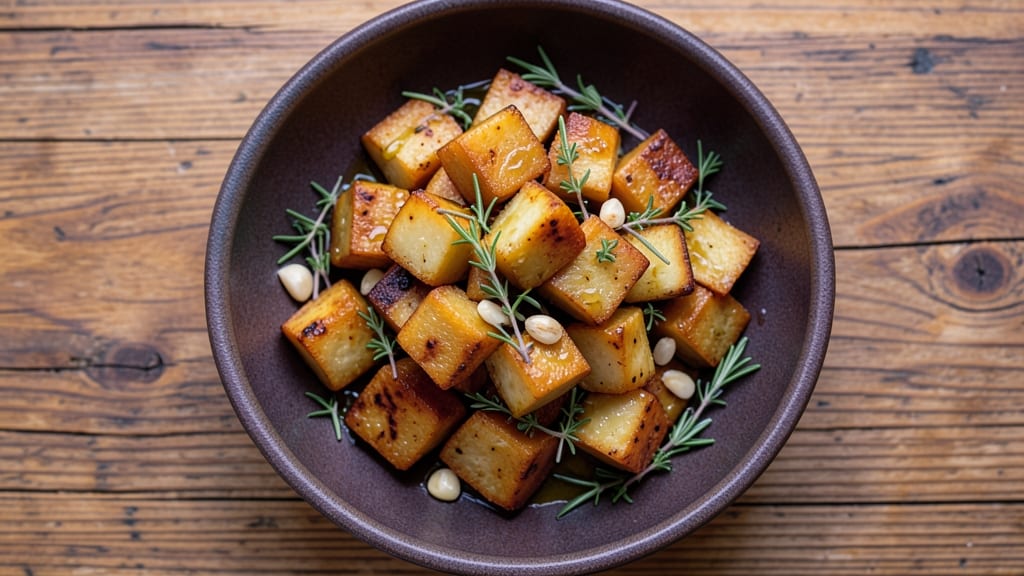
Mastering this baked celeriac recipe transforms a humble root vegetable into a dish with nutty crispy edges and a silky interior—the perfect balance of texture and flavor. The secret lies in roasting at 400°F until the outer layers caramelize into golden perfection while the center remains tender.
I developed this method after discovering how celeriac’s natural sweetness deepens when baked with just olive oil, salt, and fresh herbs, creating a side dish that rivals any roasted vegetable.
What makes this recipe stand out is its versatility—it works as a standalone side, a base for soups, or even mashed for a creamy texture. The 45-60 minute baking time ensures even cooking, while the high heat creates those coveted crispy edges that add depth to any meal.
Unlike boiled celeriac, which can taste bland, this method enhances its earthy, slightly nutty flavor into something truly special.
By the time it emerges from the oven, your celeriac will be golden and caramelized on the outside, with a fork-tender interior that melts in your mouth. The aroma alone—warm, herby, and slightly sweet—will have everyone at the table asking for seconds.
Whether served alongside roasted meats or as a hearty vegetarian main, this dish elevates any plate with minimal effort.
For extra flavor, toss the baked celeriac with fresh rosemary or thyme before serving, or drizzle with a touch of lemon zest for brightness. The possibilities are endless, but the foundation—simple, foolproof, and delicious—remains the same. Let’s get baking!
Ingredients for baked celeriac
Simple ingredients elevate celeriac into a nutty, crispy masterpiece with silky perfection inside.
| Ingredient | Amount | Notes |
|---|---|---|
| Celeriac (Celery Root) 🥔 | 2 lbs | Whole, peeled and cut into 1.5-inch chunks |
| Extra-Virgin Olive Oil 🫒 | ½ cup | High-quality, fruity variety preferred |
| Kosher Salt 🧂 | 1 ½ tsp | Fine grain for even distribution |
| Fresh Rosemary 🌿 | ¼ cup | Chopped, stems removed |
| Fresh Thyme 🌿 | 2 tbsp | Leaves only, chopped finely |
| Garlic Cloves 🧄 | 3 cloves | Peeled and halved lengthwise |
| Lemon Zest 🍋 | 1 tbsp | Freshly grated from 1 lemon |
| Ground Black Pepper 🌶️ | ½ tsp | Freshly ground for best flavor |
| Vegetable Oil 🫒 | 1 tbsp | For greasing baking sheet |
| Heavy Cream 🥛 | ¼ cup | Optional, for mashed variation |
| Fresh Parsley 🌿 | ⅛ cup | Chopped, for garnish |
The celeriac is the star here—look for firm, heavy roots with smooth, unblemished skin. Whole Foods or specialty produce markets often carry the freshest celeriac, but any grocery store’s organic section should have good quality. Avoid any with soft spots or sprouting eyes. The key to crispy edges lies in the high heat and even oil distribution—don’t skip the olive oil step. Extra-virgin olive oil adds subtle fruity notes that complement celeriac’s earthiness, while kosher salt ensures even seasoning without overpowering. Fresh herbs like rosemary and thyme should be vibrant green, not wilted—Trader Joe’s often has excellent fresh herb bundles at reasonable prices.
No fresh rosemary? Dried rosemary at half the amount works, but the flavor won’t be as bright. Short on thyme? Fresh oregano or marjoram can substitute in a pinch. The garlic cloves should be firm and clove-shaped—avoid any that feel soft or sprouting. For the lemon zest, use an organic lemon if possible—the zest should be vibrant yellow, not white or bitter. If you’re making the mashed variation, full-fat heavy cream gives the best texture, but half-and-half works in a bind. The vegetable oil for greasing? Any neutral oil will do—canola or avocado oil are good budget options.
Freshly baked celeriac keeps its crispy edges best when served immediately, but you can reheat portions in a 350°F oven for 10-15 minutes to restore texture. Store leftovers in an airtight container in the fridge for up to 5 days, though the texture softens over time. For longer storage, freeze baked celeriac (without cream if mashed) for up to 3 months. The herbs can be chopped ahead and stored in the fridge for 3 days, but fresh is always better. This dish reheats beautifully—just toss with a splash of water and cover to trap steam.
Why You'll Love This Recipe
- Here’s what sold me: the outside gets golden and caramelized, while the inside stays silky. It’s like a hug in your mouth—warm, earthy, and just sweet enough to make you want seconds.
- Five-Ingredient Magic: I swear by this—just celeriac, olive oil, salt, and two herbs. That’s it. The rosemary and thyme work their magic while you’re busy with other things, turning a humble root into something deeply savory.
- Crispy-Creamy Perfection: Here’s what sold me: the outside gets golden and caramelized, while the inside stays silky. It’s like a hug in your mouth—warm, earthy, and just sweet enough to make you want seconds.
- Meal Prep MVP: Between us, this is my go-to for busy weeks. Bake a big batch on Sunday, and you’ve got a side dish ready for salads, grain bowls, or even mashed into soups all week. (Yes, even on a Tuesday night.)
Step-by-step instructions for baked celeriac with crispy edges
Master this technique to achieve celeriac with perfectly nutty, crispy edges while keeping the interior tender and silky.
Prep and Season the Celeriac for Maximum Crispiness
Begin by peeling the 2 lbs of celeriac using a vegetable peeler or sharp knife, removing all blemishes and outer skin. Cut it into uniform 1.5-inch chunks—consistent size ensures even cooking and crispy edges. Place the chunks in a large bowl and toss gently with the 0.5 cup extra-virgin olive oil until evenly coated.
In a small bowl, combine the 0.25 cup chopped fresh rosemary, 2 tablespoons finely chopped fresh thyme, 1 tablespoon lemon zest, and 0.5 teaspoon freshly ground black pepper. Sprinkle this herb mixture evenly over the celeriac, then add the 1.5 teaspoons kosher salt. Toss again until every surface is thoroughly coated. The oil and herbs will create that signature crispy bark while infusing flavor deep into the flesh.
Create the Perfect Baking Environment
Preheat your oven to 425°F. Line a large baking sheet with parchment paper and lightly brush it with 1 tablespoon vegetable oil—this prevents sticking and makes cleanup effortless. Arrange the celeriac chunks in a single layer, leaving about 1 inch between each piece. This spacing allows hot air to circulate freely, promoting even browning and crispiness.
For extra flavor development, place the halved 3 cloves of garlic directly on the baking sheet near the celeriac. As they roast, their aroma will permeate the dish. Bake for 30 minutes, then flip each piece using tongs to ensure even browning on all sides. The celeriac should begin developing golden-brown edges and a fragrant aroma.
Develop Crispy Edges and Tender Interior
Continue baking for another 20-25 minutes, until the edges are deeply golden brown and crispy to the touch while the center remains tender when pierced with a knife. The celeriac should have a beautiful caramelized exterior with a slight char in spots—this is what creates that coveted nutty flavor. If you're concerned about over-browning, tent the pan loosely with foil during the last 10 minutes of baking.
For a mashed variation, remove half the celeriac after 25 minutes of total baking time. Mash these pieces with a fork in a bowl, then stir in the 0.25 cup heavy cream until smooth. Return to the oven for 5-7 minutes to heat through while the remaining pieces finish crisping. The cream adds a luxurious texture that pairs beautifully with the crispy exterior.
Finish and Serve with Fresh Garnish
Remove the celeriac from the oven and transfer it to a serving platter. Immediately sprinkle with the 0.125 cup chopped fresh parsley, which adds a bright contrast to the rich, earthy flavors. The parsley should be distributed evenly over all pieces to enhance both presentation and flavor.
Let the celeriac rest for 5 minutes before serving. This resting period allows the juices to redistribute, ensuring each bite remains moist and flavorful. Serve immediately while the edges are still crispy and the interior remains silky. The contrast between the crispy exterior and tender interior makes this dish truly special.
Pro Tips For Making Baked Celeriac
- Peel Before Slicing: Celeriac’s knobby skin hides tough spots—peel it first, then slice. I learned this the hard way when a stubborn chunk of skin made my otherwise perfect roast look (and taste) uneven. Use a sharp knife or a vegetable peeler, but don’t rush; you’re not carving a pumpkin here.
- Roast at 400°F: Too low, and it steams into mush; too high, and the outside burns before the center cooks. 400°F is the sweet spot—hot enough for caramelization, cool enough to stay tender. After 25 minutes, flip the pieces and check for doneness with a fork. If it slides out clean, you’re golden.
- Salt the Oil: Toss the celeriac in olive oil and a generous pinch of salt before baking—this seasoning sticks to the root and crisps into a flavor bomb. I used to add salt after, and the dish always felt flat. Trust me: salted oil is the thing that matters most here.
- Crush the Herbs: Fresh rosemary and thyme lose their punch when left whole. Roughly chop them and press them into the celeriac with your fingers—this releases their oils and ensures every bite gets that herby kiss. (Yes, even if you’re impatient like me.)
Creative variations of this dish
Herb-Infused Variations
Swap the rosemary and thyme for fresh sage and tarragon to create a French-inspired version that pairs beautifully with duck or roasted chicken. Use 1 tbsp chopped sage and 1 tbsp chopped tarragon instead, then finish with a drizzle of honey for a touch of sweetness.
The tarragon adds an anise-like depth that complements celeriac’s earthiness perfectly. 🌿
Spicy Celeriac Twist
For a kick, toss the celeriac with 1 tsp smoked paprika and ½ tsp cayenne pepper before baking. Add 1 minced jalapeño to the herb mix for extra heat.
This works wonderfully as a side for grilled steak or in a spicy soup. The smoky paprika enhances the caramelization while the cayenne adds a slow-building warmth. 🌶️
Citrus-Glazed Celeriac
After baking, brush the celeriac with a glaze made from 2 tbsp honey, 1 tbsp orange juice, and 1 tsp grated orange zest. Return to the oven for 5 minutes at 400°F to set the glaze.
This adds a bright, tangy contrast that cuts through rich dishes like braised pork or creamy risotto. The orange zest also brightens the natural sweetness of the celeriac. 🍊
Cheesy Mashed Celeriac
For a decadent twist, mash half the baked celeriac with ½ cup grated Gruyère cheese and 2 tbsp butter. The cheese melts into the creamy texture, creating a luxurious side that pairs with roasted vegetables or as a vegetarian main.
For extra richness, fold in 2 tbsp crumbled bacon or crispy pancetta. 🧀
Asian-Inspired Sesame Celeriac
Toss the celeriac with 1 tbsp toasted sesame oil, 1 tbsp soy sauce, and 1 tsp grated ginger before baking. After roasting, sprinkle with 1 tbsp toasted sesame seeds and serve with a drizzle of sriracha mayo.
This fusion variation works brilliantly as a side for sushi or in Asian-inspired bowls. The sesame adds a nutty depth that complements celeriac’s natural flavors. 🌏
Smoky Maple-Glazed
For a sweet-and-smoky profile, mix 2 tbsp pure maple syrup with 1 tsp liquid smoke and brush over the celeriac after baking. Top with crumbled bacon and chopped pecans for crunch.
This variation shines as a side for Thanksgiving turkey or as a vegetarian centerpiece. The maple adds caramelized sweetness that balances the smokiness beautifully. 🍁
Nutrition facts
Frequently asked questions
Why does my celeriac turn out soggy instead of crispy?
Soggy celeriac usually means the oven temperature wasn't high enough or the pieces were overcrowded. Use 425°F and leave 1 inch between chunks for proper airflow. Also, avoid cutting pieces too small—they'll cook too quickly. For extra crispiness, bake for 5 extra minutes uncovered at the end.
Can I use celeriac that's already been peeled and bagged?
Yes, but check for any soft spots first. Pre-peeled celeriac works great for this recipe—just cut into 1.5-inch chunks and follow the same seasoning steps. The key is even oil distribution and proper baking time. If the pieces are irregular in size, cut them to match for consistent doneness.
How can I make this dish ahead of time?
Baked celeriac reheats best when made a day ahead. Store in an airtight container and reheat at 350°F for 10-15 minutes to restore crispiness. For mashed celeriac, add a splash of water when reheating. The flavor actually improves overnight as the herbs infuse deeper.
What's the best way to peel celeriac without tearing?
Use a sharp vegetable peeler and work in one continuous motion from top to bottom. For stubborn spots, a paring knife works better than a chef's knife. Peel just enough to remove blemishes—the outer layer has great flavor. If you hit a tough spot, rotate the celeriac and try again rather than forcing the blade.
Can I substitute celeriac with another root vegetable?
While no perfect substitute exists, parsnips or turnips work in a pinch. For closest results, use rutabaga—it has a similar texture when baked. Just reduce baking time by 10 minutes as it cooks faster. The flavor will differ slightly, but the crispy edge technique remains the same.