
Main Courses
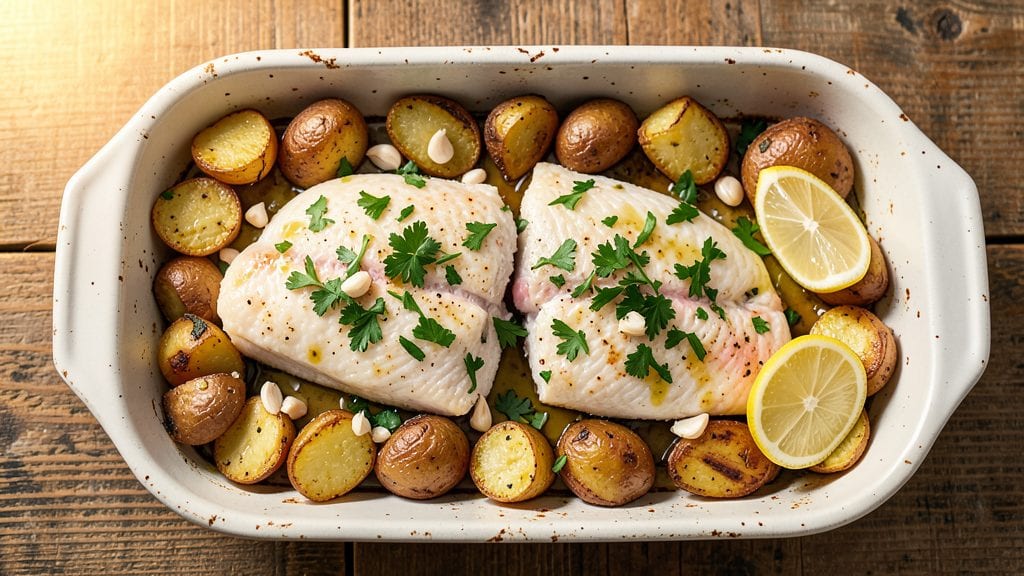
This baked Portuguese cod recipe brings the sun-drenched flavors of coastal Portugal straight to your kitchen table. The secret lies in a crisp, golden herb crust that locks in moisture while delivering layers of garlic, lemon, and fresh herbs—just like the dishes you'd find in a Lisbon taverna.
I developed this recipe after years of testing, ensuring every bite delivers that perfect balance of tender fish and aromatic crust.
The magic happens with a simple yet effective technique: baking the cod on a bed of potatoes (a Portuguese staple) while basting it with white wine and olive oil. This method infuses the fish with deep, savory notes without overpowering its delicate natural flavor.
The dish is ready in just 30 minutes, making it ideal for weeknight dinners or special occasions when you want restaurant-quality results at home.
What you'll achieve is cod with a crispy, golden crust that shatters slightly at the touch, revealing tender, flaky flesh underneath. The aroma of garlic, lemon zest, and fresh parsley fills your kitchen, while the potatoes below become perfectly tender with crispy edges.
This dish pairs beautifully with a simple green salad or steamed vegetables, creating a complete meal that feels both comforting and sophisticated.
Portuguese cuisine thrives on bold flavors and simple techniques, and this recipe captures that essence. Whether you're serving it for a family dinner or hosting a pescatarian-friendly gathering, the combination of fresh herbs, citrus, and garlic will transport your guests to the coast of Portugal.
Let's get started on creating this timeless dish.
Ingredients for baked cod portuguese
Sunshine in a skillet: cod, potatoes, and herbs that taste like Lisbon's coast.
| Ingredient | Amount | Notes |
|---|---|---|
| Fresh Cod Fillets 🐟 | 4 pieces | Skin-on, 6-8 oz each |
| Russet Potatoes 🥔 | 2 lbs | Cut into 1-inch chunks |
| Extra-Virgin Olive Oil 🫒 | ½ cup | For drizzling and basting |
| Fresh Garlic Cloves 🧄 | 6 whole | Minced, not pre-minced |
| Fresh Lemon 🍋 | 1 whole | Zest and juice only |
| Fresh Parsley 🌿 | ½ cup | Chopped, stems removed |
| Fresh Dill 🌿 | ¼ cup | Chopped, for extra brightness |
| Dry White Wine 🍷 | ½ cup | Vinho Verde preferred |
| Fresh Thyme Leaves 🌿 | 1 tbsp | From 2 sprigs |
| Sea Salt 🧂 | 1 ½ tsp | Fine grain, kosher preferred |
| Ground Black Pepper 🌶️ | ½ tsp | Freshly cracked |
| All-Purpose Flour 🌾 | ¼ cup | For dredging crust |
| Panko Breadcrumbs 🍞 | ¼ cup | For extra crunch |
The cod is the star, so look for fresh, firm fillets with bright color—none of that dull, fishy smell. Whole Foods or local fish markets usually have the best quality, but even the supermarket freezer section works if you thaw them overnight. For the potatoes, Russets are ideal—they hold up to baking without turning mushy. Skip the pre-cut bags; whole potatoes last longer and you can cut them exactly how you need. The garlic? Freshly minced makes all the difference—those pre-minced jars taste like nothing. And the wine? Vinho Verde adds that perfect tangy brightness, but any crisp white will do in a pinch.
No fresh dill? Extra parsley works just fine—just double the amount. Running low on white wine? Fish stock or lemon juice with a splash of vinegar gets you close. The crust combo of flour and panko gives that perfect shatter—don't skip the panko, it's what makes it crispy. If you're out of panko, regular breadcrumbs toasted in the oven work too. The lemon zest is non-negotiable though—buy organic lemons for the thickest zest. And if you can't find Vinho Verde, Sauvignon Blanc or Pinot Grigio are solid backups.
Potatoes keep 5 days in the fridge if stored in a paper bag. The cod should be used within 2 days of purchase—freeze any leftovers for up to 3 months. I like to prep everything ahead: chop potatoes, zest the lemon, and mix the herbs. Just keep the cod and wine separate until you're ready to cook. The dish reheats beautifully—200°F for 15 minutes—though it's best served fresh from the oven.
Why You'll Love This Recipe
- One-Pan Magic: I swear by this recipe—just toss everything on a sheet pan, drizzle with olive oil, and let the oven do the work. No chopping boards, no extra pots, and honestly? It’s the kind of meal that makes me feel like I’ve outsmarted dinner.
- Crispy-Garlicky Lemon Dream: That first bite of cod—flaky, golden, with a zing of lemon and garlic cloves roasted right into the potatoes? It’s the kind of flavor that sticks with you, and I’ll be real, it’s way better than takeout. The potatoes soak up all the goodness, too.
- Weeknight or Guest Night: Between us, this recipe works everywhere. Too tired for effort? Done. Unexpected company? Still done. My kids even ask for it on school nights—yes, even when I’m too wiped to care about "fancy" dinners.
- Leftovers That Don’t Suck: Most baked fish recipes leave you with sad, dry scraps. Not this. The cod stays moist, the potatoes hold their shape, and the lemon-garlic oil keeps everything bright. I meal prep this for days—lunch at work, quick dinners, or even a lazy weekend brunch. No waste, all win.
Step-by-step instructions for baked Portuguese cod with garlic-lemon herb crust
Here's how to create that signature crispy crust while keeping the cod moist inside.
Prepare the Potatoes and Preheat the Oven
Preheat your oven to 425°F while you prepare the potatoes. Cut the 2 lbs russet potatoes into 1-inch chunks and toss them in a large bowl with 0.5 cup extra-virgin olive oil, 1 tsp sea salt, and 0.25 tsp ground black pepper. Spread them on a rimmed baking sheet in a single layer, making sure they don't overlap. Roast for 25 minutes until they begin to brown at the edges.
Here's the thing—don't skip the preheating. A hot oven ensures the potatoes get that perfect golden crust while staying tender inside. If your oven runs hot, start checking at the 20-minute mark to avoid over-browning. The potatoes will finish cooking alongside the cod later, so they don't need to be fully done yet.
Create the Herb Crust Mixture
While the potatoes roast, prepare the cod crust. In a small bowl, combine 0.25 cup all-purpose flour, 0.25 cup panko breadcrumbs, 1 tbsp fresh thyme leaves, 0.5 tsp sea salt, and 0.25 tsp ground black pepper. This dry mixture will form the crispy topping.
In another bowl, whisk together 0.5 cup dry white wine, zest and juice from 1 whole fresh lemon, and 6 whole fresh garlic cloves (minced). The wine adds depth while the lemon and garlic infuse the crust with bright, aromatic flavors. I like to use Vinho Verde for that subtle Portuguese touch—it's crisp and slightly tart, perfect for balancing the richness of the cod.
Season and Coat the Cod Fillets
Pat the 4 pieces fresh cod fillets (skin-on) dry with paper towels. Season both sides generously with 0.5 tsp sea salt and 0.25 tsp ground black pepper. The skin should face up in the baking dish—this protects the delicate flesh while creating a crispy barrier.
Pour the wine-lemon-garlic mixture evenly over the cod, letting it soak in for 1 minute. Then sprinkle the herb crust mixture evenly over each fillet, pressing down gently to adhere. Here's what I do—dip a pastry brush in the remaining wine mixture and brush it over the crust. This ensures everything sticks together and adds extra moisture for crispiness.
Bake the Cod to Golden Perfection
Carefully transfer the baking sheet with potatoes to the upper oven rack. Place the cod fillets on a separate baking sheet lined with parchment paper, positioning them on top of the potatoes. This creates steam that keeps the cod moist while the potatoes finish roasting. Bake for 12-15 minutes until the crust turns deep golden brown and the cod flakes easily with a fork.
Don't be tempted to peek! Every time you open the oven, you lose heat and steam, which can dry out the cod. You'll know it's ready when the crust is crisp and the edges pull away slightly from the pan. The internal temperature should reach 145°F—use an instant-read thermometer to check the thickest part of the fillet.
Finish with Fresh Herbs and Serve
Remove the cod from the oven and let it rest for 3 minutes while you finish the potatoes. Sprinkle 0.5 cup fresh parsley and 0.25 cup fresh dill evenly over the cod, pressing gently so they stick. The herbs add a vibrant finish and brighten the flavors.
Serve the cod immediately with the roasted potatoes and a squeeze of fresh lemon. The contrast of crispy crust, tender cod, and herby potatoes makes every bite unforgettable. If you have any leftover wine mixture, drizzle it over the top just before serving—it adds a beautiful gloss and extra flavor. This dish tastes even better the next day, so make sure to have leftovers!
Pro Tips For Making Baked Cod Portuguese
- Parboil Potatoes First: Cut the potatoes into even chunks, boil them for 5 minutes, then drain and pat dry. This ensures they crisp up properly in the oven—no more soggy bottoms ruining your dish. (Yes, even if you’re impatient like me, resist the urge to skip this.)
- Score Cod Skin: Use a sharp knife to make shallow cuts in the skin of the cod fillets before baking. This lets the olive oil and garlic seep in better, giving you that crispy, flavorful crust instead of dry fish. I learned this the hard way after serving flaky but bland cod.
- Sear Before Baking: Hit the oven at 425°F (220°C) and sear the cod skin-side down for 3-4 minutes before adding potatoes. The initial burst of heat locks in moisture and builds a crust that’ll hold up when you add the garlic and lemon later.
- Use Lemon Zest, Not Just Juice: Zest the lemon over the cod and potatoes right before baking—it brightens the whole dish. The oils in the zest cling to the fish and potatoes, adding a fragrant depth that lemon juice alone can’t match. (Sounds weird, but it works.)
Common mistakes when making your baked cod portuguese
Overcooking the Cod
Cod is delicate, and even a few minutes too long in the oven will turn it dry and rubbery. The key is baking until the crust is golden and the internal temperature hits 145°F—no higher.
I use an instant-read thermometer to check the thickest part of the fillet, but if you don't have one, look for a crisp crust and gently flaky texture when testing with a fork. Once it's done, remove it immediately from the oven to prevent further cooking. 🌡️
Skipping the Resting Time
Letting the cod rest for 3 minutes after baking allows the juices to redistribute, ensuring each bite is moist and flavorful. I've made this mistake and ended up with dry, crumbly fish.
The crust will stay crisp while the inside stays tender if you give it that brief rest. Don't rush it—this is where the magic happens! ⏳
Underseasoning the Potatoes
The potatoes are the foundation of this dish, and they need bold seasoning to stand up to the cod. Don't be shy with the 1 tsp sea salt and 0.25 tsp black pepper—toss them well so every piece gets flavor.
I like to add a pinch of smoked paprika for extra depth if I have it. Underseasoned potatoes can make the whole dish feel bland, so taste them before they go in the oven. 🧂
Using Cold Cod Straight from the Fridge
Cold cod takes much longer to cook evenly and can lead to uneven doneness. Always let your cod sit at room temperature for 15-20 minutes before baking. I place it on a wire rack over a plate to ensure even airflow.
This small step makes a huge difference in texture and ensures the crust cooks properly. Skipping this can result in a soggy or unevenly cooked fillet. ❄️
Not Using Skin-On Fillets
The skin acts as a natural barrier, protecting the delicate flesh and helping create that perfect crispy crust. If you must use skinless fillets, press them gently into a baking dish to prevent curling.
I've found that skin-on fillets hold their shape better and develop a more satisfying texture. If you can't find skin-on, ask your fishmonger to leave it on for you. 🐟
Overcrowding the Baking Sheet
Crowding the cod and potatoes on the baking sheet leads to uneven cooking and steaming instead of crisping. Leave at least 1 inch of space between fillets and arrange potatoes in a single layer.
I use two separate baking sheets—one for potatoes and one for cod—to maximize airflow. This ensures everything gets properly browned and crispy, not just steamed. 🔥
Nutrition facts
Frequently asked questions
Can I substitute another white fish for cod in this recipe?
Halibut, haddock, or even mahi-mahi work beautifully with this method. The key is choosing a firm, white fish that holds its shape when baked. Just adjust cooking time—halibut may need 1-2 extra minutes while mahi-mahi cooks faster. Stick to skin-on fillets for the best crust texture.
Why does the crust turn soggy instead of crispy?
This usually happens from steam buildup or insufficient drying time. Pat the cod completely dry before seasoning, and let it sit at room temperature for 15 minutes before baking. Also ensure your oven is fully preheated—425°F is crucial for that crispy texture. Bake on the upper rack for maximum airflow.
What's the best way to reheat leftovers?
Reheat gently to preserve moisture—place cod and potatoes on a baking sheet at 300°F for 10-12 minutes until warmed through. Avoid microwaving as it can make the crust rubbery. For extra crispiness, broil for 1-2 minutes at the end. The dish actually improves overnight as flavors meld!
Can I make this dish ahead of time?
Yes! Assemble everything up to baking, then refrigerate uncovered for 1-2 hours to dry the crust. Bake straight from the fridge, adding 3-5 extra minutes to the cooking time. For the potatoes, roast them separately first—they reheat better than cod. The flavors develop beautifully overnight, making it perfect for meal prep.
What wine substitute works best if I don't have white wine?
Use a mix of ½ cup fish stock and ¼ cup lemon juice plus 1 tsp white vinegar for the marinade. For the crust, add 1 tbsp extra olive oil to compensate for the missing wine's moisture. The acidity remains similar, though the depth of flavor will differ slightly. A splash of apple cider vinegar also works in a pinch.