
Main Courses
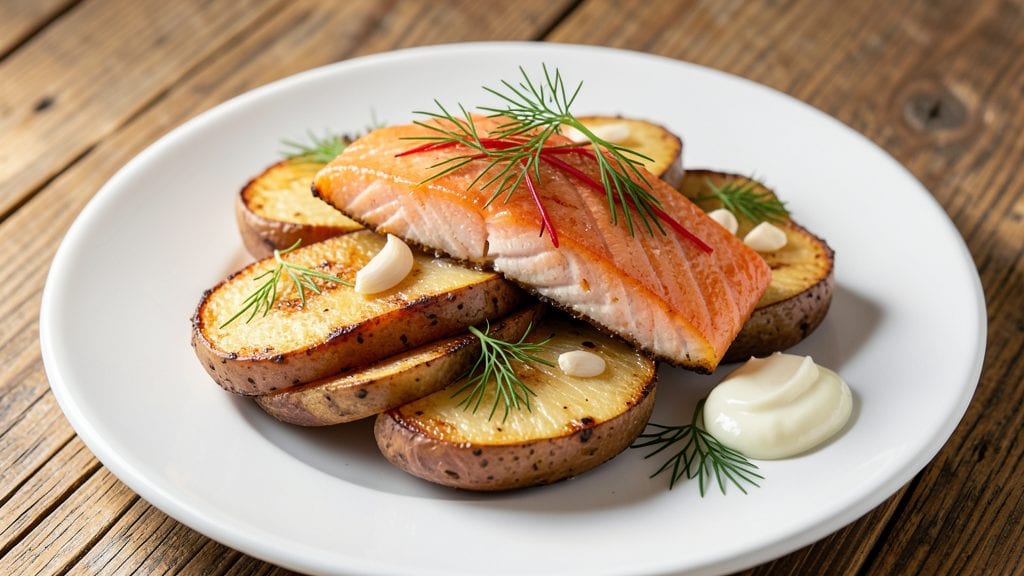
This baked potato and salmon recipe delivers a complete, restaurant-worthy meal where tender salmon and buttery potatoes cook together for maximum flavor and minimal cleanup.
The secret lies in seasoning the salmon with just salt, pepper, and a touch of lemon zest—simple yet transformative—while the potatoes develop crispy edges and fluffy interiors from a high-heat bake.
I’ve perfected this one-pan technique to ensure the salmon stays flaky and the potatoes stay perfectly moist, even when baked side by side.
What makes this recipe stand out is the balance of textures and flavors: the salmon’s delicate, buttery richness pairs beautifully with the hearty, savory potatoes.
The method is straightforward—no complicated techniques, just precise timing and a few key ingredients like garlic butter for the potatoes and fresh dill for the salmon. It’s the kind of dish that feels indulgent yet remains simple enough for a weeknight dinner.
By the end, you’ll have golden, crisp-skinned potatoes and perfectly cooked salmon with a tender, flaky center, all ready to be served together. The dish is elegant enough for a dinner party but effortless enough for a solo meal.
Serve with a simple green salad or steamed vegetables to round out the plate.
This recipe is designed for efficiency—no separate pans, no fuss. The salmon and potatoes cook simultaneously, saving time and energy while delivering a meal that feels like it took hours to prepare. Whether you’re feeding a family or treating yourself, this combination is sure to impress.
Ingredients for baked potato and salmon
Four hearty russets and two perfect salmon fillets transform into a restaurant-worthy meal with minimal effort.
| Ingredient | Amount | Notes |
|---|---|---|
| Russet Potatoes 🥔 | 4 whole | Medium-sized, scrubbed clean |
| Salmon Fillets 🐟 | 2 pieces | Center-cut, skin-on, 6 oz each |
| Unsalted Butter 🧈 | ½ cup | Cold, cubed for potatoes |
| Garlic Cloves 🧄 | 4 cloves | Minced for garlic butter |
| Fresh Dill 🌿 | ¼ cup | Chopped, for salmon seasoning |
| Lemon Zest 🍋 | 1 tbsp | From organic lemon |
| Kosher Salt 🧂 | 1 ½ tsp | Diamond Crystal preferred |
| Freshly Ground Black Pepper 🌶️ | ½ tsp | Cracked peppercorns preferred |
| Olive Oil 🫒 | 2 tbsp | Extra-virgin, for drizzling |
| Heavy Cream 🥛 | ¼ cup | Full-fat for richness |
| Fresh Lemon Juice 🍋 | 1 tbsp | From same lemon as zest |
| Fresh Parsley 🌿 | 0.1 cup | Chopped, for garnish |
The russet potatoes are the foundation—choose medium-sized ones for even baking. Whole Foods or your local grocery store's organic section often carries the best quality. Look for firm potatoes with smooth skins and no sprouts. The salmon should be center-cut fillets—this ensures the most tender, flaky texture. Wild-caught Alaskan salmon from the seafood counter delivers superior flavor, though frozen works in a pinch if properly thawed. For the butter, opt for European-style unsalted—it has a higher fat content that creates superior browning on the potatoes.
No fresh dill? Dried dill at one-third the amount works, though it lacks the bright, herbal note. Substituting lemon zest with white wine vinegar adds acidity but changes the flavor profile entirely. The heavy cream can be swapped for half-and-half, though the dish will be slightly lighter. For the olive oil, infused varieties like garlic or chili add interesting depth, though stick to plain extra-virgin for the classic version. The garlic butter mixture can be prepped ahead—just store it cold until ready to use, ensuring the butter remains firm for proper coating.
Potatoes and salmon keep best when refrigerated separately—wrap the salmon in parchment paper and store for up to 2 days. The garlic butter mixture stays fresh in an airtight container for 1 week in the fridge. For make-ahead convenience, parboil the potatoes and refrigerate them before baking—this cuts 20 minutes off prep time. The dish reheats beautifully—simply cover with foil and warm at 350°F for 10 minutes. Garnish with fresh parsley just before serving to maintain vibrant color.
Why You'll Love This Recipe
- One-Pan Magic: I swear by this for lazy nights—just toss the potatoes and salmon on a sheet pan, drizzle with butter and garlic, and let the oven do the work. No chopping boards, no extra dishes, just pure, unapologetic ease.
- Buttery-Garlic Bliss: That crispy potato skin with flaky salmon inside? It’s like a hug for your taste buds. The garlic-infused butter melts into everything, and the fresh dill adds that bright, herby finish that makes it feel fancy without the fuss.
- Lunchbox Hero: Between us, this is my go-to for meal prep. Roast a big batch of potatoes and salmon on Sunday, and you’ve got lunch sorted for days—pack it cold or reheat it, and it’s still delicious. (Yes, even on a Tuesday night.)
- Budget-Friendly Luxe: Salmon feels special, but Russets are cheap and hearty. A single fillet stretches further when paired with a baked potato, and the butter and garlic cost pennies. It’s restaurant-quality without the price tag—honestly, why wouldn’t you make this?
Step-by-step instructions for buttery baked potato meets flaky salmon
This one-pan technique delivers restaurant-quality results with minimal effort.
Prepare the Potatoes for Maximum Flakiness
Preheat your oven to 425°F while you prepare the potatoes. Using a sharp chef's knife, cut the 4 whole russet potatoes lengthwise into ½-inch thick slices—this ensures even cooking and that signature flaky texture. Arrange the slices on a rimmed baking sheet in a single layer, leaving ½-inch gaps between them for proper air circulation.
In a small bowl, combine the 2 tablespoons olive oil, 1.5 teaspoons kosher salt, and 0.5 teaspoon freshly ground black pepper. Drizzle this mixture evenly over the potato slices, massaging it gently into the cut surfaces. The olive oil creates a barrier that prevents drying while promoting crisp edges. I like to press down lightly on the potatoes during the first 15 minutes of baking—this prevents curling and ensures even contact with the hot pan.
Create the Garlic Butter Salmon Seasoning
While the potatoes begin baking, prepare the salmon seasoning. In a small mixing bowl, combine the 0.25 cup chopped fresh dill, 1 tablespoon lemon zest, 1 tablespoon fresh lemon juice, and 0.1 cup chopped fresh parsley. Set aside—this herb blend will infuse the salmon with bright, aromatic flavors.
In a separate bowl, mix the 0.5 cup cold unsalted butter with the 4 minced garlic cloves until fully incorporated. The cold butter ensures it melts evenly over the salmon, creating a rich, flavorful crust. Pat the 2 pieces salmon fillets dry with paper towels—this step is critical for achieving crispy skin. Season both sides generously with the dill mixture, then spread a thin layer of the garlic butter over each fillet, pressing gently to adhere.
Bake the Potatoes to Golden Perfection
Return the potatoes to the oven and bake for 25-30 minutes, rotating the baking sheet halfway through, until the edges are deep golden brown and a knife slides in easily. The internal temperature should reach 205°F—this ensures the potatoes are fully cooked yet still fluffy. Real talk: your oven might run hot, so start checking at the 20-minute mark to avoid overcooking.
During the last 5 minutes of potato baking, increase the oven temperature to 450°F. This final burst of heat creates the crispy edges that make baked potatoes irresistible. Remove the potatoes and tent loosely with aluminum foil to keep them warm while you finish the salmon.
Cook the Salmon to Flaky Perfection
Place the seasoned salmon fillets on the same baking sheet as the potatoes, skin-side down. Bake for 10-12 minutes until the salmon is opaque and flakes easily with a fork. The internal temperature should reach 145°F—this guarantees tender, moist salmon without overcooking. Watch carefully after 8 minutes to prevent drying.
Once the salmon is done, transfer it to a serving platter and let it rest for 3-5 minutes. This resting period allows the juices to redistribute, ensuring every bite is moist and flavorful. Meanwhile, drizzle the 0.25 cup heavy cream over the potatoes and return them to the oven for 2-3 minutes to create a silky, creamy finish.
Assemble and Garnish for Presentation
Divide the buttery potatoes evenly among 4 serving plates, placing 2 potato slices per plate. Top each portion with a salmon fillet, skin-side up. Spoon any accumulated pan juices over the salmon to maximize flavor. Garnish with an additional sprinkle of the dill-herb mixture and a final twist of lemon zest for brightness.
The result should be crispy, flaky potatoes paired with perfectly seasoned, buttery salmon. Each bite delivers the contrast of tender potato and delicate salmon, elevated by the bright herb and citrus notes. Serve immediately while the salmon is still warm and the potatoes are at their peak texture.
Pro Tips For Making Baked Potato And Salmon
- PIERCE POTATOES FIRST: Russet skins are tough—score them with a fork before baking to guarantee even cooking. I learned this the hard way when my potatoes turned mushy on the inside while staying rock-hard outside.
- USE COLD SALMON: Skip thawing frozen salmon—just pat it dry and bake it straight from the freezer. The cold fish cooks more evenly and stays moist, while room-temp salmon often overcooks before the center is done.
- SALT THE POTATOES HALFWAY: Add a pinch of salt when you prick the potatoes, then another after 20 minutes of baking. This prevents blandness from the butter soaking in later—my grandmother’s trick, and it actually works.
- SAVE TIME WITH GARLIC: Mince the garlic right before baking and toss it directly onto the salmon and potatoes. No need to pre-sauté—it’ll soften and infuse flavor while everything bakes, cutting cleanup and effort.
Common mistakes when making your baked potato and salmon
Overcooking Salmon
Salmon turns rubbery and dry when overcooked, especially in high-heat methods. The key is to remove it from the oven or pan when its internal temperature hits 145°F—any higher, and the texture suffers. I’ve learned the hard way that checking with a meat thermometer is non-negotiable.
A ThermoWorks Smoke thermometer gives precise readings, and I always set it for a 1-minute alert at 145°F to avoid missing the window. 🌡️
Skipping the Resting Time
Salmon needs 3-5 minutes of resting after cooking to allow juices to redistribute. Skipping this step means dry, stringy fillets. I’ve seen home cooks rush to plate the salmon immediately, only to be disappointed by the texture.
Place it on a wire rack over a plate to catch any juices, then tent with foil while it rests. This also keeps the skin crispy instead of soggy.
Uneven Potato Slices
Thick slices of potato take longer to cook, while thin slices burn before the center is done. For consistent results, cut each potato into ½-inch thick slices using a sharp knife. I use a mandoline slicer for precision, but a steady hand works too.
Arrange slices in a single layer with ½-inch gaps between them for even air circulation. Crowding the pan leads to steamed, soggy potatoes instead of crispy edges.
Overcrowding the Pan
Stuffing too many potatoes on one baking sheet causes uneven cooking and steam buildup, which makes them soggy. Stick to 1 layer of potatoes with space between slices. If you’re baking more than 4 potatoes, use a second sheet.
I’ve made this mistake when doubling the recipe—always plan for proper airflow. The same rule applies to salmon: place fillets skin-side down with 1-inch gaps between them for even browning.
Ignoring the Potato Press
Pressing down on potato slices during the first 15 minutes of baking prevents curling and ensures even contact with the hot pan. Without this step, edges can lift and cook unevenly, leading to dry spots. Use a small plate or spatula to gently weigh down the slices.
This technique is especially critical for thicker cuts. I’ve seen potatoes curl into little boats when skipped—press and forget, then check later for golden perfection. 🔥
Using Frozen Salmon
Thawing salmon improperly leads to uneven cooking and a mushy texture. If using frozen fillets, thaw them in the fridge overnight or use the cold water method (sealed in a leak-proof bag for 30 minutes). Never thaw at room temperature—this promotes bacterial growth.
Pat the salmon completely dry before seasoning, as any moisture prevents proper browning. I’ve ruined a great meal by skipping this step, so always plan ahead for proper thawing.
Nutrition facts
Frequently asked questions
Can I use sweet potatoes instead of russets?
Sweet potatoes work beautifully, but the texture will differ slightly. They stay moister and sweeter, so reduce baking time to 20-25 minutes (check at 18 minutes) and avoid the high-heat finish. The skin also needs scoring to prevent cracking. For best results, brush with olive oil and add ½ teaspoon cinnamon to the seasoning.
How do I keep the salmon from sticking to the pan?
Pat the salmon fillets completely dry with paper towels before seasoning—this is critical for crispy skin. Place them skin-side down on a well-oiled baking sheet (use extra-virgin olive oil) and avoid moving them once in the oven. If using a nonstick sheet, still oil it lightly to prevent sticking, especially if your salmon has a thick skin.
Can I make this recipe ahead of time?
Yes! Parboil the potatoes for 5 minutes, then refrigerate them in cold water for up to 24 hours. The day of cooking, pat dry and proceed with the recipe, reducing baking time by 5 minutes. For the salmon, season it and refrigerate (uncooked) for up to 4 hours before baking. Never prep the garlic butter ahead—make it fresh to maintain peak flavor.
What’s the best way to reheat leftovers?
Reheat gently to preserve texture. Place leftovers in a 350°F oven for 10-12 minutes, covered with foil. For the salmon, avoid microwaving—it turns rubbery. If reheating potatoes alone, brush with extra butter and broil for 2-3 minutes to restore crispiness. Store leftovers separately: potatoes for 3 days and salmon for 2 days in the fridge.
Can I substitute another fish for salmon?
Halibut or cod work well—use the same cooking time (10-12 minutes) and internal temp (145°F). For a richer flavor, try trout or sea bass. Avoid firm white fish like mahi-mahi (they need 155°F internal temp). Adjust seasoning: trout pairs well with fennel and orange zest, while cod benefits from white wine and parsley.