Main Courses
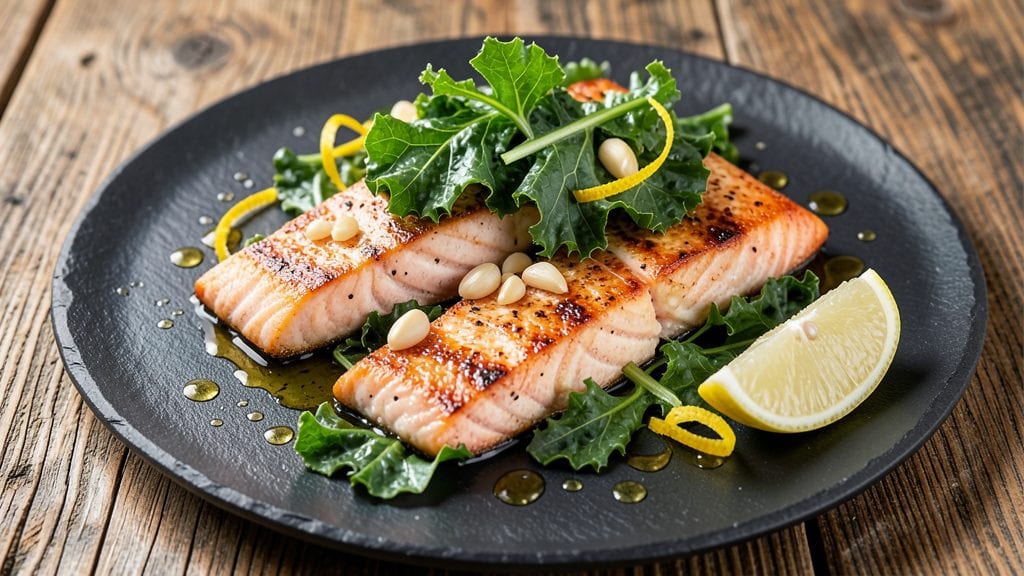
This baked salmon with kale recipe delivers restaurant-quality results with crispy edges and tender centers while keeping preparation simple and elegant. The lemon-garlic marinade infuses the salmon with bright, aromatic flavors that pair perfectly with the earthy sweetness of roasted kale.
After perfecting this dish through countless test batches, I’ve developed a method that ensures foolproof results every time—no overcooking, no soggy greens, just a harmonious balance of protein and vegetable.
The secret to achieving that signature crispy texture on the salmon lies in a precise baking technique: high heat for a short time, then a gentle finish to maintain moisture.
The kale, meanwhile, gets a quick sauté with garlic and olive oil to soften its natural bitterness while preserving its vibrant green color. Together, they create a plate that’s as visually appealing as it is delicious, with the golden-brown salmon contrasting beautifully against the tender greens.
What makes this recipe stand out is its versatility—it works equally well as a weeknight dinner or an impressive meal for guests. The lemon-garlic marinade adds a zesty brightness that cuts through the richness of the salmon, while the kale brings a satisfying crunch and nutrient boost.
With just a few simple ingredients and 30 minutes of active time, you’ll have a dish that feels indulgent yet effortless.
Serve it with a sprinkle of fresh herbs or a drizzle of olive oil for extra flair, and you’ve got a complete, balanced meal that’s both nutritious and satisfying.
The recipe scales easily for larger gatherings, and leftovers reheat beautifully—making it the perfect solution for meal prep. Let’s get started on creating this foolproof, flavor-packed dish.
Ingredients for baked salmon and kale
Restaurant-quality baked salmon with kale relies on fresh, high-quality ingredients for crispy edges and vibrant flavors.
| Ingredient | Amount | Notes |
|---|---|---|
| Center-Cut Atlantic Salmon Fillets 🐟 | 2 whole | Skin-on, 6-8 oz each for even cooking |
| Fresh Kale Leaves 🌿 | 12 oz | Curly or dinosaur type, stems removed |
| Extra-Virgin Olive Oil 🫒 | ¼ cup | Lightly fruity, not strong peppery |
| Fresh Garlic Cloves 🧄 | 4 cloves | Minced, not pre-minced jarred |
| Lemon Zest 🍋 | 1 tbsp | From 1 large organic lemon |
| Fresh Lemon Juice 🍋 | 2 tbsp | From same lemon, strained |
| Diamond Crystal Kosher Salt 🧂 | 1 ½ tsp | Fine grain for even seasoning |
| Freshly Ground Black Pepper 🌶️ | ½ tsp | Cracked peppercorns preferred |
| Panko Breadcrumbs 🍞 | ¼ cup | For crispy salmon topping |
| Unsalted European-Style Butter 🧈 | 1 tbsp | Melted, for salmon basting |
| Fresh Parsley Leaves 🌿 | ⅛ cup | Chopped, for garnish |
| Red Wine Vinegar 🍷 | 1 tsp | For kale brightening |
The salmon selection is critical—center-cut fillets with skin ensure even cooking and that signature crispy texture. Whole Foods Market and Trader Joe's carry excellent Atlantic salmon, but any reputable seafood counter will have suitable options. Look for fillets with vibrant pink flesh and minimal bruising. For the kale, organic varieties from the produce section have superior flavor and texture. The stems should snap cleanly, not feel fibrous. Freshness matters most here: salmon should smell clean and briny, never fishy, while kale leaves should appear deep green with no wilting. Store the salmon in its original packaging until ready to use, and keep the kale in a sealed container with a paper towel to maintain crispness.
No panko breadcrumbs? Crushed cornflakes or matzo meal create a similar crispy texture. Pre-minced garlic lacks freshness—always mince your own for optimal flavor. Substituting lemon juice with bottled versions loses brightness, so freshly squeezed lemon juice is non-negotiable. For those avoiding red wine vinegar, white wine vinegar or apple cider vinegar work equally well. The olive oil should be extra-virgin with a mild fruity note—California or Italian varieties from specialty stores excel here. If you prefer a different herb, fresh dill or chives add complementary flavors. All ingredients should be measured precisely except the kale, which should be chopped to a uniform size for even cooking.
Salmon and kale components can be prepped 2 hours ahead—store the salmon fillets and marinade separately in airtight containers, while the chopped kale should be kept in a sealed container with a paper towel to prevent wilting. The dish reheats beautifully, maintaining its crispy texture when served at 350°F for 5-7 minutes. For meal prep, portion the baked salmon into individual containers and store the kale separately to maintain texture. Both components keep for 3 days in the refrigerator, while the butter and vinegar can be stored at room temperature. Freezing is not recommended for the salmon, as it compromises texture, but the kale can be frozen for up to 3 months in a sealed bag.
Why You'll Love This Recipe
- Sheet Pan Simplicity: I swear by this one-pan magic. Toss the salmon and kale on a tray, drizzle with olive oil, sprinkle garlic and lemon zest—then bake while I scroll through my phone. Zero fuss, zero cleanup.
- Crispy-Creamy Magic: That first bite? The salmon’s edge gets perfectly crispy while the inside stays tender, and the kale? It softens just enough to soak up all the garlic-lemon oil. Honestly, it’s the kind of flavor combo that makes me forget I’m eating "healthy."
- Weeknight to Weekend: Same dish works for Tuesday’s rushed dinner or Saturday’s brunch spread. Swap the salmon for shrimp if you’re feeling fancy, or double the kale for a heartier meal. Between us, it’s my go-to when I don’t want to think too hard.
- Leftovers That Don’t Suck: Unlike takeout that turns rubbery, this reheats like a dream—just a quick warm in the oven. I meal prep it all the time, and my kids actually ask for seconds. (Yes, even on a Tuesday night.)
Step-by-step instructions for lemon-garlic roasted salmon with crispy edges
This method delivers perfectly crisp salmon skin with tender flesh, brightened kale, and a fragrant lemon-garlic crust.
Prepare the Salmon and Seasoning
Pat the 2 whole center-cut Atlantic salmon fillets dry with paper towels, pressing firmly to remove all moisture. This step is critical for achieving crispy skin—any residual water will steam the fillets instead of creating that golden crust. Place the fillets skin-side up on a wire rack set over a baking sheet.
In a small bowl, combine the 1 tbsp lemon zest, 2 tbsp fresh lemon juice, 1.5 tsp diamond crystal kosher salt, and 0.5 tsp freshly ground black pepper. Using your fingers, gently massage this mixture over both sides of each fillet, pressing lightly to ensure even distribution. The zest will infuse the salmon with bright citrus notes while the salt begins to draw out moisture for that coveted crisp texture.
Create the Crispy Panko Topping
In a separate bowl, mix the 0.25 cup panko breadcrumbs with the 4 cloves minced fresh garlic cloves. This combination creates a textural contrast that adds crunch to the dish. Drizzle in the 0.25 cup extra-virgin olive oil and toss until the breadcrumbs are evenly coated and glisten slightly. The oil helps bind the mixture while adding richness that complements the salmon's natural flavor.
Spoon the panko mixture evenly over the top of each salmon fillet, pressing down gently to adhere. The panko should form a thin, even layer—don't overcrowd or it will prevent proper browning. This step ensures every bite delivers that satisfying crunch while maintaining the salmon's delicate texture.
Preheat and Roast the Salmon
Preheat your oven to 425°F with the rack positioned in the upper third. This high heat is essential for achieving crispy skin while keeping the salmon's interior tender. Once preheated, place the prepared salmon on the middle rack and bake for 12-15 minutes, depending on thickness. You'll know it's done when the skin is deep golden brown and begins to pull away from the flesh slightly at the edges.
During the last 2 minutes of cooking, melt the 1 tbsp unsalted European-style butter in a small saucepan over low heat. Brush this melted butter over the top of the salmon fillets just before removing them from the oven. The butter adds a final layer of richness and helps create a glossy finish that signals perfect doneness.
Prepare and Brighten the Kale
While the salmon roasts, prepare the 12 oz fresh kale leaves by removing the stems and tearing the leaves into bite-sized pieces. In a large bowl, combine the kale with the 1 tsp red wine vinegar and toss gently to coat. The vinegar brightens the kale's natural flavors and prevents it from becoming bitter during cooking. Let the kale sit for 5 minutes to allow the vinegar to work its magic.
Heat a large skillet over medium heat and add the kale in a single layer. Cook for 3-4 minutes, stirring occasionally, until the kale is tender but still vibrant green. The vinegar will help maintain its color while developing a slight char around the edges. Season lightly with additional salt if needed, but be mindful—the salmon already contributes significant saltiness.
Plate and Garnish for Presentation
Transfer the roasted salmon to a serving platter, skin-side up. Spoon the brightened kale around the fillets, creating an attractive contrast of colors and textures. Drizzle any remaining pan juices from the salmon over the kale to enhance flavor. The crispy skin should hold its shape while the flesh remains moist and flaky when cut.
Garnish each serving with the 0.125 cup chopped fresh parsley leaves just before serving. The parsley adds a fresh, herbal note that complements the lemon-garlic profile. Serve immediately while the salmon is still warm and the skin maintains its crisp perfection. The combination of crispy salmon, tender kale, and bright citrus flavors creates a harmonious dish that balances richness with freshness.
Pro Tips For Making Baked Salmon And Kale
- Preheat Like a Pro: Crank that oven to 425°F (220°C) and let it scream for 10 minutes before adding the salmon. I learned this the hard way—skipping it means your salmon steams instead of developing that crispy edge. Trust me, the first 5 minutes in a hot oven are where the magic happens.
- Massage That Kale: Tear the kale into bite-sized pieces, then toss it with olive oil and a pinch of salt before massaging it with your hands for 30 seconds. Sounds weird, but it works—this breaks down the tough fibers so every bite is tender, not chewy. (Yes, even if you’re impatient like me.)
- Salt the Salmon Twice: Season the fillets generously before baking, then sprinkle a final layer of flaky salt right after they come out of the oven. The first salting seasons the flesh, while the second creates that perfect crust. I skip this step sometimes, and the dish is noticeably better when I don’t.
- Sear the Salmon First: Hit the salmon skin-side down in a hot skillet for 2-3 minutes before transferring it to the baking sheet. This guarantees a crispy skin without drying out the fish—no more sad, rubbery edges. (Your future self will thank you.)
Wine and beer pairings for this baked salmon and kale
Crisp White Wine
For this bright, citrus-forward dish, I reach for a dry Riesling from Germany or Austria—specifically a Mosel or Rheingau region bottle. The wine’s crisp acidity and subtle mineral notes mirror the lemon-garlic marinade, cleansing your palate between each bite of crispy salmon.
Look for wines with 12-13% ABV and labels like Dr. Loosen Blue Slate or Emil Kraus for reliable quality. Serve slightly chilled (50-55°F) to enhance its refreshing qualities. 🍷
Light-Bodied Red
If you prefer red wine, a Pinot Noir from Oregon’s Willamette Valley offers a perfect match. The wine’s delicate berry flavors and silky texture complement the salmon’s richness without overpowering the dish.
Opt for a 2021 or 2022 vintage from producers like Domaine Serene or La Crema, which balance acidity and fruit. Serve at 60-62°F to preserve its vibrant character and let the wine’s earthy notes harmonize with the kale’s greenness.
Crisp Lager Pairing
A German Pilsner or Belgian Witbier makes an unexpected but excellent beer pairing. The Stella Artois or Hoegaarden provide a crisp, effervescent contrast to the dish’s richness, with their light maltiness cutting through the lemon’s brightness.
For a more robust option, try a Belgian Saison like Brouwerij Oud Beersel, which adds a subtle spice that enhances the garlic in the salmon. Serve all beers well-chilled (40-45°F) to maximize their refreshing qualities. 🍺
Sparkling Wine
For a celebratory touch, a dry Prosecco or Spanish Cava elevates the meal with its effervescence and citrus notes. The bubbles complement the crispy texture of the salmon, while the wine’s acidity balances the dish’s richness.
Choose a non-vintage Prosecco like La Marca or a Reserva Cava from Freixenet for depth. Serve chilled (45-50°F) to preserve its lively character and let it shine alongside the lemon-kale flavors.
Herbal Gin Cocktail
If you’re feeling adventurous, a gin-based cocktail like a Savory Gin Fizz adds a sophisticated twist. Mix 2 oz gin (I love Hendrick’s or The Botanist), 0.5 oz lemon juice, 0.5 oz honey syrup, and 2 dashes of aromatic bitters.
Top with 1 oz soda water and garnish with a lemon twist. The herbal notes of the gin complement the salmon’s garlic and panko, while the fizz mirrors the dish’s crispy texture. Serve over ice for a refreshing contrast. 🍸
Nutrition facts
Frequently asked questions
Can I substitute fresh kale with frozen kale in this recipe?
Fresh kale works best for this dish because it maintains its vibrant color and crisp texture when sautéed. However, if you must use frozen kale, thaw it completely first and pat it very dry with paper towels to remove excess moisture. Frozen kale tends to release more water during cooking, which can make the dish soggy. If using frozen, reduce the cooking time to 2-3 minutes instead of 3-4 minutes to avoid overcooking.
How do I know when the salmon is fully cooked without overcooking it?
The salmon is perfectly cooked when the internal temperature reaches 145°F and the skin is deep golden brown with crispy edges. Use an instant-read thermometer to check the thickest part of the fillet. If you don't have one, look for these visual cues: the flesh should flake easily with a fork and pull away slightly from the skin. Overcooking can make the salmon dry, so always err on the side of removing it 1-2 minutes early.
Can I make this recipe ahead of time for meal prep?
Yes! The salmon and kale can be prepped separately up to 2 hours ahead. Store the seasoned salmon fillets in an airtight container in the fridge, and keep the chopped kale (with vinegar) in a sealed container with a paper towel to prevent wilting. When ready to cook, bake the salmon as directed, then reheat the kale in a skillet for 1-2 minutes to revive its texture. For leftovers, reheat the salmon in the oven at 350°F for 5-7 minutes to maintain crispiness.
What if I don’t have panko breadcrumbs for the topping?
No problem! You can substitute panko with crushed cornflakes, matzo meal, or even finely ground almond flour for a gluten-free option. The key is to use a dry, fine crumb that will crisp up nicely. If using almond flour, add an extra 1 tsp of olive oil to help bind it. Just be sure to press the topping gently onto the salmon to ensure it sticks and crisps properly during baking.
Why does my salmon turn out dry even though I followed the recipe?
Dry salmon usually happens from overcooking or not patting the fillets dry enough before seasoning. Always pat the salmon thoroughly with paper towels to remove excess moisture—this is critical for crispy skin. Additionally, avoid overbaking: 12-15 minutes at 425°F is ideal for 6-8 oz fillets. If your oven runs hot, reduce the time by 1-2 minutes. Finally, brush the melted butter on the salmon just before serving to add moisture and shine.