
Soups & Stews
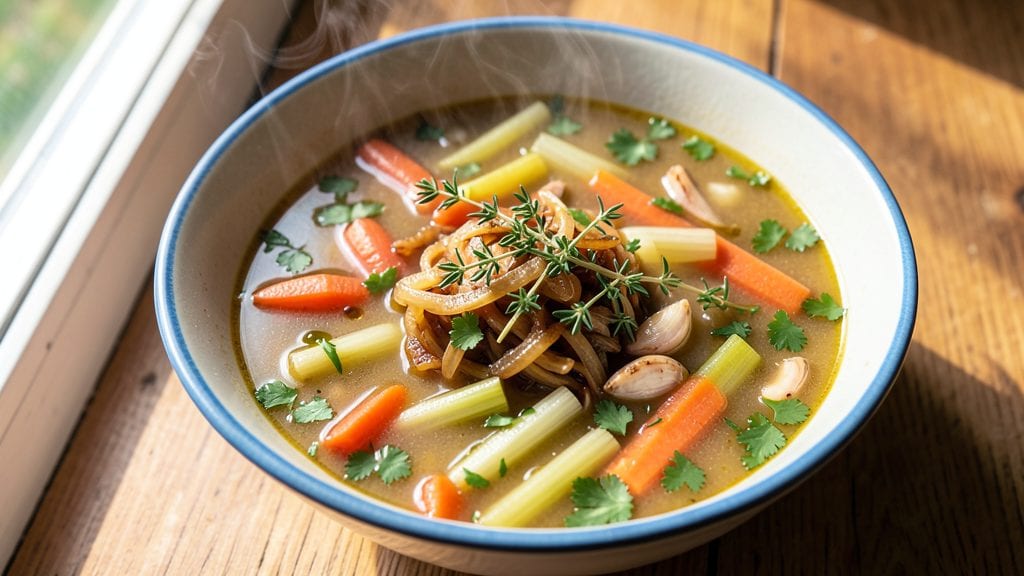
Creating a basic broth soup from scratch delivers comfort in its purest form—warm, nourishing, and packed with homemade flavor. The secret lies in building depth through slow simmering and aromatic vegetables, transforming simple ingredients into something deeply satisfying.
Whether you use homemade stock or high-quality store-bought, this one-pot method ensures rich, balanced results without fuss.
This recipe focuses on technique over complexity: sautéing onions and garlic until fragrant, adding vegetables at precise times to maintain texture, and seasoning gradually to avoid overpowering the broth.
The result is a soup that’s flexible enough for weeknight meals yet impressive enough for gatherings—all while keeping prep under 30 minutes and cooking time to 45 minutes.
What you’ll end up with is a velvety broth infused with caramelized aromatics, tender vegetables, and just the right amount of seasoning—no blandness, no bitterness, just pure, comforting flavor.
The beauty of this recipe is its adaptability: swap vegetables based on what’s fresh, adjust herbs to taste, or add protein for extra substance. It’s the kind of dish that gets better with leftovers.
Perfect for chilly evenings or as a base for more elaborate soups, this recipe proves that homemade broth doesn’t require hours of work—just patience and a few key steps. Let’s get started on creating something truly nourishing.
Ingredients for basic broth soup
Homemade broth soup begins with aromatic vegetables and slow-simmered depth.
| Ingredient | Amount | Notes |
|---|---|---|
| Yellow Onions 🧅 | 1 ½ cups | Finely diced for even caramelization |
| Garlic Cloves 🧄 | 4 cloves | Minced for aromatic depth |
| Carrots 🥕 | 1 ½ cups | Medium dice for balanced texture |
| Celery Stalks 🥬 | 1 ½ cups | Finely chopped for classic mirepoix |
| Fresh Thyme Leaves 🌿 | 1 tbsp | Or 1 tsp dried thyme if fresh unavailable |
| Fresh Parsley Leaves 🌿 | ¼ cup | Chopped for finishing brightness |
| Chicken Stock 🥫 | 4 cups | Homemade or high-quality store-bought |
| Extra-Virgin Olive Oil 🫒 | ¼ cup | Lightly toasted for flavor development |
| Bay Leaves 🌿 | 2 whole | Removed before serving |
| Salt 🧂 | 1 tsp | Diamond Crystal kosher preferred |
| Black Peppercorns 🌶️ | ½ tsp | Freshly cracked for intensity |
| Potatoes 🥔 | 1 ½ cups | Yukon Gold, diced for creaminess |
| Tomato Paste 🍅 | 2 tbsp | Concentrated for umami depth |
| Lemon Juice 🍋 | 1 tbsp | Freshly squeezed for brightness |
The foundation of any quality broth soup lies in the mirepoix—carrots, celery, and onions—where proper preparation transforms these humble vegetables into flavor carriers. For optimal results, source organic carrots and celery from Whole Foods Market or your local farmers' market, as their vibrant color indicates freshness. Yellow onions should be firm and free of sprouts, while garlic cloves should be plump and unblemished. The extra-virgin olive oil is non-negotiable here; a high-quality California extra-virgin from Trader Joe's or Costco provides the fruity notes that elevate the entire dish. Fresh herbs like thyme and parsley add complexity that dried versions simply cannot replicate, though dried herbs work at one-third the quantity in a pinch. When selecting potatoes, prioritize Yukon Golds for their natural creaminess and buttery texture, which holds up beautifully during simmering. The tomato paste should be San Marzano brand if available, as its concentrated sweetness provides unmatched umami depth without overpowering the broth.
Substitutions should never compromise the soup's fundamental balance, though flexibility is key when working with seasonal produce. If fresh thyme is unavailable, dried thyme from Penzeys Spices provides a reliable alternative, though its earthier flavor requires careful measurement. For those avoiding gluten, ensure your tomato paste is certified gluten-free, as many brands contain trace amounts. The chicken stock can be substituted with vegetable stock for a vegetarian version, though the flavor profile will differ subtly. When adjusting herbs, remember that fresh herbs should be used at twice the quantity of dried—this ensures the same aromatic impact without bitterness. The lemon juice can be omitted entirely if you prefer a more neutral broth, though its acidity helps balance the richness of the vegetables. For added protein, consider adding shredded rotisserie chicken at the end of cooking, or swap in white beans for a heartier texture.
Proper storage extends the soup's freshness while preserving its velvety texture. Once cooled, transfer the soup to glass containers with airtight lids and refrigerate for up to 5 days, though the flavor continues developing over time. For longer storage, freeze in portioned batches using silicone molds or ice cube trays—this allows for easy reheating of single servings. When reheating, bring the soup to a gentle simmer over medium heat, stirring occasionally to prevent scorching. The addition of a splash of water or stock helps restore the original consistency if the soup thickens during storage. Leftovers can be repurposed into risotto bases, sauces, or even soup dumplings, making this recipe an economical choice for meal planning.
Why You'll Love This Recipe
- Pantry-to-Pot Magic: I swear by this—no fancy ingredients, just onions, carrots, and celery (the holy trinity) simmered with garlic and thyme. Chop once, dump in, and forget about it while it builds depth. That’s the kind of recipe that makes me feel like a chef without the stress.
- Thyme for More: Honestly, the thyme is what turns this from "meh" to "make me come back." A few fresh leaves steeped in the broth? It’s that herbal brightness cutting through the richness of the broth—like a little whisper of summer in every spoonful. (Yes, even when I burn the garlic a little.)
- Weeknight Workhorse: Between us, this is my go-to when I’m exhausted but still need to feed people. Double the batch, freeze half, and boom—you’ve got a meal ready for when life gets chaotic. It’s the kind of soup that works for sick days, lazy Sundays, or when your roommate "forgets" to grocery shop.
- Budget-Friendly Blank Canvas: Carrots, celery, onions—these are the ingredients that don’t judge your wallet. A single bag of each stretches into multiple bowls, and the broth? It’s the base for everything from noodles to dumplings. I’ve turned leftovers into a stir-fry, a grain bowl, even a fancy-ish risotto. Waste not, want not.
Step-by-step instructions for basic broth soup
Here's the method for crafting a deeply flavorful homemade broth soup from scratch.
Develop the Vegetable Base
Heat the 0.25 cup extra-virgin olive oil in a large pot over medium heat until shimmering but not smoking. Add the 1.5 cups finely diced yellow onions and cook for 5-6 minutes until softened and beginning to caramelize at the edges—that golden color signals the foundation of your flavor.
Stir in the 1.5 cups medium-diced carrots and 1.5 cups finely chopped celery stalks, spreading them evenly across the pot. Cook for 8-10 minutes while stirring occasionally, until the vegetables soften and release their natural sweetness. This slow cooking process ensures maximum flavor extraction from the vegetables.
Add the 4 cloves minced garlic cloves and cook for 30 seconds until fragrant—this prevents the garlic from burning, which would create bitterness. Immediately stir in the 2 whole bay leaves, 1 tbsp fresh thyme leaves, 1 tsp salt, and 0.5 tsp freshly cracked black peppercorns. These aromatic elements will infuse the broth as it simmers.
Build Depth with Tomato and Potatoes
Reduce the heat to medium-low and stir in the 2 tbsp tomato paste, cooking for 2 minutes to develop its umami richness. This step creates a subtle depth that elevates the entire soup. Add the 1.5 cups diced Yukon Gold potatoes and pour in the 4 cups chicken stock, ensuring all ingredients are submerged.
Bring the mixture to a gentle simmer, then reduce heat to maintain a barely bubbling state. Cover partially with a lid and let it cook for 20-25 minutes until the potatoes are tender when pierced with a fork. This stage allows all flavors to meld together while the vegetables continue to break down.
Here's the thing—if the soup looks too thin at this point, don't panic. The potatoes will release starch as they cook, naturally thickening the broth. If you prefer a creamier texture, you can mash a portion of the potatoes against the pot's side to release more starch, then stir well.
Finish with Brightness and Balance
Remove the 2 whole bay leaves and stir in the 1 tbsp freshly squeezed lemon juice, which cuts through the richness and adds a bright, fresh finish. Taste and adjust seasoning with additional salt or black peppercorns if needed—this is where you ensure all flavors are perfectly balanced.
For the final touch, stir in the 0.25 cup chopped fresh parsley leaves just before serving. This not only adds vibrant color but also introduces a fresh, slightly peppery note that contrasts beautifully with the deep, savory broth. The parsley should be added last to preserve its bright flavor and vibrant green color.
Let the soup sit off heat for 5 minutes before serving. This resting period allows the flavors to settle and the soup to reach its optimal consistency. Serve immediately while hot, garnished with additional parsley if desired. The result should be a harmonious blend of sweet vegetables, rich umami from the tomato paste, and bright citrus notes.
Pro Tips For Making Basic Broth Soup
- CHAR THE ONIONS FIRST: Don’t rush this step—get those onions deep golden brown before adding anything else. I used to add garlic too early, and the soup always tasted raw; now I wait until the onions are almost caramelized, then toss in the garlic and veggies. The extra 5 minutes here makes the whole soup richer.
- SMASH THE GARLIC: Skip mincing—crush the cloves with the flat side of your knife first. This releases more flavor into the broth faster. (Yes, it looks like a crime against presentation, but your soup will taste like it’s been simmering for hours instead of 20 minutes.)
- SAVE THE THYME STALKS: Strip the leaves off the stems and toss the stems into the pot—they add subtle depth without overpowering. I learned this after accidentally discarding them and wondering why my soup lacked that "something" in the background.
- SIMMER LOW AND COVERED: Once everything’s in, reduce heat to a bare simmer and keep the lid slightly ajar. Boiling hard burns the veggies and makes the broth bitter; a gentle roll of bubbles keeps it clean and rich. (Your future self will notice the difference.)
Troubleshooting great basic broth soup
Muddy Broth Fix
If your broth turns cloudy or muddy during cooking, it’s usually from over-stirring or adding cold ingredients too quickly. I’ve found that stirring gently and avoiding sudden temperature drops keeps the broth clear.
For a quick fix, strain the soup through a fine-mesh sieve lined with a cheesecloth or paper coffee filter—this removes any particles causing cloudiness while preserving flavor. 💫
Vegetable Overcooking
Overcooked vegetables turn mushy and lose their texture, ruining the soup’s balance. To prevent this, add harder vegetables like carrots and potatoes first, then more delicate ones like celery or green beans in the last 5-10 minutes of cooking.
I always taste-test a small piece of potato—it should be tender but still hold its shape. If it falls apart, reduce cooking time by 2-3 minutes next time.
Broth Too Thin
A watery broth often means the stock wasn’t concentrated enough or the vegetables didn’t release enough starch. First, try simmering uncovered for 5-10 extra minutes to let the liquid reduce naturally. For immediate thickening, mash a few cooked potatoes against the pot’s side to release starch, then stir well.
A 1 tsp cornstarch mixed with 1 tbsp cold water can also work in a pinch—just whisk it in and simmer for 2 minutes until thickened.
Blending Mistakes
If you’re blending part of the soup for creaminess, avoid over-blending—it can turn the broth gluey or pasty. I recommend blending only half the soup at a time in an immersion blender or transferring 1.5 cups to a countertop blender.
For a smoother texture, add a splash of broth before blending to help emulsify. Always return the blended portion to the pot and stir gently to distribute evenly. 🥄
Burnt Aromatics
Burnt garlic or onions create bitter flavors that ruin the broth. To avoid this, keep heat at medium-low when cooking aromatics and stir frequently. If you notice dark brown spots, immediately reduce heat and add a splash of broth to deglaze the pot.
For extra protection, I like to add a pinch of sugar when sautéing onions—it helps caramelize them evenly without burning.
Seasoning Imbalance
Uneven seasoning often happens when herbs are added too early or salt is omitted until the end. I adjust seasoning in stages: add half the salt with the aromatics, taste after simmering, then add the rest with the lemon juice.
For herbs, add thyme and bay leaves early (they’re hardy) and parsley last (it’s delicate). If the soup tastes flat, a squeeze of lemon juice or a pinch of black pepper can often rescue it.
Nutrition facts
Frequently asked questions
Can I make this broth soup vegetarian?
Simply replace the chicken stock with 4 cups vegetable stock and add 1 cup white beans or 1 diced sweet potato for extra heartiness. The tomato paste and lemon juice will still provide that deep umami and bright finish.
How long does this soup keep in the fridge?
Store in an airtight container for up to 5 days in the refrigerator. The flavors actually deepen over time, making it perfect for meal prep. For best texture, reheat gently on the stove with a splash of water or stock.
What if I don't have fresh herbs?
Use dried thyme (1 teaspoon) and dried parsley (1/2 teaspoon) instead, but add them at the same stages—thyme with the aromatics and parsley at the end. Just remember dried herbs are 3x more concentrated than fresh.
Can I make this soup in an Instant Pot?
Yes! Sauté the onions, carrots, and celery for 3 minutes on "Sauté" mode. Add garlic, tomato paste, and spices, then pour in stock and potatoes. Cook on High Pressure for 5 minutes followed by a Natural Release. Finish with lemon juice and parsley. The pressure cooker cuts time to just 20 minutes total!
Why does my broth taste bland?
Bland broth usually means insufficient seasoning or underdeveloped flavors. Try these fixes:
- Simmer uncovered for 10 extra minutes to concentrate flavors.
- Add a pinch of sugar to the onions while sautéing.
- Finish with a splash of soy sauce (1/2 tsp) or Worcestershire sauce for umami depth. Taste as you go!