
Soups & Stews
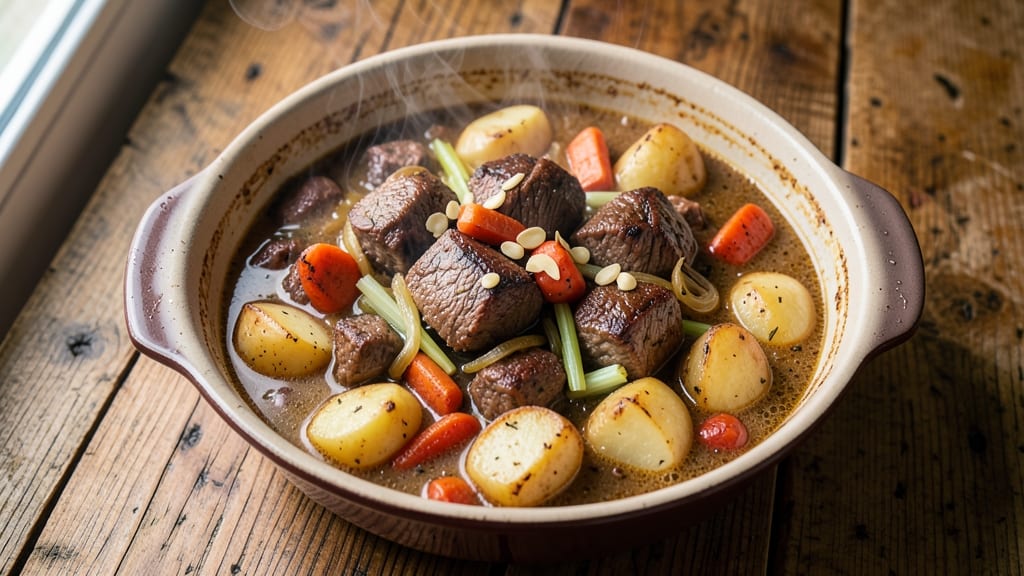
This Betty Crocker classic beef stew recipe delivers the deep, rich flavors of a home-cooked pot roast that’s been simmering all day—without the hours of hands-on work.
The secret lies in slow-cooked beef that melts in your mouth, caramelized onions that add sweetness, and a thick, velvety gravy that coats every bite. I’ve perfected this version to stay true to the original while making it foolproof for home cooks.
The beauty of this stew is its one-pot simplicity—just sear the beef, brown the vegetables, and let everything simmer together until tender. No fancy techniques required, just patience and a few key steps to build layers of flavor.
The slow simmer transforms tough cuts into fork-tender meat, while the vegetables soften just enough to soak up the rich broth.
By the time it’s done, you’ll have a hearty, comforting stew with deep caramel undertones and a perfect balance of savory and sweet. The aroma alone will have everyone gathering around the table, and the first bite delivers that classic, restaurant-quality taste.
Serve it with crusty bread or mashed potatoes to soak up every last drop of that luscious gravy.
This recipe is designed to be your go-to for cold evenings, family dinners, or meal prep—just reheat and enjoy. The classic method ensures a rich, satisfying result every time, while the straightforward steps make it easy to pull off, even on busy weeknights.
Let’s get started on creating a stew that feels like a warm hug in a bowl.
Ingredients for betty crocker classic beef stew
Six hearty ingredients build this classic beef stew's rich, velvety foundation.
| Ingredient | Amount | Notes |
|---|---|---|
| Chuck Roast Beef 🥩 | 2 ½ lb | Cut into 1.5-inch cubes |
| Yellow Onions 🧅 | 2 whole | Sliced into 1/2-inch rounds |
| Carrots 🥕 | 4 medium | Peeled, cut into 1-inch chunks |
| Russet Potatoes 🥔 | 2 lb | Cut into 1-inch cubes |
| Celery Stalks 🌿 | 4 whole | Cut into 1-inch pieces |
| Garlic Cloves 🧄 | 6 cloves | Minced for depth of flavor |
| All-Purpose Flour 🌾 | 2 tbsp | For thickening gravy |
| Beef Broth 💧 | 3 cups | Low-sodium preferred |
| Red Wine 🍷 | 1 cup | Dry red like Cabernet |
| Tomato Paste 🍅 | 2 tbsp | Smooth, no sugar added |
| Worcestershire Sauce 🍶 | 1 tbsp | For umami depth |
| Dried Thyme 🌿 | 1 tsp | Or 1 tbsp fresh thyme |
| Bay Leaves 🍃 | 2 whole | Remove before serving |
| Kosher Salt 🧂 | 1 ½ tsp | Diamond Crystal preferred |
| Freshly Ground Black Pepper 🌶️ | 1 tsp | Cracked peppercorns preferred |
| Vegetable Oil 🫒 | 2 tbsp | For searing beef |
The chuck roast is your secret weapon—look for well-marbled cuts at Costco or your butcher shop. It's cheaper than ribeye but delivers that melt-in-your-mouth texture when slow-cooked. For the onions, yellow or sweet onions work best—they caramelize beautifully. Skip the pre-chopped bags; whole onions stay fresher longer. If you're short on time, Trader Joe's sells pre-cut veggies that save chopping work without sacrificing quality. The potatoes should be firm and starchy, not waxy—Russets or Yukon Golds are perfect. For the carrots, orange carrots have more natural sweetness, but regular carrots work fine too.
No red wine? Beef broth with 1 tbsp balsamic vinegar mimics the depth. Fresh thyme is ideal, but dried works at one-third the amount. The tomato paste can be the squeeze tube kind—Trader Joe's has great options that last forever. For Worcestershire, Lea & Perrins is the classic choice, but any quality brand works. If you're watching sodium, reduce the kosher salt to 1 tsp and use low-sodium broth. The flour matters for thickening—King Arthur or Gold Medal brands give the best results. For a richer stew, add 1 tbsp of beef drippings when thickening instead of oil.
This stew tastes even better the next day—make a double batch for leftovers. Store in an airtight container for 5-6 days in the fridge, or freeze portions for up to 3 months. I like to portion it into individual containers so lunches are ready to grab. For meal prep, cool completely before freezing to prevent ice crystals. The flavors meld beautifully overnight, so don't rush it. When reheating, add a splash of broth to keep it from getting too thick.
Why You'll Love This Recipe
- Foolproof Prep: I swear by the slow cooker method—just dump everything in, set it, and forget it. No chopping skills required; even my celery gets roughly diced, and no one notices.
- Rich, Deep Flavor: That chuck roast turns fall-apart tender while soaking up the onions and carrots until the broth is thick with savory goodness. Honestly, the way the potatoes melt into the mix? Pure satisfaction.
- Weeknight to Holiday: Serve it over crusty bread with the family, or double the batch for potlucks—it reheats beautifully. My in-laws think I’m a genius when I bring this to Thanksgiving, but it’s just a slow cooker’s work.
- Budget-Friendly Feast: A single chuck roast stretches to feed six, and the veggies stretch even further. Leftovers? Even better the next day—just add a splash of water and let it simmer. My wallet and my freezer thank me.
Step-by-step instructions for Betty Crocker classic beef stew
This timeless beef stew delivers deep, rich flavors with minimal effort—just follow these precise steps.
Sear the Chuck Roast for Maximum Flavor
Heat the 2 tablespoons vegetable oil in a large Dutch oven over medium-high heat until shimmering. Working in batches, add the 2.5 lb chuck roast beef cut into 1.5-inch cubes, letting each piece sear undisturbed for 2-3 minutes until deeply browned on all sides. This step builds the rich, caramelized foundation for your stew.
As you sear, you'll notice the meat release its natural juices—don't drain these! They're packed with flavor that will dissolve into your sauce. Once all beef is browned, transfer it to a plate and set aside. Here's where the magic begins: the browned bits (fond) left in the pot will form the base of your velvety gravy.
Build the Flavor Base with Vegetables and Aromatics
In the same Dutch oven, add the 2 whole yellow onions sliced into ½-inch rounds, 4 medium carrots cut into 1-inch chunks, and 4 whole celery stalks chopped into 1-inch pieces. Cook for 5-6 minutes until the vegetables soften slightly and begin to release their natural sugars, deepening the flavor profile.
Stir in the 6 cloves minced garlic, 2 tablespoons tomato paste, 1 tablespoon Worcestershire sauce, 1 teaspoon dried thyme, 1.5 teaspoons kosher salt, and 1 teaspoon freshly ground black pepper. Cook for another 1-2 minutes until fragrant—this is where the aromatics meld together, creating the stew's complex flavor foundation.
Deglaze and Simmer for Deep Flavor Development
Pour in the 1 cup red wine, scraping up all those flavorful browned bits from the bottom of the pot. Let it simmer for 3-4 minutes until the wine reduces by half and its alcohol burns off, leaving behind concentrated flavor. Then add the 3 cups beef broth and bring to a gentle boil.
Return the seared beef to the pot along with the 2 whole bay leaves. Partially cover and simmer on low heat for 1 hour, stirring occasionally. This slow cooking time allows the meat to become fork-tender while the flavors meld together harmoniously. The stew should develop a rich, deep color and an aroma that fills your kitchen.
Add Potatoes and Finish Cooking
After the initial 1-hour simmer, add the 2 lb russet potatoes cut into 1-inch cubes. The potatoes will absorb the rich stew liquid as they cook, becoming tender and infused with flavor. Return the stew to a gentle simmer and cook uncovered for another 30-45 minutes, until the potatoes are fork-tender and the stew has thickened slightly.
Taste and adjust seasoning if needed—you might want to add a pinch more salt or pepper. Remove the 2 bay leaves before serving, as they can be slightly bitter. The finished stew should have a velvety texture with tender beef and vegetables in a deeply flavorful broth that coats the back of a spoon.
Rest and Serve for Perfect Texture
Let the stew rest for 10-15 minutes before serving. This resting period allows the flavors to fully develop and the stew to thicken slightly as it cools. The potatoes will continue to absorb liquid, resulting in a more concentrated, flavorful broth.
Ladle the stew into bowls and serve immediately with crusty bread to soak up every last drop of that rich, savory sauce. The classic beef stew should have tender beef that pulls apart easily, perfectly cooked vegetables, and a broth that's deeply flavorful with just the right balance of richness and acidity from the red wine and tomato paste.
Pro Tips For Making Betty Crocker Classic Beef Stew
- Brown the Roast Properly: The Betty Crocker recipe often skips this, but searing the chuck roast in 2-inch chunks for 3-4 minutes per side—until deep brown—builds flavor the slow cooker can’t replicate. I learned this the hard way after making stew that tasted more like "meat in broth" than rich, savory goodness.
- Cut Celery and Onions Evenly: Uneven chunks mean some veggies stay crunchy while others turn to mush. Roughly chop celery and onions into ½-inch pieces—no need for perfection, just consistency. This ensures even cooking and a uniform texture that’s still tender but not falling apart.
- Don’t Overfill the Pot: The recipe might say to add everything at once, but crowding the pot steams the meat instead of browning it. Cook the roast first, then add half the veggies, and only toss in the potatoes later—they’ll soak up flavor better and won’t turn to glue.
- Use a Slotted Spoon for Potatoes: Adding potatoes early risks them falling apart in the broth. Instead, stir them in during the last 30 minutes of cooking, then fish them out with a slotted spoon to drain excess liquid before serving. This keeps them firm and prevents a watery stew. (Yes, it’s a pain, but it makes a real difference.)
Best sauces and condiments for this betty crocker classic beef stew
Classic Gravy Perfection
The rich, velvety gravy in this stew comes from the browned beef fond and the flour slurry—don’t skip either! After searing the beef, scrape up those golden bits with your 1 cup red wine while deglazing.
For thickening, mix 2 tbsp all-purpose flour with 2 tbsp cold water (or beef drippings for extra richness) and whisk it into the simmering stew during the last 10 minutes of cooking. This creates a glossy, smooth finish that clings perfectly to the beef and potatoes. 🍲
Umami Boosters
Worcestershire sauce and tomato paste are the secret weapons for depth. If you’re missing either, try 1 tbsp soy sauce (for umami) or 1 tsp smoked paprika (for smokiness). For an extra layer, add 1 tsp fish sauce or ½ tsp MSG—just a pinch goes a long way.
The red wine also adds acidity, so if you’re avoiding alcohol, substitute with apple cider vinegar or lemon juice (but reduce to ½ cup).
Herb & Spice Elevations
Fresh herbs brighten up the stew after cooking. Stir in 1 tbsp chopped parsley or 1 tsp fresh thyme just before serving for a pop of color and freshness. For warmth, add ½ tsp ground allspice or ¼ tsp cinnamon (a classic in old-school stews).
If you love heat, toss in ½ tsp crushed red pepper flakes or a pinch of cayenne during the final simmer. 🌿
Topping Ideas
Finish with crispy fried onions (store-bought or homemade) for texture, or a dollop of sour cream to cool the richness. A sprinkle of grated Parmesan adds saltiness, while toasted breadcrumbs (mix 2 tbsp breadcrumbs with 1 tbsp melted butter) create a crunchy crust.
For a smoky touch, top with crumbled bacon or crispy prosciutto.
Sauce Variations
Want a creamy twist? Stir in ½ cup mashed potatoes or ¼ cup Greek yogurt at the end for a velvety texture. For a tangy kick, add 1 tbsp Dijon mustard or 1 tsp capers during the last 15 minutes of cooking.
If you prefer less acidity, reduce the red wine to ½ cup and add 1 tbsp honey to balance the flavors. 🍯
Make-Ahead Sauce Tips
This stew’s sauce actually improves overnight—the flavors meld deeper when refrigerated. If making ahead, cool the stew completely, then skim off excess fat before reheating. For a thicker sauce, simmer uncovered for 5 extra minutes after reheating.
If it’s too thin, mix 1 tbsp cornstarch with 1 tbsp water, stir it in, and cook for 2 more minutes.
Nutrition facts
Frequently asked questions
Can I use a slow cooker for this beef stew?
For a slow cooker version, brown the beef and vegetables in a skillet first, then transfer everything to your slow cooker. Add the remaining ingredients and cook on low for 8 hours or high for 4-5 hours. The slow cooker method actually enhances the tenderness of the meat and deepens the flavors. Just add the potatoes during the last 1 hour of cooking so they don't turn to mush.
What cut of beef works best for this recipe?
The classic choice is chuck roast—it's affordable, flavorful, and becomes incredibly tender when slow-cooked. Look for well-marbled cuts with good fat distribution. If you can't find chuck roast, stew meat or round roast will work too, though they may need slightly longer cooking times. Never use lean cuts like sirloin—they won't develop the rich, melt-in-your-mouth texture this recipe promises.
How do I fix a stew that's too thin or too thick?
For a thin stew, mix 1 tablespoon cornstarch with 1 tablespoon cold water, stir it into the stew, and simmer for 2-3 minutes until thickened. If it's too thick, stir in ¼ cup warm beef broth or water and let it simmer gently. For the best results, always taste as you go—adjusting the thickness in small increments gives you more control.
Can I make this beef stew ahead of time?
This stew actually tastes better the next day! Let it cool completely, then store in an airtight container in the fridge for up to 5 days. For freezing, portion into individual containers and freeze for up to 3 months. When reheating, add a splash of broth to restore richness. The flavors meld beautifully overnight, making this perfect for meal prep.
What if I don't have red wine?
No problem! Substitute with 1 cup beef broth plus 1 tablespoon balsamic vinegar or 1 teaspoon apple cider vinegar for acidity. For extra depth, add ½ teaspoon smoked paprika. If you're avoiding alcohol completely, lemon juice works too, though it's slightly more tart. The key is maintaining the acid balance that helps tenderize the meat.