Desserts
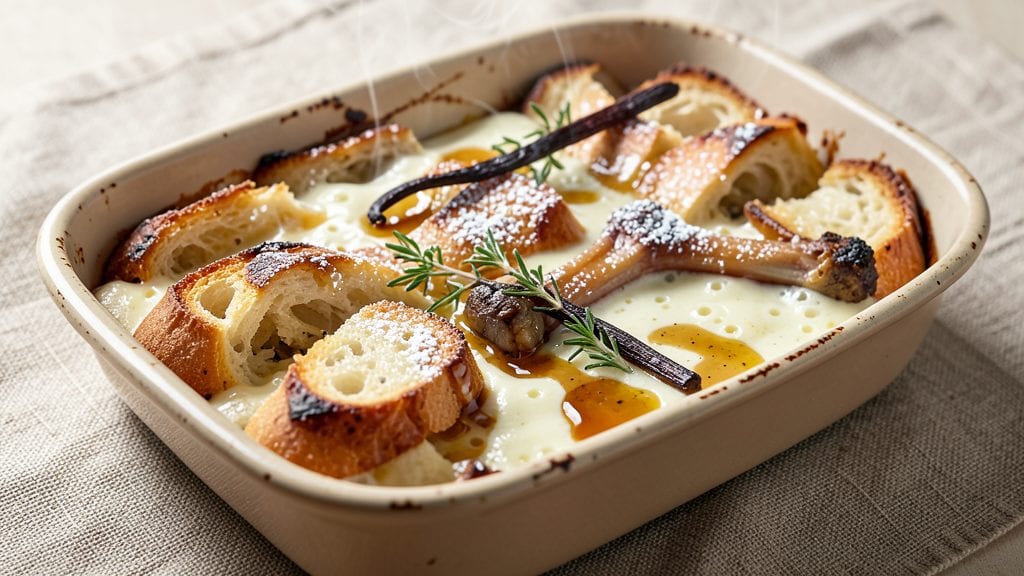
This bone marrow bread pudding transforms a classic dessert into a luxurious experience where deep umami flavors meet comforting sweetness.
The secret lies in roasting bone marrow until it caramelizes into a velvety, rich sauce that infuses the custard—creating a texture that’s custardy yet tender, with every bite offering layers of complexity.
I developed this recipe after years of experimenting with savory-sweet desserts, and the result is a dish that feels both rustic and refined, perfect for those who appreciate depth in their flavors.
The process begins with cubed bread soaked in a custard enriched with bone marrow, then baked until golden and set. Unlike traditional bread pudding, this version incorporates the marrow’s natural richness, which adds a savory depth that balances the sweetness of vanilla and brown sugar.
The custard is thickened just enough to hold its shape while remaining silky, ensuring each spoonful delivers that perfect contrast of textures—creamy custard, tender bread, and the unctuous marrow.
What makes this dish truly special is how the flavors evolve as it bakes—starting with a warm, caramelized aroma that fills the kitchen, then revealing a center that’s still rich and custardy.
The bone marrow not only enhances the umami but also ties the dish together, making it feel like a restaurant-quality dessert without the fuss. Serve it warm with a dusting of powdered sugar or a drizzle of honey to elevate the experience even further.
This recipe is ideal for special occasions or when you want to impress guests with a dessert that’s as memorable as it is delicious. The technique is straightforward, but the result is anything but ordinary—a harmonious blend of comfort and sophistication that will leave everyone asking for seconds.
Let’s get started on creating this showstopper.
Ingredients for bone marrow bread pudding
Six ingredients transform ordinary bread into a luxurious dessert with restaurant-quality umami depth.
| Ingredient | Amount | Notes |
|---|---|---|
| Day-Old Baguette 🍞 | 1 ½ lb | Cubed into 1.5-inch pieces |
| Heavy Cream 🥛 | 2 cups | Full-fat for optimal richness |
| Whole Milk 🥛 | 1 cup | Room temperature preferred |
| Large Eggs 🥚 | 4 whole | Room temperature for best binding |
| Granulated Sugar 🍚 | ¾ cup | Light brown preferred for depth |
| Pure Vanilla Extract 🌿 | 1 tbsp | Bourbon-infused for complexity |
| Unsalted Butter 🧈 | ½ cup | Cold, cubed for even melting |
| Beef Bone Marrow 🦴 | 1 lb | Fresh, from leg or femur |
| Diamond Crystal Kosher Salt 🧂 | ½ tsp | Fine grain for even dissolution |
| Freshly Ground Black Pepper 🌶️ | ¼ tsp | Cracked peppercorns preferred |
| Powdered Sugar 🍚 | ¼ cup | For final dusting only |
| Extra-Virgin Olive Oil 🫒 | 1 tbsp | For bread cubing |
The bone marrow is the heart of this dessert—fresh marrow from the leg or femur yields the richest flavor. Source it from a trusted butcher or specialty market like D'Eon or Whole Foods, where they often carry it pre-extracted. If using whole bones, crack them open with a cleaver and scoop out the marrow with a spoon—wear gloves for hygiene. For optimal results, roast the marrow at 400°F for 10-12 minutes until caramelized and velvety; this step transforms its flavor from raw to luxurious. The baguette should be day-old for texture, but if using fresh, toast lightly to mimic staleness.
No bone marrow? Substitute with high-quality beef drippings or even a blend of beef broth and a teaspoon of soy sauce for umami, though the texture will differ. For the custard, half-and-half can replace heavy cream, but the richness will be compromised. The vanilla extract is non-negotiable for depth—imitation extracts lack the complexity. If you're using pre-cubed bread, toss it with 1 tbsp of the olive oil to prevent drying. The powdered sugar should be sifted for an even dusting, and turbinado sugar can replace granulated if you prefer a crunchier texture.
Store the custard mixture in the refrigerator for up to 24 hours before baking to allow flavors to meld. Once baked, the pudding keeps for 4 days in an airtight container, though it's best enjoyed within the first 2 days. For make-ahead convenience, prepare the custard and bread mixture the night before, then bake when ready. The caramelized marrow sauce can be stored separately in a small jar and reheated gently before serving. Serve warm with a dusting of powdered sugar and a drizzle of honey or reduced balsamic glaze for contrast.
Why You'll Love This Recipe
- No-Fuss Ingredients: I swear by this recipe because it uses what’s already in my fridge. That stale baguette? Gold. Heavy cream and eggs? Always on hand. Just toss them in a bowl, let the custard work its magic, and you’re done—no special shopping trips or fancy techniques.
- Rich, Unexpected Depth: The marrow transforms this from basic bread pudding to something luxurious. That caramelized, buttery richness from the marrow cuts through the custard like a velvet glove. Honestly, it’s the kind of flavor that makes you pause mid-bite.
- Weeknight to Dinner Party: Same recipe, different vibes. Slap it together for a lazy Sunday breakfast or dress it up with toasted nuts and honey for guests. The custard’s creamy texture holds up whether it’s served warm or at room temp—no stress, just satisfaction.
- Leftovers? Better Than New: Between us, this tastes even better the next day. The custard thickens just right, and the crust gets that perfect balance of crispy and tender. I make a big batch on Sunday so I can reheat slices all week—zero guilt, all comfort.
Step-by-step instructions for bone marrow bread pudding
This method transforms simple ingredients into a decadent dessert with intense umami richness.
Prepare the Bone Marrow and Bread
Begin by roasting the 1 lb beef bone marrow at 400°F for 15-20 minutes until it softens and releases its golden, fragrant oil. Let it cool slightly, then carefully scoop out the marrow with a spoon, leaving behind the crispy skin. Reserve both the marrow and the skin separately—the marrow will be pureed for the custard, while the skin adds textural contrast.
While the marrow roasts, cut the 1.5 lb day-old baguette into 1.5-inch cubes, tossing them with 1 tbsp extra-virgin olive oil to prevent drying. Arrange the bread cubes in a single layer on a parchment-lined baking sheet and toast at 350°F for 8-10 minutes until lightly golden. This step ensures the bread absorbs the custard evenly without becoming soggy.
Create the Bone Marrow Custard
In a blender, combine the roasted marrow with 2 cups heavy cream, 1 cup whole milk, 4 whole large eggs, 0.75 cup granulated sugar, 1 tbsp pure vanilla extract, 0.5 tsp diamond crystal kosher salt, and 0.25 tsp freshly ground black pepper. Blend until completely smooth, scraping down the sides as needed. The custard should be velvety and pale, with a subtle marbled effect from the marrow fat.
Strain the mixture through a fine-mesh sieve into a large mixing bowl to remove any breadcrumbs or air bubbles. This ensures a silky texture without lumps. Gently fold in the 0.5 cup unsalted butter, cut into small cubes, until fully incorporated. The butter should melt into the custard, creating a luxurious, almost custard-like consistency.
Assemble and Bake the Bread Pudding
In a 9x13-inch baking dish, layer half of the toasted bread cubes, then pour half of the custard mixture over them. Repeat with the remaining bread and custard, pressing down gently to ensure even saturation. The bread should absorb the custard but still retain its structure—this is the hallmark of a perfect bread pudding.
Bake at 325°F for 45-50 minutes, until the edges are golden and the center is just set. A toothpick inserted should come out with a few moist crumbs, not liquid. If the top browns too quickly, tent loosely with foil. The internal temperature should reach 160°F for food safety and optimal texture.
Finish with Crispy Marrow Skin and Powdered Sugar
Remove the bread pudding from the oven and let it rest for 10 minutes. While it cools slightly, heat the reserved crispy marrow skin in a dry skillet over medium-low heat for 1-2 minutes until fragrant. Crumble it coarsely and sprinkle evenly over the top of the bread pudding.
Finally, dust the entire surface with 0.25 cup powdered sugar using a fine-mesh sieve for an elegant finish. Serve warm, with additional crumbled marrow skin on the side. The contrast of creamy custard, crispy bread, and umami-rich marrow creates a symphony of textures and flavors in every bite.
Pro Tips For Making Bone Marrow Bread Pudding
- Soak the Baguette Right: Tear that day-old baguette into 1-inch chunks—don’t slice it—so the custard soaks in evenly instead of turning into soggy layers. I learned this the hard way when my first attempt came out like a wet cardboard brick.
- Whisk Eggs Like Mad: Beat the eggs with sugar until the mixture is thick and pale yellow—no streaks, no lumps. That’s your golden ticket for a custard that sets properly and doesn’t curdle. (Yes, even if your arm gets tired.)
- Skip the Marrow Until Last: Roast the marrow separately—just until it’s soft and spreadable—then fold it into the warm pudding at the end. Adding it raw makes the custard grainy, and adding it too early turns the bread into a greasy mess.
- Bake Low and Slow: Start at 325°F (160°C) for the first 20 minutes, then crank to 375°F (190°C) for the last 15. This prevents the top from burning while the center stays creamy. I used to rush it, and the result was always either raw or charred.
Health benefits of bone marrow bread pudding
Rich Umami Boost
The bone marrow in this bread pudding delivers a concentrated dose of umami, thanks to its naturally occurring glutamates and inosinate compounds. Just 1 tablespoon of bone marrow contains about 200mg of B vitamins, particularly B12, which supports nerve function and energy production.
The roasting process enhances these nutrients while developing deep, savory notes that elevate the dessert beyond traditional sweet profiles. 💪
Protein-Packed Dessert
Unlike most desserts, this bread pudding packs a surprising 8-10 grams of protein per serving from the eggs, cream, and bone marrow. The marrow itself contributes 15% of your daily protein needs per pound, making it a rare dessert that satisfies both cravings and nutritional goals.
The protein helps stabilize blood sugar, preventing energy crashes after indulging.
Healthy Fats for Satiety
The combination of bone marrow fat and heavy cream provides monounsaturated and saturated fats that promote satiety. These fats trigger the release of leptin, a hormone that signals fullness, helping you feel satisfied with smaller portions.
The marrow's fat also enhances nutrient absorption of fat-soluble vitamins like A, D, E, and K from other components in the dish.
Bone-Building Minerals
Bone marrow is naturally rich in calcium, phosphorus, and magnesium—key minerals for bone health. A single serving provides about 10% of your daily calcium needs, supporting strong bones and teeth.
The phosphorus in marrow works synergistically with calcium to maintain healthy bone density, making this dessert surprisingly beneficial for skeletal health.
Antioxidant-Rich Ingredients
The roasted marrow develops melanoidins during caramelization, which are natural antioxidants that combat oxidative stress. The dark bread crust and toasted bread cubes also contribute polyphenols from whole grain wheat.
Together, these compounds help reduce inflammation and support cellular health—making this dessert not just delicious, but also packed with functional benefits. ✨
Blood Sugar Balance
While this dessert contains sugar, the protein and healthy fats work together to slow glucose absorption, preventing blood sugar spikes. The fiber from the toasted bread also helps regulate digestion.
For a lighter version, reduce the granulated sugar by 2 tablespoons and add 1 teaspoon cinnamon**, which has been shown to improve insulin sensitivity.
Nutrition facts
Frequently asked questions
Can I substitute bone marrow with another ingredient?
Yes! For a similar umami depth, use 2 tablespoons beef drippings or a blend of 1 cup beef broth + 1 teaspoon soy sauce. The texture won't be identical, but the flavor will remain rich. Avoid plant-based substitutes—they lack the marrow's natural fat and savory complexity.
Why does my bread pudding turn out gummy?
Overmixing the custard or underbaking causes gumminess. Always strain the custard to remove lumps, and bake until a toothpick comes out with moist crumbs (not wet batter). For extra insurance, chill the custard mixture overnight before baking—this helps set the texture properly.
How do I make this bread pudding ahead of time?
Prepare the custard and bread mixture up to 24 hours ahead, then refrigerate. When ready to bake, let it sit at room temperature for 30 minutes before transferring to a preheated oven. The marrow sauce can also be roasted and stored separately for up to 1 week in the fridge. Reheat gently before serving.
What's the best way to reheat leftovers?
Warm slices in a 350°F oven for 8-10 minutes until heated through. Avoid microwaving—it makes the bread soggy. For extra indulgence, top with a spoonful of warmed marrow sauce before serving. The contrast of reheated custard and crispy marrow skin is pure magic.
Can I use store-bought bread instead of baguette?
Choose a crusty, sturdy bread like sourdough or a brioche loaf. Avoid soft white bread—it absorbs too much custard and turns mushy. For best results, cube the bread into 1.5-inch pieces and toast lightly before assembling.