
Main Courses
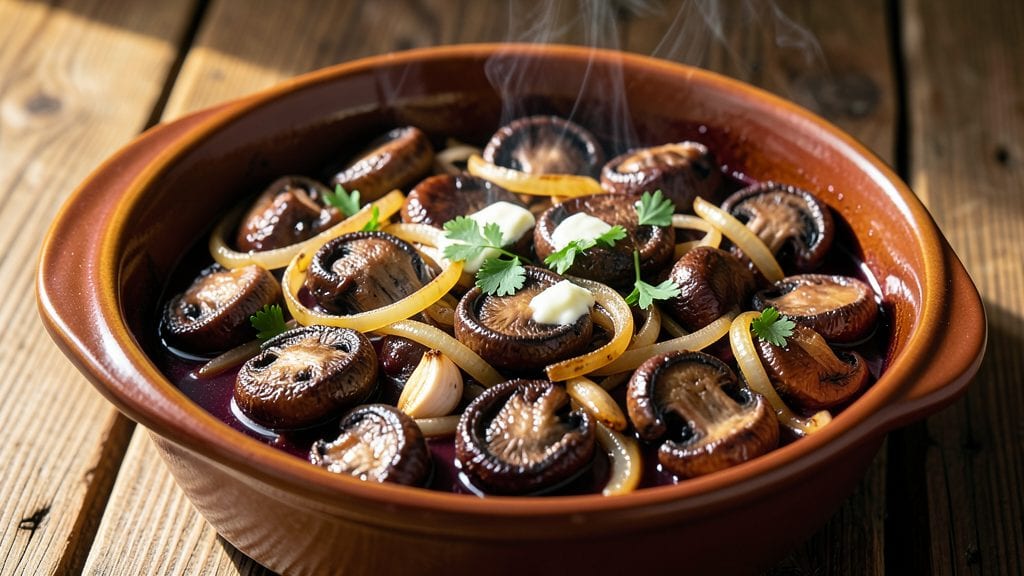
This burgundy mushroom recipe transforms humble ingredients into a restaurant-worthy dish that'll have everyone asking for seconds. Working the line at that Asheville farm-to-table restaurant taught me how a deep wine reduction can elevate simple mushrooms into something extraordinary—rich, complex, and impossibly flavorful.
The secret lies in patience: letting the wine simmer until it's reduced to a velvety glaze that coats every mushroom in deep, caramelized richness.
What makes this recipe special is its simplicity combined with professional results. You'll need just a handful of ingredients—mushrooms, onions, garlic, and a good bottle of burgundy wine—and about an hour of hands-off cooking time.
The wine's acidity cuts through the earthiness of the mushrooms while adding layers of fruitiness, creating a sauce that's both elegant and deeply satisfying. This is the kind of dish that feels like a celebration without requiring a special occasion.
By the time you're done, you'll have a one-pot masterpiece with tender mushrooms swimming in a glossy, wine-infused sauce that's perfect over creamy mashed potatoes or crusty bread.
The aroma alone will have your kitchen feeling like a Parisian bistro, and the first bite delivers that perfect balance of earthy, savory, and slightly sweet flavors. This is comfort food at its finest—warm, rich, and impossible to resist.
Pair it with a simple green salad or roasted vegetables to round out the meal. The sauce keeps well in the fridge for up to three days, so you can make it ahead for a stress-free dinner. Here's everything you need to create this timeless classic in your own kitchen.
Ingredients for burgundy mushroom
Just twelve ingredients transform into a restaurant-worthy wine-braised mushroom masterpiece.
| Ingredient | Amount | Notes |
|---|---|---|
| Fresh Cremini Mushrooms 🍄 | 1 ½ lb | Sliced into even halves |
| Yellow Onion 🧅 | 1 whole | Thinly sliced, about 1 cup |
| Garlic Cloves 🧄 | 4 cloves | Minced, not pre-minced |
| Dry Red Burgundy Wine 🍷 | 1 ½ cups | Bold, medium-bodied |
| Chicken or Vegetable Stock 💧 | 1 cup | Low-sodium preferred |
| Unsalted Butter 🧈 | 3 tbsp | Cold, cubed for browning |
| Fresh Thyme 🌿 | 2 tbsp | Leaves only, chopped |
| Fresh Rosemary 🌿 | 1 tbsp | Needles only, chopped |
| All-Purpose Flour 🌾 | 1 tbsp | For thickening sauce |
| Kosher Salt 🧂 | 1 ½ tsp | Adjust to taste |
| Freshly Ground Black Pepper 🌶️ | ½ tsp | Freshly cracked |
| Olive Oil 🫒 | 1 tbsp | For initial searing |
The mushrooms are the star, so cremini or baby bella work best—their meaty texture holds up to the long braise. Trader Joe's and Whole Foods usually have the freshest, but any grocery store's pre-sliced package works in a pinch. Avoid those sad, water-soaked mushrooms at the back of the bin. For the wine, Cabernet Sauvignon or Merlot can work if you're out of burgundy—just make sure it's dry, not sweet. The stock? Low-sodium is key here; you're adding plenty of salt later. I always grab a carton of Pacific Foods or Imagine for the best flavor without the sodium overload.
No burgundy? Pinot Noir or Chianti will do in a pinch—just avoid anything too tannic. Fresh herbs? Dried thyme and rosemary at one-third the amount work, but nothing beats the real deal. The butter should be cold and cubed when you add it—this creates those beautiful browned bits that add depth. If you're short on time, mushroom powder (yes, it's a thing) can boost umami, but nothing replaces the real thing. The flour is just for thickening at the end—don't skip it, or the sauce will be too thin to coat those gorgeous mushrooms properly.
This sauce tastes even better the next day—make extra and freeze portions. The wine reduction keeps for 3 days in the fridge, but the mushrooms get soggy after 2. For reheating, low heat only—you don't want to cook the wine off again. I always portion mine into ramekins before freezing so I can just pop one out for a quick weeknight dinner. The aroma alone will have your kitchen smelling like a Parisian bistro, and that's worth the 10-minute prep time.
Why You'll Love This Recipe
- Here’s what sold me: cremini mushrooms and a bottle of burgundy stretch further than you’d think. A single bottle makes three servings, and the stock stretches it even more. It’s the kind of recipe that makes you feel fancy without breaking the bank—especially when you’re using what’s already in your fridge.
- One-Pot Magic: I swear by this—just one pan, no fuss. Sauté the onions and mushrooms until golden, pour in that deep red wine, and let it simmer. The stock ties everything together while you’re free to stir, sip your own glass of burgundy, or even scroll through your phone. Minimal cleanup, maximum satisfaction.
- Wine-Infused Depth: That first sip of wine hitting the pan? Chef’s kiss. The burgundy’s earthy notes caramelize into the mushrooms, while the garlic cloves melt into something richer than anything from a jar. It’s the kind of flavor that makes you pause mid-bite—like a little taste of France on your stovetop.
- Weeknight to Dinner Party: Honestly, I’ve served this over buttered noodles for a lazy Tuesday and as a fancy appetizer for guests. The same base works both times—just adjust the stock ratio or add a splash of cream for richness. My roommates still think I’m a gourmet chef, and I’m not even lying about the wine.
Step-by-step instructions for burgundy mushroom braise
This rich, wine-infused mushroom dish comes together in one pot with minimal effort but maximum flavor.
Sear the Mushrooms and Onion Until Golden
Heat the 1 tablespoon olive oil in a large, heavy-bottomed pot over medium-high heat. Add the 1.5 lb fresh cremini mushrooms, sliced into even halves, and the 1 whole yellow onion, thinly sliced. Cook for 8-10 minutes, stirring occasionally, until the mushrooms release their moisture and begin to brown. You'll see the edges turning golden and crispy—that's when you know they're developing deep flavor.
I like to press down gently on the mushrooms with a wooden spoon during the first few minutes to help them release their juices. This ensures even cooking and prevents any pieces from sticking to the pot. If the mushrooms start to stick, add a splash of water and scrape up those browned bits—they're packed with flavor. Once the mushrooms are golden and the onions are soft and translucent, remove them from the pot and set aside.
Build Flavor with Butter, Garlic, and Herbs
Reduce the heat to medium and add the 3 tablespoons unsalted butter, cubed. Let it melt completely, about 1 minute, then add the 4 minced garlic cloves, 2 tablespoons fresh thyme, and 1 tablespoon fresh rosemary. Cook for 1-2 minutes until the garlic is fragrant and just beginning to turn golden—don't let it burn, or it'll turn bitter.
Here's where the magic happens: The butter will foam and then settle into a golden-brown sauce. This is your flavor base, so don't rush it. Stir occasionally to make sure the garlic doesn't stick to the bottom. Once the butter is nutty-smelling and the herbs are fragrant, add the seared mushrooms and onions back to the pot. Stir to combine and let everything warm through for 1 minute.
Deglaze with Wine and Stock
Pour in the 1.5 cups dry red burgundy wine and scrape up any browned bits from the bottom of the pot with a wooden spoon. This deglazing step captures all the flavor you've built so far. Let the wine simmer for 3-4 minutes until it reduces by about half and becomes slightly syrupy. You'll notice the alcohol smell dissipating—that's a good sign the wine is cooking down properly.
Next, add the 1 cup chicken or vegetable stock and bring the mixture to a gentle simmer. Sprinkle in the 1 tablespoon all-purpose flour and stir well to combine. The flour will help thicken the sauce slightly, giving it that luxurious, velvety texture. Let the mixture simmer for another 5-6 minutes until the sauce has thickened and coats the back of a spoon.
Season and Simmer to Perfection
Add the 1.5 teaspoons kosher salt and 0.5 teaspoon freshly ground black pepper, stirring to distribute evenly. Taste the sauce and adjust the seasoning if needed—this is your chance to balance the flavors before the final step. The mushrooms should be tender but still hold their shape, and the sauce should be rich and glossy.
Reduce the heat to low and let the braise simmer uncovered for 10-15 minutes, stirring occasionally. This final simmer allows the flavors to meld and deepen. You'll know it's ready when the mushrooms are fork-tender and the sauce has thickened to a perfect consistency. If the sauce becomes too thick, add a splash of water or stock to loosen it. Serve immediately, garnished with extra fresh thyme or rosemary if desired.
Pro Tips For Making Burgundy Mushroom
- Sear Mushrooms First: Hit the pan with a splash of oil and high heat—no crowding—until those cremini mushrooms release their golden juices. I used to skip this, and the dish tasted flat. Two minutes max, just until they’re deeply browned.
- Deglaze Aggressively: After searing onions and garlic, pour in that burgundy wine immediately while the pan’s still hot. Scrape every last bit of fond from the bottom—it’s where the flavor hides. A wooden spoon works best; don’t be lazy with a dull one.
- Reduce Wine Slow: Let the burgundy simmer uncovered for 5-7 minutes, not rushing to add stock. The alcohol needs time to burn off, or your sauce will taste harsh. I learned this after a glass of wine that wasn’t the dish.
- Salt the Stock: If using plain stock, add a pinch of salt now—it balances the acidity of the wine and deepens the flavor. Unsalted stock? Even a quarter-teaspoon makes a real difference. Trust me, your taste buds will notice.
Common mistakes when making perfect results
Skipping the Sear
One of the biggest mistakes is rushing the searing step. Those golden-brown edges on your mushrooms and onions are where the Maillard reaction happens—creating deep, complex flavors. If you skip this or cook at too low a heat, your dish will taste flat and one-dimensional.
I’ve seen home cooks skip this step to save time, but trust me, those 8-10 minutes of searing are worth it. Use a heavy-bottomed pot like a Le Creuset Dutch oven to ensure even heat distribution. 🔥
Using Low-Quality Wine
Don’t cut corners with cheap wine—it’ll make your sauce taste harsh and unbalanced. A good dry red burgundy (or Pinot Noir in a pinch) should cost at least $15-$20 for a decent bottle. The tannins and acidity in quality wine elevate the dish, while cheap wine adds bitterness.
I always grab a bottle from Austin’s Central Market—their selection of French wines is unbeatable. If you’re using a substitute, avoid anything overly sweet or oaky.
Overcrowding the Pot
Packing too many mushrooms into the pot at once steams them instead of searing, leading to soggy results. Work in batches if needed, and give them space to brown properly. I’ve had David (my official taste-tester) complain about mushy mushrooms more times than I can count—don’t let that be you!
A 12-inch skillet or Dutch oven is ideal for this recipe. If your pot is too small, cook the mushrooms in two rounds and set the first batch aside while you sear the second.
Ignoring the Deglaze
Skipping the deglazing step means losing all those flavorful browned bits stuck to the bottom of your pot. Those bits are packed with umami goodness that will make your sauce sing. After searing, add 1.5 cups wine and scrape vigorously with a wooden spoon—every bit counts.
I once forgot this step and ended up with a sauce that tasted dull. Pro tip: Use a microplane to get every last drop of flavor from the garlic and herbs before adding them to the pot.
Rushing the Reduction
Patience is key when reducing the wine. If you rush this step, the alcohol won’t fully cook off, leaving a harsh, boozy taste in your sauce. Simmer the wine until it reduces by half—about 3-4 minutes—and the alcohol smell dissipates.
This takes time, but it’s worth it. I’ve seen home cooks walk away from the stove too soon, and the result is always disappointing. Keep an eye on it and let it work its magic. 💫
Skipping the Flour
The 1 tablespoon flour at the end isn’t just for thickening—it adds body and helps the sauce cling to the mushrooms. Without it, your sauce will be too thin and watery.
Whisk the flour into the simmering mixture until fully dissolved, then let it cook for 5-6 minutes to develop a smooth, velvety texture. I’ve had David groan when the sauce was too thin—trust me, the flour makes all the difference.
If you’re avoiding gluten, use cornstarch instead, but the flavor won’t be quite the same.
Nutrition facts
Frequently asked questions
Can I substitute other mushrooms for cremini?
Baby bella or shiitake mushrooms work beautifully—their meaty texture holds up well to braising. For a more delicate flavor, try oyster mushrooms, but they'll cook faster. Avoid thin varieties like button mushrooms, as they'll turn mushy. The key is choosing mushrooms with good structure to soak up the wine sauce.
What's the best way to store leftovers?
Store the braised mushrooms in an airtight container in the fridge for up to 3 days. The sauce actually improves overnight as flavors meld. For longer storage, freeze portions in ramekins—just thaw at room temperature before reheating. Never reheat on high heat, as this can make the sauce too thick or develop off-flavors. A quick warm through on the stove over low heat is best.
Can I make this dish vegetarian?
Yes! Simply swap the chicken stock for vegetable stock and add 1 cup cooked lentils or crumbled tempeh at the end for protein. The wine-braised mushrooms still shine as the star. For extra richness, stir in 2 tablespoons nutritional yeast when serving—it adds a cheesy, umami depth that pairs perfectly with the earthy mushrooms.
Why does my sauce taste bitter?
Bitter flavor usually comes from one of three things: over-reduced wine (burning off too much), burnt garlic, or cheap wine. Always simmer the wine until it's reduced by half but still smells fruity, not burnt. Remove garlic just as it turns golden, and invest in a $15+ bottle of quality burgundy. If you've already made the dish, balance the bitterness with a splash of sweetened cream or a pinch of sugar.
What's the ideal serving temperature?
Serve this dish at 165°F—warm enough to highlight the sauce's richness but not scalding. The mushrooms should be fork-tender with just a slight bite. If reheating from the fridge, warm gently over medium-low heat for 5-7 minutes, stirring occasionally. For restaurant-style presentation, spoon the mushrooms over creamy mashed potatoes or serve with crusty sourdough bread for dipping.