
Soups & Stews
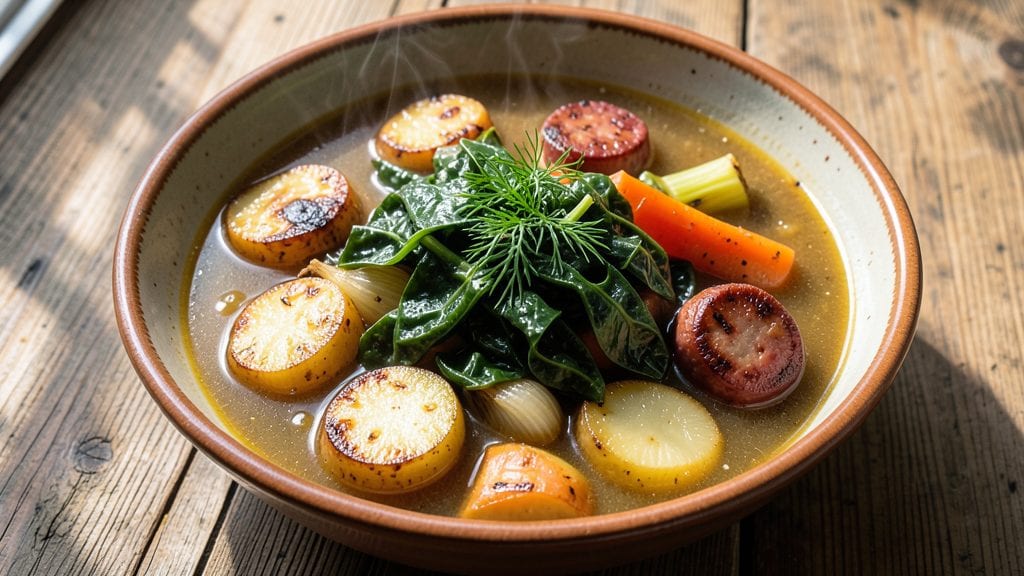
This Czech sauerkraut soup recipe brings hearty comfort to your table with its smoky sausage and tender root vegetables. The traditional Bramborák combines sauerkraut, mashed potatoes, and crispy fried edges for a dish that feels like home.
I first tasted this soup during a winter visit to Prague, where it warmed me up better than any café. The combination of tangy sauerkraut, savory sausage, and creamy potatoes creates a flavor profile that's both comforting and complex.
The beauty of this recipe lies in its simplicity and the way flavors develop through careful preparation. You'll start by creating a doughy mixture of sauerkraut and mashed potatoes, then fry it until golden brown for that satisfying crunch.
The smoky sausage adds depth, while root vegetables like carrots and onions contribute natural sweetness. This dish is perfect for chilly evenings when you crave something substantial yet balanced.
What makes this soup truly special is how each element comes together—crispy fried edges give way to tender, flavorful centers with every bite. The aroma alone will fill your kitchen with warmth, while the tangy-savory contrast makes every spoonful satisfying.
Whether you're serving it as a main dish or a side, this recipe delivers restaurant-quality results with minimal effort.
For those who prefer a vegetarian version, simply omit the sausage and add extra mushrooms or smoked paprika for depth. The traditional Czech method ensures this soup remains true to its roots while being adaptable to modern preferences. Let's bring this comforting classic to your kitchen!
Ingredients for czech sauerkraut soup
Sauerkraut, potatoes, and smoky sausage create this Czech comfort soup's perfect harmony.
| Ingredient | Amount | Notes |
|---|---|---|
| Sauerkraut 🥬 | 2 cups | Drained and rinsed lightly |
| Russell Potatoes 🥔 | 2 lbs | Yukon gold works too |
| Kielbasa Sausage 🌭 | 1 lb | Smoked, sliced into rounds |
| Yellow Onions 🧅 | 2 whole | Medium size, diced |
| Carrots 🥕 | 3 medium | Peeled and sliced into coins |
| Celery Stalks 🌿 | 3 whole | Diced, including leaves |
| Garlic Cloves 🧄 | 4 cloves | Minced for depth |
| Chicken Broth 💧 | 4 cups | Low-sodium preferred |
| Heavy Cream 🥛 | ½ cup | Full-fat for richness |
| Butter 🧈 | 2 tbsp | Unsalted for control |
| All-Purpose Flour 🌾 | ¼ cup | For crispy coating |
| Bay Leaves 🍃 | 2 whole | Removed before serving |
| Ground Black Pepper 🌶️ | 1 tsp | Freshly cracked |
| Salt 🧂 | 1 ½ tsp | Adjust to taste |
| Smoked Paprika 🌶️ | 1 tsp | For authentic smokiness |
The sauerkraut is the soul of this dish—look for fermented, tangy jars at your local grocery store's international aisle. Trader Joe's often carries good quality, but check the expiration date. The kielbasa? Koprny or garlic varieties add extra depth, but any smoked sausage works. For the potatoes, Russell or Yukon Gold break down beautifully when mashed. If you can't find kielbasa, smoked ham or bacon are solid swaps, but nothing beats the authentic flavor.
No smoked paprika? Regular paprika plus a pinch of liquid smoke gets you close. The broth is non-negotiable—low-sodium so you can control the saltiness. Fresh bay leaves add complexity, but dried work at half the amount. For the fried edges (Bramborák), flour the outside well and fry in small batches so they don't steam instead of crisp. The carrots can be swapped for parsnips if you're feeling fancy, but they're optional—this soup shines without them.
This soup tastes even better the next day as flavors meld. Keeps 4-5 days in the fridge, and freezes beautifully for up to 3 months. I always make double batches—leftovers for lunch are a dream. For vegetarian versions, swap sausage for mushrooms and add extra smoked paprika. The fried potato mixture can be prepped ahead and reheated before frying for crispy results.
Why You'll Love This Recipe
- One-Pot Magic: I swear, this soup is basically foolproof—just toss everything into one pot and let it simmer. No fancy techniques, no last-minute grocery runs for obscure herbs. The sauerkraut and kielbasa do all the heavy lifting while you stir once or twice.
- Savory Tang You’ll Crave: That first bite? The tangy punch from the sauerkraut cuts through the richness of the kielbasa, while the Russell potatoes add a buttery softness. Honestly, it’s the kind of flavor that sticks with you—like a warm hug in a bowl.
- Leftovers That Taste Better: Between us, this soup actually improves the next day. The flavors meld even more, and the potatoes get that perfect creamy texture. I’ve reheated portions for lunch all week without a single complaint.
- Budget-Friendly Crowd-Pleaser: A single kielbasa and a bag of sauerkraut stretch to feed four (or five, if you’re feeding teenagers). It’s the kind of recipe that makes grocery day less stressful—no specialty items, just hearty, satisfying ingredients.
Step-by-step instructions for Czech sauerkraut soup
This hearty soup comes together with layers of smoky, tangy, and savory flavors—let's build it properly.
Sauté the Kielbasa and Vegetables
Heat a large Dutch oven or heavy pot over medium-high heat. Add the 1 lb kielbasa sausage, sliced into rounds, and cook until browned on all sides, about 5 minutes. This step develops deep, smoky flavors that will infuse the entire soup.
Remove the kielbasa and set aside. In the same pot, add 2 tablespoons butter and let it melt completely. Add the 2 whole yellow onions, 3 medium carrots sliced into coins, and 3 whole celery stalks diced (including leaves). Cook for 8-10 minutes, stirring occasionally, until the vegetables soften slightly and the onions become translucent. You'll know they're ready when they release their natural juices and the mixture smells sweet and aromatic.
Add the 4 cloves minced garlic and the 1 teaspoon smoked paprika. Stir for 30 seconds until fragrant—this is where the authentic Czech flavor starts to develop. Don't let the garlic burn, as it will turn bitter and overpower the dish.
Build the Soup Base
Sprinkle the 0.25 cup all-purpose flour over the sautéed vegetables and stir vigorously for 1-2 minutes. This creates a light roux that will thicken the soup beautifully. The flour should coat the vegetables evenly, forming a thin, golden layer.
Gradually pour in the 4 cups chicken broth while stirring constantly to prevent lumps from forming. Add the 2 whole bay leaves, 1.5 teaspoons salt, and 1 teaspoon ground black pepper. Bring the mixture to a gentle boil, then reduce heat to medium-low and let it simmer for 10 minutes. This allows the flavors to meld together and the broth to develop a rich, savory depth.
Here's the thing—don't rush this step. The longer the broth simmers with the vegetables, the more complex and layered the flavor becomes. You'll notice the soup taking on a deeper color and aroma as it cooks.
Add Potatoes and Sauerkraut
Cut the 2 lbs russell potatoes into 1-inch cubes. Add them to the simmering broth along with the 2 cups lightly drained and rinsed sauerkraut. Stir gently to combine. The potatoes should be fully submerged in the broth—if not, add a little water to cover them completely.
Return the soup to a gentle simmer and cook for 15-20 minutes, until the potatoes are fork-tender and easily pierced with a knife. You'll see them soften and absorb the rich flavors of the broth. The sauerkraut will release its tangy essence, balancing the smokiness of the kielbasa and the sweetness of the carrots.
If the soup starts to reduce too much and the potatoes aren't fully cooked, add a splash of water or broth to maintain the proper consistency. The soup should be thick enough to coat the back of a spoon but still have a light, brothy quality.
Finish with Cream and Kielbasa
Once the potatoes are tender, stir in the 0.5 cup heavy cream and the reserved kielbasa sausage. Simmer for an additional 5 minutes to heat everything through and allow the cream to blend smoothly into the soup. The cream adds a luxurious richness that contrasts beautifully with the tangy sauerkraut and smoky sausage.
Remove the 2 whole bay leaves before serving. Taste and adjust the seasoning if needed—you might want to add a pinch more salt or a crack of black pepper to suit your preference. The soup should be perfectly balanced, with the tang of sauerkraut complementing the smoky, savory notes of the kielbasa.
Let the soup rest for 5 minutes before serving. This allows the flavors to settle and the cream to fully incorporate, ensuring each spoonful delivers a harmonious blend of textures and tastes. Serve hot with crusty bread to soak up every delicious drop.
Pro Tips For Making Czech Sauerkraut Soup
- SOAK THE KIELBASA FIRST: That cured sausage is packed with salt—if you skip soaking it for 10-15 minutes in cold water, your soup will taste like a salt lick. Trust me, I’ve learned this the hard way after ending up with a briny mess that needed diluting.
- SAUTÉ THE ONIONS LOW AND SLOW: I used to rush this step, and my onions would just steam instead of caramelize. For real depth, cook them over medium-low heat for 8-10 minutes until they’re golden and soft—not crispy, just sweet. That’s where the flavor actually develops.
- CHOP POTATOES UNIFORM: Big chunks stay tough; tiny pieces turn to mush. Aim for 1.5-inch cubes—big enough to hold shape but small enough to cook through without gummy centers. (Yes, I’ve cried over mushy potatoes in this soup before.)
- ADD CARROTS LAST: Tossing them in early makes them turn to sludge. Instead, add them with the potatoes in the last 15 minutes of simmering so they stay crisp-tender. Your future self will notice the difference.
Essential equipment for perfect results
Heavy-Duty Pot
Start with a large Dutch oven—I swear by my All-Clad 6-quart—because it handles the high heat needed for frying the potato-sauerkraut mixture while keeping the soup base simmering. The deep sides prevent spills when adding ingredients, and the heavy base distributes heat evenly.
If you're on a budget, a Lodge cast iron Dutch oven works just as well and adds that classic, even cooking performance. 🔥
Sharp Knives & Cutting Board
Precision matters here, especially when dicing onions, carrots, and celery. A Wüsthof 8-inch chef's knife with its razor-sharp edge makes quick work of these veggies, while a non-slip cutting board (like OXO Good Grips) keeps everything stable.
For the potatoes, a mandoline speeds up the process if you're prepping for a crowd—just remember to wear cut-resistant gloves for safety.
Deep Skillet for Frying
The Bramborák (fried potato-sauerkraut mixture) needs a 10-12 inch cast iron skillet or non-stick frying pan to achieve that perfect crispy crust. Cast iron retains heat beautifully, but if you prefer non-stick, a GreenPan Cerama works well for smaller batches.
Heat the skillet over medium-high heat until it's smoking hot before adding the mixture—this ensures a golden, crispy exterior every time. ⚡
Wooden Spoon & Slotted Spoon
A sturdy wooden spoon (like Oxo Good Grips) is essential for stirring the soup base without scratching your Dutch oven. For the frying step, a slotted spoon helps lift the crispy Bramborák pieces out of the skillet without breaking them apart.
I also keep a tongs handy for flipping the fried mixture to ensure even browning on all sides.
Thermometer for Perfect Doneness
While not always necessary, a meat thermometer (like ThermoWorks Thermapen) ensures your kielbasa reaches 160°F and potatoes hit 205°F for that ideal fork-tender texture. For the fried Bramborák, aim for an internal temperature of 190°F—this guarantees a crispy exterior while keeping the inside warm and doughy.
It’s a small investment that takes the guesswork out of cooking.
Nutrition facts
Frequently asked questions
Can I make this soup vegetarian?
Skip the kielbasa and replace it with 8 oz sliced mushrooms (cremini or shiitake) sautéed with the onions. Add 1 teaspoon extra smoked paprika and a splash of soy sauce for umami depth. The fried potato-sauerkraut mixture stays the same, creating a hearty vegetarian version with rich flavor.
Why does the fried potato-sauerkraut mixture need to be crispy?
The crispy edges (called Bramborák) are traditional in Czech cuisine and add a satisfying texture contrast to the creamy soup. Frying creates a golden crust that balances the tangy sauerkraut and rich broth. For best results, fry in small batches over medium-high heat until deeply browned on both sides.
How do I store leftovers without losing crispiness?
Store the soup (without the fried Bramborák) in an airtight container for up to 5 days. Reheat the soup base separately, then fry fresh Bramborák just before serving to restore that perfect crispy texture. Alternatively, freeze the fried pieces separately for up to 3 months—reheat in a 350°F oven for 10 minutes to revive the crunch.
What can I substitute if I can't find sauerkraut?
Use a mix of 1 cup chopped green cabbage and 1 cup chopped red cabbage with 1 tablespoon apple cider vinegar and 1 teaspoon caraway seeds to mimic sauerkraut's tang. Sauté the cabbage mixture first to soften it before adding to the soup. The flavor won't be identical, but it creates a similar texture and slight acidity.
Is this soup kid-friendly?
With a few adjustments, yes! Omit the smoked paprika and reduce the salt to 0.5 teaspoon. Cut the fried Bramborák into small pieces and serve with mild toppings like shredded cheese or a dollop of sour cream. Kids often love the potato texture and can be introduced to sauerkraut's tangy flavor gradually.