Sauces & Condiments
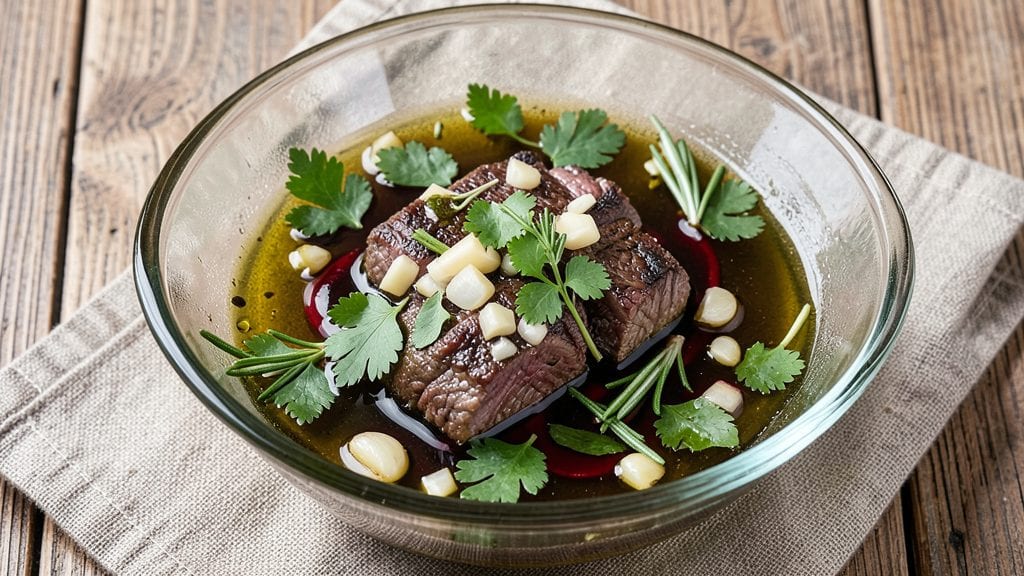
Transforming a simple Delmonico steak marinade recipe into a steakhouse-worthy experience starts with the right balance of bold flavors and precise technique.
This marinade combines garlic, herbs, and acid to tenderize while infusing rich, aromatic depth into every bite—perfect for a 3- to 4-ounce cut that needs both tenderness and complexity. The key lies in the acid-to-oil ratio, which ensures flavor penetration without overpowering the steak’s natural richness.
What sets this marinade apart is its 30-minute marinating time, designed to enhance flavor without compromising food safety. Unlike longer marinades, this blend works quickly to create a savory crust while keeping the steak’s interior juicy.
The ingredients—garlic, shallots, and fresh herbs—are finely balanced to complement the steak’s natural beefy notes, rather than overpowering them.
Once applied, this marinade delivers a steak with a caramelized crust and a tender, flavorful interior that rivals high-end steakhouse cuts. The garlic and herbs mingle with the steak’s fat, creating layers of aroma that will have everyone at the table asking for seconds.
It’s the kind of marinade that turns a weeknight dinner into a memorable experience.
For best results, use this marinade on Delmonico steaks or similar cuts, and always pat the meat dry before cooking to ensure a perfect sear. The recipe scales easily, so you can marinate multiple steaks at once for a crowd. Ready to elevate your steak game? Let’s get started.
Ingredients for delmonico steak marinade
Nine essential ingredients for a steakhouse-worthy marinade that transforms ordinary steak into extraordinary.
| Ingredient | Amount | Notes |
|---|---|---|
| Extra-Virgin Olive Oil 🫒 | ½ cup | High-quality, fruity, cold-pressed |
| Garlic Cloves 🧄 | 8 whole | Freshly peeled, minced finely |
| Shallots 🧅 | 2 whole | Minced, not sliced |
| Fresh Parsley 🌿 | ¼ cup | Flat-leaf, finely chopped |
| Fresh Thyme Leaves 🌿 | ¼ cup | Stems removed, finely chopped |
| Fresh Rosemary 🌿 | ¼ cup | Needles finely chopped |
| Red Wine Vinegar 🍷 | ¼ cup | Dry, not sweet |
| Diamond Crystal Kosher Salt 🧂 | 1 ½ tsp | Fine grain preferred |
| Freshly Ground Black Pepper 🌶️ | 1 tsp | Coarsely cracked |
| Granulated Sugar 🍚 | ½ tsp | Light brown preferred |
The extra-virgin olive oil is non-negotiable—look for California or Italian imports at specialty stores like Whole Foods or Trader Joe's for that fruity, peppery punch. Garlic and shallots should be freshly minced (not pre-chopped) to release their full aromatic potential. Fresh herbs like parsley, thyme, and rosemary are best sourced from local farmers' markets where they're bright and vibrant. If you're using dried herbs, reduce to one-third the amount—but honestly, fresh is worth the extra effort. The red wine vinegar should be dry, not sweet, and Bartles & Jaymes is a solid budget-friendly option if you don't want to splurge on premium bottles.
No extra-virgin olive oil? Avocado oil works in a pinch, though it lacks the fruity depth. Pre-minced garlic from jars is fine for a quick fix, but freshly minced is where the magic happens. Dried herbs can substitute, but fresh is always better—if you're using dried, toast them lightly in a dry pan first to wake up their flavors. White wine vinegar can replace red wine vinegar, but it’ll be slightly milder. Brown sugar works if you can’t find light brown, though it’ll add a deeper caramel note. Smoked paprika at half the amount can add depth if you want a smoky twist.
This marinade keeps up to 1 week in the fridge, but the herbs will start to lose their vibrancy after 3-4 days. Store it in a glass jar with a tight seal—olive oil helps preserve the freshness. For best results, marinate 30 minutes max—any longer risks over-tenderizing the steak. Double the batch if you're marinating multiple steaks, and portion into small containers for easy grab-and-go use. The flavors actually improve slightly after 24 hours in the fridge, so make it a day ahead if you can.
Why You'll Love This Recipe
- No-Chop Nightmare: I swear by this marinade because it only asks for two things to prep: mince the garlic and slice the shallots. That’s it. No dicing, no peeling endless veggies—just 5 minutes of actual work before you walk away.
- Garlic-Thyme Magic: The moment those minced shallots and garlic hit the olive oil with thyme, your kitchen smells like a Parisian bistro. The parsley ties it all together—bright, herby, and impossible to resist.
- Weeknight to Date Night: This marinade works just as well for a quick Tuesday dinner as it does for a fancy Saturday steak night. Use it on Delmonico cuts, or even chicken thighs if you’re feeling lazy. (Between us, I’ve done both.)
- Leftovers That Don’t Suck: Marinate extra steak and refrigerate it—this flavor only gets better overnight. Reheat slices in a pan, and suddenly you’ve got a no-effort lunch or a midnight snack that tastes like you actually cooked.
Step-by-step instructions for Delmonico steak marinade
Transform your steak into a restaurant-worthy masterpiece with this bold garlic-herb marinade that infuses deep, aromatic flavor.
Prepare the Aromatic Base
In a medium bowl, combine the 0.5 cup extra-virgin olive oil with the 0.25 cup red wine vinegar. This balance creates the perfect foundation—acidity brightens while oil carries the flavors. Whisk vigorously for 30 seconds until fully emulsified, creating a silky base that will cling beautifully to the steak.
Next, add the 2 whole minced shallots and 8 whole minced garlic cloves. The shallots will add a subtle sweetness while the garlic delivers that signature punch. Let this mixture sit for 10 minutes at room temperature—this allows the aromatics to begin releasing their oils and developing their full potential. You'll notice the mixture becomes slightly more fragrant as it rests.
Incorporate Herbs and Seasonings
Add the 0.25 cup finely chopped fresh parsley, 0.25 cup fresh thyme leaves, and 0.25 cup finely chopped fresh rosemary to the bowl. These herbs should be finely chopped to ensure even distribution throughout the marinade. Use a wooden spoon to gently fold them in, being careful not to create too many air bubbles—this preserves the marinade's potency.
Now, add the 1.5 teaspoons diamond crystal kosher salt, 1 teaspoon freshly ground black pepper, and 0.5 teaspoon granulated sugar. The sugar isn't just for sweetness—it helps caramelize the surface of the steak during cooking, creating that coveted crust. Stir well to fully integrate all ingredients. The marinade should now have a rich, vibrant color and an intoxicating aroma that fills your kitchen.
Marinate the Steak
Place your steak in a resealable plastic bag or shallow dish and pour the marinade evenly over it. For best results, use at least 1 cup of marinade per pound of steak—this ensures thorough coverage. Seal the bag (if using) and massage the marinade into the steak to ensure even distribution. Place the steak in the refrigerator and marinate for at least 4 hours, but no more than 12 hours. Over-marinating can make the meat mushy, so timing is key.
For optimal flavor penetration, turn the steak occasionally during the marinating process. You'll know it's working when the steak absorbs the vibrant colors and aromas of the marinade. When ready to cook, remove the steak from the refrigerator and let it sit at room temperature for 30 minutes before cooking. This ensures even cooking and prevents cold spots in the meat.
Cook and Serve
Pat the steak dry with paper towels just before cooking—this step is crucial for achieving a perfect sear. The marinade will have already added moisture, but removing excess surface moisture ensures a better crust. Cook the steak to your desired doneness, using your preferred method—grill, pan-sear, or broil. The marinade will enhance the natural flavors of the steak, creating a dish that's rich, aromatic, and full of depth.
As the steak cooks, you'll be rewarded with the incredible aroma of the garlic and herbs wafting through your kitchen. Serve immediately, allowing the diner to experience the full symphony of flavors. The marinade not only infuses the steak but also creates a beautiful crust that locks in juices, ensuring every bite is tender and flavorful.
Pro Tips For Making Delmonico Steak Marinade
- MINCE THAT GARLIC: I learned this the hard way—whole cloves in your marinade will just sit there like awkward guests. Use a knife to smash them flat first, then finely mince them so they dissolve into the oil instead of floating like forgotten ice cubes. (Yes, even if you’re impatient like me.)
- COOK THE SHALLOTS LOW: Shallots caramelize fast, and burned bits ruin the whole marinade. Sauté them in the olive oil over low heat until just translucent—about 3-4 minutes—then pull them out before they turn gold. Trust me, the marinade stays bright and flavorful this way.
- STRAIN THE HERBS: Fresh thyme leaves and parsley stems add bitterness if left whole. After chopping, strain the marinade through a fine-mesh sieve to keep it silky smooth. (I know, it’s extra work, but your steak will taste like it came from a fancy restaurant.)
- MARINATE 2 HOURS MAX: Delmonico steak is tough—don’t over-marinate or it’ll turn mushy. Two hours is plenty for the flavors to sink in without breaking down the meat. (And no, leaving it overnight won’t make it better—it’ll just make you sad.)
Serving suggestions for delmonico steak marinade
Classic Steakhouse Sides
This marinade pairs perfectly with creamy mashed potatoes—their buttery richness complements the bold garlic-herb notes. I like to make them with European-style butter and whole milk for extra depth.
For a lighter option, try roasted garlic asparagus with a drizzle of extra-virgin olive oil and a sprinkle of flaky sea salt. The asparagus’s natural sweetness balances the marinade’s intensity. 🥔
Wine Pairings
A bold Cabernet Sauvignon from Napa Valley—like Opus One or Caymus Vineyards—cuts through the garlic and herbs beautifully. The wine’s dark fruit and tannins stand up to the marinade’s richness. For a more affordable option, try a Malbec from Argentina, which offers similar depth without the high price tag.
Avoid light whites like Sauvignon Blanc—they’ll get overwhelmed by the marinade’s intensity. 🍷
Bread Service
Serve with garlic bread made with sourdough loaves and garlic-infused olive oil for an extra layer of flavor. I like to add fresh rosemary to the bread dough for a cohesive herb experience.
For a more elegant touch, offer crusty baguette slices with a side of whipped garlic butter—guests can dip as they enjoy their steak. 🥖
Sauce Complements
A red wine reduction sauce made with Cabernet Sauvignon and balsamic vinegar adds another dimension to the meal. Simmer 1 cup red wine with 2 tbsp balsamic vinegar and 1 tbsp butter until reduced by half.
The sauce’s acidity and richness mirror the marinade’s profile without competing. For a lighter option, a beurre blanc with shallots and white wine provides a silky contrast. 🍽️
Vegetable Additions
Roasted fingerling potatoes with thyme and rosemary tie into the marinade’s herb profile. Toss 1 lb fingerlings in 2 tbsp olive oil, 1 tsp fresh thyme, and 1 tsp rosemary before roasting at 425°F for 30 minutes. The crispy edges and tender centers add texture that balances the steak’s richness. 🥔
Dessert Pairings
Finish the meal with dark chocolate-dipped strawberries—the bitterness of 70% dark chocolate contrasts the steak’s richness. For a decadent option, try crème brûlée with its caramelized sugar topping. The dessert’s sweetness and crunch provide a satisfying contrast to the savory main course. 🍓
Nutrition facts
Frequently asked questions
Can I use this marinade for other types of steak?
This marinade works beautifully on Delmonico steaks, but it also elevates ribeye, New York strip, and filet mignon. For thicker cuts like ribeye, marinate for 4-6 hours max to avoid over-tenderizing. For leaner cuts like filet, reduce marinating time to 2-3 hours to prevent drying out.
What if I don't have fresh herbs?
Use dried herbs at one-third the amount (e.g., 1 tsp dried thyme instead of 0.25 cup fresh). Toast them lightly in a dry pan for 30 seconds to enhance flavor. For parsley, dried parsley works best in this marinade—it has a stronger flavor profile than other dried herbs.
How do I prevent the steak from becoming too acidic?
The 0.5 cup olive oil balances the acidity in this marinade, but if you're concerned, reduce the red wine vinegar to 0.125 cup and add 1 tbsp lemon juice instead. This maintains brightness without overpowering the steak's natural flavor. Always marinate for no more than 12 hours to avoid acid breakdown.
Can I reuse leftover marinade?
Never reuse marinade that's touched raw meat—it may contain harmful bacteria. For extra flavor, simmer the used marinade (without meat) for 5-10 minutes to reduce it, then use as a sauce for pasta or grilled vegetables. The concentrated flavors work wonderfully on polenta or roasted Brussels sprouts.
What's the best way to store extra marinade?
Store in an airtight glass container in the refrigerator for up to 1 week. The olive oil helps preserve freshness, but herbs will lose potency after 3-4 days. For longer storage, freeze in ice cube trays—thaw overnight in the fridge before using.