
Appetizers
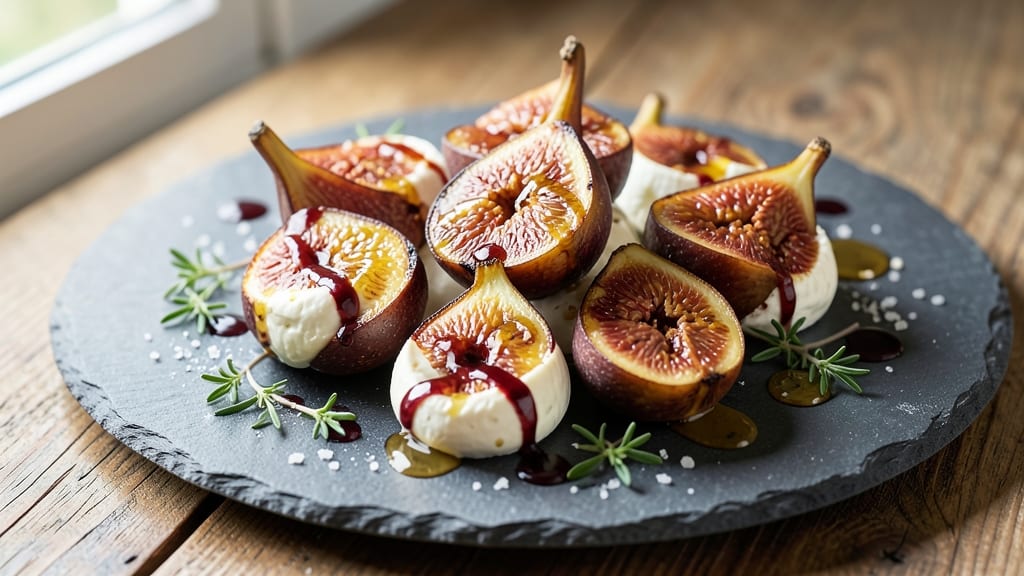
This fig and goat cheese recipe transforms simple ingredients into an elegant appetizer that balances sweet, tangy, and creamy flavors in every bite.
The key lies in roasting fresh figs until their natural sugars caramelize, then pairing them with rich goat cheese and a drizzle of honey-balsamic reduction—a combination that’s sophisticated yet approachable for any occasion.
I developed this dish after realizing how often store-bought appetizers fall short of restaurant-quality, and this method delivers restaurant-worthy results with minimal effort.
The process is straightforward but precise: roast the figs until tender, then layer them with crumbled goat cheese and a drizzle of honey-balsamic glaze. The contrast between the jammy figs, tangy cheese, and sweet-tart glaze creates a harmonious bite that’s both comforting and refined.
This recipe serves as a perfect vegetarian starter, but it also pairs beautifully with charcuterie boards or as a light main course for summer gatherings.
What you’ll achieve is a dish that’s visually stunning—golden figs glistening with glaze, creamy goat cheese peeking through—and packed with layers of flavor. The honey-balsamic balance elevates the natural sweetness of the figs while cutting through the richness of the cheese, ensuring each bite is perfectly balanced.
It’s the kind of appetizer that disappears quickly but leaves a lasting impression.
Ready in just 20 minutes, this recipe is ideal for last-minute entertaining or meal prep. Serve it warm or at room temperature, and pair it with crusty bread or a simple arugula salad to round out the meal. Here’s how to bring this dish to life—step by step.
Ingredients for fig goat cheese
Eight ingredients transform into an elegant appetizer balancing sweet, tangy, and creamy notes perfectly.
| Ingredient | Amount | Notes |
|---|---|---|
| Fresh Figs 🍇 | 8 whole | Medium-sized, halved lengthwise |
| Goat Cheese 🧀 | 8 oz | Room temperature, crumbled |
| Extra-Virgin Olive Oil 🫒 | ¼ cup | For roasting and drizzling |
| Honey 🍯 | 2 tbsp | Local or wildflower preferred |
| Balsamic Vinegar 🍶 | 1 tbsp | Aged, for reduction |
| Fresh Thyme Leaves 🌿 | ¼ tsp | Finely chopped, for garnish |
| Flaky Sea Salt 🧂 | ½ tsp | Diamond Crystal preferred |
| Black Pepper 🌶️ | ¼ tsp | Freshly cracked |
| Toasted Walnuts 🥜 | ¼ cup | Chopped, for texture |
| Fresh Arugula 🌱 | 2 cups | For serving, optional |
| Crusty Baguette 🍞 | 1 whole | Sliced, for serving |
The quality of your figs and goat cheese is non-negotiable. Whole Foods or local farmers markets offer the ripest, most flavorful figs—look for vibrant purple or green skins with no bruising. Maryland or California varieties work best, as they hold up well to roasting. For goat cheese, La Tourangelle or Capri brands deliver consistent quality, but any creamy, tangy goat cheese will suffice. Avoid overly soft varieties that crumble too easily. If you can’t find fresh figs, high-quality dried figs soaked in warm water for 10 minutes can substitute, though texture will differ. The honey should be local if possible—wildflower or clover honey adds subtle floral notes that complement the figs beautifully.
No fresh thyme? Dried thyme at half the amount works in a pinch, but fresh imparts a brighter flavor. Substituting balsamic vinegar? Red wine vinegar with a pinch of sugar mimics the sweet-tart balance, though aged balsamic’s depth is unmatched. For those avoiding nuts, toasted pumpkin seeds provide a similar crunch. If your goat cheese is too soft to crumble, chill it for 15 minutes before handling. The walnuts can be toasted in a dry pan for 2-3 minutes until fragrant—this enhances their flavor significantly. For a quicker version, skip the roasting step and simply warm the figs in the oven for 5 minutes with olive oil and salt.
This appetizer shines when served immediately, but components can be prepped ahead. Roast the figs and reduce the honey-balsamic glaze up to 2 days in advance; store separately in airtight containers. Reheat the figs gently in the oven before assembling. The goat cheese keeps for 1 week in its original packaging, while fresh figs last 3-4 days in the fridge. For a make-ahead option, assemble the appetizer on a platter, cover loosely, and refrigerate for up to 4 hours before serving. Garnish with thyme and flaky salt just before serving to preserve freshness.
Why You'll Love This Recipe
- Five-Ingredient Magic: I swear by this combo—just rip the figs, crumble the cheese, and drizzle. No fancy skills needed, just instinct. Honestly, the hardest part is waiting for the honey to melt into that creamy goat cheese.
- Sweet-Savory Balance: That first bite of warm figs with tangy balsamic and salty goat cheese? It’s like summer in a spoonful. The olive oil ties it all together—rich but never heavy.
- Breakfast to Brunch: Slather it on toast for a lazy morning or serve it with crusty bread at a picnic. Between us, it’s the star of my Sunday brunch spread, and it doesn’t require a reservation.
- No-Waste Luxury: Fresh figs get used up before they overripe, and the leftovers? Perfect for stuffing into croissants or tossing with greens. I’ve turned scraps into three meals—zero guilt, all flavor.
Step-by-step instructions for fig and goat cheese recipe
This method balances sweet, salty, and tangy flavors through precise technique and timing.
Roast the Figs for Enhanced Sweetness
Preheat your oven to 400°F and line a baking sheet with parchment paper. Arrange the 8 whole fresh figs, halved lengthwise, cut-side up on the sheet. Drizzle with 2 tablespoons of the extra-virgin olive oil and sprinkle evenly with 0.25 teaspoon of black pepper and 0.25 teaspoon of chopped fresh thyme leaves.
Roast for 10-12 minutes until the figs soften slightly at the edges and develop a caramelized aroma. The halved sides should be tender when pressed gently with a fork, but the centers should remain slightly firm. Remove from the oven and let cool for 5 minutes before handling further.
Create the Honey-Balsamic Reduction
In a small saucepan, combine 2 tablespoons of honey and 1 tablespoon of aged balsamic vinegar. Place the pan over medium heat and bring to a gentle simmer. Let it reduce for 3-4 minutes, stirring occasionally, until the mixture thickens to a syrupy consistency and darkens slightly in color.
This reduction should coat the back of a spoon and have a glossy sheen. Remove from heat immediately and set aside. The balance of sweet honey and tangy balsamic is crucial—this step develops the dish's signature flavor profile. If the reduction thickens too much, add 1 teaspoon of water to adjust the consistency.
Assemble the Goat Cheese and Walnut Base
In a medium bowl, crumble 8 ounces of room-temperature goat cheese into small, irregular pieces. Add 0.25 cup of chopped toasted walnuts and gently fold together with a fork until evenly distributed. The texture should be chunky rather than smooth, preserving the individual components' integrity.
Drizzle in the remaining 0.25 cup of extra-virgin olive oil and toss lightly to combine. Sprinkle with 0.5 teaspoon of flaky sea salt and mix just until the salt dissolves into the cheese mixture. This preparation should yield a rich, creamy base with visible walnut pieces and a glossy sheen from the olive oil.
Layer and Garnish the Composition
Arrange 2 cups of fresh arugula on a large serving platter or individual plates. Spoon the goat cheese and walnut mixture over the arugula, creating an even layer. Place the roasted fig halves on top, cut-side up, spacing them evenly across the platter.
Drizzle the honey-balsamic reduction generously over the figs and goat cheese mixture, allowing it to pool slightly in the crevices. Garnish with an additional sprinkle of 0.25 teaspoon of chopped fresh thyme leaves and a final pinch of flaky sea salt. The visual contrast between the deep purple figs, creamy goat cheese, and vibrant arugula creates an appealing presentation.
Serve with Crusty Baguette
Slice 1 whole crusty baguette into 1-inch thick pieces and arrange alongside the fig and goat cheese composition. Serve immediately while the figs are still warm and the goat cheese maintains its creamy texture. Each serving should showcase the balance of sweet, salty, and tangy flavors in every bite.
For optimal experience, encourage guests to tear the baguette pieces and use them to scoop up the goat cheese mixture along with the figs and arugula. The crusty bread provides a satisfying contrast to the soft textures of the other components, completing this sophisticated yet approachable dish.
Pro Tips For Making Fig Goat Cheese
- WARM THE GOAT CHEESE: DESCRIPTION: Take that chilled goat cheese log out of the fridge 15 minutes before using—it softens just enough to blend smoothly with figs and honey without turning into a sad, grainy mess. I learned this the hard way when my first batch looked like someone dumped crumbles into a bowl instead of a cohesive spread.
- HALVE THE FIGS LENGTHWISE: DESCRIPTION: Slice those fresh figs in half horizontally (not vertically) so the creamy centers spill out when you press them into the goat cheese. Vertical slices hide all the good stuff, and you’ll end up with a bland, underwhelming texture. Trust me, the horizontal cut makes every bite feel like a reward.
- DRIZZLE HONEY LAST: DESCRIPTION: Add the honey and balsamic after mixing everything else—otherwise, you’ll end up with a clumpy, sugar-coated goat cheese that fights back when you try to fold it. A quick drizzle at the end keeps the texture light and lets the flavors marry without turning your spread into a sticky disaster.
- USE A MIXER FOR 30 SECONDS: DESCRIPTION: Pulse the goat cheese, figs, and olive oil in a food processor for 30 seconds—just long enough to break down the figs into tiny, invisible pieces without turning the whole thing into fig paste. I was skeptical until I tried it: the texture stays silky, not mushy. (Yes, even if you’re impatient like me.)
Wine and beer pairings for fig goat cheese
White Wine Pairings
For this dish, I reach for crisp, aromatic whites that complement the figs' natural sweetness without overpowering the tangy goat cheese. A Sauvignon Blanc from New Zealand—like Kim Crawford or Oyster Bay—is my go-to.
Its bright citrus and herbal notes cut through the richness of the cheese while enhancing the figs' jammy sweetness. The acidity also balances the honey-balsamic glaze beautifully. 🍷
Alternatively, a dry Riesling from Germany or Alsace offers a mineral-driven contrast that pairs wonderfully with the dish's textural elements. Look for a Dr. Loosen Blue Slate or Trimbach Gewurztraminer—the latter's lychee and rose aromas mirror the figs' floral undertones.
Both wines should be served slightly chilled (45-50°F) to preserve their crispness.
Red Wine Options
If you prefer red, a light-bodied Pinot Noir with delicate fruit notes works surprisingly well. I love Meiomi or La Crema Sonoma Coast—their red berry flavors and silky tannins won't clash with the goat cheese's creaminess.
The wine's earthy undertones also complement the thyme garnish. Serve at 55-60°F to avoid overwhelming the dish's delicate balance.
Beer Pairings
A dry Belgian witbier like Hoegaarden or Stella Artois provides effervescence that cleanses the palate between bites. The coriander and orange peel notes in these beers mirror the honey-balsamic glaze's citrusy depth.
For a local option, try a crisp American lager—like Allagash White—which offers a neutral backdrop that lets the figs and cheese shine.
For those who prefer hoppier options, a light American pale ale with subtle fruit notes (think Fat Tire Amber Ale) works surprisingly well. The malt sweetness echoes the figs, while the hop bitterness balances the dish's richness. Serve all beers at 40-45°F to enhance their refreshing qualities. 🍺
Non-Alcoholic Options
For non-drinkers, a sparkling apple cider like Martinelli's or a ginger beer (such as Feather Ginger) offers similar cleansing properties. The effervescence and slight sweetness complement the honey-balsamic glaze without competing.
For a more herbal option, sparkling hibiscus tea (chilled) provides a floral, tart contrast that enhances the thyme garnish.
I also love serving this dish with a sparkling water infused with cucumber and mint—the cool, crisp profile refreshes the palate between bites. Add a squeeze of lemon to elevate the experience further. This pairing is especially refreshing during warm-weather gatherings. ✨
Nutrition facts
Frequently asked questions
Can I use dried figs instead of fresh ones?
Yes, but the texture will differ. Soak 8 dried figs in warm water for 10 minutes to soften, then drain well before roasting. They'll be less juicy than fresh figs but still delicious. For extra moisture, reduce the honey-balsamic glaze slightly more to compensate.
How do I prevent the goat cheese from getting too soft?
Always use room-temperature goat cheese (take it out of the fridge 30 minutes before using). Chill the assembled appetizer for 15-20 minutes before serving if your kitchen is warm. For extra stability, mix in 1 tablespoon of heavy cream with the crumbled cheese to firm it up slightly.
What's the best way to store leftovers?
Store components separately: figs in an airtight container for up to 2 days, goat cheese mixture in the fridge for 3 days, and glaze in the freezer for 1 month. Reheat figs gently in the oven (350°F for 5 minutes) and reassemble before serving. The arugula should be added fresh.
Can I make this vegetarian-friendly?
This recipe is already vegetarian. For a vegan version, substitute goat cheese with cashew cream (blend 1 cup soaked cashews with 2 tbsp lemon juice) and use vegan honey or maple syrup. The figs and walnuts remain perfectly vegan-friendly.
Why does my honey-balsamic glaze turn out too runny?
Simmer the glaze longer (5-6 minutes) until it coats the back of a spoon. If it's still too thin, add 1 tsp cornstarch mixed with 1 tsp water and stir until thickened. Avoid over-reducing—you want a glossy, syrupy consistency that clings to the figs.