
Desserts
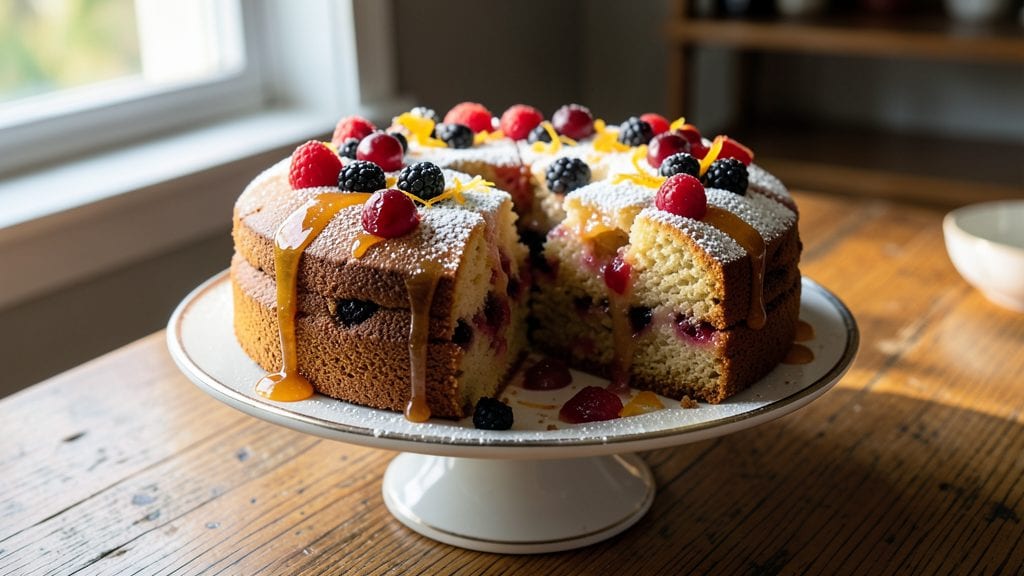
This fruit pound cake recipe delivers the perfect balance of moist crumb, spiced nuts, and bright citrus swirls that elevate any dessert table. The secret lies in layering citrus zest and preserves between rich, buttery cake layers—creating bursts of flavor with every bite.
I developed this version after years of testing traditional pound cake formulas, refining it to include the signature fruit swirl that makes it truly special.
The cake itself is a foolproof blend of all-purpose flour, butter, and eggs, baked to a golden perfection that holds its shape while remaining tender.
What sets it apart is the citrus-infused jam swirl—made from a mix of orange and lemon preserves—and the toasted pecans folded into the batter for crunch. This combination transforms a classic pound cake into something vibrant and unexpected.
By the time it emerges from the oven, you’ll have a cake with layers of moist, spiced cake, pockets of jammy citrus, and crunchy pecans that add texture.
The aroma alone will have everyone anticipating dessert, and the first slice reveals why this recipe is worth the effort—rich, fruity, and perfectly balanced. Serve warm with vanilla ice cream or dusted with powdered sugar for a showstopping finish.
This recipe works equally well as a centerpiece for holidays or a special afternoon treat. The method is straightforward, but the result feels like a bakery masterpiece. Let’s get baking—your taste buds will thank you.
Ingredients for fruit pound cake
Rich butter, citrus zest, and toasted pecans create the perfect fruit pound cake.
| Ingredient | Amount | Notes |
|---|---|---|
| Unsalted Butter 🧈 | 1 ½ cups | Room temperature, high-quality |
| Granulated Sugar 🍚 | 2 ½ cups | Superfine preferred for even texture |
| All-Purpose Flour 🌾 | 3 ½ cups | Sifted, spooned lightly |
| Orange Zest 🍊 | 1 tbsp | Fresh, bright orange peel |
| Lemon Zest 🍋 | 1 tbsp | Fresh, finely grated |
| Large Eggs 🥚 | 6 whole | Room temperature, separated |
| Orange Preserves 🍊 | 1 cup | Seedless, chunky texture |
| Lemon Preserves 🍋 | ½ cup | Seedless, for balanced flavor |
| Toasted Pecans 🥜 | 1 ½ cups | Chopped, lightly browned |
| Baking Powder 🍞 | 2 tsp | Aluminum-free preferred |
| Ground Cinnamon 🌿 | 1 tsp | Freshly ground for warmth |
| Ground Nutmeg 🌶️ | ½ tsp | Freshly grated nutmeg |
| Salt 🧂 | ½ tsp | Fine sea salt |
| Vanilla Extract 🌸 | 2 tsp | Pure, high-quality extract |
The butter is non-negotiable—Plugrá or Land O’Lakes Cultured deliver the best texture. Room temperature is key; cold butter creates dense cake. For the citrus zest, organic oranges and lemons from the produce section have the brightest flavor. I always buy Trader Joe’s orange marmalade for the preserves—it’s seedless and has the perfect balance of sweetness. The pecans should be toasted until fragrant; Costco’s bulk pecans are the best value. Freshly ground spices make all the difference—Penzeys or your local spice shop are worth the trip.
No orange preserves? Mango or apricot jam works beautifully, but stick to seedless varieties. Short on pecans? Toasted walnuts or almonds add a different but equally delightful crunch. For the sugar, superfine is ideal, but if you only have granulated, pulse it in a food processor for a few seconds. The vanilla extract should be pure—Nielsen-Massey is my go-to. If you’re in a pinch, imitation extract will work, but it lacks depth. The baking powder must be fresh; if your container is over six months old, replace it for optimal rise.
Store the cake in an airtight container at room temperature for up to 3 days—it keeps beautifully. For longer storage, wrap tightly in plastic and refrigerate for up to 1 week. The cake freezes exceptionally well; slice before freezing and reheat wrapped for 3-4 months. I always bake an extra layer—leftover slices reheated with a sprinkle of powdered sugar are perfect for breakfast. The citrus swirl keeps best when refrigerated, so plan to serve it within 2 days of baking for peak freshness.
Why You'll Love This Recipe
- No-Zest Fuss: I swear by this recipe because it only asks for two things from you: cream butter and sugar until it’s light, then fold in flour. That’s it. No food processor, no sifter, just elbow grease for five minutes—honestly, my kids think it’s a science experiment.
- Citrus Magic: The orange and lemon zest? That’s the real MVP. One teaspoon of each brightens the whole cake—no need for extra extract or syrup. It’s like sunshine in every bite, buttery and tangy without tasting like a holiday centerpiece.
- Weekend or Weeknight: Slice it fresh for brunch, or bake it ahead and freeze slices for quick toast. I’ve served it at birthday parties (because it’s fancy enough) and as a 3 p.m. snack (because it’s that good). The flour-to-butter ratio keeps it moist for days—no dry crumbs here.
- Budget-Friendly Luxury: You’re using pantry staples, not specialty ingredients. That pound of butter? Stretches to two cakes. The sugar and flour? Already in your cupboard. It tastes like a bakery’s showstopper, but the grocery bill won’t make you wince. (Yes, even on a Tuesday night.)
Step-by-step instructions for fruit pound cake
Follow this method for a moist, citrus-kissed pound cake with a perfect swirl of preserves and nutty crunch.
Cream Butter and Sugar to Lighten the Batter
In a stand mixer fitted with the paddle attachment, beat the 1.5 cups unsalted butter and 2.5 cups granulated sugar on medium speed for 5-7 minutes until the mixture is pale, fluffy, and has nearly doubled in volume. This step incorporates air into the batter, ensuring a tender crumb.
Scrape down the sides of the bowl with a spatula to ensure even mixing. The butter should be completely smooth with no graininess remaining. Here's the thing—this creaming process is what gives pound cake its signature moist texture, so don't rush it. You'll know it's ready when the mixture leaves a ribbon trail that holds its shape for a few seconds when the beaters are lifted.
Add Eggs and Zests for Citrus Brightness
Add the 6 whole large eggs, one at a time, mixing well after each addition. Then stir in the 2 teaspoons vanilla extract, 1 tablespoon orange zest, and 1 tablespoon lemon zest. The zest adds a bright, aromatic quality that pairs beautifully with the preserves.
I like to mix these ingredients on low speed just until combined—overmixing can incorporate too much air, which might cause the cake to collapse later. The batter should be smooth and slightly thick. If you're using room temperature eggs, they'll blend in more easily, creating a homogeneous mixture without lumps.
Combine Dry Ingredients and Fold in Preserves
In a separate bowl, whisk together the 3.5 cups all-purpose flour, 2 teaspoons baking powder, 1 teaspoon ground cinnamon, 0.5 teaspoon ground nutmeg, and 0.5 teaspoon salt. Sift the flour mixture into the wet ingredients and mix on low speed just until combined—you should still see small streaks of flour.
Remove the bowl from the mixer and gently fold in the 1 cup orange preserves and 0.5 cup lemon preserves using a silicone spatula. Be careful not to overmix, as this could deflate the batter. The preserves will create beautiful swirls when baked, adding bursts of fruity flavor throughout each slice.
Fold in Toasted Pecans for Nutty Crunch
Gently fold in the 1.5 cups toasted pecans, reserving a small handful for garnishing the top of the cake. The pecans add a delightful texture contrast to the soft cake layers. Distribute them evenly throughout the batter so every bite has a chance to include their rich, buttery flavor.
This is where the cake's character really comes together—sweet, citrusy, and nutty all in one. The pecans should be evenly dispersed, but don't worry about perfect distribution. A few clusters here and there just add to the rustic charm of this classic pound cake.
Bake in Two Layers for Perfect Texture
Preheat your oven to 350°F and grease two 9-inch round cake pans with butter or use parchment paper liners. Divide the batter evenly between the two pans, smoothing the tops with a spatula. Bake for 25-30 minutes, or until a toothpick inserted into the center comes out clean.
Here's the moment that matters: the cake should be golden brown on top with a slightly domed center. If the tops brown too quickly, tent the pans with foil to prevent overbrowning. Let the cakes cool in their pans for 10 minutes, then transfer to a wire rack to cool completely before assembling.
Pro Tips For Making Fruit Pound Cake
- Cream Butter Properly: Beat the butter and sugar until it’s pale and fluffy—about 3-5 minutes with a stand mixer. I learned the hard way that skipping this step leaves your cake dense and dry, especially with all that citrus zest competing for moisture.
- Measure Flour Right: Spoon flour into the dry measuring cup, then level it off with a knife—don’t scoop directly from the bag. Packed flour throws off the ratio, and this cake relies on that delicate balance of citrus and butter for a tender crumb.
- Don’t Overbake the Cake: Pull it out when the center springs back just slightly (a toothpick should have a few moist crumbs, not be clean). Overbaking turns the citrus flavors bitter and the texture dry—trust your eyes more than the recipe’s time.
- Use Fresh Zest: Grate the zest right before mixing—stale zest loses its bright flavor and turns dull. Store-bought zest in jars? Toss it. The difference in aroma is night and day, and this cake needs that citrus punch to shine.
Regional styles of this fruit pound cake
Southern Citrus Twist
In the South, fruit pound cakes often feature peach preserves instead of orange, creating a sweeter, more floral flavor profile. I swap the orange preserves for 1.5 cups peach preserves and add 1 teaspoon almond extract to the batter for a nutty depth.
The Southern touch? A whiskey glaze made with ½ cup powdered sugar and 2 tablespoons bourbon brushed between layers. This version feels like a bakery favorite from Georgia or Alabama. 🍑
New England Spiced Nuts
Up north, the focus shifts to maple and walnuts—a perfect match for the region's fall flavors. Replace the pecans with 1.5 cups toasted walnuts and fold in 1 tablespoon maple syrup to the batter. For the preserves, use 1 cup blackberry jam instead of citrus.
The result is a cake with earthy, autumnal notes that pairs beautifully with maple cream cheese frosting. This is the version I make for Thanksgiving gatherings. 🌰
Midwest Apple Cider Version
The Midwest loves its apple cider—so why not incorporate it into pound cake? Use 1 cup apple butter instead of preserves and add 1 teaspoon cinnamon to the dry ingredients. The batter gets a boost of ½ cup buttermilk for extra moisture.
Top with a caramel glaze made from ½ cup brown sugar and 2 tablespoons heavy cream, simmered until thick. This version feels cozy and nostalgic, perfect for harvest season. 🍎
Pacific Northwest Berry Swirl
Out West, raspberry and blackberry preserves take center stage. I replace the citrus preserves with 1.5 cups mixed berry jam and fold in ½ cup freeze-dried raspberries for extra bursts of fruit. The batter gets a hint of 1 teaspoon lavender extract (just a drop!) for a floral touch.
Serve with whipped cream and a sprinkle of edible lavender buds for a sophisticated yet approachable dessert. This is the version I make for summer brunch parties. 🍓
Texas Pecan-Praline Fusion
In Texas, the cake gets a praline twist—fold in ½ cup chopped praline pecans (store-bought or homemade) along with the regular pecans. The preserves become 1 cup fig jam for a deeper, jammy flavor.
Drizzle the finished cake with praline caramel sauce (melt ½ cup praline candy with ¼ cup butter and 2 tablespoons cream). This rich, nutty-sweet version is a showstopper for any occasion. 🥜
Nutrition facts
Frequently asked questions
Can I make this cake in a single layer instead of two?
Yes! For a single 9x13-inch pan, simply bake the entire batter at 350°F for 35-40 minutes until a toothpick comes out clean. The texture will be slightly denser than two layers, but the citrus swirl and nutty crunch remain intact. This works well for sheet cakes or when you prefer a simpler presentation.
What if I don’t have orange or lemon preserves?
No problem! Use 1.5 cups of any seedless jam—think raspberry, blackberry, or even mango. For a tropical twist, try pineapple or guava preserves. The key is balancing sweetness, so adjust the sugar slightly if using extra-fruity jams. Store-bought preserves work perfectly—just avoid chunky varieties that won’t swirl smoothly.
Why does my cake sink in the middle?
This usually happens from overmixing or opening the oven too soon. Mix the batter just until combined—small flour streaks are fine! Also, avoid peeking at the cake until the 25-minute mark. If it does sink, try baking at 325°F next time for a slower rise. A toothpick test is foolproof—wait until it comes out clean before removing it from the oven.
How can I make this cake gluten-free?
Replace the all-purpose flour with a 1:1 gluten-free baking flour blend (like Bob’s Red Mill) plus ½ teaspoon xanthan gum. Use 1.5 cups of the blend. For binding, add 1 extra egg white to the batter. The texture will be slightly denser, but the citrus and nut flavors shine through. Test with a small batch first to adjust moisture levels.
Can I bake this cake ahead of time?
This cake actually improves overnight. Bake it 1-2 days ahead, wrap tightly in plastic, and store at room temperature. The flavors meld beautifully, and the texture stays moist. For longer storage (up to 1 week), refrigerate the assembled cake. Reheat slices in the oven at 300°F for 5-10 minutes to restore freshness.