Sauces & Condiments
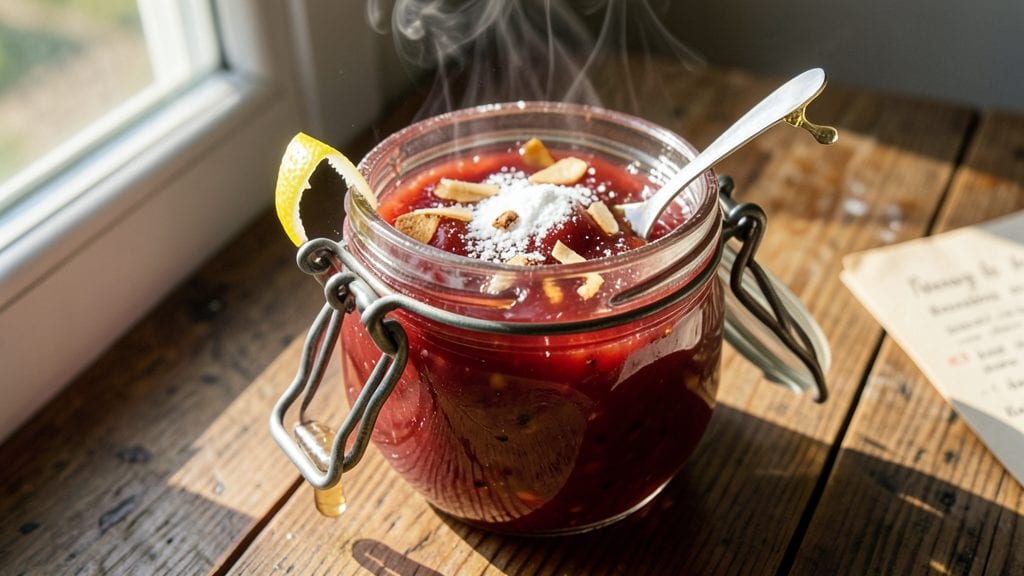
Making guava jam without pectin is simpler than you think—this recipe relies on natural fruit pectin and a long, slow cook to create a thick, spreadable jam that tastes like summer in every bite.
The secret lies in balancing ripe guavas with just the right amount of lemon juice and sugar, then letting the mixture reduce until it reaches that perfect set.
I’ve perfected this method over years of testing, and it never fails to deliver a jam that’s vibrant, fragrant, and naturally thickened without any additives.
The process is straightforward but requires patience—guavas must be fully ripe for maximum pectin release, and the jam needs to simmer for at least 45 minutes to develop its signature stickiness. No special equipment is needed beyond a heavy-bottomed pot and a candy thermometer to track the sugar stage.
The result? A jam so rich and flavorful it rivals store-bought versions, but with the purity of homemade ingredients.
What you’ll end up with is a glossy, ruby-red jam that’s perfect for toast, yogurt, or even as a glaze for meats. The natural sweetness of the guavas shines through, balanced by the bright acidity of lemon, creating a spread that’s both sophisticated and approachable.
This recipe makes about 4 half-pint jars, and it keeps for months in the refrigerator—ideal for gifting or stocking your pantry.
Ready to make jam that’s naturally thick and bursting with flavor? Here’s everything you need to create a batch that’s foolproof, delicious, and completely free of artificial thickeners.
Ingredients for guava jam recipe without pectin
Six ingredients. One pot. Jam so thick and glossy it’ll fool anyone who thinks it needs pectin.
| Ingredient | Amount | Notes |
|---|---|---|
| Ripe Guavas 🍈 | 4 cups | Pitted, peeled, and chopped |
| Granulated Sugar 🍚 | 3 cups | White or light brown preferred |
| Lemon Juice 🍋 | ½ cup | Freshly squeezed, no pulp |
| Water 💧 | ½ cup | For initial mixture |
| Cinnamon Sticks 🌿 | 2 whole | Optional for subtle warmth |
| Fresh Ginger 🌿 | 1 tbsp | Grated, optional for zing |
| Salt 🧂 | ¼ tsp | Fine sea salt |
Guavas are the MVP here—fully ripe ones are essential for natural pectin release. Look for those that yield slightly when pressed near the stem. Mexican or Indian guavas work best, but if you can’t find them, Hawaiian guavas from the produce section are your next best bet. I always buy a few extra—some might be underripe, and you can use those for smoothies later. The sugar is non-negotiable for both sweetness and helping the jam set properly. Domino or C&H are my go-tos—they dissolve smoothly and don’t leave graininess.
No fresh ginger? Ground ginger at half the amount works in a pinch, but fresh adds that bright, floral note. Short on lemon juice? Lime juice works too, though it’ll give a slightly different tang. Want to skip the cinnamon? A pinch of cardamom or vanilla bean scrapings can add depth instead. The water is just to kickstart the cooking process—don’t skip it, but don’t overthink it either. If you’re worried about the jam not setting, add 1 tsp of cornstarch to the sugar before mixing (though this recipe rarely needs it).
This jam keeps for up to 3 months in the fridge once opened, and 6 months unopened if stored in a cool, dark place. I like to portion it into half-pint jars—perfect for gifts or quick breakfasts. For extra shine, add a drop of vanilla extract or a sprinkle of ground cinnamon to each jar before sealing. The longer it sits, the more the flavors meld together—trust me, it gets even better after a week.
Why You'll Love This Recipe
- No Pectin Needed: I’ll admit—skipping store-bought pectin never crossed my mind until I tried this. The guavas’ natural pectin (from that slow simmer with cinnamon sticks) thickens it just right, no extra fuss.
- Sweet-Tart Magic: That first spoonful? Pure tropical comfort. The sugar caramelizes into the guava’s floral notes, while the lemon juice keeps it bright—like a hug in jam form.
- Pantry Staple Power: Honestly, this uses what you already have. Sugar, water, a few guavas from the market—no specialty ingredients, no last-minute grocery runs. Perfect for when you’re low on time or patience.
- Months of Gifting: Between us, this jam lasts. I’ve had jars from last summer still sealed tight, and it’s my go-to for holiday gifts. Plus, the cinnamon sticks add a cozy aroma that makes even the simplest toast feel special.
Step-by-step instructions for guava jam without pectin
This method transforms ripe guavas into a velvety jam that clings perfectly without any added thickeners.
Prepare the Guava Base
In a large, heavy-bottomed pot, combine the 4 cups of chopped ripe guavas, 0.5 cup of water, and the 2 whole cinnamon sticks. Bring to a simmer over medium heat, stirring occasionally. You'll notice the guavas release their juices and soften as they cook. Let this mixture simmer uncovered for 15 minutes, stirring every 5 minutes to prevent sticking. The guavas should break down into a thick, pulpy consistency—this is your foundation for the jam.
While the guavas cook, grate the 1 tablespoon of fresh ginger using a fine grater or microplane. Add the grated ginger to the pot along with the 0.25 teaspoon of salt. Stir well to distribute the flavors evenly. The ginger adds a bright zing that balances the sweetness, while the salt enhances all the flavors. Let the mixture simmer for another 5 minutes to meld these ingredients together.
Add Sugar and Lemon Juice
Remove the cinnamon sticks from the pot and discard them. Increase the heat to medium-high and gradually whisk in the 3 cups of granulated sugar. Stir constantly for 2-3 minutes until the sugar dissolves completely. This step is crucial—if sugar grains remain, they won't dissolve later and will make your jam grainy.
Next, pour in the 0.5 cup of freshly squeezed lemon juice. The acidity from the lemon juice helps preserve the jam and brightens the guava flavor. Bring the mixture to a full rolling boil, then reduce the heat to medium-low. Let it boil gently for 20 minutes, stirring occasionally. You'll see the mixture thicken noticeably as it simmers—this is the natural pectin in the guavas doing its work without any added thickeners.
Test for Jam Consistency
After 20 minutes of simmering, it's time to test if your jam has reached the right consistency. Place a small spoonful of the jam on a chilled plate and refrigerate it for 2 minutes. When you run your finger through the jam, it should leave a clean line that doesn't fill back in immediately. If it does fill back in, your jam needs more time to thicken.
If the jam passes the test, remove the pot from heat. Here's the thing—guava jam thickens further as it cools, so don't overcook it. If it's still too runny, return it to low heat and simmer for another 5 minutes, then test again. Once you're satisfied with the consistency, stir in any remaining whole guava pieces if you prefer a chunkier texture.
Bottle and Store
Transfer the hot jam to a clean, sterilized jar using a ladle or spoon. Tap the jar gently on the counter to remove any air bubbles trapped in the jam. Leave about ½ inch of space at the top of the jar to allow for thermal expansion as the jam cools. Seal the jar tightly with a lid.
Let the jam cool to room temperature, then refrigerate it. This jam will keep in the refrigerator for up to 3 weeks. For longer storage, you can process the jarred jam in a water bath for 10 minutes to preserve it for up to a year. Enjoy your homemade guava jam on toast, with cheese, or as a topping for yogurt—its natural sweetness and vibrant flavor will shine through.
Pro Tips For Making Guava Jam Recipe Without Pectin
- Peel Guavas Right: Cut a shallow X on the bottom, then boil whole for 2 minutes—skin slips off like magic. I used to wrestle with stubborn peels until I tried this; now I save 10 minutes and avoid bruising the fruit.
- Simmer Low and Slow: Keep heat at a bare simmer (tiny bubbles, not rolling) for 45–60 minutes. Rushing turns jam gritty; patience gives you that glossy, spreadable texture. Yes, even if you’re staring at the clock.
- Strain Twice, Strain Well: Use a fine-mesh sieve and a cheesecloth-lined colander for ultra-smooth jam. Skimping leaves fiber behind—trust me, your toast will notice the difference.
- Test Sugar Balance Early: Taste after 30 minutes—add lemon juice before sugar if it’s too bland. Too sweet later? No fix. Balance now saves you from dumping half the batch. (I’ve done it.)
Best sauces and condiments for this dish
Citrus-Infused Spreads
Brighten your guava jam by adding a splash of orange juice or lime zest to the lemon juice during cooking. I like using ½ cup orange juice for a tropical twist—it enhances the guava’s natural sweetness while adding a citrusy depth.
For a more intense flavor, zest 1 small orange and add it with the sugar. The citrus oils infuse beautifully during the long simmer, creating a jam that’s perfect for pairing with goat cheese or ricotta on toast. 🍊
Spiced Jam Variations
Experiment with warm spices to complement the guava’s tropical notes. A ¼ teaspoon of ground cloves or ½ teaspoon of star anise adds a subtle aromatic warmth that pairs beautifully with the jam’s natural sweetness.
For a smoky depth, add ½ teaspoon of chipotle powder with the sugar—it’s a fantastic match for spicy meats or grilled cheese sandwiches. Just be sure to taste as you go, since spices can intensify during cooking.
Herbal and Floral Touches
Fresh herbs elevate guava jam to gourmet status. I love adding 2 tablespoons of finely chopped fresh mint or 1 tablespoon of chopped basil during the final 5 minutes of simmering.
For a floral note, steep 1 teaspoon of rose petals (food-grade) in the ½ cup of water before adding the guavas. The herbs infuse quickly and add a bright, refreshing contrast to the jam’s richness.
Store any unused herbs in an airtight container in the fridge for up to 5 days.
Sweet and Savory Pairings
Guava jam isn’t just for sweet applications—it’s also a fantastic savory condiment. Spread it on grilled cheese with sharp cheddar and a sprinkle of black pepper for a sweet-savory bite. Drizzle it over seared duck breast or pan-seared scallops to balance rich flavors.
For a Middle Eastern twist, mix 1 teaspoon of harissa into the jam while warm and serve with hummus or flatbread. The acidity and spice cut through the jam’s sweetness beautifully. 🌶️
Fruit Jam Blends
Combine guava jam with other fruit preserves for layered flavors. Mix ½ cup of guava jam with ½ cup of mango chutney for a tropical fusion that’s perfect with chicken satay or fish tacos.
For a berry twist, blend ¼ cup of raspberry jam into the guava mixture during the final 10 minutes of cooking. The berries add a tart contrast that brightens the guava’s natural sweetness. Store blended jams in small glass jars for easy portioning.
Glazes and Marinades
Use guava jam as a glaze for roasted vegetables or grilled proteins. Simmer ½ cup of guava jam with 1 tablespoon of soy sauce and 1 teaspoon of honey for 5 minutes to create a sticky glaze for pork chops or tofu.
For a marinade, mix ¼ cup of guava jam with 2 tablespoons of lime juice, 1 tablespoon of olive oil, and 1 teaspoon of cumin. Let it marinate grilled shrimp or chicken thighs for 30 minutes before cooking for a sweet, tangy crust. 🍗
Nutrition facts
Frequently asked questions
Why does guava jam need lemon juice if it's using natural pectin?
The lemon juice serves two key purposes: it activates the fruit's natural pectin by lowering the pH, helping the jam set properly, and it preserves the jam by preventing bacterial growth. Guavas contain pectin, but the acidity from citrus is essential for proper gelling. Without it, your jam might stay too runny or spoil faster.
Can I substitute honey for sugar in this guava jam?
You can try, but it won't work the same way. Honey adds moisture and won't help the jam set properly without additional pectin. For a natural sweetener, use agave nectar or maple syrup at a 1:1 ratio, but be prepared for a softer jam consistency. The sugar in this recipe is crucial for both sweetness and texture.
What if my guava jam isn't thickening enough?
First, check if your guavas were fully ripe—they should yield slightly when pressed. If the jam is still too runny after simmering 45 minutes, try one of these fixes: add 1 tsp of cornstarch mixed with 1 tbsp water and stir in, or simmer uncovered for 10-15 more minutes to evaporate excess liquid. Never rush this step—overcooking can make the jam too hard.
How do I know when guavas are ripe enough for jam?
Ripe guavas should be soft when gently squeezed near the stem (but not mushy) and have a sweet, fragrant aroma. They should yield slightly to pressure—like a ripe peach. If they're too firm, they won't release enough pectin for proper thickening. Unripe guavas will make a runny jam, while overripe ones may be too soft to handle.
Can I make this guava jam in a slow cooker?
Yes! Follow the same steps but use the slow cooker on high for 2-3 hours (stirring occasionally) instead of stovetop simmering. The low-and-slow method helps extract more pectin naturally. Just watch the water level—you may need to add ¼ cup extra water if it reduces too quickly. The texture will be slightly different but still delicious.