
Appetizers
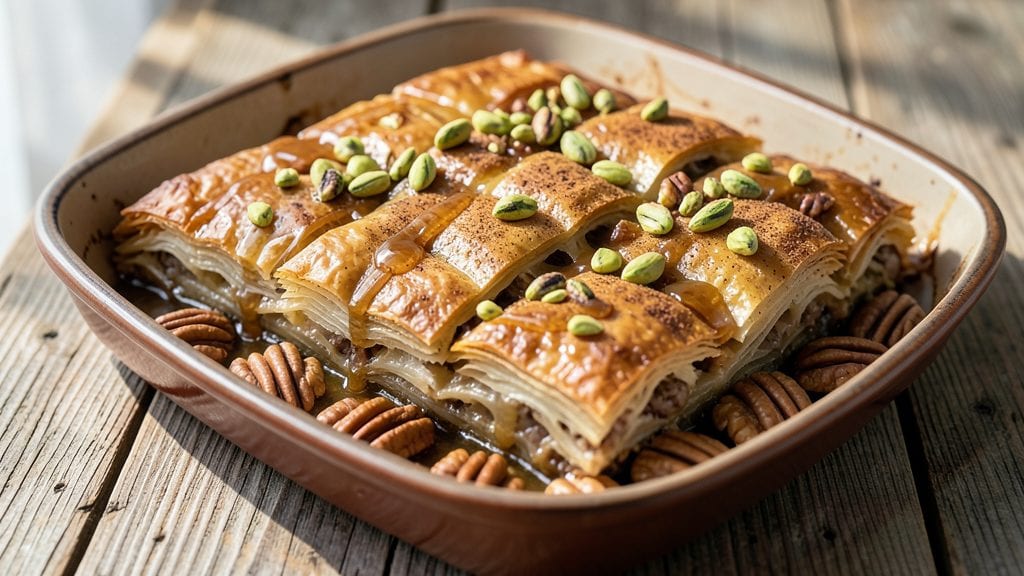
This homemade baklava recipe turns your kitchen into a fragrant, golden masterpiece—layer upon layer of crisp phyllo, rich nut filling, and that signature honey-soaked crunch.
The secret lies in precision: brushing each delicate sheet with melted butter, assembling the nut mixture in even layers, and baking until edges turn a perfect amber.
My first attempt nearly collapsed into a greasy mess, but after mastering the technique, I now get requests for this dessert at every gathering.
This recipe delivers restaurant-quality baklava with a traditional approach that’s surprisingly approachable. The nut filling—a blend of chopped walnuts, pistachios, and cinnamon—gets toasted for extra depth, while the honey syrup infuses with vanilla and lemon for brightness.
Each crisp phyllo layer adds texture, creating that iconic shatter when you cut through. The key? Work quickly with the phyllo to prevent drying, and let the syrup soak in overnight for maximum flavor.
What you’ll end up with is a golden, honey-glazed masterpiece that’s crisp on the outside, tender in the middle, and bursting with nutty sweetness in every bite. The vanilla swirls add an elegant touch, while the cinnamon-spiced nuts bring warmth.
This baklava stays fresh for days, making it perfect for holidays, potlucks, or satisfying your own sweet tooth. Let’s get started—your kitchen will smell like heaven in no time.
For those who love customization, swap the nuts for pecans or almonds, or experiment with flavored syrups like orange blossom or rosewater. The possibilities are endless, but the foundation remains the same: layers, patience, and that perfect crunch. Trust me, once you taste homemade, store-bought baklava won’t compare.
Ingredients for homemade baklava
Golden layers, nutty crunch, and honey-soaked perfection—this baklava transforms simple ingredients into a showstopping dessert.
| Ingredient | Amount | Notes |
|---|---|---|
| Phyllo Dough Sheets 🍞 | 1 package | Thawed if frozen, kept covered |
| Unsalted Butter 🧈 | 1 cup | Melted, unsalted for pure flavor |
| Walnuts 🥜 | 1 cup | Chopped, toasted for depth |
| Pistachios 🌿 | ½ cup | Shells removed, lightly toasted |
| Ground Cinnamon 🌶️ | 2 tsp | Ceylon preferred for warmth |
| Granulated Sugar 🍚 | 1 cup | For nut mixture sweetness |
| Vanilla Extract 🍃 | 1 tbsp | Pure Madagascar for depth |
| Honey 🍯 | 1 cup | Raw, thick variety preferred |
| Lemon Juice 🍋 | 2 tbsp | Freshly squeezed for brightness |
| Ground Cardamom 🌿 | ½ tsp | Optional, for floral note |
| Salt 🧂 | ¼ tsp | Fine sea salt for balance |
| Orange Blossom Water 🍊 | 1 tsp | Optional, for floral aroma |
The phyllo is non-negotiable—Filomena or Fillo Works are my go-tos, but any brand works if it thaws quickly. Keep those sheets covered with a damp towel while working (they dry out in seconds). For the nuts, toast them separately in a dry pan over medium heat until fragrant—about 5 minutes. This enhances their flavor dramatically. The butter? European-style unsalted like Plugrá melts cleaner and adds richness. Never skip the butter—it’s what makes those layers crisp and golden. And if you’re feeling fancy, swap half the walnuts for pecans or almonds for texture variation.
No vanilla extract? Vanilla bean paste or even vanilla sugar works in a pinch, though pure extract gives the best depth. The honey should be raw and thick—Manuka or buckwheat honey adds a subtle earthiness. Short on pistachios? Substitute with extra walnuts or almonds, but toast them extra long for the same nutty punch. The cardamom and orange blossom water are optional but elevate the flavor profile—think of them as the secret weapons for that authentic baklava taste. If you can’t find orange blossom water, a drop of rosewater is a decent swap, but use sparingly.
Assembled baklava keeps for 5 days in an airtight container, but it’s best the next day once the syrup fully absorbs. For longer storage, wrap individual pieces in parchment and freeze for up to 3 months. Reheat frozen slices at 350°F for 5 minutes to restore that crisp crunch. Pro tip: Cut into diamonds or squares before serving—it looks prettier and makes sharing easier. The syrup will pool at the bottom, so pour it over the top right before serving. Trust me, the first bite after soaking is worth the wait.
Why You'll Love This Recipe
- Layered Magic: I swear by the way butter and cinnamon melt into those flaky phyllo sheets—it’s like dessert alchemy. The first bite of crispy walnuts and pistachios? That’s when you know you’ve hit the jackpot.
- No Fuss Assembly: Honestly, it’s not the prettiest, but the taste makes up for it. Just butter, nuts, and sheets—no fancy tools, no stress. My kids "help" by sprinkling the cinnamon, and somehow it always turns out.
- Showstopper Every Time: Birthdays, holidays, or just because—this is the dessert that gets raves. The contrast of crunchy nuts and gooey syrup? It’s the kind of thing people will ask for by name.
- Leftovers? Please.: Between us, I make double batches because it’s the only dessert that gets better the next day. The syrup soaks in overnight, and suddenly, it’s even more decadent—no reheating, just pure satisfaction.
Step-by-step instructions for homemade baklava
Here's how to craft baklava with crispy layers, fragrant nut filling, and that signature honey-vanilla swirl.
Prepare the Nut Filling
Preheat your oven to 350°F and toast the 1 cup walnuts and 0.5 cup pistachios on a baking sheet for 8-10 minutes until fragrant and lightly golden. Watch them carefully—they burn quickly. Let them cool completely before proceeding.
In a food processor, pulse the toasted nuts until they reach a coarse crumb texture—think sand-like but not powdery. Transfer to a mixing bowl and combine with 1 cup granulated sugar, 2 tsp ground cinnamon, 0.5 tsp ground cardamom, 0.25 tsp salt, 1 tbsp vanilla extract, and 1 tsp orange blossom water. Mix thoroughly until the sugar dissolves completely and the nuts are evenly coated.
This is where the magic happens—the spices and citrus notes infuse into the nuts, creating that signature baklava flavor. The orange blossom water adds a delicate floral note that elevates the dish from ordinary to extraordinary.
Assemble the Baklava Layers
Melt the 1 cup unsalted butter in a small saucepan over low heat until completely liquid but not browned. Brush the first phyllo dough sheet with a thin layer of the melted butter using a pastry brush. Place it in a 9x13-inch baking dish.
Repeat this process with the remaining 10 phyllo sheets, brushing each one lightly with butter and stacking them directly on top of each other. I like to leave the final sheet unbuttered—this creates a crispy top layer that contrasts beautifully with the tender nut filling. The butter acts as both a glue and a flavor enhancer, preventing the layers from separating.
Here's the thing—don't skip the butter brushing. Skimping here leads to soggy layers instead of that perfect crunch. Work quickly to prevent the phyllo from drying out while you assemble.
Add the Nut Filling and Create Vanilla Swirls
Spread the nut mixture evenly over the phyllo layers, leaving a ½-inch border around the edges. This prevents the filling from oozing out during baking. Now for the signature touch—drizzle 2 tbsp lemon juice evenly over the nut layer, then pour 1 cup honey in a zigzag pattern over the top.
Using a knife, gently swirl the honey through the nut mixture to create those beautiful marbled patterns. The acidity from the lemon juice will help set the honey and prevent the filling from becoming too sticky. This step is what transforms ordinary baklava into something truly special—those intricate vanilla-honey swirls are what make this version stand out.
Real talk: Don't over-swirl. You want visible patterns, not a completely mixed filling. The contrast between the honey and nut layers is what creates that satisfying crunch with every bite.
Bake to Golden Perfection
Bake the baklava in the preheated 350°F oven for 45-50 minutes until the edges are deep golden brown and the top is crispy. You'll know it's done when the top layer is firm to the touch and the honey has caramelized slightly. The baklava should be golden all over, not just on the edges.
I like to rotate the pan halfway through baking to ensure even browning. The first 30 minutes are critical—this is when most of the moisture evaporates and the layers set. Don't open the oven door during this time or you'll risk steam condensing on the top layer.
Once baked, remove from the oven and let it cool completely on a wire rack. This resting period is crucial—it allows the honey to fully set and the layers to firm up. The baklava will continue to crisp up as it cools, so patience here pays off with perfect texture.
Cut and Serve
Using a sharp knife, cut the baklava into diamond or square pieces while it's still warm. The heat makes it easier to cut clean lines. Serve at room temperature for the best texture contrast—crispy layers with gooey honey filling.
This baklava delivers on all the promises: homemade quality with that perfect balance of sweetness, nutty richness, and floral notes. The vanilla swirls add an elegant touch that makes it feel special enough for company. Store any leftovers in an airtight container for up to 5 days—though I doubt you'll have any left!
Pro Tips For Making Homemade Baklava
- Brush Butter Generously: Don’t skimp on the butter—this isn’t the time to be frugal. Use about ½ cup melted butter for every 12 sheets, and spread it evenly with a pastry brush. I learned this the hard way when my first batch ended up dry and crispy instead of rich and flaky.
- Toast Nuts Low and Slow: Spread your walnuts and pistachios on a baking sheet in a single layer, then toast them at 300°F (150°C) for 8–10 minutes. Watch them like a hawk—they burn faster than you think, and burnt nuts ruin the whole dish. Remove them just as they start to turn golden.
- Keep Phyllo Damp: Phyllo sheets dry out faster than you’d believe. Cover the stack with a damp towel while you work, and rewet each sheet with a spray bottle or damp paper towel as you layer it. Dry sheets crack and tear—no one wants to spend 20 minutes fixing that mid-assembly.
- Bake Until Golden, Not Brown: Your baklava is done when the edges are deep golden, not when the top looks like a campfire. If it’s browning too quickly, tent it with foil and keep baking at 325°F (165°C) until the layers are crisp. Over-browning turns the butter gritty, and no one wants that.
Essential equipment for this dish
Phyllo Dough Essentials
You’ll need 1 package of phyllo dough—I recommend Filomena or Fillo Works for their reliable quality and quick thawing. Store-bought phyllo comes pre-thawed, but if frozen, transfer it to the fridge 24 hours before use.
Keep the sheets covered with a damp towel while working—they dry out in seconds! A pastry brush is non-negotiable for buttering layers evenly. 🍞
Butter Matters Most
Use 1 cup of European-style unsalted butter like Plugrá—it melts cleaner and adds richer flavor than salted varieties. Melt it in a small saucepan over low heat until fully liquid but not browned.
A fine-mist spray bottle helps keep phyllo pliable while assembling. I also keep a small bowl of ice water nearby to quickly dip my fingers if the butter gets too hot.
Nut Toasting Tools
Toast your walnuts and pistachios on a rimmed baking sheet at 350°F for 8-10 minutes—they burn fast! A food processor with a sharp blade is essential for achieving that perfect coarse crumb texture.
For extra precision, I pulse the nuts in 2-second bursts until they resemble wet sand. A fine-mesh sieve helps remove any stray nut skins before mixing.
Precision Baking Gear
A 9x13-inch baking dish is ideal for even heat distribution, but any similar size works. For perfect golden edges, I use a wire cooling rack to elevate the baklava during cooling—this prevents sogginess.
A sharp chef’s knife (I prefer Wüsthof) makes clean diamond cuts after baking. Don’t forget parchment paper for easy transfer from pan to rack!
Syrup Infusion Kit
Combine 1 cup honey, 2 tbsp lemon juice, and 1 tbsp vanilla extract in a small saucepan over medium-low heat. A thermometer ensures you don’t exceed 180°F—boiling hardens the honey.
For floral depth, add 1 tsp orange blossom water (available at Middle Eastern markets or online). A whisk helps dissolve the honey completely before pouring over the baked layers.
Optional Upgrades
For extra crunch, sprinkle ½ cup toasted sesame seeds over the final phyllo layer before baking. A piping bag with a star tip makes elegant honey swirls if you want restaurant-style presentation.
Store leftovers in an airtight container with parchment between layers to maintain crispness. For serving, gold leaf adds a luxurious touch—just place a tiny piece on each piece before presenting. ✨
Nutrition facts
Frequently asked questions
Can I make baklava without a food processor?
For the nut filling, simply chop the toasted nuts by hand with a sharp knife until you achieve a coarse, sand-like texture. Spread them on a cutting board and use the flat side of your knife to press down and create even-sized pieces. This method works just as well—it just requires a bit more elbow grease.
Why did my baklava turn out soggy instead of crisp?
Soggy baklava usually means one of two things: either the phyllo sheets weren't buttered enough (butter creates that crisp barrier), or the honey syrup wasn't fully absorbed before serving. Let your baklava cool completely before cutting, then store it in an airtight container for at least 4 hours to allow the syrup to soak in properly. Also, ensure your oven reached 350°F—underbaking can leave it too moist.
What's the best way to store leftover baklava?
Store baklava in an airtight container with parchment paper between layers to maintain crispness. It stays fresh for 5 days at room temperature. For longer storage, wrap individual pieces in parchment and freeze for up to 3 months. To restore crispness, reheat frozen pieces at 350°F for 5 minutes before serving.
Can I substitute honey with another sweetener?
Honey is ideal for its viscosity and subtle floral notes, but you can use agave syrup or light corn syrup in a pinch. For a more authentic flavor, combine ½ cup honey with ½ cup granulated sugar dissolved in water to mimic honey's thickness. Avoid heavy syrups like maple—they won't soak in as well.
How do I make baklava for a large crowd?
Double the recipe and use two 9x13-inch baking pans for even baking. For assembly, work in batches—keep extra phyllo sheets covered with a damp towel while you assemble the first tray. Use a pastry brush to butter sheets quickly, and consider pre-toasting nuts in batches to save time. Bake both pans simultaneously for 45-50 minutes, rotating halfway through.