
Main Courses
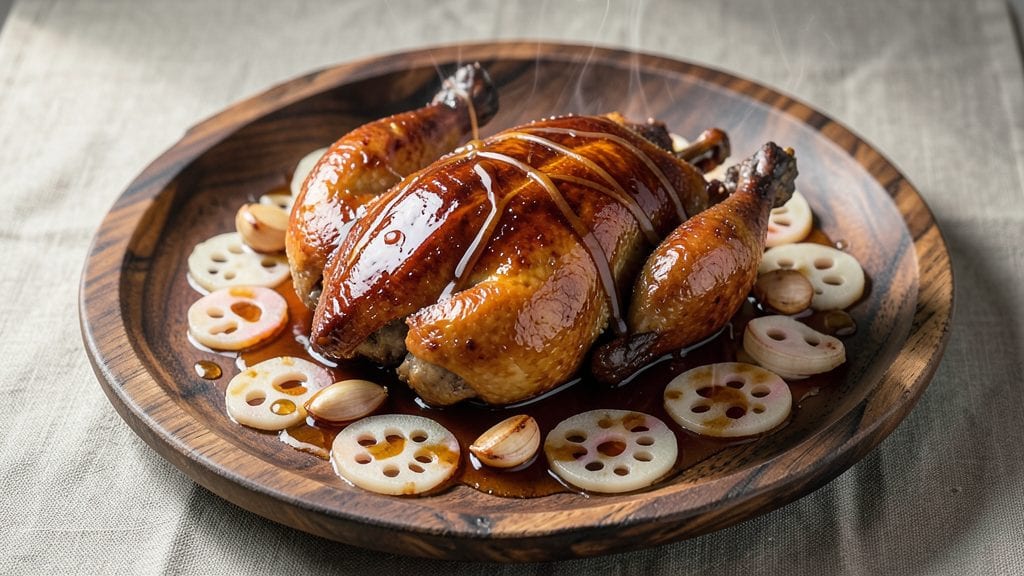
This Mandarin Duck recipe brings together the sweet-savory harmony of honey, soy, and lotus paste for a dish steeped in tradition and visual elegance. 💫 My grandmother’s Sunday roast chicken taught me patience in cooking—this recipe demands the same care, transforming simple ingredients into a centerpiece worthy of celebration.
The duck’s crispy skin gives way to tender meat filled with fragrant lotus paste, all glazed in a sticky-sweet sauce that balances richness with umami depth.
The secret lies in the preparation: marinate the duck overnight for maximum flavor penetration, then roast it slowly to render fat and develop color. The honey-soy glaze isn’t just for sweetness—it caramelizes into a glossy finish that mirrors the intricate patterns of mandarin duck symbolism.
Every step, from scoring the skin to basting with rendered fat, ensures restaurant-quality results at home.
What you’ll achieve is a dish that’s as impressive to serve as it is to eat—golden-brown duck with crackling skin, tender meat infused with lotus paste, and a glaze that’s sticky enough to drip but not so heavy it overpowers.
The aroma alone will gather your table, while the first bite delivers that perfect balance of sweet, savory, and umami that defines this classic.
Perfect for holidays, special occasions, or when you want to cook like a pro. The technique scales beautifully for gatherings, and leftovers reheat well for second helpings. Let’s bring this iconic dish to your kitchen—step by step, with confidence.
Ingredients for mandarin duck
Sweet-savory harmony starts with these 15 ingredients—traditional flavors with modern convenience.
| Ingredient | Amount | Notes |
|---|---|---|
| Whole Duck 🦆 | 5 lb | Peking duck preferred, skin scored |
| Lotus Root Paste 🌿 | ½ cup | Fresh or high-quality jarred |
| Honey 🍯 | ½ cup | Wildflower or clover preferred |
| Light Soy Sauce 🥢 | ¼ cup | Kikkoman or similar |
| Rice Vinegar 🍶 | 2 tbsp | White or seasoned |
| Garlic Cloves 🧄 | 6 cloves | Minced for marinade |
| Ginger Root 🌿 | 1 tbsp | Freshly grated, peeled |
| Sesame Oil 🫒 | 1 tbsp | Toasted, for aroma |
| Salt 🧂 | 1 ½ tsp | Diamond Crystal kosher |
| Black Peppercorns 🌶️ | ½ tsp | Freshly cracked |
| Cornstarch 🌾 | 2 tbsp | For glaze thickening |
| Water 💧 | ¼ cup | Room temperature |
| Green Onions 🧅 | 4 whole | Sliced for garnish |
| Cucumber Slices 🥒 | 1 cup | Thinly sliced, for serving |
| Scallions 🧅 | 3 whole | Thinly sliced, for garnish |
The duck is non-negotiable here. Peking duck delivers the best texture and flavor, but Cornish duck works in a pinch—just trim extra fat. Look for a duck with smooth, unblemished skin and vibrant color. Whole Foods or specialty Asian markets carry the best quality. If scoring the skin feels daunting, ask the butcher to do it—it’s worth the extra minute. The lotus paste? Fresh is ideal, but jarred brands like Lee Kum Kee work fine if you can’t find fresh. Store-bought paste lacks the delicate aroma, but it’s a solid backup for weeknight cooking.
No lotus paste? Substitute with a mix of ginger and garlic paste—it won’t be identical, but the umami stays. Running low on rice vinegar? Apple cider vinegar at half the amount mimics the tang. The honey should be thick and wildflower—avoid the thin, processed kind. For the glaze, cornstarch is key—it gives that signature glossy finish. No sesame oil? Lightly toast regular sesame seeds and grind them into the marinade. The green onions and cucumbers are just for serving, so grab whatever’s freshest—Trader Joe’s usually has pre-sliced cucumbers if you’re short on time.
Duck keeps best in the coldest part of your fridge, uncovered for 24 hours to dry-brine the skin. The lotus paste and honey? Room temperature for 30 minutes before using—they blend better. Leftover duck reheats beautifully in a 350°F oven for 20 minutes, covered loosely. Store glaze leftovers in the fridge for 1 week—it thickens as it cools, so thin with water before reheating. Garnishes like green onions stay fresh for 5 days wrapped in damp paper towels.
Why You'll Love This Recipe
- No Duck Carving Required: I’ll admit, I used to avoid whole duck because of the intimidating carving. But this recipe? Just score the skin and roast—no fancy knife work. The honey and soy glaze does all the heavy lifting while you sip tea.
- Sweet-Savory Magic: That lotus root paste might sound fancy, but it’s the secret weapon here. It adds a subtle earthiness that balances the duck’s richness, while the honey and rice vinegar give it this addictive, sticky-sweet glaze. (Yes, even my picky husband licks the plate.)
- Leftovers That Shine: Roast a whole duck once, and you’ll have meals for days. Shred the remaining meat for dumplings, toss it into noodles, or slice it thin for sandwiches. The glaze keeps it delicious—no sad, dry reheats here.
- Date Night or Weeknight Win: Fancy enough for a dinner party but simple enough for a Tuesday. The duck’s crispy skin and glossy glaze make it feel special without the stress. Plus, the lotus root paste adds a touch of elegance—no one will guess it’s a one-pan wonder.
Step-by-step instructions for glazed mandarin duck
Here's how to transform a whole duck into a sweet-savory masterpiece with crispy skin and sticky glaze.
🔥 Step 1: Score and Marinate the Duck
Start by scoring the skin of the 5 lb whole duck in a diamond pattern, cutting just deep enough to expose the fat without piercing the meat. This creates crispy pockets while keeping the meat juicy. Pat the skin completely dry with paper towels—moisture is the enemy of crispy skin.
In a bowl, whisk together the 0.5 cup honey, 0.25 cup light soy sauce, 2 tbsp rice vinegar, minced 6 cloves garlic, 1 tbsp freshly grated ginger root, and 1 tbsp toasted sesame oil. Rub this marinade all over the duck, including inside the cavity. Sprinkle with 1.5 tsp salt and 0.5 tsp freshly cracked black peppercorns. Cover and refrigerate for at least 4 hours, preferably overnight.
🍳 Step 2: Roast Until Golden and Glazed
Preheat your oven to 375°F. Place the marinated duck breast-side up on a rack in a roasting pan (no need for extra oil—the marinade provides enough fat). Roast for 1 hour 15 minutes, basting with pan juices every 20 minutes. The skin should turn deep golden brown and crispy, while the internal thigh temperature reaches 165°F.
Here's the thing—don't rush this step. The duck needs time for the skin to render fat and develop that perfect mahogany crust. If the skin starts browning too quickly, tent it loosely with foil and continue roasting. The aroma alone will have your kitchen smelling like a Chinese banquet.
🥘 Step 3: Prepare the Lotus Root Glaze
While the duck rests, make the signature glaze. In a small saucepan, combine the 0.5 cup lotus root paste, 0.25 cup water, and 2 tbsp cornstarch. Whisk vigorously over medium heat until the mixture thickens to a glossy, pudding-like consistency—about 3-4 minutes. Remove from heat and stir in 2 tbsp of the reserved duck pan juices to create a silky, sticky glaze.
This glaze is what makes mandarin duck special. The lotus root adds subtle sweetness and a delicate floral note that balances the soy's saltiness. Keep the glaze warm until you're ready to use it—it should coat the back of a spoon without being runny.
🔪 Step 4: Glaze and Garnish for Presentation
Carefully transfer the duck to a cutting board and let it rest for 15 minutes (this is crucial—it keeps the meat juicy). Using kitchen shears, slice the duck into 1-inch thick pieces, keeping the skin intact. Arrange the slices on a platter, skin-side up, and spoon the warm lotus root glaze generously over each piece.
Garnish with sliced 4 whole green onions and 3 whole scallions, then serve immediately with 1 cup thinly sliced cucumber on the side. The contrast of cool cucumber with the warm, sticky duck is pure perfection. Each bite should deliver crispy skin, tender meat, and that irresistible sweet-savory glaze.
Pro Tips For Making Mandarin Duck
- Parboil First: Skip the raw duck straight into roasting—it’ll dry out fast. Parboil it 15 minutes in salted water (skin-side down) to render fat and lock in moisture. I learned this the hard way after serving a duck so dry it could’ve been a shoe.
- Blend Lotus Paste: Store-bought lotus paste is great, but homemade is smoother and sticks better. Blend fresh lotus root with honey and light soy sauce until it’s a thick, glossy glaze—no lumps, no clumps. A food processor does this in 30 seconds; I used to hand-mash and wonder why my duck looked like it had a skin condition.
- Don’t Rush the Glaze: The honey-soy glaze needs time to caramelize—at least 15 minutes off the heat. If you rush it, you’ll end up with sticky syrup instead of that glossy, crackly finish. I now set a timer and walk away; my first attempts looked like someone dumped syrup on the duck.
- Use a Meat Thermometer: Duck hits 165°F (74°C) in the thickest part of the thigh—no guessing. Overcook it, and you’ll have rubbery meat; undercook it, and you’re playing Russian roulette with bacteria. I finally bought one after serving a duck that was almost done and almost a food safety disaster.
Perfect pairings for this mandarin duck
Side Dish Harmony
The crisp, refreshing contrast of cool cucumber slices is non-negotiable here—thinly sliced English cucumbers from the grocery store’s produce section work perfectly. I like to toss them with a pinch of salt and 1 tsp rice vinegar to enhance their natural sweetness.
For extra flair, add 1 tbsp toasted sesame seeds and a sprinkle of red pepper flakes for a subtle kick. 🥒
Steamed jasmine rice is the classic base, but forbidden rice adds an elegant black hue that ties into the dish’s symbolism. Cook it in a rice cooker with 1 cup jasmine rice and 1.5 cups water—the grains stay separate and fluffy.
For a modern twist, serve with crispy fried shallots scattered on top, which add a nutty crunch that cuts through the duck’s richness.
Sauce Pairings
A drizzle of hoisin sauce on the side lets diners control sweetness levels—just 1 tbsp per serving enhances the dish without overpowering. I recommend Lee Kum Kee for its perfect balance of sweet and umami.
For heat lovers, add chili crisp (like Lao Gan Ma) to the hoisin for a spicy-sweet contrast. 🌶️
If you prefer tangy, try a pickled ginger-mirin sauce: mix 2 tbsp mirin, 1 tbsp rice vinegar, and 1 tbsp finely chopped pickled ginger.
This brightens the palate between bites of rich duck. Store-bought versions work in a pinch, but homemade elevates the dish to restaurant quality.
Beverage Pairings
A crisp dry Riesling from Germany or China—like Dr. Loosen Blue Slate—complements the duck’s sweet-savory balance with its citrusy acidity. The wine’s mineral notes cleanse the palate between bites. For beer lovers, a light lager such as Asahi Super Dry keeps the meal refreshing without competing flavors. 🍷
Herbal teas like jasmine green tea or pu-erh add an authentic touch, especially during celebrations. Brew 2 cups water with 2 tbsp loose-leaf tea and serve warm—it pairs beautifully with the duck’s aromatic glaze. For a non-alcoholic option, sparkling yuzu soda adds a citrusy fizz that cuts through the richness.
Garnish Finishing
Fresh cilantro leaves scattered over the duck add a bright, herbal note that balances the sweetness. I like to use cilantro from local farmers markets for maximum freshness—just chop ¼ cup finely and sprinkle over the glaze.
For a pop of color, add edible gold leaf flakes (available at specialty stores) to mimic the dish’s luxurious origins. ✨
Crushed peanuts toasted with a pinch of salt provide a satisfying crunch. Heat ½ cup peanuts in a dry skillet over medium heat for 3-4 minutes, stirring constantly, until fragrant. Let them cool, then crush coarsely. The nutty depth contrasts beautifully with the duck’s sweet-savory glaze.
Nutrition facts
Frequently asked questions
Can I use a duck breast instead of a whole duck for this recipe?
For a 5 lb equivalent, use two 2.5 lb duck breasts (about ½ lb each). Score the skin in a diamond pattern, then roast breast-side down on a rack at 375°F for 25-30 minutes until the internal temp hits 165°F. The cooking time is shorter, but the technique remains the same—just halve the marinade and glaze quantities.
What if I can't find lotus root paste? What are good substitutes?
No lotus paste? No problem! Mix ¼ cup ginger paste with 2 tbsp garlic paste and 1 tbsp honey for a similar umami-sweet balance. For a simpler option, use ½ cup apricot jam (thinned with 1 tbsp water)—it adds natural sweetness and thickness. The glaze will taste different but still delicious.
How do I store and reheat leftovers?
Store duck slices in an airtight container in the fridge for up to 3 days. Reheat in a 350°F oven for 15-20 minutes covered loosely with foil—this preserves crispiness. For the glaze, reheat in a saucepan over low heat, adding 1 tbsp water if it thickens too much. Leftovers taste even better the next day!
Why does my duck skin keep tearing when I score it?
Use a sharp chef's knife and cut at a 45-degree angle—just deep enough to expose fat without piercing the meat. If the skin resists, chill the duck for 30 minutes first to firm it up. Practice on a scrap piece first! Patience is key—gentle, controlled cuts prevent tearing.
Is this dish suitable for special occasions like Lunar New Year?
Perfect! Mandarin duck symbolizes prosperity and happiness in Chinese culture, making it ideal for Lunar New Year or weddings. The dish’s golden color and intricate presentation align with festive traditions. Serve with jasmine rice and red envelopes for extra cultural flair.