
Desserts
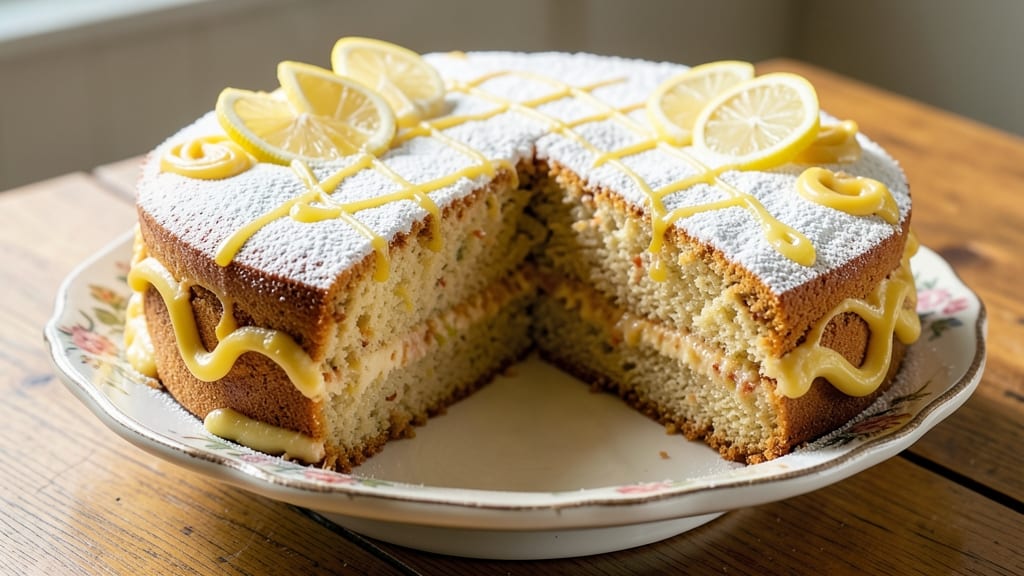
Paula Deen’s lemon pound cake recipe delivers that perfect balance of tender crumb and bright citrus flavor—just like the one you’d find at a Southern kitchen table. The secret lies in her signature buttery layers and zesty lemon swirls that keep every slice moist and bursting with flavor.
I’ve baked this version countless times, and it never fails to impress, whether served with afternoon tea or as a dessert after a holiday meal.
What makes this recipe special is Paula Deen’s foolproof technique for achieving a rich, golden cake with a velvety texture. The cake batter is infused with fresh lemon juice and zest, while the swirls of lemon curd add a tangy contrast that cuts through the buttery richness.
Baking at the right temperature—350°F—ensures even cooking, and the one-hour bake time guarantees a perfectly set yet tender crumb.
The result is a cake that’s impossibly moist, with layers of buttery cake and bright lemon curd that make every bite feel like a little taste of the South. The aroma alone—warm, citrusy, and just sweet enough—will have everyone asking for seconds.
This is the kind of dessert that feels like a hug, and it’s easier to make than you might think.
Once you’ve mastered this recipe, you can customize it with a simple lemon glaze or dust it with powdered sugar for a classic finish. It’s the perfect cake for gatherings, holidays, or even a cozy weekend treat. Let’s get baking!
Ingredients for paula deen lemon pound cake
Buttery layers, zesty lemons, and Paula Deen’s signature swirls—just 11 ingredients for Southern perfection.
| Ingredient | Amount | Notes |
|---|---|---|
| Unsalted Butter 🧈 | 2 cups | Room temperature, not melted |
| All-Purpose Flour 🌾 | 3 ½ cups | Sifted, spooned lightly |
| Granulated Sugar 🍚 | 2 ½ cups | White or light brown |
| Fresh Lemon Juice 🍋 | ½ cup | Strained, no pulp |
| Fresh Lemon Zest 🍋 | 2 tbsp | Fine, from organic lemons |
| Large Eggs 🥚 | 4 whole | Room temperature |
| Baking Powder 🍞 | 2 tbsp | Not baking soda |
| Salt 🧂 | 1 tsp | Fine sea salt |
| Vanilla Extract 🥛 | 1 tbsp | Pure, not imitation |
| Lemon Curd 🍋 | 1 ½ cups | Homemade or store-bought |
| Powdered Sugar 🍚 | 1 cup | For dusting |
The butter here is non-negotiable—use high-quality unsalted like Plugrá or Land O’Lakes for that rich Southern flavor. Room temperature is key; if it’s too cold, the cake won’t rise right. For the flour, King Arthur or Gold Medal are my go-tos—they’re reliable and give that tender crumb. The lemons? Organic is best—the zest has more flavor, and the juice is brighter. If you can’t find organic, just pick the brightest, firmest lemons at the store. And for the lemon curd? Homemade is ideal, but store-bought like Bon Appétit or Smucker’s works in a pinch.
No fresh lemons? Bottled lemon juice works, but add a pinch of salt to balance the flavor. Short on butter? Vegetable shortening cuts the fat but loses that buttery richness. For the sugar, light brown adds depth, but white keeps it classic. The vanilla extract should be pure—Nielsen-Massey or McCormick are solid choices. If you’re feeling fancy, swap the powdered sugar for a simple lemon glaze (just powdered sugar + lemon juice). And if you’re making a big batch, double everything—this cake freezes beautifully for holidays.
The batter keeps for 2 days in the fridge, but the cake itself lasts 5 days wrapped tight. Freeze slices for 3 months—just thaw at room temperature before serving. I always bake two cakes at once (one for the table, one for later) because this recipe disappears fast. Store leftovers in an airtight container with a slice of lemon on top—keeps it moist and bright. And if you’re feeling extra, dust with powdered sugar right after baking—Paula Deen’s signature touch.
Why You'll Love This Recipe
- No Mixer Needed: This recipe doesn’t demand a stand mixer—just softened butter, sugar, and a sturdy hand mixer (or even a whisk if you’re feeling old-school). The creaming method is forgiving, and the batter comes together in minutes without fuss.
- Zesty Magic: That bright burst of fresh lemon juice and zest? It’s the star here. The cake stays moist but never cloying, with a citrusy punch that’s lighter than a lemon bar but way more satisfying—like sunshine in every bite.
- Weekend or Weeknight: Slice it warm for breakfast with coffee, turn it into a trifle for brunch, or pack slices for lunch—this cake handles it all. Honestly, I’ve even used leftovers as a pie crust base (yes, really) when I ran out of time.
- Budget-Friendly Luxury: Butter and sugar make it feel special, but the ingredient list is shockingly simple. One cake feeds a crowd, and the leftovers? They last days without drying out. My secret weapon for potlucks where I don’t want to bring something store-bought.
Instructions for Paula Deen's lemon pound cake recipe
Here's how to create that signature buttery cake with bright lemon swirls and tender layers.
Cream Butter and Sugar for Maximum Fluffiness
In a stand mixer fitted with the paddle attachment, beat the 2 cups unsalted butter on medium speed until completely smooth, about 2 minutes. This ensures no lumps remain. Gradually add the 2.5 cups granulated sugar and beat on high speed for 5-6 minutes until the mixture is light and fluffy, nearly tripling in volume. You'll know it's ready when it leaves a ribbon trail when the beaters are lifted.
This step is crucial—properly creamed butter and sugar create the cake's signature tender crumb. If your butter isn't room temperature, you'll end up with dense, cakey layers instead of that classic pound cake texture. Scrape down the sides of the bowl once to ensure even mixing.
Add Eggs and Lemon Flavors Gradually
Add the 4 whole large eggs, one at a time, mixing well after each addition until fully incorporated. The mixture should be thick and pale yellow. Stir in the 0.5 cup fresh lemon juice and 2 tbsp fresh lemon zest, mixing just until combined. Finally, add the 1 tbsp vanilla extract and mix for another 30 seconds.
Here's the thing—adding the eggs one at a time prevents curdling and ensures each one blends completely. The lemon juice and zest should be fully dissolved, but don't overmix or you'll develop gluten in the flour later. The batter should be smooth with no visible streaks of lemon.
Combine Dry Ingredients and Create the Swirl
In a separate bowl, whisk together the 3.5 cups all-purpose flour, 2 tbsp baking powder, and 1 tsp salt. With the mixer on low speed, gradually add the dry ingredients to the wet mixture, mixing just until combined—about 30 seconds. The batter will be thick and slightly sticky.
Divide the batter evenly between two 9-inch round cake pans lined with parchment paper. For the signature swirl, spread ¾ cup lemon curd evenly over one layer, then top with half of the remaining batter. Repeat with the second layer. Use a knife to gently swirl the batter and curd together in a circular motion.
Bake Until Golden and Springy
Preheat your oven to 350°F. Bake the cakes for 50-55 minutes, or until a toothpick inserted in the center comes out clean and the tops are golden brown. Rotate the pans halfway through baking for even browning. I know it seems like a long time, but patience pays off—underbaking leads to a dense cake.
Don't open the oven door during the first 30 minutes of baking, or the cakes may sink. The edges should pull away slightly from the pan, and the tops should have a slight dome. If the tops brown too quickly, tent loosely with foil after 30 minutes to prevent over-browning.
Cool and Dust for Perfect Presentation
Remove the cakes from the oven and let them cool in the pans for 10 minutes, then transfer to a wire rack to cool completely. Once fully cooled, dust the tops generously with the 1 cup powdered sugar using a fine-mesh sieve. This step gives that classic Paula Deen finish and balances the bright lemon flavors.
For the best results, let the cakes cool completely before slicing. The powdered sugar will settle evenly, and the layers will hold their shape. Serve with fresh berries or a dollop of whipped cream for the ultimate lemon pound cake experience.
Pro Tips For Making Paula Deen Lemon Pound Cake
- Cream Butter Slowly: Paula Deen’s recipe relies on that signature Southern richness, so take your time beating the butter and sugar—about 3-4 minutes on medium-high until it’s light and fluffy, not just pale. I used to rush this, and the cake turned out dense. The butter needs to incorporate air properly, or you’ll get a brick instead of a tender crumb.
- Zest First, Juice Last: Grate that lemon zest before juicing it—this way, you catch every last bit of aromatic oil in the fine mesh strainer. I learned this the hard way after missing a few drops of zest in the bowl. The flavor difference is subtle but noticeable, especially in a cake where lemon is the star.
- Don’t Overmix the Dry Ingredients: Once you fold in the flour mixture, stop mixing the second everything is just combined—no streaks, no pockets. Overmixing develops gluten, and that’s how you end up with a tough, chewy cake instead of a light, airy one. Two turns of a spatula after the flour disappears is all it takes.
- Test for Doneness Early: This cake’s magic is in the springy center, but ovens lie. Start checking with a toothpick at 50-55 minutes (assuming a 350°F oven). If it comes out with a few moist crumbs but no wet batter, it’s ready—resist the urge to peek earlier, or you’ll dry it out. A cake tester is worth its weight in butter here.
Troubleshooting perfect results
Cake Won’t Rise
If your cake comes out flat or dense, the butter was likely too cold or the baking powder expired. Always use room-temperature butter—press your finger into it; if it leaves a slight indent, it's ready.
Check the baking powder's freshness by mixing 1 tsp with ¼ cup hot water—it should bubble vigorously. If not, replace it immediately. 🧈
Another common issue is overmixing the batter after adding flour, which develops gluten and makes the cake tough. Mix just until combined—about 30 seconds—after incorporating the dry ingredients. Also, ensure your oven thermometer is accurate; many ovens run 25°F hotter or colder than set.
If your cake rises in the middle but falls in the center, it was underbaked—always check with a toothpick.
Lemon Flavor Too Mild
The lemon flavor might be weak if you used bottled lemon juice instead of fresh or if the zest wasn’t finely grated. For maximum brightness, use freshly squeezed juice from organic lemons—they’re packed with more flavor.
Zest should be finely grated (not pre-packaged), and you can add an extra 1 tbsp zest if your lemons are small or underripe. 🍋
If the lemon curd swirls aren’t tangy enough, try making your own: simmer 1 cup sugar, ½ cup butter, 3 eggs, ½ cup lemon juice, and 2 tbsp zest until thickened.
Store-bought curd often lacks depth, so homemade makes a noticeable difference. For extra zing, brush the cooled cake with a simple lemon glaze (mix ½ cup powdered sugar with 1 tbsp lemon juice).
Dry or Crumbly Texture
A dry cake usually means overbaking or using too much flour. Pull it out when a toothpick comes out with a few moist crumbs—not completely clean. If the cake cracks on top, the oven was too hot, or the butter wasn’t creamed properly.
For a moister crumb, add 1 tbsp sour cream or yogurt to the batter, or replace ¼ cup flour with cornstarch for a lighter texture. ⚡
If your cake feels dense, it might have been undercreamed. Beat the butter and sugar until light and fluffy (about 5-6 minutes), and ensure your eggs are room temperature. Overmixing after adding flour is another culprit—stop mixing as soon as the flour disappears.
For extra moisture, brush the warm cake with simple syrup (equal parts sugar and water) while still in the pan.
Swirls Disappeared
If the lemon curd swirls vanished, the batter was likely too thick or the curd too runny. For a clean swirl, spread ¾ cup curd evenly over the first layer, then top with half the batter.
Use a spatula or knife to gently swirl in a circular motion—don’t overmix, or the layers will blend completely. Chill the pans in the fridge for 15 minutes before baking to slow the rise and keep swirls distinct. 🌬️
If your curd was too thin, thicken it by simmering longer or adding 1 tsp cornstarch to the mixture. For a bolder swirl, use lemon curd with added zest or fold in white chocolate chips for contrast.
Avoid overfilling the pans—batter should reach ¾ inch from the top to prevent spillage and uneven swirls.
Nutrition facts
Frequently asked questions
Can I make this lemon pound cake in a single 9-inch pan instead of two?
Yes, but the texture may be denser since pound cakes rely on their height for even baking. If you must use one pan, reduce the baking time to 45-50 minutes and check for doneness early. For best results, stick with two 9-inch pans—they create that classic tender crumb Paula Deen is known for.
How do I store leftovers to keep them moist?
Wrap the cake tightly in plastic wrap or aluminum foil, then place it in an airtight container with a slice of lemon on top. This keeps it moist for up to 5 days at room temperature. For longer storage, freeze slices for up to 3 months—thaw overnight in the fridge before serving.
Can I substitute lemon curd with something else?
For a similar tangy flavor, try swirling in white chocolate ganache or fresh raspberry jam. If you prefer a fruit-only option, use strawberry preserves, but reduce the amount to 1 cup to avoid sogginess. The curd’s creamy texture is key to Paula Deen’s signature swirl, so homemade is ideal.
Why does Paula Deen’s version have a powdered sugar dusting?
The powdered sugar adds a delicate sweetness that balances the bright lemon flavor while giving that classic Southern finish. It also helps create a smooth, professional-looking top. Dust it right after cooling—this prevents clumping and keeps the cake fresh longer. For extra flair, sift it through a fine-mesh sieve.
Can I make this cake gluten-free?
Yes, but the texture will differ. Replace the flour with a 1:1 gluten-free baking flour blend (like Bob’s Red Mill) and add ½ tsp xanthan gum to mimic the structure. You may also need to reduce the baking powder by ¼ tsp and increase the lemon juice slightly for moisture. Test in a small batch first—gluten-free pound cakes can dry out faster.