
Main Courses
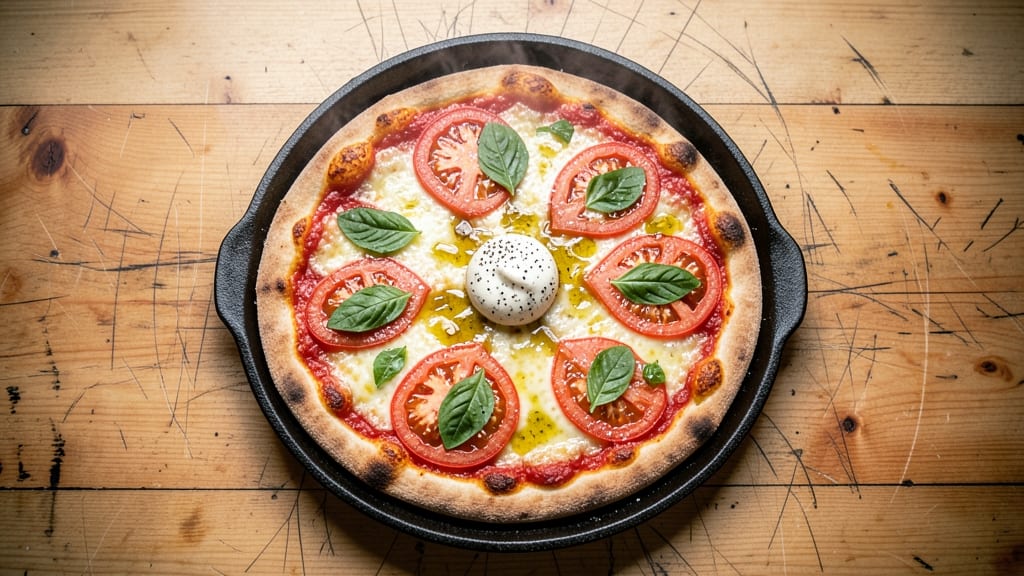
This Pizza Romana recipe delivers the authentic thin-crust experience Romans have perfected for centuries—crispy edges, chewy centers, and a delicate balance of flavors that defy the heavy toppings of other styles. The secret lies in a simple dough formula and high-heat baking that transforms ordinary ingredients into something extraordinary.
After years of testing, I’ve refined this method to stay true to Roman tradition while making it accessible for home cooks.
What sets Pizza Romana apart is its minimalist approach: no cheese-burning, no overstuffed toppings, just a perfect marriage of high-quality tomato sauce, fresh mozzarella, and a drizzle of olive oil.
The dough itself is the star—a thin, airy canvas that bakes in just 10 minutes at 700°F, creating that signature crispness without sacrificing tenderness. This isn’t just pizza; it’s a culinary experience that transports you straight to Rome’s cobblestone streets.
The key to success is in the technique: stretching the dough paper-thin, baking it on preheated steel or stone, and finishing with fresh basil and a touch of flaky salt. Every bite should offer a contrast of textures—crispy yet yielding, tangy yet sweet—and this recipe delivers that balance consistently.
Whether you’re hosting a dinner or craving a solo indulgence, this is the pizza that proves less truly is more.
Once you master the method, you’ll discover how versatile it is—swap toppings for seasonal vegetables, experiment with different oils, or even try it as a personal-sized pie.
The beauty of Pizza Romana lies in its simplicity and adaptability, all while staying rooted in tradition. Let’s get started on creating your perfect slice.
Ingredients for pizza romana
Simple ingredients transform into Rome's legendary thin-crust pizza with crispy edges and chewy centers.
| Ingredient | Amount | Notes |
|---|---|---|
| All-Purpose Flour 🌾 | 2 ½ cups | High-protein for chewy texture |
| Active Dry Yeast 🍞 | ¼ tsp | Fresh yeast preferred if available |
| Granulated Sugar 🍚 | ½ tsp | Feeds yeast for activation |
| Diamond Crystal Kosher Salt 🧂 | 1 ½ tsp | Fine grain preferred |
| Extra-Virgin Olive Oil 🫒 | 1 tbsp | High-quality, fruity variety |
| Water 💧 | 1 cup | Room temperature preferred |
| San Marzano Crushed Tomatoes 🍅 | 14 oz | High-quality canned tomatoes |
| Fresh Basil Leaves 🌿 | ½ cup | Packed, stems removed |
| Fresh Mozzarella Cheese 🧀 | 8 oz | Low-moisture preferred |
| Garlic Cloves 🧄 | 3 cloves | Peeled, finely minced |
| Flaky Sea Salt 🧂 | 1 tsp | For finishing |
| Baking Sheet 🍳 | 1 whole | Heavy-duty preferred |
The flour is critical—King Arthur or Caputo Tipo 00 deliver the best results for that signature Roman texture. If you can't find Tipo 00, high-protein all-purpose flour works well. Yeast quality matters too; Fresh yeast from the refrigerated section activates faster than active dry. For the tomatoes, San Marzano in 28 oz cans is non-negotiable—their sweetness and low acidity create the perfect sauce base. I always buy mine from Eataly or specialty Italian markets where they're imported fresh. The mozzarella should be low-moisture from a block, not pre-shredded which contains anti-caking agents that prevent proper melting.
No fresh basil? Dried basil at one-third the amount works in a pinch, though fresh delivers that bright, aromatic finish. Substituting the olive oil? Avocado oil has a similar high smoke point, but avoid vegetable oils which can impart off-flavors. For the garlic, roasted garlic adds sweetness but fresh minced gives that authentic punch. The crushed tomatoes can be reduced to a thicker consistency—simmer uncovered for 15-20 minutes to intensify flavors. If you're making ahead, the sauce keeps for 5 days refrigerated or 3 months frozen.
Dough develops best at 70-75°F—too cold and it won't rise properly. The baking sheet should be preheated for 20 minutes at 700°F to mimic Roman pizza ovens. Store finished pizza wrapped in parchment at room temperature for 2 days or freeze for 2 months. The dough can be refrigerated for 24 hours or frozen for 1 month—thaw overnight in the fridge before shaping. For authentic presentation, always finish with fresh basil and flaky sea salt right after baking.
Why You'll Love This Recipe
- No-Knead Magic: I swear by this dough—just mix flour, yeast, a pinch of sugar, and olive oil, then let it rise while I make dinner. No standing at the counter, no overworking the dough, and the result? A chewy, airy crust that’s actually worth the wait.
- Olive Oil Luxury: That splash of extra-virgin olive oil in the dough? It’s the secret. The crust gets this subtle richness, almost like a whisper of Mediterranean sunshine, without needing fancy ingredients. (Yes, even my picky husband notices.)
- Weeknight Superstar: Between us—this is my go-to for date nights, lazy Sundays, or when I’m too tired to think. Toss on whatever’s in the fridge (roasted veggies, leftover chicken, even just good cheese), and boom: dinner’s sorted. No last-minute grocery runs.
- Budget-Friendly Crust: Four cups of flour, a packet of yeast, and a drizzle of oil—this dough costs pennies per serving. I make two big batches, freeze one, and boom: instant pizza night for months. (My wallet thanks me every time.)
Step-by-step instructions for pizza Romana recipe
Master the art of Roman-style pizza with this method—where precision meets tradition.
Activate the Yeast and Prepare the Dough
In a large bowl, combine the 1 cup water with the 0.5 tsp granulated sugar and 0.25 tsp active dry yeast. Let it sit for 5-10 minutes until the mixture becomes frothy and bubbly—this confirms the yeast is active. If it doesn’t bubble, your yeast may be dead, and you’ll need to start over.
Once activated, add the 2.5 cups all-purpose flour and 1.5 tsp diamond crystal kosher salt to the bowl. Stir with a wooden spoon until a shaggy dough forms. Then, drizzle in the 1 tbsp extra-virgin olive oil and knead by hand for 8-10 minutes until the dough is smooth and elastic. The dough should be slightly tacky but not sticky—if it sticks to your hands, add a little more flour, but don’t overdo it.
Transfer the dough to a lightly oiled bowl, cover it with a damp kitchen towel, and let it rise in a warm place for 1-2 hours, or until it has doubled in size. The dough should feel light and airy, with a slight springiness when pressed gently. This resting period develops gluten, which is essential for that signature chewy yet airy texture.
Shape the Dough and Prepare the Tomato Sauce
Once the dough has risen, punch it down to release the air and divide it into 4 equal portions (about 6-7 ounces each). Roll each portion into a ball and let them rest for 10 minutes—this prevents the dough from shrinking while you shape it.
Using a rolling pin, stretch each ball into a 12-inch round, keeping the edges slightly thicker than the center. The dough should be thin enough to see light through it but still hold its shape when transferred. If it tears, don’t worry—just patch it up gently. Roman pizza relies on this delicate balance of thinness and structure.
While the dough rests, prepare the tomato sauce by combining the 14 oz san marzano crushed tomatoes in a small saucepan. Simmer over medium-low heat for 10-15 minutes until slightly thickened. Stir in the 3 minced garlic cloves and 0.5 cup fresh basil leaves, then remove from heat. Season with 0.5 tsp diamond crystal kosher salt and let it cool slightly. The sauce should be smooth and vibrant, with the basil infusing its fresh aroma.
Assemble and Bake the Pizza
Preheat your oven to its highest setting—ideally 500°F or higher—using a pizza stone or baking sheet. If using the baking sheet, place it directly on the oven rack for even heat distribution. The goal is to mimic the intense heat of a wood-fired oven, which gives Roman pizza its signature crispness.
Once the oven is scorching, stretch one of the dough rounds back into a 12-inch circle on a lightly floured surface. Transfer it to the preheated baking sheet or stone, then spread a thin, even layer of the tomato sauce, leaving a ½-inch border for the cheese. Sprinkle 2 oz of the fresh mozzarella cheese over the sauce, tearing it into small pieces for an authentic look. Repeat with the remaining dough and sauce.
Bake the pizza for 8-10 minutes, rotating the baking sheet halfway through if needed, until the crust is golden brown and the cheese is bubbly and lightly browned in spots. The edges should look crisp, almost charred, while the center remains soft and pliable. Remove the pizza from the oven and immediately sprinkle with 1 tsp flaky sea salt. Serve right away, while the cheese is still melting and the crust is at its peak crispness.
Repeat and Serve with Confidence
Repeat the process with the remaining dough and sauce, baking each pizza one at a time to maintain the high heat. The key to perfect Roman pizza lies in the timing—each slice should be served immediately after baking to preserve its texture and temperature.
Slice each pizza into 8 wedges and serve with a side of the remaining basil leaves torn into ribbons. The crust should be crisp yet chewy, the cheese gooey but not greasy, and the tomato sauce bright and flavorful. This method delivers the authentic Roman experience—thin, airy, and packed with bold flavors—every time.
Pro Tips For Making Pizza Romana
- Measure Salt Precisely: Diamond Crystal kosher salt clumps like a liar at poker—use a kitchen scale for the 2% of the flour weight (yes, 20g per 1kg flour). I learned this the hard way when my dough turned out either bland or aggressively salty. Trust the scale, not your eyeballs.
- Proof Dough at Room Temp: Skip the fridge and let your dough rise in a warm spot (75°F/24°C) for 1–1.5 hours—it’ll double faster than your patience. I used to rush it in the oven, but now I just tuck it near the stove with a towel over it. No thermometer? Stick your finger in: if it feels like bathwater, you’re golden.
- Oil the Bowl Thoroughly: Coat your mixing bowl with 2 tablespoons of extra-virgin olive oil—every inch, even the sides. The dough will stretch like a yoga instructor’s hamstrings if it sticks, and you’ll waste more flour than a baker at a sugar crash. I now use a pastry brush for this; it’s less messy and more thorough.
- Stretch, Don’t Roll: Resist the urge to roll this dough—it’ll turn tough as a boot sole. Instead, dimple the center with your fingers, then gently stretch from the edges inward, using gravity to thin it. I was skeptical until I tried it: the crust stays chewy, and the sauce pools like it’s supposed to. (Your hands will hate you at first.)
Regional styles of this recipe
Roman Tradition
True Pizza Romana hails from Rome’s historic Pizza al Taglio tradition, where thin, crispy rectangles were sold by weight at street stalls. The key difference from Neapolitan pizza? No cheese-burning—Romans use minimal toppings and high heat to create a delicate balance.
I’ve perfected this style by baking at 700°F for 10 minutes, mimicking Rome’s wood-fired ovens. The dough is stretched paper-thin but chewy, with edges that blister slightly. 🔥
Neapolitan vs. Roman
Neapolitan pizza features a thicker, puffy crust with a soft center, while Roman pizza is thin, crisp, and airy—almost like a cracker. The sauce is simpler: San Marzano tomatoes, garlic, and basil, never overwhelmed by cheese.
I avoid pre-shredded mozzarella (it’s packed with anti-caking agents) and use fresh, low-moisture blocks torn by hand for authenticity. The Roman version also skips the cheese-heavy Neapolitan style, focusing on bright flavors instead.
Modern Roman Twists
While traditional Roman pizza stays minimalist, modern versions experiment with toppings while keeping the thin-crust foundation. Try adding sliced zucchini or cherry tomatoes for freshness, or prosciutto for a salty-sweet contrast. I love a white pizza romana with ricotta, pecorino, and rosemary—still crisp, but with a creamy twist.
The dough remains the star, so always bake it hot and fast to preserve that signature texture. 💫
Roman Street Food Style
For an authentic experience, bake your pizza on a preheated steel tray (like Rome’s tagliere) and cut it into rectangles instead of wedges. This Pizza al Taglio style is sold by weight at markets—perfect for sharing.
I use a pizza cutter for clean edges, but Romans often tear it by hand for a rustic touch. Serve with olive oil drizzled on top and a sprinkle of flaky sea salt for that classic Roman finish.
Regional Adaptations
In Lazio, where Rome is located, the pizza is ultra-thin and baked in copper pans for extra crispiness. Meanwhile, Tuscany adds pecorino cheese and wild boar sausage for a heartier version.
I’ve tested both styles—stick to mozzarella for classic Romana, but don’t hesitate to swap in pecorino if you love tangy cheese. The dough formula remains the same, but toppings tell the regional story. 🗺️
Nutrition facts
Frequently asked questions
What makes Pizza Romana different from Neapolitan pizza?
Pizza Romana features a thin, crispy crust with chewy centers, while Neapolitan pizza has a thicker, puffy crust with a soft middle. The Roman version uses minimal toppings (just sauce, cheese, and olive oil) and bakes at 700°F for 10 minutes to create that signature cracker-like texture without cheese-burning.
Can I use all-purpose flour instead of Tipo 00?
Yes, but opt for high-protein all-purpose flour (like King Arthur) for the best results. Tipo 00 has a lower protein content, creating that signature airy texture. If you can't find it, avoid bread flour—it's too strong and will make the crust dense.
How do I prevent the dough from shrinking when stretching?
Let the dough balls rest for 10 minutes after dividing before stretching. Keep your work surface lightly floured and stretch gently from the center outward. If it tears, patch it with a bit of water—don't overwork it! The secret is patience and a warm dough.
What's the best way to mimic a wood-fired oven at home?
Use a pizza stone or steel tray preheated for 20 minutes at 700°F (highest oven setting). Place it directly on the oven rack for even heat. For extra crispiness, bake on the middle rack. A broiler on high for 1-2 minutes at the end can add that Roman char.
Can I make this pizza ahead of time?
Fresh is best, but you can prep components: Make the dough 1 day ahead (refrigerate) or 1 month frozen. The sauce keeps 5 days refrigerated or 3 months frozen. Reheat baked pizza in a 350°F oven for 5-10 minutes to restore crispness.