
Desserts
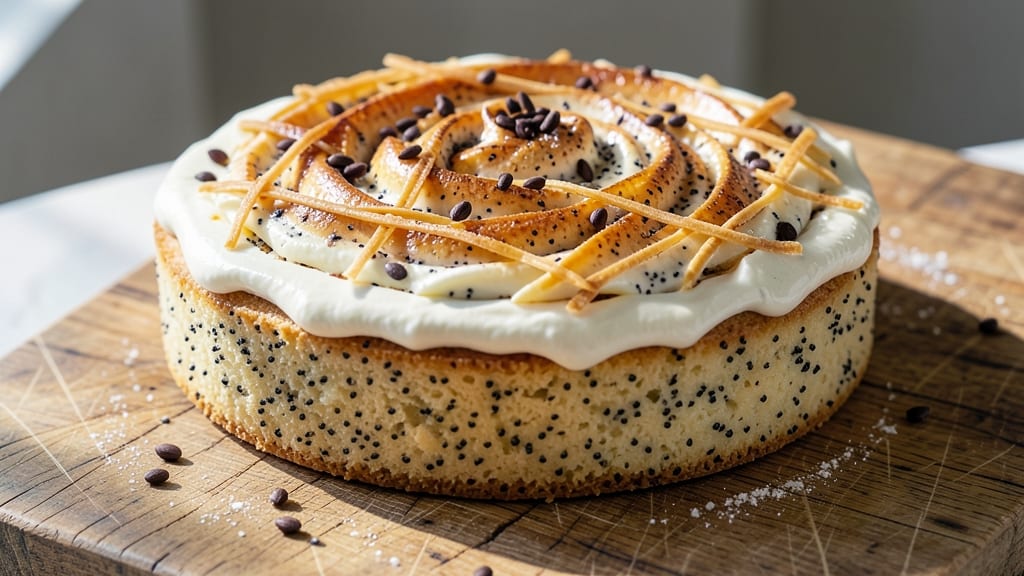
This poppyseed cake recipe delivers layers of tender vanilla cake with a nutty crunch from poppy seeds, all topped with velvety vanilla frosting that melts in your mouth. 💛 I first baked this version after my daughter Lily begged for something "fancy but not too sweet" for her birthday—it became an instant hit with both kids and adults.
The secret lies in properly grinding the poppy seeds and folding them gently into the batter to avoid dense pockets.
The cake itself is light and airy, thanks to a precise mix of all-purpose flour, baking powder, and a touch of sour cream that keeps it moist without being heavy. I bake it in two 8-inch rounds for perfect layering, then let it cool completely before spreading the frosting.
The vanilla frosting uses a simple 3-ingredient method (powdered sugar, butter, and vanilla extract) that's foolproof and pairs beautifully with the cake's nutty flavor.
What you'll end up with is a cake that's rich enough to feel special but not so sweet it's overwhelming—each bite offers a perfect balance of tender crumb, poppy seed crunch, and creamy frosting.
The layers hold together beautifully, making it perfect for celebrations or when you want to impress guests without spending hours in the kitchen.
This recipe serves 12-14 and can be made a day ahead, with the frosting added just before serving. For extra flair, I like to sprinkle crushed pistachios or toasted almonds on top, but the classic version is already irresistible. Let's get baking!
Ingredients for poppyseed cake
Twelve ingredients, three layers of magic—this poppyseed cake is a crowd-pleaser every time.
| Ingredient | Amount | Notes |
|---|---|---|
| All-Purpose Flour 🌾 | 2 ½ cups | Sifted for light texture |
| Granulated Sugar 🍚 | 2 cups | White or light brown |
| Poppy Seeds 🌱 | ½ cup | Freshly ground for crunch |
| Unsalted Butter 🧈 | 1 cup | Cold, cubed for creaming |
| Large Eggs 🥚 | 3 whole | Room temperature |
| Vanilla Extract 🌿 | 2 tsp | Pure alcohol-free preferred |
| Baking Powder 🧂 | 2 tsp | Double-acting for lift |
| Salt 🧂 | ½ tsp | Fine sea salt |
| Sour Cream 🥛 | ½ cup | Full-fat for moisture |
| Milk 🥛 | ½ cup | Whole milk preferred |
| Powdered Sugar 🍚 | 3 cups | Sifted for smooth frosting |
| Vanilla Frosting Butter 🧈 | 1 cup | Cold, cubed for piping |
| Heavy Cream 🥛 | ¼ cup | Chilled for stability |
Poppy seeds are the star here, and freshly grinding them makes all the difference. Trader Joe's and Whole Foods sell them pre-ground, but I always grab whole seeds and pulse them in my food processor for that perfect crunch. The butter needs to be cold—cold from the fridge, not softened at room temp. I use Land O'Lakes or Plugrá for reliability. For the vanilla extract, Nielsen-Massey is my go-to—it's pure and consistent. The sour cream adds moisture without heaviness, so don't skip it. And that milk? Whole milk gives the best texture, but 2% works in a pinch.
No poppy seeds? Toasted almonds or crushed pistachios add a similar crunch—just reduce the amount to 0.25 cup since they're larger. Short on sour cream? Plain Greek yogurt at the same quantity works beautifully. The frosting can be made with cream cheese for a tangier twist, but the classic butter version is foolproof. If your frosting is too runny, pop it in the fridge for 10 minutes to firm up. And for extra flair, toast the nuts you're using for garnish—5 minutes at 350°F brings out their flavor.
This cake keeps beautifully for 3 days at room temperature, wrapped tightly in plastic. For longer storage, freeze the unfrosted layers for up to 2 months. The frosting can be made a day ahead—just whip it again before spreading. I always bake mine in two 8-inch rounds, but if you're short on pans, a 9-inch round works too. Just adjust baking time by 5-7 minutes—the center should spring back when touched.
Why You'll Love This Recipe
- No-Fuss Mixing: I swear by this recipe’s simplicity—just cream butter and sugar, crack eggs, fold in dry ingredients, and pop it in the oven. No fancy techniques, no waiting for dough to rest. Honestly, I’ve made it in my pajamas while watching a movie.
- Nutty Magic: That first bite? The poppy seeds add this earthy, slightly sweet crunch that’s ridiculously good—like a cozy hug for your taste buds. The butter makes it rich but not heavy, and the sugar keeps it just sweet enough to feel special.
- Breakfast or Dessert: Here’s what sold me—this cake works for brunch and dinner. Serve it warm with a dusting of powdered sugar for a lazy weekend treat, or slice it cold the next day with coffee. My husband even sneaks pieces for his lunchbox.
- Budget-Friendly Staples: Between us, this recipe uses pantry basics—flour, sugar, butter, eggs—that won’t break the bank. A single batch feeds six, and leftovers keep beautifully for days. I’ll be real: it’s my go-to when I need something impressive without the grocery splurge.
Step-by-step instructions for poppyseed cake with vanilla frosting
This is how you create a perfectly moist poppyseed cake with layers that crumble just right and a velvety vanilla frosting that melts in your mouth.
👨🍳 Step 1: Cream Butter and Sugar for Lightness
In a stand mixer fitted with the paddle attachment, beat the 1 cup unsalted butter (cold, cubed) and 2 cups granulated sugar on medium speed for 3-4 minutes until light and fluffy. You'll notice the mixture nearly doubles in volume and becomes pale—this incorporates air that makes the cake tender.
I like to scrape down the sides of the bowl every 30 seconds to ensure everything gets evenly creamed. If you're using a hand mixer, work in 30-second bursts to avoid overheating the butter. The texture should be smooth and ribbon-like when you lift the beaters.
👨🍳 Step 2: Add Eggs and Vanilla for Rich Flavor
Add the 3 whole large eggs one at a time, mixing on low speed for 10 seconds after each addition. Then add the 2 teaspoons vanilla extract and mix for another 20 seconds until fully combined. The mixture might look slightly curdled at first, but don't worry—it will come together.
Here's the thing—room temperature eggs incorporate better, so if yours are straight from the fridge, let them sit in warm water for 5 minutes first. This prevents lumps and ensures a smoother batter. The vanilla extract should be pure alcohol-free for the best flavor without any aftertaste.
👨🍳 Step 3: Combine Dry Ingredients and Poppy Seeds
In a separate bowl, whisk together the 2.5 cups all-purpose flour (sifted), 2 teaspoons baking powder, and 0.5 teaspoon salt. Gradually add this dry mixture to the wet ingredients, mixing on low speed for 30 seconds just until combined. You should still see some flour streaks—overmixing develops gluten and makes the cake tough.
Now fold in the 0.5 cup poppy seeds using a silicone spatula. I like to press them gently against the sides of the bowl to ensure even distribution. Add the 0.5 cup sour cream and 0.5 cup milk, mixing just until smooth. The batter should be thick but pourable—if it's too stiff, add 1 tablespoon milk at a time until it reaches the right consistency.
🍳 Step 4: Bake Layers to Golden Perfection
Preheat your oven to 350°F. Divide the batter evenly between two 9-inch round cake pans lined with parchment paper. Bake for 25-30 minutes or until a toothpick inserted in the center comes out clean. The edges should be golden brown, and the top should spring back when gently pressed.
Don't open the oven during baking—this causes the cakes to sink. If the tops brown too quickly, tent loosely with foil after 15 minutes. Let the cakes cool in the pans for 10 minutes, then transfer to a wire rack to cool completely. This prevents them from cracking when you remove them from the pans.
🥘 Step 5: Make the Vanilla Frosting
In a stand mixer fitted with the paddle attachment, beat the 1 cup vanilla frosting butter (cold, cubed) on medium speed until creamy, about 2 minutes. Gradually add the 3 cups powdered sugar (sifted), mixing on low speed until combined. Add the 0.25 cup heavy cream and mix until smooth.
Here's where it gets fun—add the 2 teaspoons vanilla extract and mix until fully incorporated. The frosting should be thick but spreadable. If it's too stiff, add 1 teaspoon milk at a time until it reaches a smooth, pipeable consistency. Chill the frosting for 15 minutes before using to make it easier to work with.
🍽️ Step 6: Assemble and Frost the Cake
Place one cake layer on a serving plate. Spread a thin layer of frosting on top to seal in moisture, then add the second layer. Frost the top and sides of the cake with the remaining frosting, using a spatula to create smooth, even swirls. For extra flair, pipe a simple border around the edges.
Sprinkle the remaining poppy seeds on top of the frosting for a beautiful finish. Let the cake sit at room temperature for 30 minutes before slicing to allow the frosting to set slightly. Each slice should have a tender crumb, nutty poppyseed flavor, and a creamy vanilla frosting that melts in your mouth!
Pro Tips For Making Poppyseed Cake
- Toast the Seeds: Poppy seeds have a bitter edge that can overpower the cake if you skip this step. Heat them dry in a skillet over medium-low for 3–4 minutes, stirring constantly, until fragrant—just until they smell nutty. (Yes, even if you’re impatient like me, don’t rush this.)
- Cream Butter Cold: Unsalted butter straight from the fridge is your friend here. It whips up lighter and holds air better than softened butter, which can turn the batter greasy. Beat it until it’s pale and fluffy—about 3–4 minutes—before adding sugar.
- Don’t Overmix the Batter: Poppyseed cake is delicate, and overworking the batter introduces gluten, making it dense. Mix just until the flour disappears—maybe 10–12 strokes with a spatula. (I learned this the hard way after a brick-like first attempt.)
- Bake Until Springy: The cake’s done when a toothpick comes out clean and the center springs back when gently pressed. Overbaking dries it out, so pull it when the edges are set but the middle still jiggles slightly—then let it cool completely before slicing. (Your future self will thank you.)
Essential equipment for perfect results
Mixing Essentials
You'll need a stand mixer with paddle attachment—this is non-negotiable for creaming butter and sugar properly. I use my KitchenAid Artisan Series because it handles the job effortlessly, but a hand mixer works in a pinch if you're patient.
The key is the paddle attachment, not the whisk—this ensures you incorporate air without over-developing gluten. 💛
Grinding Poppy Seeds
Freshly ground poppy seeds make all the difference. Skip the pre-ground seeds from the store and pulse ½ cup whole poppy seeds in a food processor for 10-15 seconds until finely ground but not powdered.
I keep a small batch pre-ground in my freezer for quick access. If you don't have a food processor, a mortar and pestle works too—just be patient and grind in batches.
Precision Baking Tools
Two 9-inch round cake pans are ideal, but I've baked this cake successfully in 8-inch pans by reducing the batter by ¼ cup. Line them with parchment paper circles cut to fit—this prevents sticking and makes removal effortless.
A toothpick is essential for checking doneness, and I always keep a small offset spatula handy for spreading frosting smoothly. For extra precision, a digital kitchen scale ensures accurate measurements, especially for the flour.
Frosting Perfection
The frosting requires a paddle attachment again, but this time we're working with powdered sugar, which can be dusty. I always sift the 3 cups powdered sugar before adding it to avoid lumps.
A bench scraper helps smooth out the frosting between layers, and a piping bag with a star tip adds professional flair if you're feeling fancy. For garnish, toasted nuts or extra poppy seeds need a fine-mesh sieve to distribute them evenly.
Cooling and Storage
A wire cooling rack is a must-have for letting cakes cool completely without soggy bottoms. For storage, I use clear plastic wrap pressed directly against the cake to prevent drying. A sharp serrated knife makes clean slices, and a damp cloth keeps crumbs at bay when serving.
For make-ahead prep, a large airtight container keeps the cake fresh for up to 3 days at room temperature.
Optional Upgrades
If you're serious about baking, invest in a cake turntable for frosting—it makes spreading the frosting a breeze. A thermometer ensures your oven is at the correct 350°F (some ovens run hot or cold).
For extra flair, a pastry brush helps dust powdered sugar on the sides of the cake before frosting. And if you love experimenting, a small food mill lets you make your own vanilla bean paste for homemade frosting. 💡
Nutrition facts
Frequently asked questions
Why does this poppyseed cake need freshly ground seeds?
Freshly grinding poppy seeds creates that perfect crunchy texture that store-bought pre-ground seeds can't match. When you grind them yourself, you control the coarseness and avoid the powdery texture that happens when seeds sit on shelves. The seeds also release their nutty oils while grinding, which enhances the flavor in every bite.
Can I substitute poppy seeds with something else?
For a similar crunch, try toasted almonds or crushed pistachios—just reduce the amount to ¼ cup since they're larger. If you want a seed-free option, sunflower seeds work well too. The key is keeping the texture contrast with the tender cake layers.
How do I know when the cake is fully baked?
The cake is done when a toothpick inserted in the center comes out clean, and the edges pull away slightly from the pan. The top should spring back when gently pressed. Overbaking dries out the cake, so don't exceed 30 minutes at 350°F—every oven varies, so check at 25 minutes if yours runs hot.
Can I make this cake gluten-free?
Yes, but you'll need a 1:1 gluten-free flour blend and add ½ teaspoon xanthan gum to improve structure. Replace the sour cream with dairy-free yogurt and use gluten-free oats if toasting for garnish. The texture will be slightly denser, but the flavor remains delicious.
Why does my frosting turn grainy?
Grainy frosting usually means lumps from powdered sugar or uneven mixing. Always sift the powdered sugar before adding, and mix on low speed to avoid incorporating air. If it's too stiff, add 1 teaspoon milk at a time. Chill the frosting for 15 minutes before using to help it smooth out.