
Sauces & Condiments
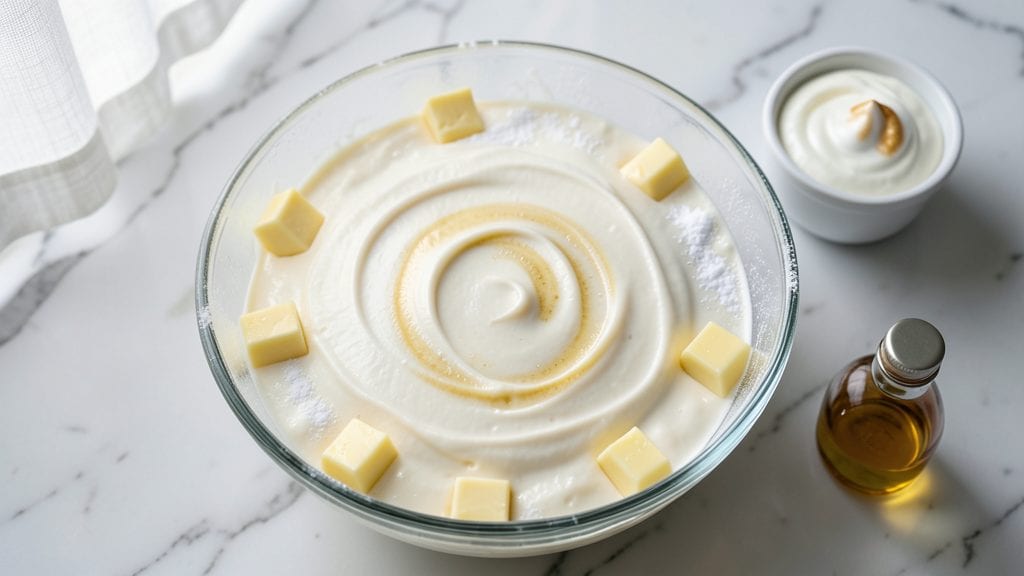
This traditional icing recipe delivers the buttery vanilla swirls that make cakes look like they came from a bakery—perfect pipe stability every time. I learned this technique from my Nonna, who swore by the ratio of powdered sugar to butter for that ideal consistency.
The secret lies in proper mixing and a touch of meringue powder for structure, ensuring your icing holds its shape whether you're piping rosettes or flooding layers.
What sets this recipe apart is its versatility—use it for decorating sheet cakes, cupcakes, or even as a filling between layers. The buttercream base gives a rich, velvety texture while maintaining enough firmness to pipe clean lines.
Unlike store-bought versions, this recipe uses real vanilla extract for depth of flavor, and the powdered sugar ensures smooth, glossy results without graininess.
By the time you're done, you'll have an icing that's foolproof for piping intricate designs or spreading smoothly over frosting. The butter content keeps it tender enough to work with but firm enough to hold its shape.
This is the kind of icing that transforms homemade desserts into showstoppers—no fancy equipment required, just patience and the right ratios.
Perfect for layer cakes, donuts, or even as a glaze for cookies. Let's get started with the recipe that'll make your desserts look professionally made.
Ingredients for traditional icing
Eight simple ingredients transform into the dreamy icing your Nonna would approve of—smooth, stable, and packed with flavor.
| Ingredient | Amount | Notes |
|---|---|---|
| Unsalted Butter 🧈 | 1 cup | Cold, cubed for easier mixing |
| Powdered Sugar 🍚 | 4 cups | Sifted for smooth texture |
| Pure Vanilla Extract 🌿 | 2 tsp | Real extract for deep flavor |
| Meringue Powder 🍰 | 1 tbsp | For perfect pipe stability |
| Heavy Whipping Cream 🥛 | ½ cup | Cold for fluffiness |
| Milk 💧 | 1 tbsp | Adjusts consistency |
| Salt 🧂 | ¼ tsp | Fine sea salt |
| Cornstarch 🌾 | 1 tsp | Prevents graininess |
The butter is non-negotiable—European-style or Plugrá melts beautifully for that velvety finish. Grab the coldest butter from your fridge, cubed but not softened—this keeps your icing firm enough to pipe but creamy enough to spread. Powdered sugar? Domino or C&H are my go-tos, but sift it first (trust me, it makes all the difference). Meringue powder isn't just a fancy name—it's what gives this icing that professional bakery stability. You can find it at King Arthur Flour or online if your local store doesn't carry it. And for the vanilla? Real extract—none of that imitation stuff. Nonna's rule: if it doesn't say 'pure vanilla extract', don't buy it.
No meringue powder? 1 extra egg white whipped to stiff peaks works in a pinch (though it adds a slight eggy taste). Short on butter? Coconut oil at half the amount keeps it dairy-free, but the texture won't be identical. The heavy cream can be swapped for Greek yogurt if you're watching fat, but it'll be slightly tangier. Powdered sugar clumping? Cornstarch is your friend—it's what keeps this icing silky smooth. Pro tip: if your icing is too thick, add milk 1 tsp at a time. Too thin? Chill it for 15 minutes and try again. And if you're piping rosettes, a piping bag with a star tip makes all the difference—Wilton 1M is my favorite.
This icing keeps beautifully—3 days in the fridge covered with plastic wrap. For longer storage, freeze portions in airtight containers for up to 3 months. Just thaw at room temperature before using. A little trick I learned: if your icing gets too soft from sitting out, pop it in the fridge for 10 minutes to firm up before piping. And if you're decorating cakes? Use a offset spatula to spread it smoothly over frosting—it's a game-changer. Leftovers? Slather them on donuts or use as a glaze for cookies. Nothing goes to waste with this versatile recipe.
Why You'll Love This Recipe
- No-Fuss Whip-Up: I swear, this takes less time than waiting for the coffee to brew. Just cream the butter, sift the powdered sugar, and fold in that meringue powder—no eggs to separate, no overbeating to stress about. The heavy cream ties it all together in minutes, not hours.
- Velvet Smooth Magic: That first bite? Pure buttery silk with vanilla whispering through every layer. The meringue powder gives it structure without the fuss of homemade meringue, and the cream keeps it luscious—not cloying, not dry. Honestly, it’s the kind of icing that makes me want to frost everything.
- Party in a Bowl: Birthday cake? Check. Holiday cookies? Done. Even a last-minute pie needs this. The recipe scales like a dream—double it for a crowd, halve it for a quiet night in. And because it’s stable at room temp, I’ve frosted cakes the morning of without a single meltdown.
- Budget Buster: I use this instead of store-bought all the time. Butter and powdered sugar are pantry staples, and a little vanilla extract goes a long way. The meringue powder might seem like a splurge, but one box lasts forever—no wasted eggs or failed batches. My wallet (and my taste buds) thank me every time.
Step-by-step instructions for traditional icing recipe
This buttery vanilla icing delivers flawless pipe stability and rich flavor every time—let's make it!
Cream the Butter and Sugar for Light Texture
Place the 1 cup unsalted butter (cold and cubed) in a large mixing bowl. Using a hand mixer or stand mixer fitted with the paddle attachment, beat on medium speed until the butter is completely smooth and creamy, about 2-3 minutes. This ensures no lumps remain and creates a perfect base for the icing.
Gradually add the 4 cups powdered sugar (sifted) through a fine-mesh sieve as you mix. This prevents clumping and creates a silky, lump-free texture. Mix on medium speed for 3-4 minutes until the sugar is fully incorporated and the mixture is light and fluffy. You'll know it's ready when the sides of the bowl are clean and the mixture looks smooth and pale.
Add Stabilizers and Flavorings
In a small bowl, whisk together the 1 tbsp meringue powder, 1 tsp cornstarch, 0.25 tsp salt, and 2 tsp pure vanilla extract. The meringue powder is key here—it creates the perfect pipe stability while keeping the icing light. Sprinkle this mixture evenly over the butter-sugar blend while mixing on low speed. This prevents the powder from clumping and ensures even distribution.
Continue mixing for 1-2 minutes until fully combined. The icing should now be smooth, glossy, and hold its shape when piped. If it looks too thick, add the 1 tbsp milk and mix for another 30 seconds. If it's too thin, add 1 tablespoon powdered sugar at a time until it reaches a thick, pipeable consistency—think of it like toothpaste: it should hold its shape but still flow smoothly.
Incorporate the Heavy Whipping Cream
In a separate bowl, whip the 0.5 cup heavy whipping cream (cold) with clean beaters until it forms soft peaks. This adds richness and lightness to the icing. Gently fold the whipped cream into the butter-sugar mixture using a spatula, mixing just until fully combined. Be careful not to overmix—you want to maintain the airiness while integrating the cream evenly.
Taste the icing and adjust the sweetness if needed. If it tastes too sweet, add a pinch more of the salt to balance the flavors. If it needs more vanilla, add an extra ½ teaspoon pure vanilla extract. The icing should be sweet but not overpowering, with a rich buttery depth that complements cakes and cookies perfectly.
Test and Perfect the Consistency
Transfer the icing to a piping bag fitted with a large star tip (or a zip-top bag with a small corner snipped off). Pipe a small amount onto a plate and let it sit for 5 minutes. If it spreads too much, add 1 tablespoon powdered sugar and mix until smooth. If it's too thick and holds its shape without flowing, add ½ teaspoon milk at a time until it reaches the perfect consistency—thick enough to hold its shape but still smooth and spreadable.
For the classic swirl effect, pipe the icing in a zigzag pattern onto a cake or cookie sheet, then immediately use a small offset spatula to create soft peaks and swirls. This technique gives you that professional bakery look. Cover the icing with a clean kitchen towel to prevent a skin from forming, and let it sit at room temperature for 30 minutes before using. This resting time allows the flavors to meld and the texture to stabilize perfectly.
Pro Tips For Making Traditional Icing
- Soften Butter First: I learned this the hard way—trying to mix cold butter into powdered sugar just creates a greasy mess. Let the butter sit at room temperature for 15-20 minutes before starting. It blends smoother and avoids lumps that ruin the texture.
- Sift That Sugar: Powdered sugar clumps like a stubborn guest who won’t leave. Sift it directly into your bowl before adding anything else—this cuts down on lumps and makes mixing a breeze. Trust me, your icing will thank you.
- Whip Cream Last: Adding heavy whipping cream too early makes the icing too thin too fast. Wait until you’ve mixed the butter, sugar, and vanilla into a smooth paste, then fold in the whipped cream at the very end. This keeps your icing stable and spreadable.
- Measure Meringue Powder Precisely: Too much meringue powder and your icing turns stiff; too little and it won’t hold shape. Use a kitchen scale if you can—1 teaspoon per cup of powdered sugar is the sweet spot. No guesswork, just perfect consistency.
Serving suggestions for this recipe
Cake Decorating Magic
This icing isn't just for show—it's a game-changer for cake decorating. For a buttery vanilla swirl, pipe zigzag lines across the cake, then use an offset spatula to create soft peaks and swirls.
I swear by the Wilton 1M tip for those perfect rosettes that look like they came from a bakery. Cover the cake with plastic wrap while you work to keep the icing from drying out too quickly. 🎂
Cookie Glazing Perfection
Want to take your cookies to the next level? Brush this icing over sugar cookies or snickerdoodles while they're still warm. The butter content keeps it smooth and glossy, while the meringue powder ensures it sets just enough to hold its shape.
For extra flair, sprinkle with crushed peppermint or toasted coconut before it dries. I love using this on gingerbread cookies during the holidays—it adds that professional finish. ✨
Donut Drizzling
This icing is my secret weapon for donuts. Dip your favorite donuts halfway into the icing, then roll them in sprinkles or crushed nuts for instant crowd-pleasers. For a glazed effect, thin the icing slightly with 2-3 teaspoons milk and drizzle over yeast donuts or cinnamon rolls.
The key is to work quickly—donuts absorb moisture fast, so keep the icing at room temperature. 🍩
Cupcake Topping Tricks
Pipe small rosettes or swirls on top of cupcakes for a bakery-style finish. For a textured look, use a fork to drag lines through the icing after piping. I also love adding edible gold leaf or colored sprinkles for special occasions.
If your icing gets too thick while decorating, pop it in the fridge for 10 minutes to firm up before piping again. 💛
Layer Cake Flooding
For layer cakes, spread this icing smoothly between frosting layers using an offset spatula. The meringue powder keeps it stable enough to hold its shape without sliding off.
To create a marbled effect, divide the icing into two bowls, tint one with food coloring, then swirl the two together with a knife before spreading. Chill the cake for 30 minutes before adding final decorations to prevent melting. 🎨
Make-Ahead Tips
This icing stores beautifully for 3 days in the fridge covered with plastic wrap. For longer storage, freeze portions in airtight containers for up to 3 months. Thaw at room temperature before using.
Pro tip: if your icing gets too soft after sitting out, give it a 10-minute chill in the fridge to firm up. Leftovers? Use them to glaze cookies, fill cake layers, or even drizzle over pancakes for a sweet breakfast treat. 💡
Nutrition facts
Frequently asked questions
Can I make this icing without meringue powder?
If you don't have meringue powder, whisk 1 extra egg white to stiff peaks and fold it into the icing at the end. This adds stability, though it may give a slight eggy flavor. For a dairy-free version, replace the butter with ½ cup coconut oil (chilled), but the texture will be slightly softer.
Why did my icing turn out too runny?
Runny icing usually means too much liquid or not enough sugar. If it's too thin, add 1 tablespoon powdered sugar at a time and mix until thickened. Chill the icing for 15 minutes before testing again. For piping, aim for a consistency like toothpaste—thick enough to hold its shape but still smooth.
How do I adjust the flavor for chocolate or citrus desserts?
For chocolate, replace ½ cup powdered sugar with ½ cup cocoa powder (sifted) and add 1 tablespoon milk to balance. For citrus, add 1 teaspoon lemon or orange zest along with the vanilla. For extra richness, fold in 2 tablespoons melted chocolate or 1 teaspoon almond extract. Always taste and adjust sweetness with a pinch of salt.
Can I use this icing for warm weather baking?
This icing is best for cooler climates or indoor decorating. In warm weather, the butter can melt, making it too soft to pipe. For outdoor events, chill the icing for 30 minutes before using and store it in the fridge until ready. If needed, add ½ teaspoon cornstarch to help stabilize it. For humidity-prone areas, cover the icing with plastic wrap while working.
What’s the best way to store leftover icing?
Store leftover icing in an airtight container in the fridge for up to 3 days. For longer storage, freeze portions in small containers for up to 3 months. Thaw at room temperature before use. If the icing firms up too much after chilling, let it sit at room temperature for 10 minutes before piping. Never leave it out uncovered—it dries out quickly.