
Breakfast & Brunch
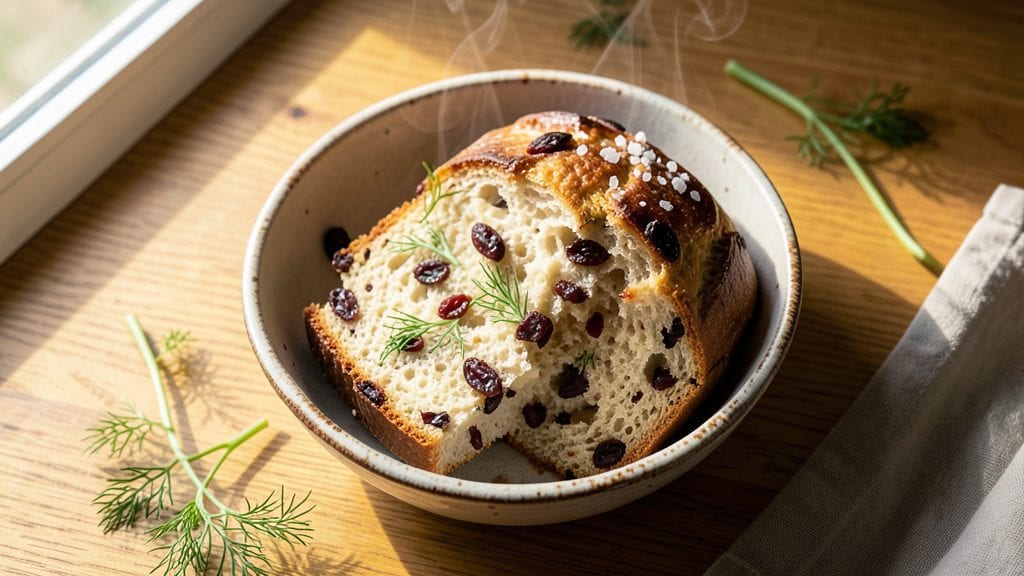
This Amy's raisin fennel bread recipe delivers a perfect balance of sweet raisins and aromatic fennel seeds, creating a loaf with a crispy top and tender crumb.
The anise notes from the fennel seeds add a sophisticated depth that pairs beautifully with the natural sweetness of the raisins, making it ideal for breakfast or dessert. I developed this recipe after years of experimenting with artisan breads, and it consistently produces a loaf that rivals bakery quality.
The key to this recipe lies in the careful combination of ingredients and precise baking technique. You'll use active dry yeast to create a light, airy texture, while the fennel seeds infuse the dough with their signature licorice-like flavor.
The raisins add bursts of sweetness that contrast perfectly with the savory notes, creating a harmonious flavor profile. This recipe is designed to be approachable for home bakers, with clear instructions that ensure consistent results every time.
What you'll achieve is a beautifully risen loaf with a golden, crispy top and a tender interior studded with plump raisins. The aroma alone will fill your kitchen with warmth and comfort, while the taste delivers a perfect blend of sweet and savory flavors.
This bread is versatile enough to enjoy on its own, with butter, or paired with jam for a delightful breakfast or snack.
Perfect for weekend baking projects or holiday gifts, this raisin fennel bread is sure to impress. The recipe includes optional garnishes like coarse sugar or sesame seeds for added texture and visual appeal. Let's get started on creating your own bakery-style loaf at home.
Ingredients for amy's raisin fennel bread
Simple ingredients that transform into bakery-style loaves with crispy tops and sweet-savory crumb.
| Ingredient | Amount | Notes |
|---|---|---|
| Active Dry Yeast 🍞 | 2 ¼ tsp | One packet, room temperature |
| Warm Water 💧 | 1 ¼ cups | 110°F, not hot |
| All-Purpose Flour 🌾 | 5 cups | Plus 1 tbsp for dusting |
| Granulated Sugar 🍚 | ½ cup | For yeast activation |
| Sea Salt 🧂 | 1 ½ tsp | Fine grain preferred |
| Whole Milk 🥛 | ½ cup | Warmed, full-fat |
| Large Eggs 🥚 | 1 whole | Room temperature |
| Unsalted Butter 🧈 | ½ cup | Cold, cubed |
| Plump Raisins 🍇 | 1 ½ cups | Soaked in warm water |
| Whole Fennel Seeds 🌿 | 1 ½ tbsp | Toasted lightly |
| Ground Fennel Seeds 🌶️ | 1 tbsp | For dough infusion |
| Coarse Sugar 🍚 | 2 tbsp | For bread topping |
| Sesame Seeds 🌰 | 1 tbsp | Optional garnish |
The fennel seeds are the magic here—whole and ground for maximum flavor. Toast the whole seeds in a dry pan for 30 seconds to wake up their aroma, then grind half for the dough. Trader Joe's and Penzeys carry the best quality, but any bulk spice section works. For raisins, Sun-Maid or Thompson Seedless are my go-tos—they plump up beautifully. Soak them in warm water for 10 minutes before using, then drain well. The yeast? Freshness matters—check the date on the packet and use it within a month for best results. Store your flour in the freezer if you're not using it often to prevent rancidity.
No whole fennel seeds? Crushed fennel bulb from the produce section works too—just finely chop it. Running short on raisins? Dried cranberries or chopped dates add a different but delicious twist. The milk can be swapped for buttermilk or plant-based milk, but full-fat dairy gives that rich, tender crumb. For a lighter loaf, add 1 tsp baking powder to the flour mix. And if you're feeling fancy, swap the coarse sugar topping for turbinado sugar—it caramelizes even better. The sesame seeds are totally optional but add that bakery-style crunch.
This dough needs time to rise—at least 2 hours for best flavor. Shape it into a round loaf for a classic boulesque look, or go for an oval for a more rustic vibe. The bread keeps well for 3 days at room temperature, wrapped tightly in foil. For longer storage, freeze slices in a bag for up to 3 months. I always make an extra loaf—it's perfect for gifting or freezing. Toasting the bread brings out the fennel's anise notes even more, so don't skip this step if you can wait!
Why You'll Love This Recipe
- No-Knead Magic: I swear by this—just mix the yeast, warm water, and flour, then let it rise while I watch an episode. The raisins plump up naturally, and the fennel’s subtle anise notes weave through without overpowering. Honestly, the dough is so forgiving I’ve even used my hands instead of a mixer.
- Sweet-Savory Balance: That first bite? Warm, chewy crust with a hint of caramelized sugar from the raisins, then a bright fennel kick that lingers. It’s the kind of bread where every slice feels like a little celebration—no heavy spices, just pure, satisfying flavor.
- Weeknight Workhorse: I bake a loaf on Sundays, and it’s still the star of my lunches by Friday. Toast it for breakfast, pack it for work, or serve it with soup—it’s the one bread that doesn’t get ignored. The sea salt cuts through the sweetness, making it perfect for everything.
- Pantry Staple Power: Five ingredients, zero specialty items. If you’ve got flour and yeast, you’ve got this. And because it keeps for days (or freeze slices for freshness later), it’s my go-to for when I’m low on time or cash—but never on taste.
Step-by-step instructions for Amy's raisin fennel bread recipe
Here's how to craft this fragrant, anise-kissed loaf with a crackly top and juicy raisin pockets.
Activate the Yeast with Warm Water and Sugar
In a small bowl, combine the 2.25 teaspoons active dry yeast with the 1.25 cups warm water (about 110°F) and 0.5 cup granulated sugar. Let it sit for 5-7 minutes until frothy—this confirms your yeast is alive and ready to work. You should see tiny bubbles forming and a light, airy texture developing. If nothing happens after 10 minutes, your yeast may be dead, and you'll need to start over.
Here's the thing—this step sets the foundation for your bread. The sugar feeds the yeast, while the warm water creates the perfect environment for activation. Don't use hot water or you'll kill the yeast instantly. If your kitchen is cold, use slightly warmer water (115°F) to speed up the process, but never exceed 120°F or you'll cook the yeast to death.
Mix the Dough with Flour, Milk, Egg, and Butter
In a large mixing bowl, combine the 5 cups all-purpose flour and 1.5 teaspoons sea salt. Create a well in the center and pour in the yeast mixture, 0.5 cup whole milk, 1 whole large egg, and 0.5 cup cold unsalted butter (cut into small cubes). Using a wooden spoon or dough whisk, mix until a shaggy dough forms.
Switch to your hands and knead the dough on a lightly floured surface for 8-10 minutes until smooth and elastic. You'll know it's ready when it springs back slowly when poked. The dough should feel slightly tacky but not sticky—add more flour (1 tablespoon at a time) if needed. Real talk: This is where the magic happens. The kneading develops gluten, which gives your bread that perfect chewy texture and structure. Don't skip this step or your bread will turn out dense.
Infuse the Dough with Fennel and Raisins
While the dough rests, prepare the 1.5 cups plump raisins by soaking them in warm water for 10 minutes to plump them up. Drain and pat dry. In a small pan over low heat, toast the 1.5 tablespoons whole fennel seeds for 2-3 minutes until fragrant—you'll smell that distinctive anise aroma. Grind them lightly with a mortar and pestle or spice grinder to create a coarse powder.
Once your dough has doubled in size (about 1 hour), punch it down and fold in the drained raisins, ground fennel seeds, and 1 tablespoon ground fennel seeds. This infusion gives the bread its signature anise flavor. Be gentle when incorporating the raisins to avoid deflating the dough. The raisins will distribute evenly, creating pockets of sweetness throughout each slice.
Shape and Proof the Dough for Maximum Rise
Transfer the dough to a lightly floured surface and shape it into a 9x5-inch loaf pan. Press your fingers gently into the dough to create a well for the raisins to settle into. Brush the top with a bit of whole milk to help create a crackly crust. Cover the pan with a damp towel and let it rise in a warm place for 1-1.5 hours until it reaches the top of the pan and feels springy to the touch.
Here's where patience pays off. The dough should puff up noticeably and develop a slight domed shape. If your kitchen is chilly, place the pan near a warm oven (with the light on) to encourage rising. Don't rush this step—underproofed dough leads to dense bread. When you press two fingers gently into the dough and it springs back slowly, it's ready for the oven.
Bake to Golden Perfection with Crunchy Top
Preheat your oven to 375°F. Mix 2 tablespoons coarse sugar with 1 tablespoon sesame seeds and sprinkle evenly over the risen dough. Bake for 35-40 minutes until the bread is deep golden brown and sounds hollow when tapped on the bottom. The top should have a beautiful crackly crust with caramelized sugar spots.
Let the bread cool in the pan for 10 minutes before transferring to a wire rack. This resting period allows the steam to escape and the crumb to set. The aroma filling your kitchen at this point? Pure heaven. The anise notes from the fennel will be prominent, balanced by the sweet raisins and buttery richness. Slice it warm for the best texture—each bite should be tender with pockets of juicy raisins and that signature crunchy top.
Pro Tips For Making Amy'S Raisin Fennel Bread
- Bloom the Yeast First: Skip mixing yeast into dry flour—dissolve it in warm water (110°F) with sugar first. Let it bubble for 5-10 minutes until frothy. This guarantees it’s active before committing to the dough, and you’ll spot dead yeast early (no bubbles = start over).
- Toast the Raisins: Toss raisins in 1 tablespoon oil and 1 teaspoon sugar, then bake at 350°F for 8-10 minutes. They plump up, develop depth, and won’t sink like wet weights in your dough. (Yes, even if you’re impatient like me.)
- Knead Until Silky: The dough should pull cleanly away from the bowl and stretch without tearing—aim for 8-10 minutes by hand or 5-6 minutes with a stand mixer. Over-kneading? Your bread turns tough. Under-kneading? It collapses. Feel for that happy medium.
- Proof at Room Temp: Resist the fridge—proof the dough in a warm spot (75-80°F) for 1-1.5 hours until it’s almost doubled. Cold slows fermentation, and you’ll lose that light, airy texture. A sunny windowsill or turned-off oven with a bowl of hot water works.
Make-ahead tips for this dish
Prep Ahead Strategy
You can prepare the dough up to 24 hours in advance and let it ferment in the refrigerator. After mixing and the first rise, shape the dough into a loaf and place it in a lightly greased 9x5-inch loaf pan.
Cover with plastic wrap and refrigerate for 12-24 hours. This cold fermentation enhances the flavor depth and improves the texture. When ready to bake, remove the dough from the fridge and let it sit at room temperature for 1 hour to rise slightly before proceeding with the baking step.
Freezer-Friendly Dough
For ultimate convenience, you can freeze the shaped dough before the final rise. After shaping the dough into a loaf and placing it in the pan, cover tightly with plastic wrap and freeze for up to 3 months.
When ready to bake, thaw the dough in the refrigerator overnight, then let it sit at room temperature for 1 hour to rise before baking. This method is perfect for busy weekends or holiday baking when you want fresh bread without the last-minute rush.
Raise and Bake Timeline
Plan your baking timeline to maximize efficiency. Prepare the dough in the morning, let it rise and rest at room temperature, then refrigerate the shaped loaf overnight. In the morning, remove it from the fridge to rise while you prep toppings.
Bake it during lunch or dinner when you can enjoy the warm, fragrant bread immediately. This approach ensures you have a perfectly risen, flavorful loaf ready when you need it most. 📅
Make-Ahead Toppings
Prepare your toppings in advance to streamline the baking process. Mix the 2 tablespoons coarse sugar and 1 tablespoon sesame seeds in a small bowl and store it in an airtight container.
This pre-mixed topping can be sprinkled directly on the risen dough just before baking, saving you time and ensuring even coverage.
You can also make a simple honey glaze by mixing 2 tablespoons honey with 1 tablespoon warm water and brush it on the bread after baking for a sweet, sticky finish.
Storage Solutions
Store your baked bread in an airtight container at room temperature for up to 3 days. For longer storage, slice the bread and freeze the slices in a single layer on a baking sheet before transferring them to a freezer bag. This prevents the slices from sticking together.
To reheat, toast the frozen slices directly in the toaster or warm them in a 350°F oven for 5-7 minutes until heated through. The texture will be slightly drier but still delicious, perfect for quick breakfasts or snacks. ❄️
Gift-Worthy Packaging
If you're making this bread for gifts, wrap the cooled loaf in parchment paper and tie it with twine for a rustic, bakery-style presentation. Place it in a sturdy box or basket lined with tissue paper for added elegance.
For extra thoughtfulness, include a small jar of local honey or a bag of your favorite jam. This bread makes a wonderful homemade gift that’s sure to impress—its beautiful crust and aromatic flavors will make it feel like a special treat. 💛
Nutrition facts
Frequently asked questions
Can I substitute whole fennel seeds with ground fennel?
You can use ground fennel, but the flavor won't be as vibrant. The recipe calls for both whole fennel seeds (toasted for aroma) and ground fennel (for infusion). If using only ground fennel, increase to 2 tablespoons and toast it lightly in a dry pan first to enhance the anise notes.
Why did my bread turn out dense instead of light and airy?
Dense bread usually means underproofed dough or over-kneading. Ensure your yeast is active (test in warm water first) and let the dough rise until it doubles in size (1-2 hours). Also, avoid over-kneading—stop when the dough springs back slowly when poked. Cold kitchen? Use a warm oven with the light on to speed up rising.
How do I store this bread to keep it fresh longer?
Wrap the cooled loaf tightly in foil or plastic and store at room temperature for up to 3 days. For longer storage, slice and freeze individual pieces in a bag for 3 months. Toast frozen slices directly in the toaster—they’ll regain crispiness! The fennel flavor actually intensifies slightly when reheated.
Can I make this bread without a loaf pan?
Shape the dough into a round boulesque or oval free-form loaf. Brush with milk and sprinkle toppings before baking on a parchment-lined baking sheet. Bake at 375°F for 30-35 minutes until golden. For extra crustiness, bake on a preheated pizza stone or baking steel.
What's the best way to reheat sliced bread?
For maximum crispiness, toast slices in a toaster or toaster oven until golden. For softer bread, wrap slices in foil and warm in a 300°F oven for 5-7 minutes. Microwaving works in a pinch but can make the crust soggy. The fennel's anise flavor shines brightest when warm!