
Desserts
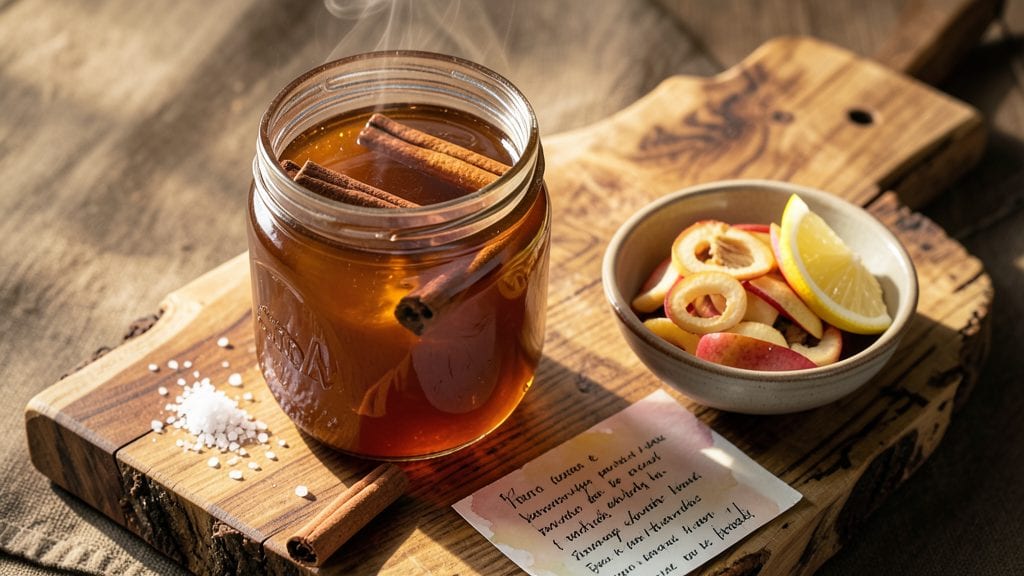
This apple scrap jelly canning recipe turns forgotten peels and cores into a golden, fragrant spread that captures the essence of autumn in every jar. This recipe takes the scraps you’d normally toss—peels, cores, and bruised fruit—and turns them into a glossy, tangy-sweet jelly perfect for toast, yogurt, or desserts.
The process is straightforward, but the results are anything but ordinary: a vibrant jelly with a perfect set and bright apple flavor that keeps for months.
What makes this recipe work is the balance of natural pectin from the apple scraps, added sugar for sweetness, and lemon juice for acidity—all combined in precise measurements to ensure a reliable gel.
Sterilizing jars and processing them in a water bath guarantees shelf-stable jelly that maintains its texture and flavor for up to a year. It’s a foolproof method that even beginners can master, yielding about four 8-ounce jars from just 6 cups of scraps.
The jelly’s texture is smooth yet slightly chunky, with a delicate balance of sweetness and tartness that enhances any dish. Spread it on warm biscuits, drizzle it over cheesecake, or stir it into yogurt for a burst of apple flavor without the fuss of fresh fruit.
The best part? You’ll never look at apple scraps the same way again.
With minimal equipment and just a few pantry staples, you can preserve the essence of autumn in jars that last through the winter. Let’s get started on turning those scraps into something extraordinary.
Ingredients for apple scrap jelly canning
Six cups of scraps transform into four jars of golden, fragrant apple jelly.
| Ingredient | Amount | Notes |
|---|---|---|
| Apple Scraps 🍎 | 6 cups | Peels, cores, and bruised fruit |
| Granulated Sugar 🍚 | 4 cups | White or light brown preferred |
| Lemon Juice 🍋 | ½ cup | Freshly squeezed, unsweetened |
| Powdered Pectin 🍬 | ¼ oz | Low-sugar or no-sugar variety |
| Water 💧 | 1 cup | Filtered or distilled preferred |
| Cinnamon Sticks 🌿 | 2 whole | Optional, for extra aroma |
| Salt 🧂 | ½ tsp | Kosher or sea salt |
| Apple Cider Vinegar 🍏 | 1 tbsp | For sterilizing jars |
| 8-Ounce Mason Jars 🥫 | 4 whole | With lids and bands |
Apple scraps are the star here—don’t skimp on quantity. Fresh peels and cores yield the best flavor, but bruised fruit works too. Whole Foods or local orchards often sell discounted seconds perfect for this. If you’ve got Granny Smiths, their tartness adds depth. Rinse scraps well to remove dirt, but skip peeling—the skin’s full of flavor. For extra aroma, toss in 2 cinnamon sticks while cooking. They infuse the jelly beautifully and can be removed after processing.
No powdered pectin? Crushed raspberries or blackberries (about 1 cup) add natural pectin—just reduce sugar slightly. Running low on lemon juice? Bottled lemon juice works, but fresh has more zing. The sugar is non-negotiable—it’s what turns scraps into jelly. Light brown sugar adds subtle caramel notes, but white sugar keeps it classic. For sterilizing jars, apple cider vinegar is my go-to, but boiling water works in a pinch. Just make sure jars are hotter than the jelly when filling to prevent mold.
Jars keep for up to a year in a cool, dark pantry. Label them with the date—trust me, you’ll forget! Store opened jars in the fridge for 3-4 weeks. The jelly thickens as it cools, so don’t freak out if it looks runny right after canning. For a chunkier texture, blend half the scraps before adding them. Freeze extras in ice cube trays for single-serving portions. This jelly’s magic? It tastes like autumn, jarred forever.
Why You'll Love This Recipe
- I’ll be real: this recipe turned my apple peels and cores into something useful instead of trash. Just toss those scraps in a pot, add sugar and pectin, and—boom—you’ve got jelly that tastes like autumn in a jar.
- Zero-Waste Magic: I’ll be real: this recipe turned my apple peels and cores into something useful instead of trash. Just toss those scraps in a pot, add sugar and pectin, and—boom—you’ve got jelly that tastes like autumn in a jar.
- Sweet-Tart Balance: That lemon juice isn’t just for show—it cuts through the sugar and makes every spoonful bright. The pectin keeps it thick and glossy, so it’s not too cloying, not too tart—just right.
- Gift-Worthy in Minutes: Between us, this jelly is the perfect hostess gift. Slap a ribbon on those jars, and suddenly you’ve got homemade treats that cost pennies but look like you spent hours. (Spoiler: you didn’t.)
Step-by-step instructions for preserving apple scrap jelly
Transform those apple peels and cores into golden, glossy jelly that tastes like autumn in every jar.
Prepare the Apple Scraps
Combine the 6 cups apple scraps with the 1 cup water in a large pot. Bring to a boil over medium-high heat, then reduce to a simmer and cook for 20-25 minutes until the mixture softens completely. You'll see it break down into a thick, pulpy consistency—this is your jelly base.
While it cooks, add the 2 cinnamon sticks (if using) and the 0.5 teaspoon salt. Stir occasionally to prevent sticking, and watch for the mixture to reduce by about half. The scent will be incredible—like walking through an orchard on a crisp fall morning. Once fully broken down, remove the cinnamon sticks and discard them.
Strain and Measure the Juice
Line a fine-mesh strainer with cheesecloth or a clean kitchen towel and set it over a large bowl. Pour the cooked apple mixture through the strainer, pressing gently with a wooden spoon to extract every last drop of juice. This step is crucial—you want the clearest, smoothest jelly possible.
You should have about 3 to 3½ cups of juice. If you need more, return the strained pulp to the pot and simmer for another 10 minutes, then strain again. Measure the juice carefully—this determines your jelly's consistency. The juice should be completely clear with no visible pulp remaining.
Add Sugar and Pectin
Return the measured apple juice to the same pot and bring it to a full rolling boil over medium-high heat. While it heats, whisk together the 4 cups granulated sugar and 0.25 ounce powdered pectin in a small bowl. Once the juice reaches a boil, remove it from heat for just 1 minute to let it cool slightly.
Quickly pour the sugar-pectin mixture into the boiling juice, stirring constantly with a wooden spoon for 2 minutes. Return the pot to medium-high heat and bring back to a full rolling boil that cannot be stirred down. This boil should last for 1 minute—set a timer so you don't miss it. The jelly will thicken dramatically during this time, going from a thin liquid to a glossy, wobbly consistency.
Sterilize Jars and Fill with Jelly
While the jelly is boiling, prepare your 4 whole 8-ounce mason jars by washing them in hot, soapy water, then rinsing thoroughly. Place them in a large pot of boiling water and keep them submerged for 10 minutes to sterilize. Meanwhile, add the 0.5 cup lemon juice and 1 tablespoon apple cider vinegar to the boiling jelly and stir for 1 minute.
Using a funnel, carefully ladle the hot jelly into each sterilized jar, filling them to within ¼ inch of the rim. Wipe the rims clean with a damp paper towel to ensure proper seals. Place the lids on the jars and screw on the bands until fingertip-tight.
Process and Store the Jelly
Place the filled jars in a canning pot or large pot fitted with a rack. Cover with water, ensuring the jars are completely submerged by at least 1 inch. Bring to a boil over medium-high heat and process for 10 minutes once boiling. This sterilizes the jars and creates a vacuum seal.
Remove the jars from the pot and let them cool undisturbed for 12 hours. You'll hear the satisfying ping as the lids seal. Check each lid—it should be concave in the center and not move when pressed. Store the sealed jars in a cool, dark place for up to 1 year. The result? A beautiful, amber-colored jelly with that perfect balance of sweetness and tang—every bite will taste like homemade magic.
Pro Tips For Making Apple Scrap Jelly Canning
- STRAIN TWICE: That first strain of apple scraps leaves behind grittiness you’ll regret later. Use a dampened jelly bag or fine-mesh sieve, then strain again through cheesecloth—yes, it’s extra work, but your jelly won’t taste like apple sandpaper.
- BOIL HARDER: Pectin needs a proper boil—220°F (104°C) for 1 minute—to set right. If your pot’s simmering like nervous tea, crank the heat and stir constantly. Under-boiling is why homemade jelly sometimes stays runny.
- LEMON JUICE FIRST: Mix lemon juice into the hot liquid before adding pectin—it dissolves better and prevents that weird cloudy separation. Skip this, and your jelly might look like it’s got a milky afterthought.
- WEIGH THE SUGAR: Volume spoons lie—pack sugar tightly into your measuring cup and level it off. Too little sugar = jelly that won’t gel; too much = syrup. A kitchen scale (if you’re fancy) takes the guesswork out entirely.
Flavor customization for this dish
Spiced Variations
Add warmth with 1 teaspoon ground cinnamon or ½ teaspoon cardamom to the strained juice before adding sugar. For a ginger kick, steep 2 thin slices of fresh ginger in the hot juice for 5 minutes before straining.
I love a star anise-infused twist—simmer 1 whole star anise pod in the apple scraps during the initial cook for a subtle licorice note. 🌿
Fruit Blends
Combine apple scraps with 2 cups blackberries or raspberries for a tart-sweet balance. These berries add natural pectin and deepen the color. For a citrus twist, add zest from 1 orange or lemon to the strained juice before boiling.
I once made a pear-apple hybrid by adding 3 cups pear scraps—it created a velvety texture with a floral aroma. 🍓
Herbal Infusions
Steep 2 sprigs fresh rosemary or 3 basil leaves in the hot juice for 10 minutes before straining. Remove herbs completely to avoid bitterness. For a floral touch, add 1 teaspoon dried lavender (culinary-grade) to the sugar-pectin mix.
I discovered this lavender-infused jelly pairs beautifully with goat cheese on crackers. 🌸
Smoky Depth
Add ½ teaspoon smoked paprika or 1 chipotle pepper in adobo sauce to the strained juice for a subtle smoky undertone. For a bolder flavor, simmer 1 small applewood chip in the initial scrap cook (remove before straining). This works surprisingly well with sharp cheddar on toast. ⚡
Sweet-Savory Balance
Reduce sugar to 3½ cups and add 1 teaspoon apple cider vinegar plus ½ teaspoon mustard seeds for a tangy-savory profile. This version shines on grilled cheese sandwiches or as a glaze for roasted pork.
I also like adding 1 teaspoon honey at the end for a delicate sweetness contrast. 🍯
Nutrition facts
Frequently asked questions
Can I use store-bought apple juice instead of fresh scraps?
The recipe relies on natural pectin from apple peels and cores, so fresh scraps create the best texture. However, you can substitute with 3½ cups unsweetened apple juice (not cider) plus ½ cup crushed raspberries for extra pectin. Skip the initial simmering step—just proceed with straining and sugar addition. The flavor won't be identical, but it'll still set properly.
Why did my jelly turn out too runny?
Runny jelly usually means one of three things: undercooked pectin (boil time was too short), too much liquid (measure juice carefully), or insufficient sugar. For next time, ensure the jelly boils hard for the full 1 minute after adding pectin, and verify your sugar-to-juice ratio matches the recipe. If it's already made, simmer the runny jelly uncovered for 10-15 minutes to reduce it further.
How can I tell if my jars sealed properly?
After cooling 12 hours, press the center of each lid—it should stay concave and not pop up when pressed. If the lid flexes or makes a popping sound, the seal failed. Store these jars in the fridge (they'll keep 1 month) or reprocess them with new lids. Properly sealed jars will have a slight vacuum—you might even hear a faint ping as they cool.
Can I adjust the sweetness level?
Yes! Reduce sugar to 3½ cups for a tart version or increase to 4½ cups for extra sweetness. For a balanced approach, add 1 teaspoon honey or ½ teaspoon vanilla extract after canning. Remember that less sugar requires more lemon juice (0.6 cup) to maintain acidity for safe canning. Taste the jelly before processing—it'll thicken slightly as it cools.
What’s the best way to use up extra jelly?
Spread it on warm biscuits or toast for breakfast, drizzle over vanilla ice cream, or mix into yogurt parfaits. It’s also fantastic in cheese boards (especially with sharp cheddar), as a glaze for pork tenderloin, or stirred into oatmeal. For single servings, freeze jelly in ice cube trays—perfect for quick flavor boosts! The possibilities are endless.