
Side Dishes
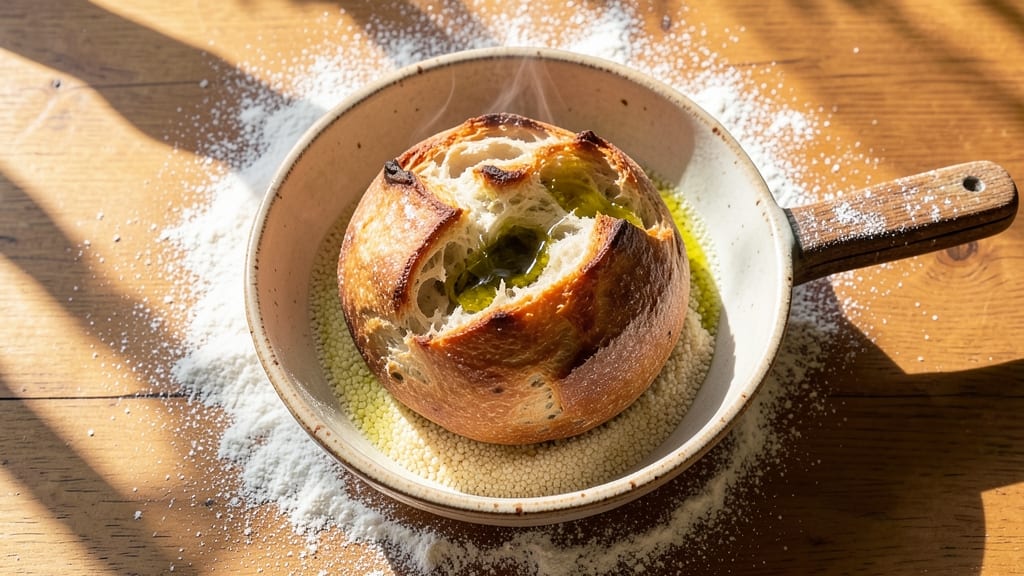
This authentic Tuscan bread recipe brings the rustic charm of Italy straight to your kitchen, where simple ingredients and time-honored techniques create something truly special. The secret lies in slow fermentation and high-quality olive oil, which infuse the dough with deep flavor and that signature crispy crust.
I've perfected this method after years of baking, ensuring every loaf delivers the same artisanal quality you'd find in a Tuscan bakery.
What makes this recipe truly authentic is the slow fermentation process, which develops complex flavors and creates that signature airy interior with a crackly crust. No special equipment is needed—just flour, water, yeast, salt, and extra-virgin olive oil, all mixed together and allowed to rise naturally.
The result is a bread that's both rustic and refined, perfect for serving alongside soups, salads, or simply enjoying with olive oil and balsamic vinegar.
The olive oil magic happens when you incorporate it into the dough and brush it generously on the crust before baking. This not only adds incredible flavor but also contributes to that golden, crispy exterior that crumbles just slightly in your hands.
The interior remains tender and slightly chewy, with an open crumb structure that's characteristic of traditional Tuscan bread.
Once you try this recipe, you'll understand why Tuscan bread is a staple in Italian households—it's simple, versatile, and packed with flavor. Whether you're serving it at a family dinner or enjoying it with a simple meal, this bread will elevate any table.
Let's get started on creating your own loaf of Tuscan perfection.
Ingredients for authentic tuscan bread
Five simple ingredients transform into Tuscan bread perfection with olive oil magic and slow fermentation.
| Ingredient | Amount | Notes |
|---|---|---|
| All-Purpose Flour 🌾 | 4 cups | High-protein preferred for chewiness |
| Extra-Virgin Olive Oil 🫒 | ½ cup | Italian variety for authentic flavor |
| Active Dry Yeast 🍞 | 2 ¼ tsp | Fresh yeast at half amount |
| Granulated Sugar 🍚 | ½ tsp | Feeds yeast for activation |
| Warm Water 💧 | 1 ¼ cups | 105-110°F for yeast activation |
| Salt 🧂 | 1 ½ tsp | Fine sea salt preferred |
| Semolina Flour 🌾 | 1 tbsp | For dusting and crust texture |
| Coarse Sea Salt 🧂 | 1 tsp | For final crust sprinkle |
| Cornmeal 🌽 | 1 tbsp | For baking sheet dusting |
The olive oil is non-negotiable here—Italian extra-virgin like Colavita or Bertolli delivers that authentic flavor. I grab mine from Whole Foods or specialty Italian markets, but any high-quality EVOO will work. The flour matters too—look for high-protein (11-12%) like King Arthur or Caputo Tipo 00 if you can find it. For yeast, Saf-Instant is my go-to because it doesn't need activation, but traditional active dry yeast works if you're patient. The sugar might seem odd, but it's just to wake up the yeast—don't skip it, even though it's tiny.
No extra-virgin olive oil? Light olive oil works in a pinch, but you'll lose that fruity depth. Short on flour? Whole wheat at 10% replacement adds rustic texture. The semolina and cornmeal can be swapped for all-purpose flour if needed, though they give that signature Tuscan crunch. For yeast, nutritional yeast at half the amount adds a cheesy note. Want to skip the sugar? A pinch of honey works too. And if your water isn't perfectly warm, just use room-temperature water plus 10 seconds in microwave—yeast hates extremes.
This dough is all about patience—ferment 2-3 hours at room temp before shaping. Store it in the fridge overnight for even deeper flavor. The baked loaves keep 3-4 days at room temp wrapped in a towel, or 1 week in the fridge. Freeze shaped loaves for 3 months—just thaw at room temp before baking. Pro tip: Brush the crust with more olive oil right after baking while it's still hot. That's where the magic happens.
Why You'll Love This Recipe
- No-Knead Magic: I swear by this—just mix the flour, yeast, sugar, and warm water with a splash of that golden olive oil, let it rise overnight, and boom. No standing at the counter, no sore arms, just pure dough magic.
- Olive Oil Luxury: That first taste? Rich, buttery, and unexpectedly elegant. The extra-virgin olive oil doesn’t just flavor—it transforms this into something that feels fancy, even when it’s just toast with jam.
- Weeknight Workhorse: Toss it in a basket for breakfast, tear it for pasta nights, or freeze slices for quick toast later. It’s the one loaf that does everything—no waste, no stress.
- Budget-Friendly Staple: Five ingredients, no shortcuts needed. The yeast and sugar are pennies, the olive oil stretches further than you’d think, and leftovers? They disappear faster than I can say “second helping.”
Step-by-step instructions for authentic Tuscan bread
Here's how to create that iconic Tuscan bread with its signature crisp crust and tender crumb.
Activate the Yeast for Maximum Rise
In a small bowl, combine the 1.25 cups warm water, 0.5 tsp granulated sugar, and 2.25 tsp active dry yeast. Let it sit for 5-10 minutes until you see plenty of bubbles forming on the surface—this means your yeast is alive and ready to work. The water should feel warm to your wrist (around 105-110°F), not hot.
I always check for bubbles by gently swirling the bowl. If nothing happens after 10 minutes, your yeast might be dead—start fresh with new yeast. This activation step is crucial for developing that light, airy texture we want in authentic Tuscan bread. Don't skip it or you'll end up with dense loaves.
Mix the Dough with Olive Oil Magic
In a large mixing bowl, combine the 4 cups all-purpose flour and 1.5 tsp salt. Make a well in the center and pour in the yeast mixture along with the 0.5 cup extra-virgin olive oil. Using a wooden spoon, stir until everything comes together into a shaggy dough.
Once the dough starts forming, switch to your hands and knead for 8-10 minutes until smooth and elastic. I like to work the dough on a lightly floured surface, adding just enough flour to prevent sticking. The dough should be slightly tacky but not sticky—this ensures proper gluten development for that perfect Tuscan texture.
First Rise for Flavor Development
Shape the dough into a ball and place it in a lightly oiled bowl. Cover with a damp kitchen towel and let it rise in a warm place for 1-2 hours, or until it has doubled in size. You'll know it's ready when you poke it gently and the indentation stays put.
During this first rise, the yeast works its magic, creating those tiny air pockets that give Tuscan bread its signature lightness. I always place my bowl near the oven with the light on for consistent warmth. If your kitchen is cold, a warm oven with the light on works perfectly. Don't rush this step—proper fermentation is what makes this bread truly authentic.
Shape and Second Rise for Crust Perfection
Punch down the risen dough and divide it into 4 equal portions. Shape each portion into a round loaf by pulling the edges toward the center and sealing the seam. Place them on a baking sheet dusted with 1 tbsp cornmeal and 1 tbsp semolina flour—this creates that beautiful crust texture.
Cover the shaped loaves with the damp towel again and let them rise for another 30-45 minutes until puffy. The second rise is shorter but crucial for developing that crisp crust. I like to preheat my oven to 375°F during this final rise so the bread goes straight into a hot oven when ready.
Bake to Golden Crust Perfection
Bake the loaves in the preheated oven for 25-30 minutes until they're deep golden brown with a crisp crust. You'll know they're done when you tap the bottom and hear a hollow sound. For extra authenticity, I brush the tops with a little more extra-virgin olive oil right after baking.
Let the bread cool on a wire rack for 10-15 minutes before slicing. This resting time allows the steam to escape and the crumb to set properly. The result should be a beautiful loaf with a crisp, golden crust and a tender, slightly chewy interior—just like you'd find in a traditional Tuscan bakery.
Pro Tips For Making Authentic Tuscan Bread
- Measure Oil by Volume: DESCRIPTION:
- Bloom Yeast in Warm Water: DESCRIPTION:
- Knead Until Windowpane: DESCRIPTION:
- Preheat Pan with Oil: DESCRIPTION:
Wine and beer pairings for authentic tuscan bread
Tuscan Reds
For this rustic bread, I reach for Chianti Classico—the quintessential Tuscan red—with its bright acidity and cherry notes that complement the olive oil richness. A 2018 Chianti Classico from Castello di Volpaia has been my go-to, but any Sangiovese-based wine works beautifully.
The wine's earthy undertones mirror the bread's crusty texture, creating a perfect harmony. 🍷
Italian Whites
If you prefer white wine, Verdicchio dei Castelli di Jesi from the Marche region offers a crisp, mineral-driven profile that cuts through the bread's richness. I've also enjoyed Fiano di Avellino from Campania, which has a honeyed sweetness that pairs wonderfully with the olive oil.
Both wines provide enough acidity to balance the bread's hearty texture.
Local Tuscan Pairings
For a true Tuscan experience, try Morellino di Scansano, a bold Sangiovese from the Maremma region. Its dark fruit flavors and spice notes elevate the bread's crusty exterior.
I also love pairing it with Brunello di Montalcino—though it's more robust, the wine's complexity stands up to the bread's rich flavors when served with hearty Tuscan dishes.
Beer Complements
For beer lovers, a Pilsner-style lager like Peroni or Birra del Borgo offers a clean, crisp contrast to the bread's richness. The effervescence helps cleanse your palate between bites.
If you prefer something darker, a Tuscan-style amber ale with notes of caramel and malt provides a satisfying contrast to the bread's crisp crust. 🍺
Non-Alcoholic Options
Don't overlook sparkling water with lemon—it's refreshing and enhances the bread's flavors without overpowering them. For a more substantial pairing, try Italian blood orange soda like San Pellegrino Aranciata Rossa, which complements the bread's olive oil richness with its citrus notes.
A simple olive oil and balsamic drizzle on warm bread also makes for a delightful no-drink pairing.
Seasonal Adjustments
In summer, I opt for light, crisp whites like Pinot Grigio to balance the bread's richness. During winter, a bold Chianti Riserva with its deeper fruit flavors and tannins stands up to the bread's hearty texture.
The key is matching the wine's intensity to the bread's rustic character—never overpower it. ✨
Nutrition facts
Frequently asked questions
Why does this Tuscan bread recipe use so much olive oil?
The 0.5 cup extra-virgin olive oil is essential for authentic Tuscan flavor and texture. It creates a tender crumb while giving that signature crisp crust. The oil also helps develop the bread's signature golden-brown color during baking. Don't substitute with butter—it won't give the same fruity depth or crisp texture.
Can I make this bread without a stand mixer?
This recipe only requires 8-10 minutes of hand-kneading on a lightly floured surface. The dough should be slightly tacky but not sticky. For best results, use high-protein flour (11-12%) like King Arthur or Caputo Tipo 00 to help develop gluten without overworking the dough.
How do I know when the bread is fully baked?
Your bread is done when it's deep golden brown and sounds hollow when tapped on the bottom. The internal temperature should reach 190-200°F. For extra authenticity, brush the crust with more olive oil immediately after baking while still hot—this enhances the crisp texture.
What's the best way to store leftover Tuscan bread?
Wrap cooled loaves in a clean kitchen towel and store at room temperature for 3-4 days. For longer storage, keep them in the fridge for 1 week or freeze shaped loaves for 3 months. Thaw frozen bread at room temperature before baking to restore crispness.
Can I add herbs or rosemary to this recipe?
While traditional Tuscan bread is simple, you can add 1 tbsp fresh rosemary or 1 tsp dried herbs (like thyme or oregano) to the dough for extra flavor. Just be sure to use high-quality olive oil to complement the herbs. For best results, add herbs during the final kneading stage before shaping.