
Main Courses
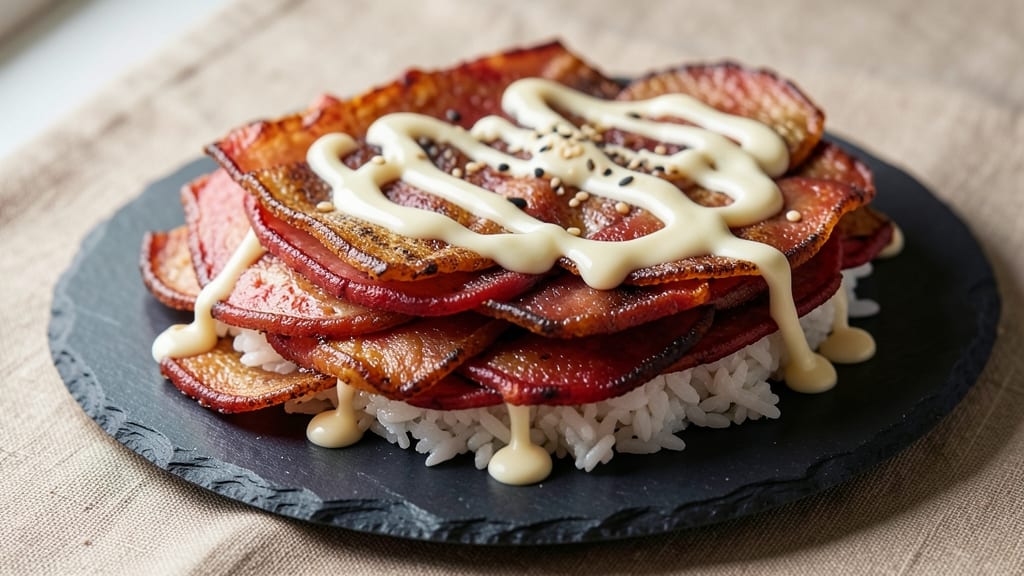
This baked spam musubi recipe brings the heart of Hawaiian-Japanese fusion to your kitchen with its perfect blend of crispy rice and savory Spam. The magic happens when grilled Spam meets perfectly shaped rice wrapped in nori, baked to golden perfection—no frying required.
I developed this version after years of perfecting the balance between crispy exterior and tender interior, ensuring every bite delivers that satisfying crunch and rich flavor.
The beauty of this dish lies in its simplicity and versatility. You'll start with a few core ingredients—Spam, sushi rice, nori sheets, and mayo—as the foundation, then customize with optional toppings like furikake or teriyaki glaze.
The grilling process caramelizes the Spam just enough to create depth, while the baking step transforms the rice into a crispy, edible wrap that holds everything together beautifully. This method delivers restaurant-quality results without the mess of deep-frying.
What you'll end up with is a dish that's equal parts comforting and exciting—a crispy, savory bite that's perfect for picnics, potlucks, or a quick weeknight dinner. The contrast between the crunchy rice exterior and the tender Spam inside creates a texture that's impossible to resist.
Serve warm or at room temperature, and watch it disappear faster than you can say "onigiri."
For those who love to experiment, try adding a spicy mayo drizzle or a sprinkle of sesame seeds for extra flavor. The possibilities are endless, but the foundation remains the same: simple, satisfying, and full of that warm, homey comfort that makes this dish a staple in Hawaiian cuisine.
Let's get started on creating your own batch of these delicious bites.
Ingredients for baked spam musubi
Core ingredients for crispy, comforting musubi—no deep-frying needed. Simple but packed with flavor.
| Ingredient | Amount | Notes |
|---|---|---|
| Spam 🥓 | 14 oz | Cut into 12 equal slices |
| Sushi Rice 🍚 | 2 cups | Cooked and seasoned properly |
| Nori Sheets 🍣 | 12 whole | Standard size (7"x7") |
| Mayonnaise 🥛 | ¼ cup | Japanese mayo preferred |
| Rice Vinegar 🍶 | 1 tbsp | For rice seasoning |
| Sugar 🍬 | 1 tsp | For rice seasoning |
| Salt 🧂 | ½ tsp | For rice seasoning |
| Vegetable Oil 🫒 | 1 tbsp | For greasing pan |
| Furikake Seasoning 🌶️ | 2 tbsp | Optional topping |
| Sesame Seeds 🌰 | 1 tsp | Optional garnish |
| Teriyaki Glaze 🍢 | ¼ cup | Optional drizzle |
Spam is the star here, so grab the classic canned Spam—the pink kind, not the honey or black pepper varieties. Costco or Walmart usually have it in stock, but check the Asian market for extra varieties. The nori sheets? Look for the standard 7"x7" size—those tiny ones won't wrap properly. For the sushi rice, short-grain Japanese rice is non-negotiable. If you're in a pinch, jasmine rice works in a bind, but it won't be quite the same. The mayo should be Japanese-style—Kewpie or Hellmann's Japanese if you're not near an Asian grocery store.
No furikake? Toasted sesame oil plus a pinch of salt works in a pinch. Running low on nori? Substitute with seaweed snacks, but they won't wrap as neatly. The teriyaki glaze can be store-bought or homemade—just make sure it's thick enough to stick. If your rice is too dry, splash in a teaspoon of water to help it mold better. Pro tip: Use a rice cooker for perfect sushi rice every time—no sticky mess, no guesswork.
Spam keeps in the fridge for up to 2 months unopened, but once sliced, use it within 3 days. Nori sheets last 6-12 months unopened in a cool, dark place. For extra crunch, bake the musubi immediately after shaping—don't let them sit too long. Store leftovers in an airtight container for 3 days. Reheat in the oven at 350°F for 5 minutes to restore crispiness.
Why You'll Love This Recipe
- I swear by this hack: just slice the Spam, mix the rice with vinegar, and slap it all together. No chopping, no fuss—just layer, wrap, and bake. The nori holds it like a dream, so even if my hands are sticky, the musubi stays intact.
- No-Cook Prep: I swear by this hack: just slice the Spam, mix the rice with vinegar, and slap it all together. No chopping, no fuss—just layer, wrap, and bake. The nori holds it like a dream, so even if my hands are sticky, the musubi stays intact.
- Umami Bomb: That crispy Spam edge? Chef’s kiss. The mayo glaze caramelizes just enough to balance the salty-sweet rice, while the vinegar keeps it bright. It’s the kind of flavor that makes my lunchbox taste like a bento from Tokyo—without the jet lag.
- Lunchbox Legend: Between us, this is my go-to for school lunches, potlucks, or even a quick picnic. The portions are perfect for one person, and they travel like a champ. My kid still asks for them every week—no complaints about soggy sandwiches here.
Step-by-step instructions for baked Spam musubi
Here's how to create these comforting Hawaiian bites with perfect texture every time.
Prepare the Spam Slices
Cut the 14 oz Spam into 12 equal slices about ¼-inch thick. I like to use a sharp knife and work carefully to maintain even thickness—this ensures they'll cook uniformly in the oven. Pat each slice dry with paper towels to remove any excess moisture. This step is crucial because damp slices can make the rice wrap soggy later.
Arrange the slices on a parchment-lined baking sheet, leaving about ½-inch between each one. This spacing prevents them from sticking together when they bake. For extra flavor, lightly brush each slice with ½ tablespoon of the 0.25 cup teriyaki glaze (about 1 teaspoon per slice). This gives them that sweet-savory touch that makes musubi so addictive.
Bake the Spam Until Golden
Preheat your oven to 375°F. Bake the Spam slices for 15-18 minutes until they're golden brown and slightly crispy around the edges. You'll know they're ready when the edges pull away from the baking sheet just a little—this indicates they've developed that perfect texture.
Let the baked Spam cool for 5 minutes before handling. This resting time prevents the rice from getting too warm too quickly when you assemble the musubi later. While they cool, prepare your work surface by lightly greasing it with 1 tablespoon vegetable oil—this makes rolling the rice easier and prevents sticking.
Assemble the Rice Wraps
Take one of the 7"×7" nori sheets and place it shiny-side down on your prepared surface. Spread ¼ cup of the seasoned sushi rice (about ⅙ of the total 2 cups) evenly over the nori, leaving a ½-inch border around the edges. The rice should be about ¼-inch thick—this creates the perfect balance between bite-sized portions and satisfying texture.
Place one of the cooled Spam slices horizontally across the center of the rice, about 1 inch from the bottom edge. Fold the bottom edge of the nori up over the Spam, then fold in the sides, and finally roll tightly from the bottom up, just like a burrito. Press gently but firmly to seal—this creates that satisfying crunch and keeps everything contained.
Add Final Touches and Serve
Once all 12 musubi are assembled, place them seam-side down on a fresh baking sheet. Brush the tops lightly with any remaining teriyaki glaze (about 1 teaspoon per musubi). Sprinkle with 2 tablespoons furikake seasoning (about ½ teaspoon per musubi) and 1 teaspoon sesame seeds for that classic Hawaiian-Japanese flavor combination.
For extra crunch, you can lightly toast them in the oven at 350°F for 3-5 minutes until the nori turns a deeper green and the edges crisp slightly. Serve warm for that comforting texture contrast—crispy nori wrapping around warm, tender Spam and fluffy rice. These make perfect handheld bites for any occasion, especially when you're craving something familiar yet exciting.
Pro Tips For Making Baked Spam Musubi
- Preheat Pan to 375°F: Spam needs a hot oven to render fat properly—any lower and you’ll end up with greasy musubi. I learned this the hard way when my first batch turned out soggy because I skipped preheating. Use the broiler for the last 2 minutes if yours runs cool.
- Slice Spam Thinly: Uniform ½-inch slices bake evenly and absorb mayo better. Thicker pieces stay rubbery; thinner ones crisp up nicely. Use a sharp knife and don’t rush—this is where texture makes all the difference.
- Mix Mayo with Vinegar: Skip the plain mayo—add 1 tsp rice vinegar per ¼ cup to cut richness and brighten flavor. I was skeptical until I tried it; the balance is what turns good musubi into great musubi.
- Press Rice Firmly: Pack the sushi rice into the nori cups tightly—loose rice falls apart when you slice. Use a small bowl to press down evenly, then chill for 10 minutes before cutting. This keeps your musubi intact when serving.
Essential equipment for baked spam musubi
Must-Have Tools
First, grab a sharp chef's knife (I use Victorinox 8-inch) for clean Spam slicing—uneven cuts ruin the presentation. A rice cooker (like Zojirushi NS-LAC10) is non-negotiable for perfect sushi rice texture. For shaping, a lightly oiled silicone mat (or parchment paper) prevents sticking when rolling nori. 🔪
Oven Essentials
Your oven needs a baking sheet with edges (I prefer Nordic Ware Half-Sheet Pans) to prevent musubi from rolling off during baking. A wire cooling rack helps crisp up the bottoms after baking.
For even heat distribution, use two racks—place one in the middle and bottom of the oven. 🌡️
Assembly Workstation
Set up a small cutting board (like OXO Good Grips) for rice portioning and a second board for Spam prep. Keep wet wipes nearby—rice sticks like glue!
A rolling pin (or even a clean water bottle) helps press seams tight. For extra crispiness, I use a pastry brush to apply teriyaki glaze evenly. ✨
Optional Upgrades
Invest in a digital kitchen scale (I love OXO Good Grips) for precise rice measurements—sushi rice needs exact ratios. A small offset spatula helps spread rice smoothly on nori sheets.
For presentation, tweezers let you place sesame seeds perfectly without mess. These extras make assembly feel like a pro chef's kitchen. 💫
Budget-Friendly Swaps
No rice cooker? Use a heavy-bottomed pot with a tight lid—just simmer rice with water at a 1:1 ratio for 15 minutes after boiling. Replace silicone mats with parchment paper (just oil it well).
For glaze, store-bought teriyaki sauce works in a pinch—just thicken it with 1 tsp cornstarch mixed with 1 tbsp water. Every kitchen can make these! 💰
Nutrition facts
Frequently asked questions
Can I use regular white rice instead of sushi rice?
While you can use jasmine or long-grain white rice in a pinch, sushi rice is specifically seasoned with rice vinegar and sugar to create that perfect sticky-yet-crispy texture. For best results, use short-grain Japanese rice and season it with 1 tbsp rice vinegar, 1 tsp sugar, and ½ tsp salt per 2 cups cooked rice. The texture will be slightly different but still delicious!
How do I keep my musubi from falling apart?
Proper rolling technique is key! Make sure your rice is ¼-inch thick and press firmly as you roll. A lightly oiled work surface prevents sticking, and using a rolling pin (or water bottle) helps seal the seams. Chill the assembled musubi for 10 minutes before baking to help them hold together better.
What's the best way to reheat leftover musubi?
For maximum crispiness, place leftovers on a baking sheet and warm at 350°F for 5-7 minutes. If you prefer microwave reheating, wrap each musubi in a damp paper towel and heat for 20-30 seconds—this helps restore some of the crispiness. Just be careful not to overdo it or the nori will get soggy!
Can I make musubi without nori sheets?
You can substitute with seaweed snacks (like roasted nori strips) or even toasted sesame seeds mixed into the rice for flavor. For wrapping, try using plastic wrap or even parchment paper lightly oiled—just know the texture will be different. The rice will still hold together, but the classic crispy wrap will be missing.
Why is my Spam coming out rubbery instead of crispy?
This usually happens when the Spam isn't baked long enough or at the right temperature. Make sure to bake at 375°F for 15-18 minutes until golden brown. Also, pat the slices completely dry before baking—any moisture will make them steam instead of crisp up. For extra crunch, try brushing with a little more teriyaki glaze before baking.