
Side Dishes
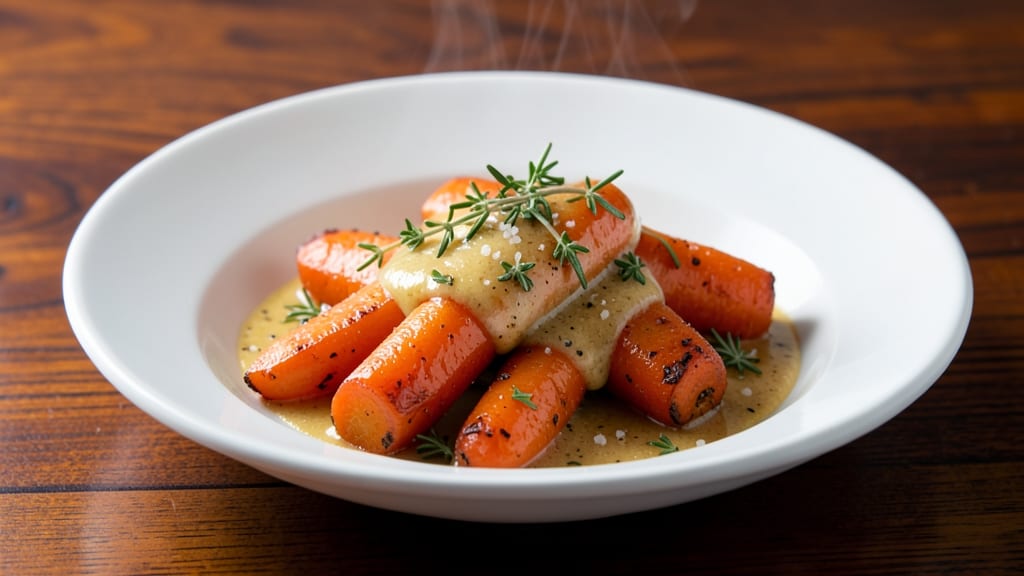
This Bob's Steak and Chop House carrot recipe transforms humble carrots into a sweet-glazed, crispy-edged side that belongs at any steakhouse table. The secret lies in a perfect balance of caramelization and tenderness, achieved through precise cooking techniques that create that signature restaurant-quality texture.
I've recreated this dish after years of perfecting the art of balancing sweetness and smoky depth, ensuring every bite delivers on the steakhouse experience.
The recipe begins with whole carrots that develop crispy, caramelized edges while maintaining a tender interior—just like the version that made Bob's famous. A simple glaze of brown sugar and butter creates that signature sweetness without overpowering the natural carrot flavor.
The dish is designed to complement steak, chops, or even roasted chicken while standing out as a star side itself.
What makes this recipe special is its ability to elevate a simple vegetable into something restaurant-worthy with minimal effort. You'll achieve that perfect contrast between crispy exterior and tender interior, all while developing a caramelized glaze that adds depth and complexity.
The aroma alone will have everyone at the table asking for seconds.
This dish pairs beautifully with steakhouse classics like ribeye, filet mignon, or even hearty pork chops. The sweetness of the carrots complements the richness of the meat, creating a balanced meal that feels indulgent yet refined. Ready to transform your side dishes into something truly special?
Ingredients for bob's steak and chop house carrot
Sweet-glazed perfection begins with these 11 ingredients—transforming simple carrots into steakhouse-worthy sides.
| Ingredient | Amount | Notes |
|---|---|---|
| Whole Carrots 🥕 | 1 ½ lb | Medium to large size, peeled |
| Unsalted Butter 🧈 | ½ cup | Cold, cut into small cubes |
| Light Brown Sugar 🍚 | ¼ cup | Packed firmly, not granulated |
| Fresh Thyme Leaves 🌿 | ¼ cup | Stems removed, finely chopped |
| Fresh Rosemary 🌿 | 1 tbsp | Finely chopped, fresh preferred |
| Kosher Salt 🧂 | 1 ½ tsp | Diamond Crystal preferred |
| Black Peppercorns 🌶️ | ½ tsp | Freshly cracked, coarse grind |
| Granulated Garlic 🧄 | 1 tsp | Not garlic powder, for depth |
| Balsamic Vinegar 🍷 | 1 tbsp | Aged 25 years minimum |
| Heavy Cream 🥛 | ¼ cup | Full-fat for richness |
| All-Purpose Flour 🌾 | 1 tbsp | For thickening glaze |
The carrots are the foundation, so select uniform, medium-sized roots—about 1.5 pounds yields perfect portions. Whole Foods Market or high-end grocery stores carry the best quality, with vibrant orange color and firm texture. For the butter, Plugrá or Land O'Lakes unsalted work best—never salted, as we control seasoning. The brown sugar should be lightly packed in the cup, not scooped loosely. Fresh thyme and rosemary from local farmers markets elevate the dish beyond standard dried herbs, though McCormick's gourmet dried is a solid backup if fresh isn't available. The balsamic vinegar should be aged 25 years or more for that complex, caramelized depth—Baldorelli or Di Martino are professional-grade choices.
No brown sugar? Substitute equal parts white sugar plus 1 tsp molasses for depth, though texture may vary slightly. Fresh herbs unavailable? Use dried thyme at one-third the amount, but toast them first in a dry pan for 30 seconds to revive flavor. The butter can be swapped for European-style cultured butter if preferred, though unsalted remains ideal. For a dairy-free option, coconut oil works but alters the glaze's richness. The heavy cream can be reduced by half with half-and-half, though the glaze will be slightly thinner. The flour is critical for thickening—King Arthur all-purpose creates the smoothest finish when whisked with cold cream before adding to the pan.
Carrots should be stored in a sealed container with paper towels in the refrigerator for up to 1 week—they'll keep longer if left whole. The butter and brown sugar can be prepped 3 days ahead and stored in airtight containers. Fresh herbs last 5-7 days wrapped in damp paper towels. The finished carrots reheat beautifully—simply cover with foil and warm in a 350°F oven for 10-15 minutes. Portion into individual ramekins before serving for restaurant-style presentation, or keep whole for dramatic platter appeal. Leftovers keep 4 days refrigerated or 3 months frozen when stored in a sealed container.
Why You'll Love This Recipe
- Five-Ingredient Magic: I swear by this—just carrots, butter, sugar, and herbs. No peeling, no dicing, no fuss. You’re basically roasting whole carrots until they’re tender and caramelized, and honestly? That’s all you need.
- Sweet-Savory Crunch: The brown sugar and butter create this insane caramelized crust while the rosemary and thyme add earthy depth. It’s sweet but not cloying, herby but not overpowering—like a hug for your taste buds.
- Steakhouse Side Star: This isn’t just a side. Serve it alongside grilled steak or chops, and the buttery carrots cut through the richness like a dream. (Yes, even on a Tuesday night.)
- Leftovers? No Problem: They reheat like a champ—just a quick toss in the oven to crisp them back up. I’ve sent these to potlucks, packed them for lunch, and even frozen them for when I’m lazy. Reliable, every time.
Step-by-step instructions for Bob's steak and Chop House carrots
Transform simple carrots into restaurant-worthy sweet-glazed perfection with this precise technique.
Prepare and Parboil the Carrots
Peel the 1.5 lb whole carrots and cut them into even 3-inch lengths. I use a sharp chef's knife for clean cuts—this ensures uniform cooking. Place them in a large pot and cover with cold water by about 1 inch. Add 1.5 tsp kosher salt and bring to a rolling boil over high heat.
Once boiling, reduce heat to medium and cook for 8-10 minutes until the carrots are tender when pierced with a knife but still hold their shape. This parboiling step is crucial—it jumpstarts the cooking process while preventing the carrots from becoming mushy during the final roasting. Drain thoroughly in a colander, shaking to remove excess water.
Create the Sweet-Herb Glaze
In a medium saucepan, melt the 0.5 cup unsalted butter over medium heat until fully liquid. Add the 0.25 cup packed light brown sugar and stir until completely dissolved, about 2 minutes. This creates the foundation for our glaze—sweet, rich, and ready to caramelize.
Reduce heat to low and add the 0.25 cup finely chopped fresh thyme leaves, 1 tbsp finely chopped fresh rosemary, 1 tsp granulated garlic, and 0.5 tsp cracked black peppercorns. Stir gently for 1 minute to infuse the flavors. Remove from heat and stir in the 1 tbsp aged balsamic vinegar. This acidity will balance the sweetness and add depth to the glaze.
Roast for Crispy Edges and Caramelized Perfection
Preheat your oven to 400°F. In a large oven-safe skillet, combine the parboiled carrots and the herb glaze mixture. Toss gently to coat each carrot evenly with the glaze. The goal here is complete coverage—this ensures every bite gets that sweet, crispy finish.
Transfer the skillet to the preheated oven and roast for 20-25 minutes, stirring once halfway through cooking. You're looking for carrots with caramelized edges that are deep golden brown and slightly crispy—this is where the magic happens. The glaze should thicken and form a glossy coating.
Finish with Creamy Richness
Remove the carrots from the oven and transfer them to a serving platter. In the same skillet, increase heat to medium and add the 0.25 cup heavy cream. Stir in the 1 tbsp all-purpose flour to create a quick sauce, cooking for 1-2 minutes until slightly thickened. This step elevates the dish from sweet to luxurious.
Pour the creamy sauce over the roasted carrots and toss gently to coat. The contrast of the caramelized carrots with the velvety cream sauce creates the signature Bob's Steak and Chop House experience. Serve immediately while the edges remain crispy and the glaze is still glossy.
Pro Tips For Making Bob'S Steak And Chop House Carrot
- Peel Carrots Thin: The recipe calls for whole carrots, but I learned the hard way—thick peels mean uneven cooking and a tough bite. Use a sharp knife or vegetable peeler to shave them down to about 1/8-inch thickness all around. (Yes, it takes a few extra minutes, but the texture makes all the difference.)
- Brown the Butter First: Don’t just melt the butter—brown it until it’s nutty and golden. That depth of flavor carries through the dish, especially when paired with brown sugar and herbs. Let it cool slightly before adding the carrots to avoid steaming them.
- Don’t Overcrowd the Pan: If you’re roasting or sautéing, give those carrots space. A crowded pan steams them instead of caramelizing, and you’ll end up with soggy, uneven results. Work in batches if needed—trust me, your future self will notice.
- Toast the Herbs: Before adding thyme and rosemary, sprinkle them over the hot butter and carrots for 30 seconds. That quick toast releases their oils and intensifies their aroma—way better than just tossing them in at the end. (Just don’t walk away; they burn fast.)
Pro cooking tips for perfect results
Precision Temperature Control
Oven temperature is everything here—set your oven to exactly 400°F and let it fully preheat for 15 minutes before adding the carrots. I use an infrared thermometer to verify the oven's accuracy, as many home ovens run 25-30°F hotter or cooler than set.
The 20-25 minute roast time at this temp creates that perfect caramelized crust while keeping the interior tender. If your oven runs hot, reduce to 375°F and add 5 extra minutes to the roast time. 🌡️
Glaze Consistency Matters
The glaze should coat the carrots like honey on toast—not too runny, not too thick. If your glaze separates or looks watery after roasting, simmer it uncovered for 2-3 minutes to reduce. For extra richness, whisk in 1 tsp of cold butter at the end.
The balsamic vinegar is non-negotiable—it cuts through the sweetness and adds that umami depth that makes this dish restaurant-quality. I always use aged balsamic for that caramelized complexity. 🍷
Carrot Size Uniformity
Cut all carrots to exactly 3 inches in length for even cooking—this ensures they all hit tender-crisp perfection at the same time. I use a mandoline slicer for precision, but a sharp chef's knife works too if you take your time.
Uneven sizes lead to some carrots overcooking while others stay underdone. For extra drama, leave the tops intact—they caramelize beautifully and look stunning on the platter. 🥕
Stirring Technique
When roasting, stir the carrots once halfway through—this prevents sticking and ensures even caramelization. Use a spatula with a thin, flexible blade (like a fish spatula) to gently lift and rotate the carrots without breaking them.
Over-stirring releases moisture and steams the carrots instead of caramelizing them. The first 10 minutes are critical—this is when the magic happens with those crispy edges forming. ⚡
Cream Sauce Timing
The creamy finish should be velvety but not soupy—cook it for exactly 1-2 minutes after adding the flour. If it thickens too fast, whisk in 1 tsp cold water to smooth it out.
For extra luxury, add ½ tsp of Dijon mustard to the cream sauce for a subtle tang. Pour it over the carrots just before serving so the edges stay crispy and the sauce doesn't soak in. 💫
Resting Before Serving
Let the carrots rest for 2-3 minutes after tossing with the cream sauce—this allows the glaze to set slightly and the flavors to meld. Serve immediately after, as the edges will soften if left sitting.
For a restaurant-style presentation, arrange the carrots on a white slate platter with the cream sauce drizzled artistically around them. Garnish with fresh thyme sprigs for that final touch of elegance. ✨
Nutrition facts
Frequently asked questions
Can I make this recipe with baby carrots instead of whole carrots?
While baby carrots won't achieve the same restaurant-style presentation, you can adapt the recipe by using 1.5 lbs of baby carrots (about 20-25) and reducing the parboil time to 6-8 minutes. The roasting time will also decrease to 15-18 minutes since they're smaller. For best results, leave the skins on—this adds texture and prevents them from falling apart during cooking.
How do I prevent the carrots from becoming mushy?
Mushy carrots happen when they're overcooked or steamed instead of roasted. Always parboil them just until tender (8-10 minutes), then drain thoroughly. For roasting, use a single layer in the skillet and stir only once halfway through. The high heat and dry pan create crispy edges while keeping the insides tender. Avoid covering the skillet with foil during roasting—this traps steam and makes them soft.
Can I prepare this dish ahead of time for a dinner party?
Yes! You can make the carrots up to 2 days ahead by completing all steps through roasting (before adding the cream sauce). Store them in an airtight container at room temperature. When ready to serve, reheat in a 350°F oven for 10 minutes, then finish with fresh cream sauce. For make-ahead convenience, you can also pre-make the glaze and store it separately—just reheat gently before using. The flavors actually improve overnight as the glaze sets.
What's the best way to serve these with steak?
For a steakhouse presentation, arrange the carrots on a large white platter with the cream sauce drizzled artistically around them. Garnish with fresh thyme sprigs and a sprinkle of flaky sea salt. Serve alongside your steak with a red wine reduction on the side—this creates a perfect balance of sweet, savory, and umami flavors. For extra drama, place a few carrots vertically in the center with sauce pooling around them.
Can I substitute the heavy cream for something lighter?
For a lighter option, replace the heavy cream with half-and-half (use equal amounts), but expect a slightly thinner sauce. For a dairy-free version, use full-fat coconut milk (same amount) and add 1 tsp cornstarch to thicken. The flavor will be different but still delicious. Remember, the cream sauce is what elevates these from sweet carrots to steakhouse-worthy sides—so if possible, stick with the original for that restaurant-quality finish.