
Snacks
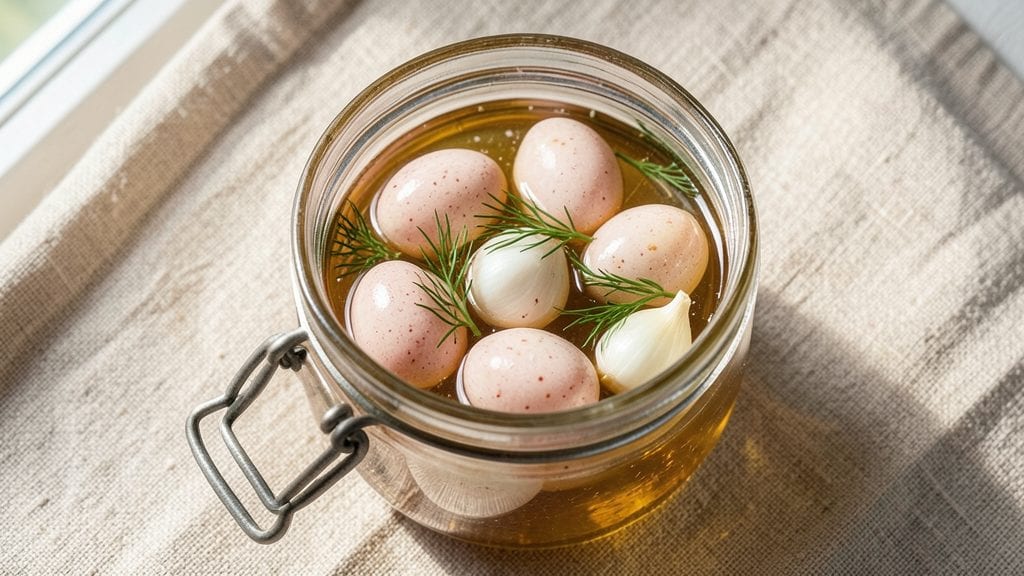
Unlock the secret to a canned pickled quail eggs recipe that turns delicate quail eggs into tangy, briny bites perfect for any snack spread or appetizer platter.
This recipe delivers restaurant-quality pickled eggs with a 10-minute prep time, using traditional canning methods that preserve their delicate texture while infusing bold flavors. The secret lies in balancing vinegar, spices, and proper sterilization to create jars that stay fresh for months.
What sets this method apart is the simplicity of the ingredients—just vinegar, water, salt, and spices—yet the results are undeniably sophisticated. Whether you prefer a classic vinegar-only brine or a spiced variation with garlic and dill, the process ensures crisp shells and perfectly tender yolks.
This technique also works beautifully with other small eggs or even olives, making it versatile for any pantry.
By following these precise steps, you’ll achieve jars of pickled quail eggs that are crisp, tangy, and ready to elevate any dish. Serve them as standalone appetizers, sprinkle over salads, or use as a garnish for cocktails.
The satisfaction of canning your own preserves—with flavors that develop over time—is unmatched. Let’s get started on this foolproof method.
For those new to canning, don’t worry—this recipe includes clear sterilization instructions and storage tips to ensure your jars stay safe and delicious for up to a year. The key is patience during the sealing process, which guarantees a vacuum seal that keeps the eggs fresh and flavorful.
Once mastered, you’ll never buy store-bought pickled eggs again.
Ingredients for canned pickled quail eggs
Simple ingredients transform delicate quail eggs into restaurant-quality pickled bites perfect for any occasion.
| Ingredient | Amount | Notes |
|---|---|---|
| Quail Eggs 🥚 | 24 whole | Freshly laid preferred |
| White Vinegar 💧 | 2 cups | Distilled preferred for clarity |
| Water 💧 | 2 cups | Filtered or bottled preferred |
| Diamond Crystal Kosher Salt 🧂 | 1 ½ tbsp | Fine grain preferred |
| Garlic Cloves 🧄 | 6 cloves | Thinly sliced lengthwise |
| Fresh Dill Sprigs 🌿 | ½ cup | Tightly packed, stems removed |
| Black Peppercorns 🌶️ | 1 tsp | Crushed lightly |
| Mustard Seeds 🌶️ | ½ tsp | Yellow preferred |
| Red Pepper Flakes 🌶️ | ¼ tsp | Adjust for heat preference |
| Lemon Juice 🍋 | 2 tbsp | Freshly squeezed |
| Lemon Zest 🍋 | 1 tbsp | Finely grated |
| Mason Jars 🍶 | 4 whole | Pint-sized with lids |
The quality of your quail eggs and vinegar makes all the difference. Fresh quail eggs from a trusted local farm ensure optimal texture, while distilled white vinegar guarantees clarity in the final product. For vinegar, Heinz or White House brands are consistently reliable. The Mason jars must be sterilized—boil them for 10 minutes before use to prevent spoilage. For dill, fresh sprigs are non-negotiable; dried loses its aromatic punch. The kosher salt should be Diamond Crystal if possible—its finer grain dissolves perfectly without graininess.
No fresh dill? Dried dill at one-third the amount works in a pinch, though texture suffers slightly. Substitute tarragon or parsley for a different herbal profile. Short on mustard seeds? Ground mustard at half the amount provides similar tang. The red pepper flakes can be omitted entirely for a milder version, or cayenne powder at the same quantity adds heat. For lemon, bottled lemon juice
Sterilized jars stay fresh for up to 12 months when properly sealed. After opening, refrigerate and consume within 2 weeks24 hours before eating for best results. For gift-giving, wrap jars in twine with a handwritten tag detailing the date. The brine can be reused for pickling other small items like cherry tomatoes or cornichons if strained through cheesecloth after removing eggs.
Why You'll Love This Recipe
- No-Fuss Pantry Magic: I swear by this recipe because it uses what’s already in my cupboard—just vinegar, salt, and garlic. No fancy tools, no last-minute grocery runs. Honestly, I’ve made it with eggs still warm from the fridge, and they turn out perfect every time.
- Garlic Bomb Twist: That first crack into a pickled quail egg? Pure flavor payoff. The garlic cloves infuse just enough punch to make your taste buds sit up, while the vinegar keeps it bright and tangy—not too sour, not too mild. Between us, it’s the kind of snack that disappears faster than my willpower on a bad day.
- Party Snack Hero: These are my secret weapon for gatherings—no one even notices they’re quail eggs until they’re gone. Toss them in salads, serve them on charcuterie boards, or just eat them straight from the jar. My daughter’s friends think they’re fancy store-bought bites, and I get to take credit for the genius.
- Budget-Friendly Stash: A jar lasts me weeks, and I’m not exaggerating. The cost per serving is laughable compared to buying pre-pickled eggs, and the leftovers? They’re the reason I never panic when company drops by. Plus, Diamond Crystal salt makes it taste like I spent hours marinating—when really, it’s just 10 minutes of my time.
Step-by-step instructions for canned pickled quail eggs
A quick, precise method for briny, aromatic quail eggs that preserve perfectly for months.
Prepare the Brining Solution
In a large bowl, combine the 2 cups white vinegar and 2 cups water. Add the 1.5 tablespoons diamond crystal kosher salt and stir until fully dissolved. This creates an acidic brine that will tenderize the quail eggs while preserving their texture. The solution should be completely clear with no visible salt granules.
Next, add the 6 cloves garlic cloves (thinly sliced lengthwise), 0.5 cup fresh dill sprigs (tightly packed, stems removed), 1 teaspoon black peppercorns (lightly crushed), 0.5 teaspoon mustard seeds, and 0.25 teaspoon red pepper flakes. Stir gently to distribute the aromatics evenly. Finally, incorporate the 2 tablespoons lemon juice and 1 tablespoon lemon zest, which will brighten the flavor profile and balance the acidity.
Sterilize the Mason Jars and Pack the Eggs
Wash the 4 whole Mason jars and their lids in hot, soapy water, then sterilize them by boiling for 10 minutes. This ensures a clean seal and prevents spoilage. While the jars are sterilizing, carefully crack the 24 whole quail eggs over a small bowl to collect any shells that may break. Discard any cracked eggs—only use whole, unbroken eggs for the best texture.
Using a small spoon or tongs, place 6 whole quail eggs into each jar. Arrange them gently but firmly to prevent movement during the pickling process. The eggs should be snug but not packed too tightly, allowing the brine to circulate around them. Leave about 1 inch of headspace at the top of each jar, as the eggs will expand slightly during processing.
Pour the Brine and Seal
Using a funnel, carefully pour the prepared brining solution into each jar, filling them to within ½ inch of the rim. The brine should fully submerge the eggs, covering them completely. Tap the jars gently on the counter to dislodge any air bubbles trapped between the eggs and the liquid. If needed, use a clean chopstick to pop bubbles near the eggs.
Wipe the rims of the jars with a clean, damp cloth to remove any residue, then seal each jar with its sterilized lid. Screw the lids on tightly but avoid over-torquing, as this can cause leaks. Place the jars on a baking sheet for stability and let them cool to room temperature for 30 minutes. This allows the lids to form a proper seal as the contents contract slightly.
Process and Store for Maximum Shelf Life
Once the jars have cooled, check the seals by pressing down on the center of each lid. If the lid pops back up, the seal is broken, and the jar should be refrigerated and consumed within 1 week. If the lid stays down, the seal is secure, and the eggs can be stored at room temperature. For long-term preservation, process the jars in a water bath canner for 10 minutes after bringing the water to a rolling boil.
Allow the jars to cool completely before storing them in a dark, cool pantry. The pickled quail eggs will continue to develop flavor over the next 24 hours and can be stored for up to 1 year. The eggs should have a bright, tangy flavor with a firm yet tender texture. Serve them chilled as a snack, on charcuterie boards, or as a topping for salads and sandwiches.
Pro Tips For Making Canned Pickled Quail Eggs
- STERILIZE JARS FIRST: My first batch of pickled quail eggs turned cloudy within days because I skipped this step. Boil your canning jars and lids in hot water for 10 minutes—even if you're not pressure canning—it kills bacteria that ruins flavor and shelf life.
- USE 1:1 VINEGAR TO WATER: Diamond Crystal salt measures differently than table salt, so don’t eyeball it. Stick to equal parts white vinegar and water (1 cup each) for the brine, then add 2 tablespoons of kosher salt per cup. Too much salt makes the eggs mushy; too little lets mold creep in.
- PEEL GARLIC LAST: Crush or slice garlic cloves right before sealing the jars—otherwise, they’ll turn bitter and gray from sitting in the vinegar too long. Toss them in just before adding the eggs, and you’ll get bright, fresh flavor every time.
- PACK EGGS TIGHTLY: Don’t just drop quail eggs into jars like marbles. Nestle them snugly so the brine fully covers them—no air gaps. Use tongs to gently press them down; this prevents floating and ensures even pickling. (Yes, it looks crowded, but that’s how it’s done.)
Creative variations of this dish
Global Fusion Twist
Transform this classic recipe into a Japanese-inspired version by swapping the dill for shiso leaves and adding 1 tbsp grated fresh ginger to the brine. Use rice vinegar instead of white vinegar for a milder tang, and finish with a sprinkle of toasted sesame seeds before sealing.
Serve with pickled ginger on the side for an authentic sushi bar vibe. 🌿
Spicy Cajun Kick
For a Louisiana-inspired heat bomb, replace the red pepper flakes with 1 tbsp Cajun seasoning (like Tony Chachere’s) and add 1 tsp smoked paprika to the brine. Pack each jar with 2 bay leaves and 1 tsp filé powder (made from ground sassafras) for a smoky, earthy depth.
The eggs will have a bold, spicy crunch perfect for game day spreads. 🌶️
Herb-Infused Mediterranean
Give your pickled quail eggs a Greek island makeover by infusing the brine with 1 tbsp oregano, 1 tsp dried thyme, and 3 sprigs fresh rosemary. Add ½ cup sliced kalamata olives to each jar for a briny contrast.
Finish with a drizzle of extra-virgin olive oil before serving—these eggs pair perfectly with feta cheese and crusty bread. 🍅
Sweet & Tangy Asian Pear
Balance the acidity with a sweet-savory twist by adding ½ cup thinly sliced Asian pear (peeled) to each jar along with the eggs. Sweeten the brine with 1 tbsp honey or agave and include 1 star anise pod for warmth.
The pears soften slightly, creating a delicate, fruity contrast to the tangy eggs—ideal for Asian-inspired charcuterie boards. 🍐
Smoky Chipotle Heat
For a Mexican-inspired smoky heat, replace the red pepper flakes with 1 chipotle pepper in adobo sauce (minced) and ½ tsp ground cumin. Add 1 tsp lime zest to the brine for brightness.
Serve these eggs with corn tortilla chips or on tacos al pastor for a bold, smoky-sweet flavor explosion. 🌶️🔥
Classic Vinegar-Only Brine
If you prefer a minimalist approach, skip all spices and aromatics, using only 2 cups white vinegar, 2 cups water, and 1.5 tbsp kosher salt. This clean, tangy version lets the quail eggs shine with their natural flavor—perfect for those who love simplicity.
Store in amber glass jars to protect from light and enjoy the bright, crisp taste for up to 18 months. ⚡
Nutrition facts
Frequently asked questions
Can I use chicken eggs instead of quail eggs for this recipe?
While you can use chicken eggs, the texture and flavor won't be the same. Chicken eggs are much larger and their shells are thicker, which means they won't pickle as quickly or develop the same delicate crunch. Quail eggs are ideal for this method because their small size allows for even pickling and a perfect bite-sized portion. If you must use chicken eggs, reduce the brine by half and increase the pickling time to 3-4 days for similar results.
How do I know if my pickled quail eggs are properly sealed?
After cooling, press down on the center of each jar lid. If the lid stays down and doesn't pop back up, the seal is secure. You should also hear a satisfying "ping" sound when pressing. If the lid pops up or the seal breaks, refrigerate the jar and consume within 1 week. For extra peace of mind, store sealed jars in a cool, dark place away from direct sunlight.
Can I adjust the spice level in the brine?
For milder eggs, reduce the red pepper flakes to ¼ teaspoon or omit entirely. If you love heat, add ½ teaspoon cayenne pepper or 1 sliced fresh chili (like jalapeño) to each jar. For smoky flavor, include 1 smoked paprika packet in the brine. Always taste the brine before adding eggs to adjust to your preference.
How long do pickled quail eggs last once opened?
Once opened, store the eggs and remaining brine in an airtight container in the refrigerator. They'll stay fresh for 2-3 weeks. The flavor continues to develop over time, so they taste even better after a few days in the fridge. For longer storage, transfer the eggs to a clean jar with fresh brine (equal parts vinegar and water with 1 teaspoon salt per cup).
What are the best ways to serve pickled quail eggs?
These versatile bites shine as standalone snacks, but they also elevate other dishes. Try them on charcuterie boards, sprinkled over salads, or as a garnish for cocktails. For a hearty meal, add them to sandwiches, tacos, or ramen. The tangy crunch pairs perfectly with rich cheeses like brie or goat cheese, creamy dips, or even as a topping for pizza.