
Appetizers
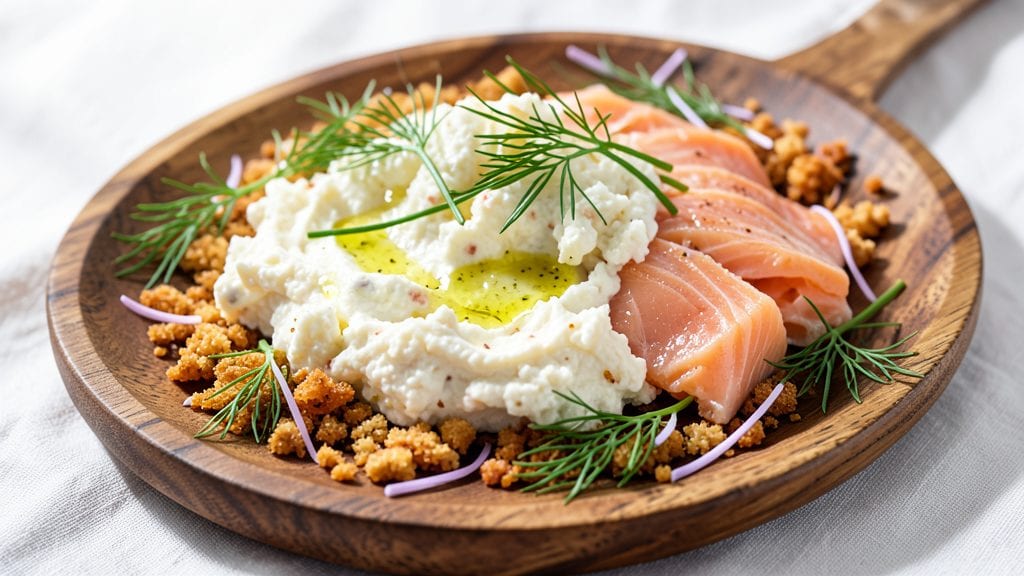
This canned salmon cottage cheese recipe transforms simple pantry staples into a surprisingly sophisticated appetizer that balances creamy texture with subtle oceanic flavor.
The combination might sound unusual, but the right seasoning and preparation turn it into something unexpectedly elegant—think of it as a Nordic-inspired bite that delivers both protein and crunch in every mouthful.
The secret lies in the preparation: flaked canned salmon adds a delicate fishiness while cottage cheese provides that signature creamy base.
A sprinkle of toasted breadcrumbs or crushed nuts creates the crunchy topping that elevates this dish from basic to impressive, making it perfect for cocktail parties or light lunches where you want something substantial yet refined.
What you’ll end up with is a dish that’s creamy yet textured, with a delicate salmon flavor that pairs beautifully with the tangy richness of cottage cheese. The breadcrumb topping adds a satisfying contrast, ensuring each bite feels balanced and complete—no soggy or dry textures here.
This recipe works equally well as a standalone appetizer or as part of a larger charcuterie spread. The best part? It comes together in under 30 minutes with minimal effort, proving that gourmet flavors don’t require complicated techniques—just the right ingredients and a little attention to texture.
Ingredients for canned salmon cottage cheese
Nordic-inspired bites with creamy cottage cheese and delicate salmon flavor—simple yet unexpectedly elegant.
| Ingredient | Amount | Notes |
|---|---|---|
| Canned Salmon (with bones) 🐟 | 1 can | High-quality, wild-caught preferred |
| Small-Curd Cottage Cheese 🧀 | 16 oz | Full-fat for optimal creaminess |
| Panko Breadcrumbs 🍞 | ½ cup | Toasted for enhanced crunch |
| Extra-Virgin Olive Oil 🫒 | 2 tbsp | For toasting breadcrumbs |
| Fresh Dill 🌿 | ¼ cup | Finely chopped, stems removed |
| Fresh Chives 🌱 | 2 tbsp | Minced for bright flavor |
| Lemon Zest 🍋 | 1 tsp | From organic lemon preferred |
| Lemon Juice 🍋 | 1 tbsp | Freshly squeezed |
| Diamond Crystal Kosher Salt 🧂 | ½ tsp | Fine grain preferred |
| Freshly Ground Black Pepper 🌶️ | ¼ tsp | Cracked peppercorns preferred |
| Capers 🍅 | 1 tbsp | Chopped, for briny contrast |
| Crushed Red Pepper Flakes 🔥 | ¼ tsp | Optional, for subtle heat |
| Unsalted Butter 🧈 | 1 tbsp | For shaping and binding |
The quality of your canned salmon makes all the difference here. Wild-caught varieties from brands like Wild Planet or Vital Choice offer superior texture and flavor compared to farmed options. Look for cans labeled 'with bones'—the calcium-rich bones add subtle depth to the dish. If you're using a different brand, opt for the highest-quality option available, as the fishiness should be delicate rather than overpowering. For the cottage cheese, small-curd varieties like Tillamook or Organic Valley provide the ideal creamy yet slightly textured base. Avoid low-fat versions—they lack the richness needed for this sophisticated appetizer.
No fresh dill on hand? Dried dill at one-third the amount works in a pinch, though it won't have the same bright, fresh character. Substituting chives for dill isn't recommended, as they offer a distinctly milder flavor profile. For the breadcrumbs, Japanese panko is ideal due to its light, airy texture, but regular panko or even crushed cornflakes in a pinch will provide adequate crunch. If you're avoiding gluten, crushed almonds or pecans make excellent alternatives. The capers can be omitted if you prefer a milder flavor profile, but their briny contrast is what elevates this dish from ordinary to extraordinary.
This appetizer holds beautifully for up to 4 hours at room temperature, making it perfect for cocktail parties. Store any leftovers in an airtight container in the refrigerator for up to 3 days, though the texture may become slightly softer over time. For a make-ahead option, prepare the mixture without the breadcrumb topping and refrigerate it. Toast the breadcrumbs fresh before serving to ensure maximum crunch. The dish can also be frozen for up to 1 month, though the texture may change upon thawing—best enjoyed fresh whenever possible.
Why You'll Love This Recipe
- I’ll be real: canned salmon and cottage cheese are two of the most affordable protein sources out there. You’re getting all the omega-3s and creaminess for pennies, and the panko adds that restaurant-worthy crunch without breaking the bank. (Not the prettiest, but the taste makes up for it.)
- Five-Ingredient Magic: Honestly, I swear by this recipe because it’s the kind of meal where you open the pantry and boom—you’ve got everything. Canned salmon with bones? Check. Cottage cheese? Already there. Panko and olive oil? Always in my fridge. Fresh dill? Even if it’s just a handful from the garden, it transforms everything.
- Crispy-Creamy Bliss: That crispy panko shell with the fluffy, tangy cottage cheese center? It’s the kind of texture combo that makes you pause mid-bite. The salmon’s richness plays so well with the bright dill and olive oil—salty, creamy, and fresh all at once. (Yes, even on a Tuesday night.)
- Lunchbox Hero: Between us, this is my go-to for packed lunches. It holds up for days in the fridge—no soggy textures, just that perfect balance of protein and crunch. My kids (and my husband) actually eat their leftovers, which is basically a miracle in this house.
Step-by-step instructions for canned salmon cottage cheese topping
Transform humble pantry staples into a luxurious, textured topping with this precise method.
Toast the Panko Breadcrumbs for Maximum Crunch
Preheat your oven to 350°F and spread the 0.5 cup panko breadcrumbs evenly on a rimmed baking sheet. Drizzle with the 2 tablespoons extra-virgin olive oil and toss gently with a silicone spatula until every crumb is lightly coated. Spread them in an even layer—this prevents clumping during toasting.
Bake for 8-10 minutes, stirring once halfway through, until the breadcrumbs turn a rich golden brown and emit a toasty aroma. Remove from the oven immediately and let cool for 5 minutes—this prevents them from absorbing moisture from the cottage cheese later. The toasting enhances their crunch while developing nutty depth that contrasts beautifully with the salmon's richness.
Fluff and Season the Cottage Cheese Base
In a medium mixing bowl, use a fork to gently break up the 16 oz small-curd cottage cheese until it reaches a creamy, slightly lumpy texture. This process incorporates air, which creates a lighter final product. Add the 1 tablespoon lemon juice and 1 teaspoon lemon zest, mixing until fully combined. The acidity brightens the cottage cheese's natural tang while preventing it from becoming overly dense.
Fold in the 0.25 cup finely chopped fresh dill, 2 tablespoons minced fresh chives, 1 tablespoon chopped capers, 0.5 teaspoon diamond crystal kosher salt, and 0.25 teaspoon freshly ground black pepper. Sprinkle in the 0.25 teaspoon crushed red pepper flakes if using. Taste and adjust seasoning—this mixture should be vibrant and balanced, with notes of lemon, dill, and briny capers complementing the salmon's natural flavor. The cottage cheese should now be bright white with visible herb flecks.
Combine and Shape the Mixture
Add the 1 can canned salmon with bones (drained but reserving 2 tablespoons of liquid if available) to the cottage cheese mixture. Using your hands or a rubber spatula, gently fold everything together until the salmon flakes are evenly distributed. The salmon's natural oils will begin to emulsify with the cottage cheese, creating a luxurious, creamy texture. If the mixture seems too dry, add 1-2 teaspoons of reserved salmon liquid to help bind it.
Transfer the mixture to a small bowl and fold in the toasted panko breadcrumbs using a gentle folding motion. The breadcrumbs should be evenly dispersed throughout—aim for a ratio where every bite contains both the creamy cottage cheese base and crispy crunch. The mixture should now have a marbled appearance with golden crumbs visible throughout. If working ahead, cover and refrigerate for up to 4 hours, though it's best used immediately for optimal texture.
Form and Finish with Butter
Using your hands, gently shape the mixture into a log or patties, depending on your serving preference. For a log, roll it in your palms until smooth, then wrap in plastic wrap and chill for 30 minutes to firm up. For patties, form into 4 equal portions, each about ½-inch thick, and place on a parchment-lined plate. The cold helps the mixture hold its shape better when serving.
Just before serving, take 1 tablespoon unsalted butter and rub it over the surface of each piece. This creates a golden, glossy finish that enhances both presentation and flavor. The butter's richness complements the bright, herby salmon mixture while adding an extra layer of creaminess. Serve immediately over toasted baguette slices, crackers, or as a topping for avocado toast—each bite delivers the perfect contrast of creamy cottage cheese, flaky salmon, and crispy panko.
Pro Tips For Making Canned Salmon Cottage Cheese
- CRUSH THE BONES FIRST: Those salmon bones hide flavor—mash them into the cottage cheese with a fork before mixing. I learned this the hard way after making a batch where the bones stayed stubbornly intact, leaving pockets of bland filling. Five minutes of crushing pays off in every bite.
- TOAST PANKO DRY: Spread panko in a single layer on a baking sheet and toast it for 3-4 minutes at 350°F before adding it to the mix. Sounds weird, but it works: the breadcrumbs stay crispy longer and don’t turn into mush when the salmon cooks. (Yes, even if you’re impatient like me.)
- SALT THE COTTAGE CHEESE: Mix ½ teaspoon of salt directly into the cottage cheese before combining it with salmon—don’t just rely on the canned salmon’s seasoning. The small curds absorb flavor better when salted upfront, and you’ll taste the difference in the final texture. (Your future self will notice.)
- USE COLD OIL FOR CRISPING: Chill the olive oil in the fridge for 10 minutes before frying—it prevents the panko crust from steaming instead of browning. I was skeptical until I tried it: the crust turns golden in under 3 minutes, not soggy and pale. (This isn’t the prettiest method, but it’s the tastiest.)
Regional styles of these flavors
Scandinavian Open-Faced
In Sweden, this dish transforms into an open-faced sandwich called smörgås—think of it as a Nordic charcuterie board on toasted rye bread.
Spread the salmon-cottage cheese mixture generously on a slice of dark rye bread (like Filippa or Laxå), then top with thinly sliced pickled red onions, a dollop of sour cream, and a sprinkle of fresh dill.
The tangy onions cut through the richness, while the sour cream adds a velvety contrast. Serve with a side of cloudberry jam for a sweet-tart balance that’s pure Scandinavian comfort. 🌍
Russian Caviar-Inspired
In Russia, this recipe gets a luxurious twist by incorporating black caviar (or salmon roe) for a caviar-inspired bite. Mix in 1 tablespoon chopped caviar or salmon roe into the cottage cheese-salmon blend before shaping.
Top with crispy fried onions and a drizzle of crème fraîche for a dish that mimics the elegance of a blini topping. The caviar adds a briny depth that elevates the dish to restaurant-quality sophistication.
Garnish with chopped chives and a pinch of freshly cracked black pepper for a touch of refinement. ✨
Japanese-Inspired Okonomiyaki
For a savory-sweet fusion, blend the salmon-cottage cheese mixture into a Japanese okonomiyaki style pancake. Spread the mixture on a thin crepe or okonomiyaki pan, then top with sliced green onions, shredded nori, and a drizzle of okonomiyaki sauce.
Finish with a sprinkle of bonito flakes and Japanese mayo for a dish that’s both creamy and umami-packed. The contrast of the crispy panko and the soft pancake base makes this a unique twist on a classic street food. 🍢
Mediterranean Mezze Style
Turn this into a mezze platter by shaping the mixture into small phyllo cups or serving it on warm pita bread with a side of tzatziki. Add a sprinkle of sumac and za’atar for a Middle Eastern flair.
Pair with olives, hummus, and grilled halloumi for a spread that’s as vibrant as it is flavorful. The Mediterranean herbs—like mint or oregano—can replace the dill for a regional twist that still keeps the dish creamy and satisfying. 🌿
American Charcuterie Twist
For a Southern-inspired appetizer, shape the mixture into small puff pastry cups and bake until golden. Serve alongside smoked gouda, apple slices, and honeycomb for a charcuterie board that’s both elegant and easy.
The contrast of the warm, buttery pastry with the cool, creamy salmon-cottage cheese topping makes it a crowd-pleaser. Add a spicy honey drizzle for a touch of heat that balances the richness. 🍯
Nordic-Inspired Bites
In Norway and Finland, this dish is often served as mini tartlets in buttery shortcrust pastry. Press the salmon-cottage cheese mixture into muffin tins lined with puff pastry strips, then bake at 375°F for 12-15 minutes until golden.
Top with a beaten egg wash and a sprinkle of poppy seeds for a Nordic-inspired bite that’s perfect for holiday gatherings. The pastry adds a flaky contrast to the creamy filling, making it a showstopper. 🎄
Nutrition facts
Frequently asked questions
Can I substitute fresh salmon for canned salmon in this recipe?
Fresh salmon works but requires extra prep! Cook it first—either poach at 375°F for 10-12 minutes or pan-sear until flaky. Cool completely before flaking and using. Fresh salmon has more moisture, so you may need to drain excess liquid or reduce cottage cheese slightly to maintain the right texture. The flavor will be richer but slightly more fishy than canned.
How do I make this dish ahead of time without losing texture?
Prepare everything except the breadcrumb topping up to 4 hours ahead and refrigerate. Toast the breadcrumbs fresh before serving to guarantee maximum crunch. For longer storage (3 days), shape the mixture into patties, refrigerate, and toast the breadcrumbs separately. Reheat gently in a 200°F oven for 5 minutes to restore warmth without drying it out.
What if I don't have panko breadcrumbs?
No problem! Use crushed cornflakes, toasted almonds, or crushed potato chips for crunch. For a gluten-free option, try crushed pistachios or walnuts. Toast them in the same way (oil + 350°F for 8-10 minutes) to enhance flavor. The key is achieving that golden, crispy texture to contrast the creamy base.
Can I make this recipe without cottage cheese?
Swap for ricotta cheese (lighter texture) or Greek yogurt (tangier flavor). For a dairy-free option, use silken tofu blended with lemon juice and a pinch of salt. Adjust herbs and seasoning to taste—ricotta needs more lemon zest, while yogurt may require extra salt. The salmon will still shine, but the texture will be slightly different.
Why does my mixture seem too dry or crumbly?
This usually happens if the cottage cheese is too thick or the salmon lacks moisture. Add 1-2 teaspoons of reserved salmon liquid or a splash of heavy cream to bind it. For extra richness, stir in 1 tablespoon of softened butter or a dollop of sour cream. Gently fold until smooth—this should restore the creamy consistency. The mixture should hold its shape when scooped but still be spreadable.