Side Dishes
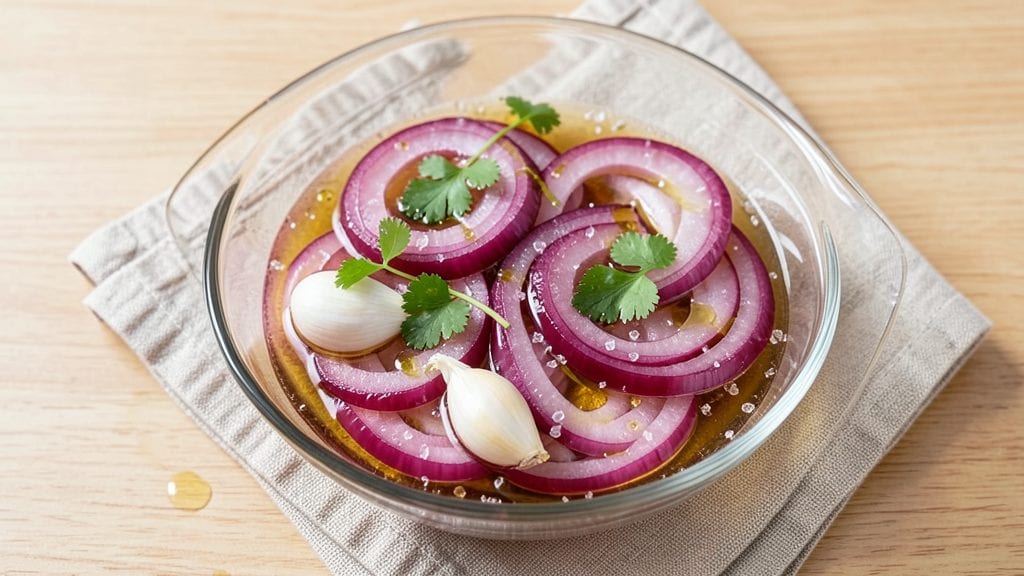
This cava pickled red onion recipe transforms simple red onions into vinegar-bright, tangy bites that elevate every tapas spread or sparkling wine pairing. The key lies in the precise balance of vinegar, sugar, and spices—creating a crunchy, flavorful condiment that stays crisp for days.
I developed this recipe after years of testing pickling methods, and the results are consistently restaurant-quality without the fuss.
The process is straightforward: thinly slice red onions, then combine them with a simple pickling liquid of white vinegar, water, sugar, and salt. Optional additions like garlic cloves, mustard seeds, or chili flakes add depth, while fresh herbs like dill or thyme introduce aromatic brightness.
The onions absorb the tangy, slightly sweet liquid in just 24 hours, delivering a crunchy, vibrant bite that complements cava perfectly.
What makes this recipe stand out is its versatility—use these pickled onions as a tapas, garnish for salads, or a zesty topping for grilled meats and seafood. The flavor profile is bold enough to stand alone but subtle enough to enhance other dishes.
Once you try this method, you’ll never buy store-bought pickled onions again; the homemade version is far more vibrant and customizable.
Ready in just 30 minutes of prep plus 24 hours of pickling, this recipe delivers professional results with minimal effort. The pickling liquid can be reused for multiple batches, making it both economical and sustainable.
Whether you're hosting a tapas night or simply craving a tangy crunch, these pickled red onions will become a staple in your kitchen.
Ingredients for cava pickled red onion
Vinegar-bright, tangy red onions that elevate tapas and sparkling wine pairings with minimal effort.
| Ingredient | Amount | Notes |
|---|---|---|
| Red Onions 🧅 | 2 large | Thinly sliced on mandoline |
| White Vinegar 💧 | 1 ½ cups | Distilled, 5% acidity preferred |
| Granulated Sugar 🍚 | ½ cup | White or raw cane sugar |
| Salt 🧂 | 1 ½ tbsp | Diamond Crystal preferred |
| Water 💧 | 1 ½ cups | Filtered preferred |
| Garlic Cloves 🧄 | 4 cloves | Smashed, not minced |
| Mustard Seeds 🌶️ | 1 tsp | Yellow or brown preferred |
| Black Peppercorns 🌶️ | 10 whole | Crushed lightly |
| Fresh Dill 🌿 | ¼ cup | Chopped, stems removed |
| Fresh Thyme 🌿 | ¼ cup | Leaves only, chopped |
| Red Wine Vinegar 🍷 | ½ cup | Optional, for depth |
| Cayenne Pepper 🔥 | ¼ tsp | Adjust for heat preference |
The onions are the foundation, so choose firm, dry red onions—avoid any with sprouting or soft spots. A mandoline slicer ensures even slices for consistent pickling. For vinegar, distilled white vinegar delivers the cleanest tang, but apple cider vinegar works if you prefer fruitiness. Sugar should be fine granulated—it dissolves faster than raw cane. Diamond Crystal kosher salt dissolves more slowly, creating a better brine texture. If you can't find it, use half the amount of table salt.
No fresh dill or thyme? Dried works at one-third the amount, but fresh delivers that bright, aromatic punch. Short on mustard seeds? Celery seeds add a similar earthy note. The red wine vinegar is optional but adds complexity—Trader Joe's has a great affordable option. For heat, crushed red pepper flakes can replace cayenne. The pickling liquid can be reused up to three times—just replenish the water and sugar each time. Store it in a clean, airtight container in the fridge.
These pickled onions keep in the fridge for up to 2 weeks, though they're best within 5-7 days for maximum crunch. The flavor actually improves after the first 48 hours, so plan ahead. For serving, drain them well—a fine-mesh strainer works best. The pickling liquid can be used as a quick marinade for proteins or as a tangy dressing base. Freeze extras in ice cube trays for easy portioning later.
Why You'll Love This Recipe
- Fridge Magic Ready: I keep a jar of these in my fridge at all times—just slice, pour, and wait. No chopping skills needed; even my roommate (who burns toast) can handle the thin slices.
- Sweet-Tangy Crunch: That perfect balance of bright vinegar, just enough sugar, and the onions’ sharp bite? It’s the kind of flavor that turns tacos, sandwiches, or even a simple charcuterie board into something ridiculously good.
- Party in a Jar: Hosting a last-minute gathering? This pickled onion mix adds instant pizzazz to any spread—no cooking required. I’ve used it for everything from brunch to game day snacks, and it’s always the first thing to disappear.
- Pantry Staple Wins: A single batch lasts me weeks, and it costs pennies to make. Honestly, I’d rather buy these than store-bought pickles—they’re fresher, cheaper, and way more versatile. Plus, I can tweak the sugar or vinegar ratio to suit my mood.
Step-by-step instructions for vinegar-bright pickled red onions
Here's how to create vibrant, tangy pickled onions perfect for cava pairings and tapas.
Prepare the Onions and Brine Base
Using a mandoline slicer, cut the 2 large red onions into paper-thin slices, about 1/16-inch thick. Place them in a large bowl and set aside. In a separate saucepan, combine the 1.5 cups white vinegar, 0.5 cup granulated sugar, 1.5 tablespoons salt, and 1.5 cups water over medium heat. Stir until the sugar and salt dissolve completely, then remove from heat and let cool to room temperature.
The sugar helps balance the acidity while the salt enhances flavor penetration. For even pickling, ensure the onions are submerged completely in the brine. If needed, gently press them down with a clean spoon to encourage full immersion.
Add Aromatics and Spices
Once the brine has cooled, add the 4 smashed garlic cloves, 1 teaspoon mustard seeds, 10 lightly crushed black peppercorns, 0.25 cup chopped fresh dill, 0.25 cup chopped fresh thyme, 0.5 cup red wine vinegar, and 0.25 teaspoon cayenne pepper. Stir gently to combine, being careful not to crush the herbs too finely. The red wine vinegar adds depth while the cayenne provides a subtle heat that pairs beautifully with cava.
Here's the thing—don't overmix. You want the herbs to infuse the brine without turning it into a chunky puree. The mustard seeds will add a gentle warmth, while the black peppercorns contribute a peppery bite that complements the onions' natural sweetness.
Combine and Store for Maximum Flavor
Transfer the onions to a clean, airtight glass jar or container, making sure they're fully submerged in the brine. If any onions float to the top, weigh them down with a small plate or lid. Seal the container and refrigerate for at least 24 hours before using, though they'll develop even more complex flavors after 48 hours.
This resting period allows the flavors to meld perfectly. The onions will soften slightly while maintaining their crisp texture, and the vinegar will create that signature tangy crunch. For best results, use within 2 weeks, though they'll keep for up to 3 weeks in the refrigerator.
Serve with Cava and Tapas
When ready to serve, drain the onions slightly before using to prevent excess moisture. They're perfect for topping cava glasses, adding to patatas bravas, or serving alongside grilled meats and cheeses. The vibrant color and bright tang cut through rich flavors while adding a refreshing crunch.
For an extra touch, sprinkle with a pinch of flaky sea salt just before serving. This enhances their natural sweetness and balances the acidity. The pickled onions should have a crisp texture with a bright, tangy flavor that's neither too sweet nor overly acidic—just perfectly balanced for cava pairing.
Pro Tips For Making Cava Pickled Red Onion
- Thin the Slices: Use a sharp knife and cut the onions paper-thin—like you’re trying to slice through butter. Thicker rings? They’ll stay crunchy and underpickle. I learned this the hard way when my first batch came out chewy instead of tender.
- Boil the Vinegar: Bring the vinegar, sugar, and water to a full rolling boil before adding the onions. This dissolves the sugar faster and ensures even pickling. Skipping this step means you’ll be waiting longer for that bright, tangy flavor to develop.
- Pack Tight, Then Weigh: Stuff the onions into the jar as tightly as possible—use a spoon to press them down. Then, place a small plate or lid on top to keep them submerged. If they float, they’ll pickle unevenly, and you’ll end up with half-raw layers.
- Add a Bay Leaf: Tuck in a single bay leaf when hot-packing the jar—it adds depth without overpowering. I was skeptical until I tried it; now it’s non-negotiable for me. (Yes, even if you’re impatient like me.)
Regional styles of this recipe
Spanish Tapas Style
In Spain, these pickled onions are a staple for patatas bravas and pan con tomate, where they add a sharp contrast to creamy aioli or smoky paprika-spiced potatoes.
I like to serve them in small ceramic bowls alongside crispy fried cod or chorizo—the tang cuts through the richness beautifully. For an authentic touch, use sherry vinegar instead of white vinegar in the brine. 🌶️
French Bistro Twist
French bistros often use pickled red onions as a garnish for steak frites or duck confit, where their bright acidity balances rich, fatty flavors. I recommend adding 1 bay leaf and 1 tsp juniper berries to the brine for a savory depth.
Serve them on a charcuterie board with Gruyère cheese and cornichons for a refined bistro-style spread. The French also love drizzling the pickling liquid over salade niçoise for extra tang. 🍷
Mexican Street Food
For a bold, spicy kick, Mexican street vendors often serve pickled onions with tacos al pastor or quesadillas. Boost the heat by adding 1 tbsp chipotle powder and 1 tsp ground cumin to the brine.
Use apple cider vinegar for a fruity twist. These onions work perfectly as a topping for huevos rancheros or alongside birria tacos. The acidity helps cut through the smoky, spicy flavors. 🌶️🔥
Italian Antipasto
In Italy, pickled red onions are a classic antipasto starter, often paired with prosciutto and burrata. For an Italian-inspired version, add 1 tsp fennel seeds and 2 sprigs of rosemary to the brine.
Serve them on a wooden board with marinated olives and grissini (Italian breadsticks). The onions also elevate bruschetta or caprese salad by adding a tangy crunch. 🌿
Middle Eastern Mezze
Middle Eastern cuisine often features pickled onions as part of mezze platters, where they complement hummus, baba ganoush, and labneh. For a Middle Eastern twist, add 1 tsp ground coriander and 1 tsp cumin to the brine, along with 1 tbsp lemon zest.
Serve them in a clay dish with warm pita bread and za’atar-spiced nuts. The bright, tangy flavor pairs beautifully with creamy dips and grilled meats. 🌿✨
Nutrition facts
Frequently asked questions
How long should I pickle the onions for perfect crunch?
For ideal texture, pickle the onions for 24 hours at minimum, but let them sit 48 hours for deeper flavor development. The acidity softens them slightly while preserving that satisfying crunch. After 7 days, they'll start losing crispness, so use within 2 weeks for best results.
Can I use yellow or white onions instead of red?
Red onions work best because their vibrant color and mild sweetness shine in pickling. Yellow onions will work, but they'll lose their pink hue and taste slightly sharper. White onions are too mild and won't hold up well to the acidity. Stick with red for that classic tapas presentation.
What's the best way to store leftover pickling liquid?
Transfer the leftover brine to a clean, airtight container and refrigerate for up to 3 months. It's perfect for marinating proteins or as a tangy salad dressing base. Just reheat it gently before reuse to kill any bacteria. Never reuse vinegar that's been open for more than 1 month without refrigeration.
Why did my onions turn mushy instead of staying crisp?
Overpickling or improper storage causes mushiness. Keep them submerged in cold brine for no more than 2 weeks, and always store them in the fridge. If using glass jars, ensure they're completely sealed to prevent oxidation. For extra crunch, add 1 extra tablespoon of sugar to the brine—it helps preserve texture.
How can I make these pickled onions spicier?
Boost the heat by adding 1 teaspoon of crushed red pepper flakes or ½ teaspoon of cayenne to the brine. For smoky heat, include 1 chipotle pepper in adobo sauce. Let them pickle for 48 hours to fully develop the spice. These work perfectly as a topping for tacos or grilled meats.