
Side Dishes
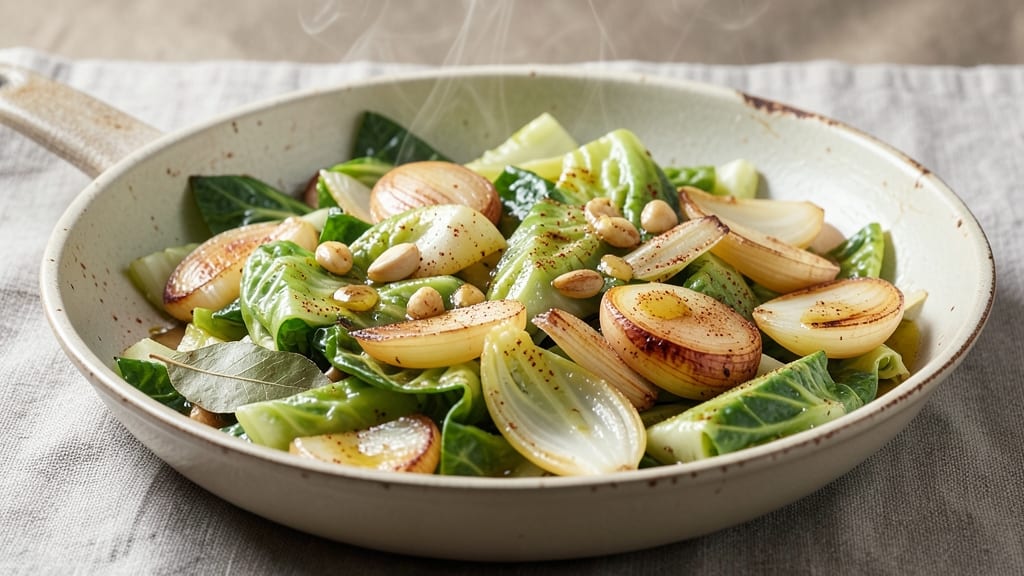
This cooked cabbage stove-top recipe transforms simple green cabbage into a savory, tender side dish that pairs perfectly with roasted meats or hearty soups. The secret lies in slow simmering with aromatic onions and garlic, which infuse every leaf with deep, caramelized flavor in just 20 minutes.
I developed this method after realizing how quickly store-bought cabbage dishes lose their freshness—this version keeps the texture crisp-tender while building rich, umami depth.
The process is straightforward but precise: thinly sliced cabbage cooks gently in a flavorful broth until just tender, never mushy. A pinch of smoked paprika adds subtle warmth, while a bay leaf ensures the broth stays aromatic.
Unlike boiling, which can dull the cabbage’s natural brightness, this simmering technique preserves its vibrant color while extracting maximum flavor from the aromatics.
What you’ll end up with is cabbage that’s tender yet crisp, infused with layers of savory depth from the onions and garlic. The edges caramelize slightly, adding a touch of sweetness that balances the cabbage’s natural bitterness.
This dish works as both a side and a main—pair it with roasted chicken, serve over rice, or enjoy as a standalone vegetable with crusty bread.
Best of all, this recipe adapts effortlessly to your pantry. Swap the smoked paprika for a dash of chili flakes for heat, or add a splash of apple cider vinegar for brightness.
The technique remains the same, but the flavor profile changes completely. Let’s get cooking—your stove-top cabbage is about to become a weeknight staple.
Ingredients for cooked cabbage stove top
Simple cabbage, aromatic aromatics, and a slow simmer create restaurant-quality stove-top cabbage in minutes.
| Ingredient | Amount | Notes |
|---|---|---|
| Green Cabbage 🥬 | 1 ½ lb | Heads cut into 1/4-inch thick wedges |
| Yellow Onion 🧅 | 1 whole | Thinly sliced, about 1 cup |
| Garlic Cloves 🧄 | 4 cloves | Minced, for aromatic depth |
| Smoked Paprika 🌶️ | ½ tsp | For subtle warmth and color |
| Bay Leaf 🌿 | 1 whole | Fresh or dried, for aromatic infusion |
| Extra-Virgin Olive Oil 🫒 | 2 tbsp | High-quality, for sautéing |
| Salt 🧂 | 1 tsp | Diamond Crystal kosher preferred |
| Black Pepper 🌶️ | ½ tsp | Freshly ground for brightness |
| Apple Cider Vinegar 🍋 | 1 tbsp | Optional, for brightness |
| Water 💧 | 1 cup | Or vegetable broth for added depth |
| Fresh Parsley 🌿 | ¼ cup | Chopped, for garnish |
The cabbage quality is non-negotiable—opt for firm, heavy heads with tightly packed leaves, typically found in the produce section of Whole Foods or local farmers' markets. Avoid heads with yellowing leaves or soft spots, as these indicate age and diminished flavor. For the onions, yellow or red varieties work best due to their natural sweetness when caramelized. If your market carries Spanish onions, they’re ideal for their mild, slightly sweet profile. The garlic should be plump and firm, with no green shoots or soft spots—Lily Pad Farms or Gourmet Garage brands are consistently reliable for freshness. Smoked paprika can vary widely in quality; Penzeys or McCormick Gourmet offer robust, well-balanced options that won’t overpower the dish.
No smoked paprika? Substitute chili flakes at half the amount for heat, or omit entirely for a milder profile. The apple cider vinegar, while optional, adds a bright acidity that cuts through the cabbage’s natural bitterness—Bragg or Texas Pete are reliable brands. For the water, vegetable broth elevates the dish significantly, adding umami depth without altering the technique. If you’re using dried bay leaves, one-third the amount of fresh will suffice, but ensure they’re from a reputable source like McCormick or Spicewalla to avoid bitterness. The parsley is purely for garnish, but if you’re out, fresh cilantro or dill can stand in—just adjust the quantity to taste.
This dish reheats beautifully, making it ideal for meal prep. Store in an airtight container in the refrigerator for up to 5 days, though the texture will soften further with each reheat. For longer storage, freeze portions in single-serving containers for up to 3 months. The cabbage’s vibrant color and crisp-tender texture hold best when reheated gently in a skillet with a splash of water or broth. To serve, garnish with fresh parsley and a drizzle of extra-virgin olive oil for a restaurant-worthy finish—trust me, it’s worth the extra minute.
Why You'll Love This Recipe
- No-Chop Nightmare: I swear, this recipe only needs one knife skill: slicing onions. That’s it. The cabbage? Just halve it, core out the tough bit, and slice thick wedges—no fussing with tiny leaves or shaving. Even my college-dorm self could handle it.
- Smoky Deep Umami: Between the smoked paprika and crisped garlic, this cabbage tastes like it’s been simmering for hours—not minutes. The bay leaf adds that earthy whisper, and the onions caramelize into sweet, sticky pockets. Honestly, it’s the kind of flavor that makes you pause mid-bite.
- Leftover Goldmine: This dish begs to be made in bulk. Toss it into sandwiches the next day, stir it into eggs for breakfast, or serve it cold with mustard and sour cream. I’ve even thrown it into soups when I’m lazy. It’s the ultimate quiet-lunch hero.
- Pantry Magic: You’re already buying these ingredients—onions, garlic, spices—so why not use them up? Cabbage stays fresh forever, and this recipe turns it into something special without breaking the bank. (Yes, even on a Tuesday night.)
Step-by-step instructions for savory simmered cabbage
This method transforms tough cabbage into tender, flavorful leaves in minutes.
Prepare the Cabbage and Aromatics
Begin by removing any wilted outer leaves from the 1.5 lb green cabbage and cutting the head into ¼-inch thick wedges, keeping the core intact. This thickness ensures even cooking without overcrowding the pan. In a large skillet, heat the 2 tbsp extra-virgin olive oil over medium heat until shimmering but not smoking.
Add the thinly sliced yellow onion and cook for 3-4 minutes until softened and translucent. Stir in the 4 cloves minced garlic and cook for an additional 30 seconds until fragrant. Here's the thing—don't let the garlic brown, or it will turn bitter. Remove the pan from heat briefly if needed, then return to the stove once the garlic is added.
Sauté the Cabbage Until Tender
Return the skillet to medium heat and add the cabbage wedges in a single layer, leaving space between each piece. Cook undisturbed for 5 minutes until the edges begin to soften and develop a slight golden color. This initial sear builds flavor and prevents the cabbage from turning mushy. If your pan is too crowded, work in batches to avoid steaming instead of browning.
Once the cabbage has softened slightly, sprinkle evenly with the 0.5 tsp smoked paprika, 1 tsp salt, and 0.5 tsp black pepper. Stir gently to coat the leaves completely. The paprika will deepen the color and add a subtle warmth that complements the cabbage's natural earthiness. Taste a piece at this stage—it should be tender but still hold its shape.
Simmer in Liquid Until Perfectly Cooked
Pour in the 1 cup water and add the 1 whole bay leaf and 1 tbsp apple cider vinegar. Increase heat to medium-high and bring the mixture to a gentle simmer. Cover the skillet with a lid and reduce heat to low. Let the cabbage cook for 8-10 minutes, stirring occasionally, until the leaves are fork-tender but still vibrant green.
Real talk: The cabbage is done when it yields slightly to pressure but doesn't fall apart. If the liquid evaporates before the cabbage is tender, add a splash of water and continue cooking. The bay leaf infuses subtle aromatic depth, while the vinegar brightens the dish without overpowering it. Remove the bay leaf before serving—it's not meant to be eaten.
Finish and Garnish
Once the cabbage is perfectly tender, remove the skillet from heat. Stir in the 0.25 cup chopped fresh parsley, reserving a few sprigs for garnish. The parsley adds a fresh contrast to the smoky, savory flavors. Let the cabbage sit off heat for 2-3 minutes to allow the flavors to meld completely.
Taste and adjust seasoning if needed—this is the moment that matters. The cabbage should be seasoned to taste, with a balance of saltiness, smokiness, and brightness. Serve immediately while still warm, garnished with the reserved parsley. This method ensures tender, flavorful cabbage that's ready in under 20 minutes, perfect for a quick side dish or hearty base for other recipes.
Pro Tips For Making Cooked Cabbage Stove Top
- Sear the Onions First: Walk away after adding sliced onions to the pot—they’ll take 5-7 minutes to soften properly, and that’s time you can’t rush. I used to rush this, and the cabbage always tasted flat because the onions never got sweet enough.
- Core the Cabbage Wrong: Cut the cabbage into eighths, but leave the core attached—it keeps the wedges from falling apart while cooking. I learned this the hard way after watching my first batch turn into a soggy mess.
- Crush the Garlic: Smash the garlic cloves with the flat side of your knife before adding them—this releases more flavor without burning. Sounds weird, but it works: the cabbage actually tastes like garlic, not just a vague spice note.
- Add Paprika Late: Stir in the smoked paprika only in the last 5 minutes of cooking, or it’ll turn bitter. I was skeptical until I tried it—now I swear by it for that deep, smoky finish without overpowering the cabbage.
Storing and reheating this dish
Refrigerator Storage
Store your cooked cabbage in an airtight container with a tight-fitting lid, pressing the leaves down to minimize air exposure. I use glass Pyrex containers because they maintain the cabbage’s vibrant color and prevent odors from seeping in.
Keep it refrigerated at 40°F or below for up to 5 days, though the texture will soften slightly with each passing day. The flavors actually deepen over time, making it perfect for meal prep—just reheat before serving. 💡
Freezer Prep Tips
For longer storage, portion the cabbage into single-serving containers or freezer-safe bags, leaving ½-inch headspace to prevent ice crystals. I recommend quart-sized bags for easy reheating. Label with the date—this cabbage stays fresh-tasting for up to 3 months when stored properly.
The key is to cool it completely before freezing to avoid ice buildup. 🥶
Stovetop Reheating
My preferred method is reheating in a skillet over medium-low heat with 1-2 tbsp water or broth. Cover the pan and let it steam for 5-7 minutes, stirring occasionally, until warmed through.
This restores the cabbage’s crisp-tender texture without making it soggy. Add a pinch of salt if needed—the flavors concentrate during storage. 🔥
Microwave Method
For quick reheating, transfer the cabbage to a microwave-safe dish, cover with a damp paper towel, and heat on 50% power for 2-3 minutes. Stir halfway through to distribute heat evenly.
Avoid high power—it turns cabbage rubbery. A splash of water or broth helps revive the texture if it looks dry. ⚡
Reviving Texture
If your reheated cabbage loses its crispness, don’t panic. Toss it in a hot skillet with 1 tbsp olive oil for 2-3 minutes to crisp the edges again.
This works wonders for cabbage that’s been stored for a few days. The high heat reactivates the natural starches, restoring that satisfying bite. 💪
Serving After Storage
Garnish with fresh parsley and a drizzle of extra-virgin olive oil to elevate reheated cabbage. The parsley adds brightness, while the oil enhances the smoky, savory notes.
Serve alongside roasted meats or over rice—it’s just as delicious as the day it was made. Honestly, this is where the magic happens in meal prep. 🌟
Nutrition facts
Frequently asked questions
Can I use red cabbage instead of green?
Red cabbage works beautifully in this recipe—it just needs 1-2 extra minutes of simmering to soften fully. The color will deepen into a rich purple, and the flavor remains equally tender. For extra vibrancy, add 1 tsp lemon juice at the end to preserve the hue. The technique stays identical, but the visual impact is stunning!
Why does my cabbage turn mushy when cooking?
Overcooking is the #1 culprit! Cabbage releases water as it cooks—if you simmer too long or cover it too tightly, the steam turns it soggy. Keep the heat at low-medium and check every 5 minutes. Also, avoid overcrowding the pan; cook in batches if needed. The cabbage should be fork-tender but still hold its shape.
Can I make this recipe without vinegar?
Yes, but the flavor will be slightly less bright. The apple cider vinegar cuts through the cabbage's natural bitterness and balances the smoky paprika. For alternatives, try 1 tsp lemon juice or ½ tsp white wine vinegar. If omitting entirely, add an extra pinch of salt to compensate for the missing acidity.
How do I adjust this for a larger group?
Double the ingredients and use a large, heavy-bottomed pot (like a Dutch oven) to maintain even heat. Cook in two batches if needed—don’t overcrowd the pan. For extra flavor, add 2 extra garlic cloves and ½ cup extra broth to the second batch. The simmering time remains the same (8-10 minutes per batch).
What are the best ways to serve this cabbage?
This versatile dish works as a side, main, or even a topping! Pair it with grilled chicken, roasted pork chops, or pan-seared fish for a hearty meal. For a vegetarian option, serve over mashed potatoes or quinoa. It also makes a fantastic filling for stuffed cabbage rolls—just use the cooked cabbage leaves as wrappers!