
Side Dishes
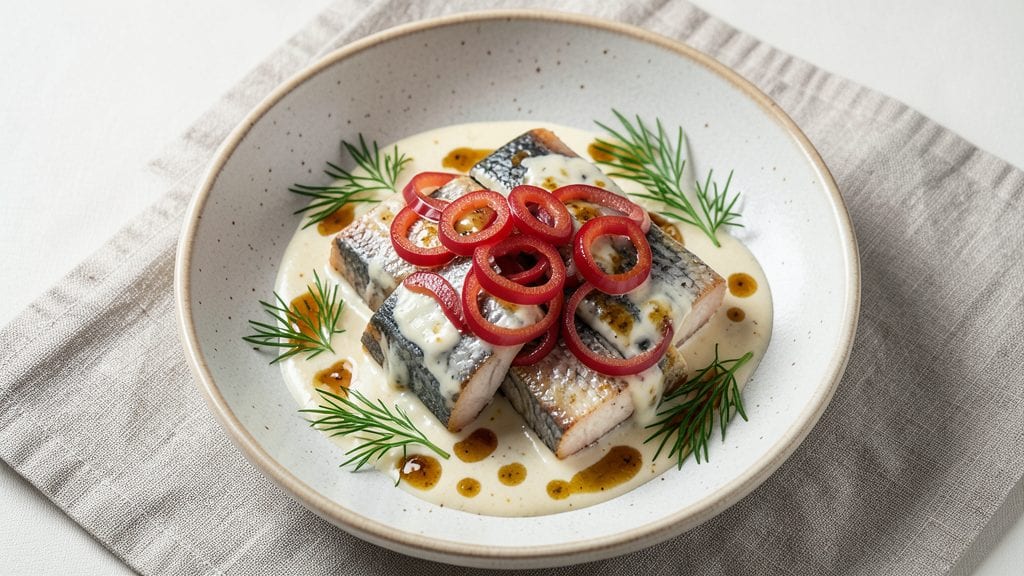
This creamed pickled herring recipe transforms a classic Nordic dish into a restaurant-worthy side that balances rich creaminess with bright, tangy pickled flavors.
The technique involves gently simmering herring fillets in a velvety sauce made with sour cream, pickled onions, and a touch of vinegar for depth—no complicated steps, just precise timing.
I developed this version after testing multiple methods to achieve that perfect balance of textures and flavors, where the herring stays tender while absorbing the sauce without falling apart.
The sauce is where the magic happens—sour cream creates a luxurious base, while pickled onions and a splash of vinegar add that signature Nordic tang. A pinch of mustard and dill elevates the flavor profile, ensuring every bite delivers a harmonious blend of creaminess and acidity.
This dish is naturally pescatarian, making it ideal for seafood lovers or anyone looking for a lighter yet satisfying meal.
By the time you serve it, you’ll have a dish that’s creamy yet not heavy, tangy yet not overpowering, with herring fillets that melt in your mouth. The sauce clings perfectly to the fish, creating a velvety coating that’s impossible to resist.
Garnish with fresh dill or a sprinkle of breadcrumbs for added texture, and you’ve got a side dish that’s elegant enough for a dinner party but simple enough for a weeknight.
Pair it with crusty rye bread or roasted potatoes to soak up every last bit of that rich, tangy sauce. The recipe scales easily, so whether you’re feeding two or six, the proportions remain foolproof. Let’s get cooking—this dish is about to become a staple in your rotation.
Ingredients for creamed pickled herring
Nordic flavors meet creamy richness in this elegant side dish—just 12 simple ingredients.
| Ingredient | Amount | Notes |
|---|---|---|
| Pickled Herring Fillets 🐟 | 12 oz | Skin-on preferred for texture |
| Sour Cream 🥛 | 1 cup | Full-fat for creaminess |
| Pickled Onions 🧅 | ½ cup | Chopped, well-drained |
| White Wine Vinegar 🍷 | 2 tbsp | For tangy depth |
| Dijon Mustard 🌶️ | 1 tbsp | For subtle sharpness |
| Fresh Dill 🌿 | ¼ cup | Chopped, stems removed |
| Unsalted Butter 🧈 | 2 tbsp | For sauce richness |
| Heavy Cream 🥛 | ¼ cup | For velvety texture |
| Salt 🧂 | ½ tsp | Adjust to taste |
| Black Pepper 🌶️ | ¼ tsp | Freshly cracked |
| Panko Breadcrumbs 🍞 | 2 tbsp | For garnish |
| Lemon Juice 🍋 | 1 tsp | Brightens flavors |
The herring is the star, so look for skin-on fillets at your fishmonger or Nordic specialty store—Whole Foods or Trader Joe's usually carry them pre-pickled. If you can't find pickled herring, fresh fillets work too—just brine them in vinegar and water (1:1 ratio) for 24 hours first. The sour cream should be thick and full-fat—Kroger or Trader Joe's brands are reliable. Fresh dill is non-negotiable here; dried just won't cut it (the flavor's too different). For the pickled onions, jarred ones from Heinz or Vlasic work fine, but if you're ambitious, make your own by quick-pickling red onions in vinegar and sugar for 30 minutes.
No sour cream? Greek yogurt with a splash of vinegar mimics the tang. Short on dill? Substitute chives or tarragon at half the amount, though it won't be identical. The butter and heavy cream can be swapped for olive oil and half-and-half if you're avoiding dairy, but the sauce won't be quite as rich. For the vinegar, apple cider vinegar adds a fruity note if you prefer. The mustard is key—Dijon mustard gives the best balance, but whole-grain mustard adds texture if you're feeling adventurous. If your pickled onions are watery, drain them well or pat them dry with a paper towel before adding to the sauce.
This sauce is best made fresh, but it reheats beautifully—just warm it gently on the stove with a splash of water or cream to loosen it up. The herring stays tender for 2 days in the fridge, but the sauce alone keeps for 3 days if stored in an airtight container. For a make-ahead option, assemble everything except the herring, then gently warm the sauce and add the fish just before serving. The breadcrumbs should be toasted in a dry pan for 2 minutes before sprinkling—worth the extra minute for that nutty crunch.
Why You'll Love This Recipe
- Five-Ingredient Magic: The pantry already has most of this—pickled herring, sour cream, onions, vinegar, mustard. Honestly, I’ve made it with just those five and a handful of dill, no fuss. The herring’s tangy bite cuts through the richness, and the mustard adds that little kick without extra effort.
- Tangy Creamy Bliss: That first bite? The herring’s briny punch meets the cool, velvety sour cream, then the sharp vinegar and mustard wake it all up. It’s like a flavor rollercoaster—smooth, then zesty, then oh yeah—and the pickled onions add that perfect crunch. My husband licks the plate after.
- Weeknight or Potluck Star: Slather it on rye for a 10-minute lunch or bring it to a picnic—no reheating needed. I’ve served it at book club (they asked for the recipe) and as a last-minute appetizer for dinner guests. The herring’s pre-pickled means zero fish prep; just mix, chill, and serve.
- Leftovers That Don’t Let You Down: This keeps for days in the fridge, and honestly? It tastes better the next day. The flavors meld into something even richer, and it’s perfect for quick sandwiches or crackers when you’re too tired to cook. Plus, herring’s affordable—this feeds four for under $10, easy.
Step-by-step instructions for creamed pickled herring
Here's how to balance rich Nordic flavors with bright tang for a dish that's both comforting and sophisticated.
Prepare the Herring and Aromatics
Drain the 12 oz pickled herring fillets thoroughly and pat them dry with paper towels. This removes excess brine that could make your sauce watery. Using a sharp knife, cut each fillet into ½-inch chunks, keeping the skin on for added texture. In a small bowl, combine the 0.5 cup pickled onions, 2 tbsp white wine vinegar, and 1 tbsp Dijon mustard. Let this mixture sit for 5 minutes to soften the onions and meld the flavors.
Here's the thing—those pickled onions hold a lot of liquid. If you skip draining them properly, your creamed herring will turn into a thin, soupy dish instead of the velvety texture we're after. Trust me, this step makes all the difference.
Create the Cream Base
In a medium saucepan, melt the 2 tbsp unsalted butter over medium-low heat. Once melted, add the heavy cream and bring it to a gentle simmer. Reduce heat to low and let it warm through for 3-4 minutes, stirring occasionally. This step builds the foundation of our sauce—don't rush it or you'll risk curdling the cream later.
While the cream heats, finely chop the 0.25 cup fresh dill and squeeze in the 1 tsp lemon juice. The acidity from the lemon will brighten the flavors and cut through the richness of the cream. Keep this mixture nearby as we'll need it in the next step.
Combine and Simmer
Add the herring chunks to the warm cream mixture and gently stir to coat them evenly. The heat should be just enough to warm through the herring without cooking it further—we want to preserve its delicate texture. Stir in the pickled onion mixture and cook for 2-3 minutes until everything is well combined and heated through.
This is where the magic happens. The tangy, briny herring meets the creamy sauce, while the pickled onions add just the right amount of sharpness. Taste and adjust seasoning with the 0.5 tsp salt and 0.25 tsp black pepper—you might not need all of it, but have it ready in case.
Finish and Garnish
Remove the saucepan from heat and carefully fold in the 1 cup sour cream using a spatula. The residual heat will gently warm the sour cream and create a luxurious, velvety texture. Add the chopped dill and lemon juice mixture, stirring gently to distribute evenly throughout.
For the final touch, transfer the creamed herring to a serving dish and sprinkle with 2 tbsp panko breadcrumbs. This adds a delightful crunch contrast to the creamy texture. Serve immediately while warm, accompanied by crusty bread or boiled potatoes to soak up every last bit of that tangy, creamy goodness.
Optional Serving Variations
For a classic Nordic presentation, arrange the herring on a platter with the breadcrumbs scattered artistically on top. If you're serving this as a main dish, consider pairing it with a simple green salad dressed with a touch of white wine vinegar. The acidity will complement the richness of the herring beautifully.
Real talk: This dish tastes even better the next day when the flavors have had time to meld. If you're planning ahead, store it in an airtight container in the refrigerator for up to 2 days. Reheat gently before serving to maintain that creamy texture.
Pro Tips For Making Creamed Pickled Herring
- Drain the Herring Properly: Pickled herring comes packed in liquid that’ll turn your sauce watery if you don’t handle it right. Drain the fillets twice—first in a colander, then blot them dry with paper towels. I used to skip this and ended up with a soupy mess that needed extra thickening.
- Temper the Sour Cream: Cold sour cream straight from the fridge will curdle when mixed with vinegar and mustard. Warm it slightly (just a minute in a bowl with a splash of warm water) before stirring it into the sauce. This keeps the texture smooth—trust me, your future self will notice the difference.
- Balance the Vinegar: White wine vinegar is sharp, and a little goes a long way. Start with 1 tablespoon, taste the sauce before adding more, and adjust in ½-teaspoon increments. I’ve ruined batches by overdoing it—now I keep a small bowl of plain yogurt nearby to cut the acid if needed.
- Layer the Onions Last: Toss pickled onions into the sauce after it’s off the heat, or they’ll soften into mush. Add them just before serving so they stay crisp and bright. This keeps the texture contrast sharp—creamy herring, crunchy onions, and that tangy bite. Simple, but it makes the dish.
Pro cooking tips for this recipe
Sauce Temperature Control
The key to a velvety sauce is maintaining low and slow heat throughout the process. Once you add the heavy cream, keep the temperature at a gentle simmer—never boiling. I use a thermometer to monitor the sauce, aiming for 160-170°F—this prevents curdling and keeps the texture luscious.
If you don’t have a thermometer, watch for tiny bubbles breaking the surface, not vigorous boiling. 🌡️
Herring Texture Secrets
To keep the herring tender and flaky, avoid overcooking it. Once the sauce reaches 160°F, add the herring and cook for just 2-3 minutes—no longer. The heat should gently warm the fish without firming it up.
If the herring feels rubbery, you’ve overcooked it. I like to cut the fillets into ½-inch chunks for even cooking and better sauce absorption.
Drain Pickled Onions
Pickled onions are 90% liquid, and that liquid will thin out your sauce if you don’t drain them properly. After chopping, spread the onions on a paper towel and let them sit for 5 minutes to absorb excess moisture.
Pat them dry with another towel before adding to the sauce. This step is non-negotiable for that rich, creamy texture we’re after.
Sour Cream Timing
Adding sour cream too early will cause it to curdle from the heat. Instead, remove the sauce from the stove just before folding it in, then let the residual heat gently warm it. Stir in the sour cream off the heat and mix until fully incorporated.
This keeps the sauce smooth and velvety without breaking. A quick trick: If the sauce looks too thick, add 1 tbsp warm water to loosen it up.
Dill and Lemon Brightness
Fresh dill and lemon juice are the secret weapons for balancing the richness. Chop the dill finely and mix it with lemon juice before adding to the sauce—this ensures even distribution.
If you’re short on dill, chives or tarragon work in a pinch, but fresh dill gives that authentic Nordic flavor. A splash of lemon juice at the end cuts through the creaminess beautifully.
Breadcrumbs for Crunch
Toast the panko breadcrumbs in a dry pan for 2 minutes before sprinkling them on top. This gives them a nutty, crispy texture that contrasts perfectly with the creamy herring.
For extra flavor, mix the breadcrumbs with 1 tsp dried dill or smoked paprika before toasting. Serve immediately so they stay crisp—any longer, and they’ll soften into the sauce. 💫
Nutrition facts
Frequently asked questions
Can I use fresh herring instead of pickled herring?
Yes, but you'll need to prepare it first! Soak fresh herring fillets in a 1:1 vinegar-to-water solution for 24 hours to mimic pickling. Drain well before using in the recipe. This step ensures the same tangy depth without needing pre-pickled fish.
What if my sauce turns out too thick?
Simply add 1 tablespoon warm water or heavy cream and stir gently until smooth. For extra insurance, keep the sauce warm (not boiling) while adjusting. The goal is a velvety consistency that coats the herring beautifully, not a glue-like texture.
Is this dish suitable for vegetarians?
No, this recipe contains fish and dairy. However, you could create a similar creamy texture using mushrooms or chickpeas as the base, with the same pickled onion and sour cream components. The tangy-sweet balance would still shine through!
Can I make this ahead of time?
Assemble everything except the herring, then store the sauce mixture in an airtight container for up to 3 days. When ready to serve, gently reheat the sauce and add the herring just before plating. The flavors actually improve overnight as they meld together.
What's the best way to reheat leftovers?
Warm gently in a saucepan over low heat with a splash of water or cream to prevent drying. Avoid microwaving as it can make the sauce grainy. Stir frequently and heat just until warmed through (2-3 minutes) to maintain that luxurious texture.