
Side Dishes
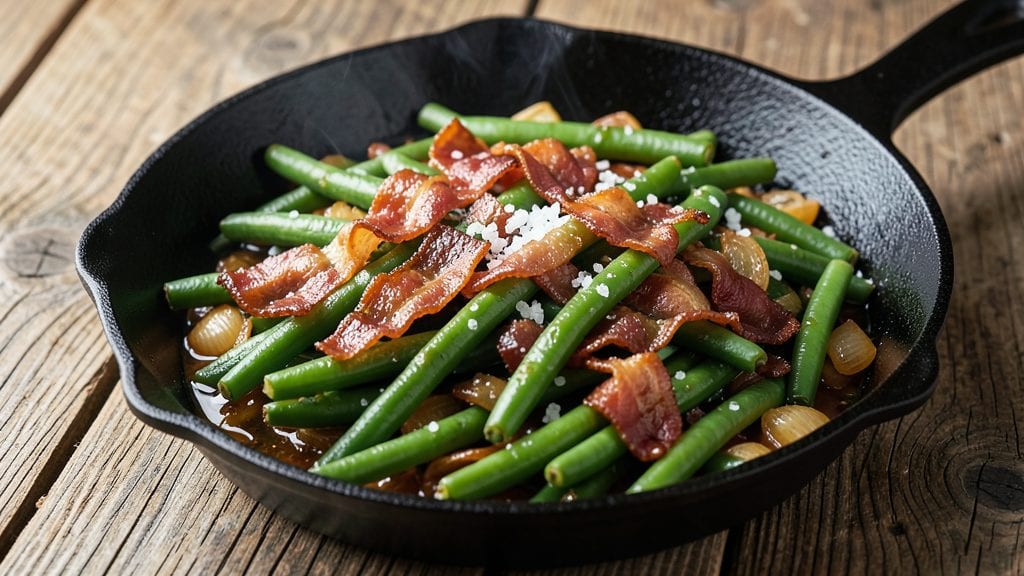
This old-fashioned Southern style green beans recipe brings the comforting flavors of a Southern kitchen to your table, where crisp-tender beans meet smoky bacon and a bright vinegar kiss. The dish carries the weight of tradition—simple ingredients transformed into something deeply satisfying through slow cooking and careful seasoning.
I first learned this recipe from my grandmother, who swore by the method of frying bacon until it rendered its fat and then letting the beans simmer in that golden liquid until they reached just the right tenderness.
The beauty of this recipe lies in its balance—crisp edges on the beans, rich smokiness from the bacon, and a tangy vinegar note that cuts through the richness.
It’s a dish that pairs perfectly with fried chicken, ham, or even a simple steak, making it a staple for Sunday dinners and holiday feasts.
The key is patience; letting the beans cook low and slow ensures they stay crisp-tender rather than turning mushy, while the bacon adds depth that elevates the dish from side to something truly memorable.
What you’ll end up with is a bowl of green beans that’s crisp, flavorful, and impossible to resist—each bite delivering a perfect harmony of smoky, tangy, and savory notes.
The aroma alone will have everyone at the table reaching for seconds, and the method is straightforward enough for weeknight cooking but hearty enough for a special occasion. This is the kind of dish that tastes like home, no matter where you are.
Ready to bring a taste of the South to your kitchen? The process is simple, but the result is anything but ordinary. Let’s get started with a recipe that’s as much about tradition as it is about flavor.
Ingredients for old fashioned southern style green beans
Simple Southern ingredients transformed into a dish that tastes like home-cooked tradition.
| Ingredient | Amount | Notes |
|---|---|---|
| Fresh Green Beans 🥦 | 1 ½ lb | Trimmed, cut into 2-inch pieces |
| Thick-Cut Bacon 🥓 | 8 oz | Thick-cut for maximum flavor |
| Yellow Onion 🧅 | 1 whole | Large, thinly sliced |
| White Vinegar 🍶 | ¼ cup | White or apple cider |
| Granulated Sugar 🍚 | 1 tbsp | Light brown sugar works too |
| Salt 🧂 | 1 ½ tsp | Kosher or sea salt |
| Black Pepper 🌶️ | ½ tsp | Freshly ground preferred |
| Garlic Cloves 🧄 | 3 cloves | Minced for depth of flavor |
| Fresh Parsley 🌿 | ¼ cup | Chopped, for garnish |
| Butter 🧈 | 2 tbsp | Unsalted, for richness |
| Hot Sauce 🔥 | 1 tbsp | Optional, for heat |
The bacon is non-negotiable here—thick-cut delivers the best flavor and smoky richness. Look for center-cut slices at your local butcher or Costco for the best quality, but regular grocery store bacon works fine too. Fresh green beans should be bright green and crisp—avoid those wilted or yellowing ones at the store. If you can't find fresh, frozen green beans are a solid backup, just be sure to thaw and drain them well before cooking. The onion and garlic should be freshly minced (not pre-chopped) for the best flavor, and Parmley's or Trader Joe's are great places to grab fresh herbs like parsley.
No thick-cut bacon? Thin-cut bacon works, but you'll need about 12 oz—just cook it longer to render the fat. Substituting vinegar? Lemon juice works in a pinch, but it won't give that same classic tang. If you're avoiding sugar, skip it entirely—the vinegar and bacon will still shine. For extra depth, smoked paprika can replace some of the hot sauce. Fresh parsley is ideal, but dried parsley at half the amount will work if you're in a bind. The butter adds richness, so don't skip it—it balances the acidity beautifully.
This dish tastes even better the next day—make extra if you can. Store leftovers in an airtight container in the fridge for up to 4 days, though the beans will lose some crunch over time. To reheat, gentle warming on the stove with a splash of water preserves texture better than microwaving. The bacon fat solidifies when cold, so reheat gently to avoid a greasy mess. If you're prepping ahead, cook the bacon and set it aside until serving—it stays crispier that way.
Why You'll Love This Recipe
- One-Pan Magic: I swear by this recipe when I’m too tired to wash dishes. Toss the green beans, bacon, and onions on a sheet pan, roast until crispy—boom, done. No pots, no pans, just golden edges and that smoky-sweet aroma filling my kitchen.
- Sweet-Savory Balance: That vinegar-sugar mix? It’s the secret weapon—brightens the beans without overpowering them. The bacon adds saltiness, the onions caramelize just enough, and suddenly, you’ve got a dish that’s ridiculously good with no extra effort.
- Weeknight Workhorse: Between us, this is my go-to for potlucks, church dinners, or when my kids bring home friends. It reheats perfectly, travels well, and even my picky eaters ask for seconds. (Yes, even on a Tuesday night.)
- Budget-Friendly Staple: Fresh green beans might seem fancy, but they’re cheaper than frozen in season—and this recipe stretches them. A pound of bacon feeds four, the onions add depth without cost, and the vinegar-sugar combo turns simple ingredients into something special. My wallet thanks me.
Step-by-step instructions for old-fashioned Southern style green beans
Here's how to create this classic Southern dish with rich bacon flavor and tangy vinegar crunch.
Cook the Bacon Until Crisp
Cut the 8 oz thick-cut bacon into ½-inch pieces and place them in a large skillet over medium heat. Cook for 8-10 minutes, stirring occasionally, until the bacon is golden brown and crisp. This slow cooking renders the fat while developing that signature smoky flavor. Don't rush this step—the rendered fat is essential for flavor and texture.
Once the bacon is crisp, use a slotted spoon to transfer it to a paper towel-lined plate, leaving the rendered fat in the skillet. You should have about 2 tablespoons of bacon fat remaining. If you need more fat, increase the heat briefly to render additional fat from the bacon pieces. This fat will create the base for your green beans' rich flavor profile.
Sauté Onion and Garlic
In the same skillet with the bacon fat, add the 1 whole yellow onion (thinly sliced) and cook over medium heat for 5-6 minutes until softened and beginning to caramelize. The onions should turn translucent with just a hint of golden color at the edges. This step builds the flavor foundation for your dish.
Add the 3 minced garlic cloves and cook for an additional 30 seconds until fragrant. Be careful not to let the garlic burn, as it can quickly turn bitter. The combination of caramelized onions and garlic will create a sweet, savory base that complements the green beans perfectly. Remove the onions and garlic from the skillet and set them aside with the bacon.
Blanch the Green Beans
Bring a large pot of water to a rolling boil. Add the 1.5 lb fresh green beans (trimmed and cut into 2-inch pieces) and cook for 3-4 minutes until they are bright green and just tender. You want them to retain some bite—al dente is key. Drain the green beans immediately and transfer them to an ice bath to stop the cooking process and preserve their vibrant color.
Once cooled, drain the green beans again and return them to the pot. Add the crisp bacon, caramelized onions, and garlic to the green beans. Stir in the 2 tbsp butter, 1.5 tsp salt, and 0.5 tsp black pepper. Toss everything together until the green beans are evenly coated with the flavorful mixture. This step ensures every bite has that perfect balance of smoky, savory, and slightly sweet notes.
Simmer with Vinegar and Sugar
Return the skillet with the bacon fat to medium heat. Add the green bean mixture to the skillet and stir in the 0.25 cup white vinegar and 1 tbsp granulated sugar. Simmer for 5-7 minutes, stirring occasionally, until the green beans are heated through and the vinegar has slightly reduced. The vinegar will create a tangy brightness that cuts through the richness of the bacon.
Taste and adjust seasoning if needed. The sugar balances the acidity of the vinegar, while the salt and pepper enhance the overall flavor. The green beans should be tender-crisp with a glossy sheen from the vinegar and butter. This simmering step is crucial for developing the dish's signature Southern flavor profile.
Finish and Serve
Remove the skillet from heat and stir in the 0.25 cup chopped fresh parsley and 1 tbsp hot sauce (if using). The parsley adds a fresh, bright note that balances the richness of the bacon and green beans. The hot sauce adds a subtle kick that enhances the overall flavor without overpowering it. Let the green beans sit for 2-3 minutes to allow the flavors to meld together.
Serve the green beans immediately, garnished with additional crisp bacon pieces if desired. This dish is best enjoyed fresh, while the green beans are still vibrant and the bacon remains crisp. Pair it with cornbread, grilled chicken, or any other Southern classic for a complete meal. The combination of smoky bacon, tangy vinegar, and fresh green beans creates a dish that's both comforting and full of flavor.
Pro Tips For Making Old Fashioned Southern Style Green Beans
- CRISP THE BACON FIRST: Cook the thick-cut bacon until it’s just crispy—not blackened, not greasy—then drain it on paper towels. That extra fat renders out, and you’ll end up with a dish that tastes richer without being soggy. I used to skip this, and the beans always felt heavy afterward.
- TRIM BEANS LIKE A PRO: Snip the ends off the green beans with kitchen shears—don’t just snap them. It keeps them whole but makes them cook faster and look neater. Also, if you’re using thicker beans, halve them lengthwise so they soften evenly. (Yes, even if the recipe doesn’t say it.)
- STOP WHEN THEY’RE AL DENTE: Southern green beans should have a slight bite—pull them out of the pot when they’re tender-crisp, not mushy. Taste-test at 8 minutes if you’re unsure. Overcooking turns them into a sad, limp mess, and no one wants that.
- SWEAT THE ONION LOW AND SLOW: Don’t rush the onion—cook it on medium-low until it’s soft and translucent, not browned. That’s where the flavor builds. I learned this the hard way when I burned the first batch and had to start over. (Your nose will thank you.)
Make-ahead tips for old fashioned southern style green beans
Prep Ahead for Crisp Beans
Start by prepping the bacon and green beans the night before—this saves time and keeps the bacon crisp. Cook the 8 oz thick-cut bacon until fully crisp, then drain on paper towels. Store the bacon in an airtight container in the fridge.
For the green beans, trim and cut them into 2-inch pieces and store in a sealed container with a damp paper towel to maintain freshness. This step ensures you’re ready to blanch and assemble the dish quickly the next day. 💪
Bacon Fat Storage
Save the rendered bacon fat in a small jar or airtight container—it’s the secret to keeping your green beans flavorful when reheating. Store it in the fridge for up to 1 week or freeze it for longer storage.
When reheating, add 1-2 tablespoons of the reserved fat to the skillet to recreate that rich, smoky base. This fat is non-negotiable for that authentic Southern taste. 🥓
Vinegar and Sugar Mix
Combine the ¼ cup white vinegar and 1 tbsp granulated sugar in a small bowl and store it in the fridge. This tangy-sweet mixture can be prepped up to 3 days ahead—it’s the key to that bright, balanced flavor.
When ready to cook, simply stir it into the skillet with the green beans and bacon. This shortcut ensures you won’t miss the freshness of homemade prep. ✨
Blanching in Advance
Blanch the green beans up to 1 day ahead and store them in an ice bath to stop cooking. Drain well and pat dry before refrigerating in an airtight container. When reheating, toss the blanched beans with the reserved bacon fat and bacon over medium heat for 3-4 minutes.
This method keeps them crisp-tender and ready to finish with vinegar and sugar. 🥦
Garnish Last Minute
Hold off on adding the ¼ cup chopped parsley and 1 tbsp hot sauce until serving. These finishing touches add freshness and heat, so they’re best added right before eating.
If prepping ahead, store them separately in small containers and stir them in just before serving. This keeps the dish vibrant and full of flavor. 🌿
Reheating Like a Pro
Reheat your green beans gently on the stovetop over medium-low heat for 4-5 minutes, stirring occasionally. Add a splash of water or reserved bacon fat if they look dry. Avoid microwaving—it turns the beans soggy.
For extra crispiness, broil for 1-2 minutes at the end to restore some crunch. This method ensures your make-ahead dish tastes just like it was freshly made. 🔥
Nutrition facts
Frequently asked questions
Why does this recipe use vinegar and sugar together?
The combination creates a perfect balance of tangy brightness and subtle sweetness that cuts through the richness of the bacon. The vinegar adds a classic Southern tang while the sugar prevents it from being too sharp. This flavor pairing is traditional in Southern cooking and enhances the overall dish harmony.
Can I make this recipe without bacon?
Yes, but you'll lose the signature smoky depth. For a vegetarian version, use 2 tablespoons olive oil or 2 tablespoons bacon fat substitute (like coconut oil) instead. You might also add ½ teaspoon smoked paprika to mimic the bacon flavor. The dish will still be delicious but will taste more like a simple vinegar-green bean side.
How do I keep the green beans crisp-tender?
Blanching in boiling water for only 3-4 minutes is key—this stops the cooking process immediately. Then shock them in ice water to preserve their color and texture. When reheating, cook over medium heat for just 3-4 minutes with a splash of water or reserved bacon fat. Never microwave or overcook, as this turns beans mushy.
What's the best way to store leftovers?
Store in an airtight container in the fridge for up to 4 days. The beans will lose some crispness but reheat beautifully. For longer storage, freeze for up to 3 months. To reheat, warm gently on the stovetop with a splash of water or bacon fat—never microwave directly. This preserves the texture much better.
Can I use frozen green beans instead of fresh?
Thaw and drain frozen beans completely before blanching. They may need 1-2 extra minutes in boiling water since they're pre-cooked. The key is to maintain the same crisp-tender texture. For best results, use high-quality frozen beans with no added sauces. The flavor difference is minimal when prepared this way.