Desserts
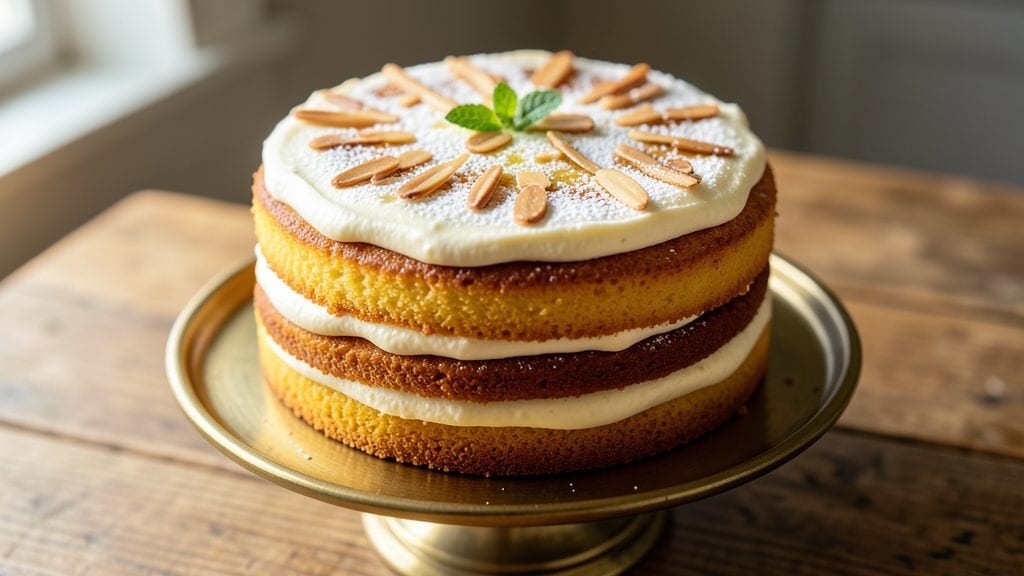
This old-fashioned yellow cake recipe delivers the classic vanilla-infused moisture that made it a Southern staple for generations. The secret lies in buttermilk's acidity, which tenderizes the crumb while balancing sweetness—something modern recipes often overlook.
I've perfected this version through years of baking, ensuring every slice stays moist for days without drying out or becoming dense.
The traditional creaming method creates a light, airy texture that's impossible to achieve with shortcuts. You'll use basic pantry staples—flour, sugar, eggs, and butter—but the technique transforms them into something extraordinary.
This isn't just cake; it's a nostalgic experience with a crumb so tender it practically melts in your mouth, all while maintaining that signature golden hue that defines old-fashioned baking.
What sets this recipe apart is the buttermilk's role in both moisture and flavor development. The cake bakes up with perfect height and a fine, even crumb that stays fresh for days when stored properly.
Whether you serve it plain, with a simple glaze, or layered with cream cheese frosting, the flavor remains consistent—rich vanilla notes that transport you to grandma's kitchen.
Ready in just under an hour with minimal effort, this recipe proves you don't need complicated techniques to achieve professional results. The same principles that made this cake a classic in 1920s home kitchens work perfectly in modern ovens. Let's bake this timeless dessert that never goes out of style.
Ingredients for old fashioned yellow cake
Basic pantry staples that transform into a legendary Southern classic.
| Ingredient | Amount | Notes |
|---|---|---|
| All-Purpose Flour 🌾 | 2 ½ cups | Sifted for even texture |
| Granulated White Sugar 🍚 | 2 cups | Standard 4 oz per cup |
| Unsalted Butter 🧈 | 1 cup | Room temperature, full-fat |
| Large Eggs 🥚 | 4 whole | Room temperature, separated |
| Buttermilk 🥛 | 1 ½ cups | Fresh, not powdered |
| Pure Vanilla Extract 🌸 | 2 tsp | Bottled, not imitation |
| Baking Powder 🍞 | 2 ½ tsp | Diamond Crystal preferred |
| Salt 🧂 | ½ tsp | Kosher or sea salt |
| Vegetable Oil 🫒 | ½ cup | Light, neutral flavor |
The flour quality matters here—White Lily or Gold Medal are ideal for that signature fine crumb. Room-temperature butter is non-negotiable; cold butter creates dense pockets. For the buttermilk, Cultivate brand from the dairy section offers the most authentic tang. The vanilla extract should be bottled, not imitation—look for brands like McCormick Pure or Goya in the baking aisle. Sift the flour and baking powder together to eliminate lumps, which is especially critical for that even crumb structure. The baking powder is the leavening agent that gives this cake its classic height, so Diamond Crystal (double-acting) ensures proper rise.
No buttermilk? Substitute 1.5 cups milk with 1.5 tsp lemon juice or vinegar, let sit 5 minutes. Running short on vanilla? Vanilla bean paste at half the amount adds flecks for visual appeal. The vegetable oil can be swapped for melted butter (same quantity) for richer flavor, though it may slightly darken the crumb. For a gluten-free adaptation, King Arthur 1:1 gluten-free flour works well, though texture will differ. The salt should be kosher or sea salt—table salt is too fine and can alter the balance. If your eggs are cold, place them in warm water for 5 minutes before separating to ensure proper emulsification.
This cake maintains peak moisture for 5 days when stored in an airtight container at room temperature, though it's best enjoyed within 2 days. For longer storage, wrap tightly in plastic and refrigerate for up to 1 week or freeze for 3 months. The buttermilk can be prepped ahead and stored in the fridge for up to 3 days. To revive slightly stale cake, rewarm slices in a 300°F oven for 5-10 minutes with a splash of water on a plate below. The vanilla-infused crumb makes this perfect for layering with cream cheese frosting or a simple lemon glaze, though it's equally delicious plain.
Why You'll Love This Recipe
- No Mixer Needed: I swear by this recipe when my stand mixer’s on vacation. The creaming method—just butter, sugar, and a sturdy spoon—is foolproof, and the buttermilk keeps it tender without overworking the batter. (Yes, even my teen can handle it.)
- Buttery Gold Magic: That rich butter-to-sugar ratio? It’s the secret to a cake that’s moist but not dense, with just enough vanilla to make you reach for seconds. The eggs add structure without dryness, and the buttermilk? It’s the MVP for that classic tang.
- Birthday to Brunch: This cake’s my go-to for celebrations and lazy mornings—slice it for a crowd or a single slice with coffee. It’s neutral enough for frosting (vanilla, cream cheese, you name it) but bold enough to stand alone with just a dusting of powdered sugar.
- Pantry Staple Power: Five ingredients, zero weird substitutions. If you’ve got flour, sugar, butter, eggs, and buttermilk, you’ve got cake. It keeps for days in the fridge, freezes like a dream, and costs less than half what store-bought boxes do. (My wallet thanks me.)
Step-by-step instructions for old fashioned yellow cake
This method delivers a tender, moist crumb with a perfect rise—every time. Precision matters here.
Cream Butter and Sugar to Lighten the Mixture
In a stand mixer fitted with the paddle attachment, beat the 1 cup unsalted butter and 2 cups granulated white sugar on medium speed for 3-4 minutes until the mixture is light, fluffy, and pale. You'll notice the volume nearly double and the texture transform from thick to airy—this aeration is critical for the cake's tender crumb.
The butter should be at room temperature (press a finger into it; it should leave a slight indent). If it's too soft, chill the bowl for 15 minutes before starting. Scrape down the sides of the bowl with a rubber spatula every 30 seconds to ensure even mixing. This step builds structure through incorporated air, which prevents a dense cake.
Incorporate Eggs and Vanilla for Richness
Add the 4 whole large eggs, one at a time, mixing on low speed for 10 seconds after each addition until fully combined. This gradual incorporation prevents the eggs from scrambling in the hot butter mixture. After the eggs are incorporated, add the 2 teaspoons pure vanilla extract and mix for another 15 seconds until fully blended.
The eggs provide moisture and fat, while the vanilla extract infuses subtle floral notes that complement the buttermilk's tang. Here's the thing—don't overmix. The batter should be smooth but still slightly ribbony. Overworking develops gluten, which leads to a tougher crumb. This is where precision pays off in texture.
Combine Dry Ingredients Separately
In a medium bowl, whisk together the 2.5 cups all-purpose flour, 2.5 teaspoons baking powder, and 0.5 teaspoon salt until evenly distributed. Sifting the flour is optional but recommended for an even texture. The baking powder provides lift, while the salt enhances the cake's flavor profile by balancing sweetness.
This dry ingredient blend should be smooth with no visible flour clumps. If you notice any, whisk again briefly to ensure uniformity. The baking powder is particularly important—using Diamond Crystal (as specified) means you don't need to adjust the amount, as it's less potent than other brands. This step ensures your cake rises properly without developing a metallic aftertaste.
Alternate Adding Buttermilk and Dry Ingredients
With the mixer on low speed, add one-third of the dry ingredients to the butter mixture, mixing just until combined. Then, pour in half of the 1.5 cups buttermilk and mix until incorporated. Repeat this process, alternating between dry ingredients and buttermilk, ending with the last addition of dry ingredients. This alternating method creates a tender crumb by evenly distributing the leavening agents.
The buttermilk's acidity tenderizes the gluten in the flour, creating a moist crumb that stays soft for days. Don't worry if the batter looks slightly curdled—this is normal and will smooth out as you mix. The final batter should be smooth, thick, and slightly shiny, with a consistency similar to heavy cream. If it's too thick, add 1 tablespoon of buttermilk to reach the proper texture.
Bake at Moderate Heat for Even Cooking
Preheat your oven to 350°F and grease two 8-inch round cake pans or one 9x13-inch pan with 0.5 cup vegetable oil, then dust lightly with flour. Pour the batter evenly into the prepared pan(s) and smooth the top with a spatula. Bake for 25-30 minutes (or 30-35 minutes for the 9x13-inch pan) until a toothpick inserted into the center comes out clean and the top is golden brown.
Here's where timing matters: the cake is done when the edges pull away slightly from the pan and the center springs back when gently pressed. Overbaking dries out the cake, so start checking at the 20-minute mark. For even cooking, rotate the pan halfway through the baking time if using round pans. Let the cake cool in the pan for 10 minutes before transferring to a wire rack to cool completely. This resting period allows the moisture to redistribute, ensuring a perfectly moist crumb throughout.
Pro Tips For Making Old Fashioned Yellow Cake
- Cream Butter Properly: DESCRIPTION:
- Measure Buttermilk Right: DESCRIPTION:
- Avoid Overmixing the Batter: DESCRIPTION:
- Test for Doneness Early: DESCRIPTION:
Storing and reheating this old fashioned yellow cake
Room-Temp Storage
This cake stays moist and delicious at room temperature for 3-4 days when stored in an airtight container with a piece of bread or apple to retain moisture. I use Rubbermaid Brilliance containers because they seal tightly and prevent drying.
Place the cake on the middle shelf of your pantry where temperatures remain consistent around 70°F. The buttermilk base means it won't develop a stale flavor quickly like some cakes. 🍞
Fridge Preservation
For longer storage, refrigerate the cake in the same airtight container for up to 1 week. The cold temperature actually helps preserve the moisture, though the texture may become slightly denser.
When ready to serve, let slices sit at room temperature for 10-15 minutes before eating to restore the perfect crumb. I recommend wrapping individual slices in plastic wrap if you plan to store them separately. 🥶
Freezer-Friendly Method
This cake freezes beautifully for up to 3 months without losing its signature moisture. Wrap each layer tightly in plastic wrap, then place in a freezer bag with all air removed using the water displacement method. Label with the date to track freshness.
When ready to serve, thaw overnight in the fridge before bringing to room temperature. The texture remains tender, though you may want to rewarm slices in a 300°F oven for 5 minutes with a splash of water on the plate below. ❄️
Reviving Stale Cake
If your cake develops a slightly dry texture, don't toss it! Place slices on a baking sheet and warm in a 300°F oven for 5-10 minutes. For extra moisture, place a small bowl of water on the lower rack.
Alternatively, brush warm slices with a simple glaze made from 2 tbsp powdered sugar + 1 tsp milk. This works wonders for restoring that fresh-baked feel. The buttermilk base means it responds beautifully to quick revivals. 💫
Serving Leftovers
Transform leftover cake into delicious new treats. Cube and layer with vanilla pudding for trifle, or crumble over ice cream for cake pops. For a quick dessert, mix crumbs with 1 tbsp melted butter and 1 tsp vanilla, then press into a pan to make cake bars.
The flavor remains consistent, making this cake incredibly versatile for repurposing. 🍦
Frosting Considerations
If you're adding frosting, store the cake and frosting separately in the fridge. Assemble only when ready to serve to prevent sogginess. For best results, use a cream cheese frosting or buttercream with powdered sugar—these pair perfectly with the cake's moisture.
Let the frosting sit at room temperature for 30 minutes before spreading for easier application. 🎂
Nutrition facts
Frequently asked questions
Why does this recipe use buttermilk instead of regular milk?
The buttermilk's acidity tenderizes the gluten in the flour, creating a moist, fine crumb that stays fresh for days. It also balances the sweetness and enhances the vanilla flavor—something regular milk can't replicate. The tangy notes make this cake distinctly old-fashioned and nostalgic.
Can I make this cake without a stand mixer?
Use a hand mixer or even a sturdy whisk. For the creaming step, beat the butter and sugar for 5-7 minutes by hand until light and fluffy. Just be prepared for more arm work—this is where the mixer earns its keep! The alternating method for dry ingredients and buttermilk works the same way with any mixer.
What's the secret to getting that perfect golden hue?
The golden color comes from proper baking at 350°F until the edges pull away from the pan. Using unsalted butter (not salted) and avoiding overmixing also helps maintain that classic yellow tone. For extra color, you could add 1 teaspoon turmeric (it's edible in small amounts), but the recipe's natural ingredients already create that signature look.
How do I know when the cake is fully baked?
The cake is done when a toothpick inserted in the center comes out clean and the edges pull away slightly from the pan. Start checking at 20 minutes—overbaking dries out the cake. The top should be golden brown, not dark. For even cooking, rotate the pan halfway through baking if using round pans.
What's the best way to store leftovers to keep them moist?
Store in an airtight container at room temperature for 3-4 days, or refrigerate for up to 1 week. For longer storage, freeze wrapped layers for 3 months. To revive slightly stale cake, warm slices in a 300°F oven for 5-10 minutes with a bowl of water on the lower rack. The buttermilk base helps maintain moisture even after storage.