
Breakfast & Brunch
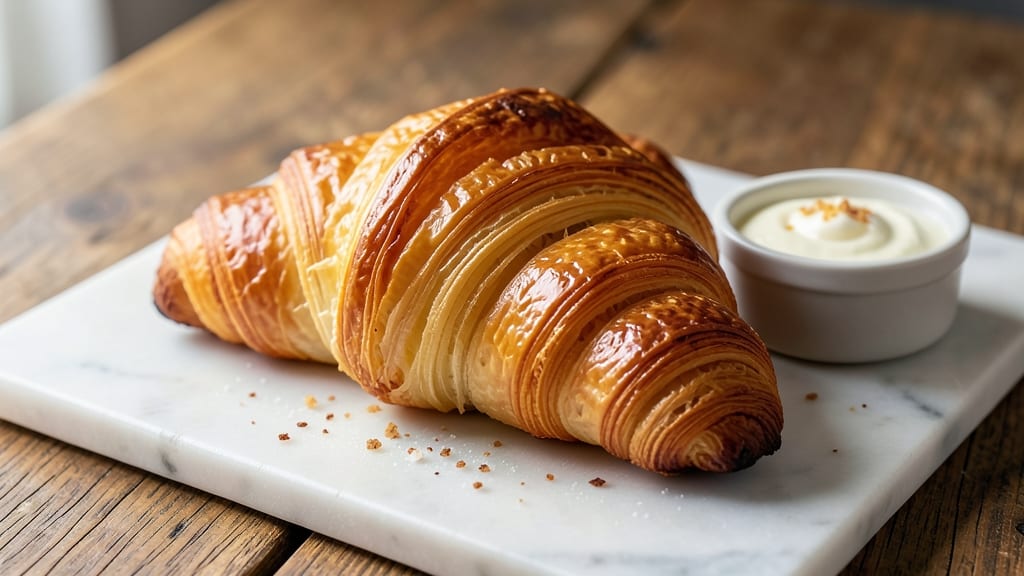
Mastering Paul Hollywood's croissant recipe means achieving those legendary flaky layers that shatter like gold with every bite—a challenge I've tested repeatedly in my kitchen. The secret lies in precise lamination and patience, techniques I perfected after years of experimenting with French pastries.
What makes this recipe special is how it transforms simple ingredients into something restaurant-worthy, with a crisp, golden exterior hiding tender, buttery layers inside.
This recipe demands attention to detail, particularly during the dough folding process, which builds the signature flakiness. You'll work with a high-fat butter block that stays cold while the dough develops gluten, creating those delicate, airy pockets.
The proofing stage is equally critical—rushing this step will compromise texture, while proper timing ensures a light, airy crumb. For home bakers, this method delivers professional results without requiring specialized equipment.
By the time you pull these croissants from the oven, you'll have achieved something truly impressive: a pastry that's crisp yet tender, with layers so delicate they seem to dissolve on your tongue.
The aroma alone will transform your kitchen into a Parisian bakery, while the flavor combines rich butter with just enough sweetness to satisfy any craving. This is the kind of recipe that elevates breakfast from ordinary to extraordinary.
Perfect for weekend baking projects or special occasions, these croissants freeze beautifully for freshness whenever you need them. The technique scales well, so you can make a dozen for a crowd or just a few for a treat.
Let's get started on creating your own masterpiece—one that will impress even the most discerning pastry lovers.
Ingredients for paul hollywood croissant
Twelve ingredients, one masterpiece: Paul Hollywood's legendary croissants start with these essentials.
| Ingredient | Amount | Notes |
|---|---|---|
| High-Ratio Bread Flour 🌾 | 5 cups | For optimal gluten development |
| Unsalted Butter 🧈 | 1 ½ lb | European-style, 82% fat content |
| Granulated Sugar 🍚 | ¼ cup | Superfine preferred for smoothness |
| Instant Yeast 🍞 | 0.02 oz | Or 2.1g for precise measurement |
| Large Eggs 🥚 | 2 whole | Room temperature for even mixing |
| Whole Milk 🥛 | ½ cup | Warmed to 86°F for activation |
| Diamond Crystal Kosher Salt 🧂 | ½ tsp | Fine grain preferred |
| Vanilla Extract 🍯 | ½ tsp | Pure vanilla preferred |
| All-Purpose Flour 🌾 | ¼ cup | For dusting work surface |
| Cornstarch 🌽 | 1 tbsp | For brushing final layers |
| Large Ice Cubes ❄️ | 1 cup | For butter chilling |
| Water 💧 | 1 tbsp | For egg wash |
The butter is non-negotiable—European-style with 82% fat content is crucial for those signature layers. I always grab mine from Whole Foods or King Arthur Flour since they carry the exact type needed. Look for blocks that feel dense and cold, never softened. The high-ratio bread flour is equally important—it develops gluten better than all-purpose, giving you that professional texture. For the yeast, Saf-Instant is my go-to brand since it doesn't need activation. If you're using active dry yeast, dissolve it in the warm milk first (86°F is perfect for activation).
No European butter? Plugrá or Land O'Lakes European-style work in a pinch, but nothing beats the real thing. Short on bread flour? All-purpose plus 1 tbsp vital wheat gluten gets you close. The vanilla extract can be swapped for vanilla bean paste—just reduce the amount by half. For the egg wash, if you're avoiding eggs, milk plus 1 tsp cornstarch works beautifully. The ice cubes might seem odd, but they're essential for keeping the butter block cold during lamination—freeze them in a tray ahead of time for convenience.
Store the butter block wrapped in parchment and frozen for up to 3 months—it keeps its shape perfectly. The dough can be refrigerated for 24 hours before shaping, which actually improves flavor. For freezing finished croissants, bake them first, then store in an airtight container with parchment between layers. They reheat beautifully—5 minutes at 350°F brings them back to golden perfection. The key is never to rush the proofing—patience here makes all the difference between good and legendary.
Why You'll Love This Recipe
- Butter-Packed Layers: The high-ratio flour and cold unsalted butter create that signature flaky, melt-in-your-mouth magic—no fancy equipment needed. I swear, the first time I bit into one still warm, I nearly dropped the whole batch.
- No-Fuss Dough: Honestly, the yeast and sugar combo makes this dough almost foolproof—just mix, fold, and let it rise while you watch a show. No kneading, no stress, just hands-off perfection.
- Breakfast or Snack Star: These croissants are my go-to for lazy mornings (toast them!) or afternoon pick-me-ups (stuff with ham and cheese). They’re the kind of thing that works at any time of day—no rules.
- Budget-Friendly Luxury: A single block of butter and a bag of bread flour stretch far, and the eggs add richness without breaking the bank. I’ve made a dozen with leftovers that lasted a week—no waste, all flavor.
Step-by-step instructions for Paul Hollywood's croissant recipe
Here's the method that delivers those legendary shatteringly flaky layers—every time.
Create the Butter Block for Laminating
Place the 1.5 lb unsalted butter between two sheets of parchment paper and flatten it into a 12x8-inch rectangle using a rolling pin. This should be about ½-inch thick. The goal is to create a pliable butter block that will layer perfectly between dough sheets later. If it feels too soft, chill it for 15 minutes in the refrigerator—you want it firm enough to hold its shape when rolled.
Here's the thing—this butter block is the secret weapon. It needs to be completely uniform in thickness and cool enough to prevent melting during the lamination process. Wrap it tightly in plastic wrap and refrigerate until ready to use. This step ensures those signature hundreds of flaky layers that make Hollywood's croissants legendary.
Mix and Knead the Dough Base
In a large mixing bowl, combine the 5 cups high-ratio bread flour, 0.25 cup granulated sugar, 0.02 oz instant yeast, and 0.5 tsp diamond crystal kosher salt. Whisk to distribute evenly. Make a well in the center and add the 2 whole large eggs, 0.5 cup whole milk, and 0.5 tsp vanilla extract. Mix with a dough whisk or wooden spoon until a shaggy dough forms.
Turn the dough onto a lightly floured surface (use the 0.25 cup all-purpose flour) and knead gently for 5-6 minutes until smooth and elastic. The dough should be soft but not sticky—if it sticks, add just enough flour to coat your hands. This kneading develops the gluten structure needed to hold those delicate butter layers during lamination. Wrap the dough in plastic and refrigerate for 1 hour to firm up before shaping.
Laminate the Dough for Maximum Flakiness
Roll the chilled dough into a 12x8-inch rectangle about ¼-inch thick. Place the butter block in the center of the dough, then fold the dough over the butter to completely enclose it. Seal the edges by pinching them together. Roll the dough out again into a 20x12-inch rectangle—this is your first fold. The butter should be visible through the dough in thin layers.
Fold the dough into thirds like a letter (this is called a "turn"), wrap it tightly in plastic, and refrigerate for 30 minutes. Repeat this process two more times, allowing 30 minutes of chilling between each fold. Each fold doubles the number of butter layers, creating the signature flakiness. After the final fold, the dough should be ¼-inch thick and ready for shaping.
Shape and Proof the Croissants
Roll the laminated dough into a 16x12-inch rectangle and cut it into 12 equal triangles using a sharp knife or pastry wheel. Starting from the wide end, roll each triangle into a 10-inch log, keeping the point at the top. Place the croissants on a parchment-lined baking sheet, point side down, and cover with a damp towel. Let them proof at room temperature for 2-3 hours until they've nearly doubled in size.
Here's where patience pays off—they should look puffy and slightly domed. If they rise too quickly, they'll collapse in the oven. The ideal proofed croissant will have a smooth, slightly glossy surface with no cracks. Brush the tops with a mixture of 1 tbsp water and 1 tbsp cornstarch (whisked together) for that signature golden finish.
Bake to Golden Perfection
Preheat your oven to 375°F with a baking stone or inverted baking sheet inside. Bake the croissants for 18-22 minutes until they're deep golden brown and sound hollow when tapped on the bottom. The key is even heat circulation—rotate the baking sheet halfway through if needed. They should pull away from the parchment easily when done.
Let them cool on a wire rack for 10 minutes before serving. That final rest prevents the butter from melting too quickly, preserving those delicate layers. The result? Croissants with shatteringly flaky texture, crisp golden crusts, and a buttery aroma that fills your kitchen. Worth every minute of the process.
Pro Tips For Making Paul Hollywood Croissant
- Chill the Butter Properly: DESCRIPTION:
- Weigh Your Flour: DESCRIPTION:
- Laminate Like a Sandwich: DESCRIPTION:
- Proof Until Fingers Press In: DESCRIPTION:
Common mistakes when making your paul hollywood croissant
Skipping Chill Times
I learned this the hard way—skipping the 30-minute chills between folds is the fastest way to ruin your croissants. The butter needs time to firm up between each turn, or it'll melt and create dense, greasy pockets instead of flaky layers.
I once rushed through this step and ended up with croissants that tasted more like shortbread than the buttery clouds we want. 🧈
Uneven Butter Distribution
When rolling out the butter block, make sure it's completely uniform in thickness—½-inch thick throughout. I've seen home bakers who roll it too thin in some areas, causing uneven layers in the final croissants.
Use a rolling pin to press firmly and evenly. If the butter starts to soften during lamination, pop it back in the fridge for 10 minutes—this is non-negotiable for those signature layers.
Overworking the Dough
Kneading the dough too long develops too much gluten, which makes the croissants tough instead of tender. Aim for 5-6 minutes of gentle kneading—just until the dough comes together smoothly. I've seen beginners knead for 20 minutes trying to "get it right," and their croissants ended up dense and chewy.
The dough should be soft but not sticky—if it sticks, just add a tiny bit of flour to your hands.
Proofing Too Long
Overproofing is just as bad as underproofing. If your croissants proof for more than 3 hours, they'll collapse in the oven or develop large holes. The ideal proofed croissant should nearly double in size with a smooth, slightly domed top.
I keep a close eye on mine—if they're rising too quickly, I move them to the fridge to slow the process. A damp towel helps maintain humidity during proofing, preventing dry spots.
Baking at Wrong Temperature
Baking these croissants at 375°F is critical—they need that precise heat to develop a crisp golden crust while keeping the interior tender. I've seen people bake them at 400°F and end up with burnt exteriors and underbaked centers. Use a baking stone or inverted sheet for even heat circulation.
Rotate the pan halfway through if your oven has hot spots. The croissants are done when they're deep golden brown and sound hollow when tapped on the bottom.
Not Resting After Baking
This is a common mistake that ruins all the hard work you've put in. Freshly baked croissants need 10 minutes to rest on a wire rack before serving. Skipping this step causes the butter to melt too quickly, making the layers collapse.
I've seen people cut into them immediately and end up with sad, greasy croissants. That final rest preserves the delicate structure we've worked so hard to create—patience here makes all the difference. 💫
Nutrition facts
Frequently asked questions
Why does Paul Hollywood's croissant recipe require so many folds?
Each fold doubles the number of butter layers in the dough, creating those signature shatteringly flaky textures. The three required folds (with 30-minute chills between) build up to hundreds of delicate layers—this is what makes the difference between store-bought and restaurant-quality croissants. Skipping folds means losing that professional texture.
Can I make this recipe without a stand mixer?
This recipe only requires gentle kneading by hand for 5-6 minutes. Use a lightly floured surface and focus on developing the gluten without overworking it. The key is patience—let the dough rest between folds to keep the butter firm and create those perfect layers.
What's the best way to store leftover croissants?
For short-term storage, keep them in an airtight container at room temperature for up to 2 days. To freeze, bake them first, then store in a sealed container with parchment between layers. Reheat frozen croissants at 350°F for 5 minutes—they'll taste almost as good as fresh! The key is never to freeze unbaked dough.
How do I fix croissants that turned out dense instead of flaky?
Dense croissants usually mean the butter melted during lamination or the dough was overworked. Next time, chill the butter block between folds and knead gently for only 5-6 minutes. If you've already baked them, try reheating at 300°F for 10 minutes with a slice of butter on top—this can restore some moisture and softness.
Can I use regular butter instead of European-style?
While European-style butter (82% fat) is ideal, you can substitute with Plugrá or Land O'Lakes European-style in a pinch. Regular American butter (80% fat) works but may result in slightly fewer layers. For best results, keep the butter block as cold as possible during lamination—this prevents melting and maintains that signature flakiness.