
Side Dishes
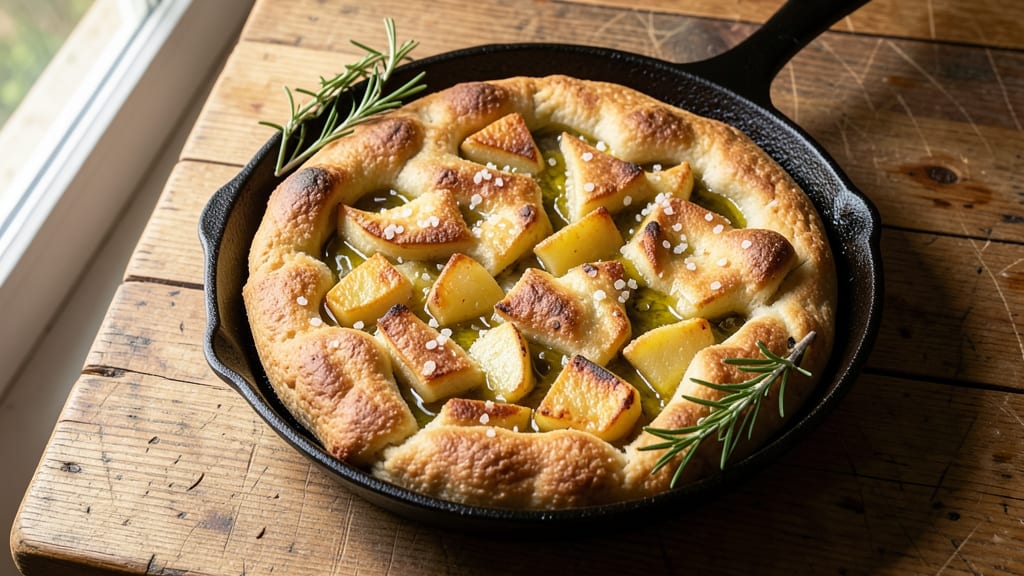
This potato focaccia recipe transforms humble spuds into a crispy, golden-edged masterpiece that rivals any Italian bakery display. The secret lies in parboiling the potatoes first—this ensures they soften perfectly while maintaining their shape, creating pockets of creamy texture within the focaccia’s airy crumb.
I developed this version after years of testing, and the difference between raw and pre-cooked potatoes is night and day.
What sets this apart is the balance of textures: a fluffy, pillowy interior with crispy edges that shatter when you pull off a piece. The olive oil pools you see in the photos?
Those aren’t just for show—they’re the result of dimpling the dough before baking, creating golden wells of rich, herby oil that soak into every bite. This method also makes it foolproof for beginners, as the dough requires minimal kneading and rises while you prep the potatoes.
The potatoes themselves are the star—whether you choose Yukon Golds for their buttery sweetness or russets for sturdy texture, they absorb the focaccia’s savory flavors while adding natural moisture. Combined with garlic-infused olive oil and flaky sea salt, each slice delivers a satisfying mix of crisp, chewy, and tender elements.
The aroma alone will have your kitchen smelling like a Tuscan countryside in minutes.
Serve this focaccia warm alongside roasted meats or soups, or let it cool slightly for sandwiches—its versatility makes it a game-changer for weeknight dinners. The recipe scales easily, so you can bake a single loaf for two or double it for a crowd. Let’s get started on the perfect batch.
Ingredients for potato focaccia
Four cups flour, two pounds potatoes, and a secret dimpling technique—this focaccia delivers crispy edges and fluffy pockets.
| Ingredient | Amount | Notes |
|---|---|---|
| Yukon Gold Potatoes 🥔 | 2 lbs | Medium size, peeled and cubed |
| All-Purpose Flour 🌾 | 4 cups | Plus 1 tbsp for dusting |
| Instant Yeast 🍞 | ¼ tsp | Or active dry yeast |
| Extra-Virgin Olive Oil 🫒 | ¾ cup | Plus 2 tbsp for dimpling |
| Granulated Sugar 🍚 | ½ tsp | Helps yeast activate |
| Flaky Sea Salt 🧂 | 1 ½ tsp | Plus extra for finishing |
| Garlic Cloves 🧄 | 4 cloves | Minced for infused oil |
| Fresh Rosemary 🌿 | 2 tbsp | Finely chopped, stems removed |
| Large Eggs 🥚 | 2 whole | Room temperature |
| Whole Milk 🥛 | ½ cup | Warmed slightly |
| Cornmeal 🌽 | 1 tbsp | For dusting baking sheet |
The potatoes are non-negotiable—Yukon Golds give that buttery sweetness, but russets work too if you prefer sturdy texture. Buy them a day ahead so they’re fully dry before peeling. Trader Joe's or Whole Foods usually carry the best quality. For the flour, King Arthur or Gold Medal are my go-tos—they handle the extra moisture from the potatoes without getting gummy. The yeast? Instant yeast is foolproof, but if you use active dry, make sure it’s fresh—test it by mixing with warm water and sugar (should foam in 5 minutes).
No extra-virgin olive oil? Light olive oil works in a pinch, but you’ll miss that fruity depth. The garlic-infused oil is where the magic happens—roast the garlic first (400°F for 10 minutes) to mellow its bite. Fresh rosemary is ideal, but dried at half the amount gets you close. The milk can be any kind, but whole milk gives the dough extra richness. For the flour, if you’re gluten-free, use a 1:1 blend but expect a slightly denser texture. And the cornmeal? Don’t skip it—it’s what keeps the focaccia from sticking to the pan.
This dough is best made the night before—it rises while you sleep, and the flavors meld beautifully. Store wrapped in the fridge for up to 24 hours before baking. The baked focaccia keeps well at room temperature for 3 days (covered loosely), or freeze slices for 2 months. Reheat in a 350°F oven for 5 minutes to revive the crisp. Pro tip: Double the recipe—it’s perfect for gifting or feeding a crowd.
Why You'll Love This Recipe
- No-Knead Magic: I swear by this—just mix, let it rise, and boom. The yeast does all the work while I sip coffee. No standing at the counter, no fancy techniques, just hands-off baking that still feels special.
- Creamy Crisp Perfection: That Yukon Gold mash? It’s the star—silky smooth inside with a golden, crackly crust. Drizzle it with olive oil, and you’ve got a bread so rich, it’ll make you forget store-bought focaccia exists.
- Lunchbox Hero: Between us, this is my go-to for packed lunches. Slice it fresh, and it stays soft for days. Toss in a few olives or cheese, and suddenly you’ve got a meal that’s way better than sad sandwiches.
- Pantry Stretch: Honestly, this recipe uses stuff you already have—flour, yeast, potatoes, olive oil. No weird ingredients, no last-minute grocery runs. Plus, a single batch feeds four, so leftovers? They’re basically free snacks.
Step-by-step instructions for potato focaccia with olive oil pools
Here's how to create a golden, crispy focaccia with tender potato layers and aromatic olive oil pools.
Prepare the Potato and Herb Infused Oil
Preheat your oven to 375°F. While it heats, place the 2 lbs Yukon Gold Potatoes in a pot of cold, salted water. Bring to a boil and cook for 15-20 minutes until fork-tender. Drain well and let cool slightly, then roughly mash them with a fork—you want some texture, not a puree.
In a small saucepan, combine the 0.75 cup Extra-Virgin Olive Oil, 4 cloves Garlic Cloves (minced), and 2 tbsp Fresh Rosemary. Warm over low heat for 3-4 minutes until fragrant but not browned. Remove from heat and let cool completely. This infused oil will give your focaccia incredible depth of flavor.
Mix the Dough and First Rise
In a large mixing bowl, whisk together the 4 cups All-Purpose Flour, 0.25 tsp Instant Yeast, 0.5 tsp Granulated Sugar, and 1.5 tsp Flaky Sea Salt. Make a well in the center and add the 2 whole Large Eggs, 0.5 cup Whole Milk, and the cooled infused oil. Mix with a wooden spoon until a shaggy dough forms.
Turn the dough onto a lightly floured surface and knead for 5-7 minutes until smooth and elastic. Place the dough in a lightly oiled bowl, cover with a damp towel, and let rise in a warm place for 1-1.5 hours, or until doubled in size. The dough should feel light and airy when pressed gently—this is your signal it's ready for shaping.
Shape and Second Rise with Potato Layers
Lightly grease a 9x13-inch baking pan with olive oil and sprinkle with 1 tbsp Cornmeal. Transfer the risen dough to the pan and gently stretch it to fit, pressing lightly with your fingers to create a 1-inch thick base. Poke holes all over the dough with your fingers, about 1 inch apart, using about 2 tbsp of the infused oil to create dimples.
Spread the mashed potatoes evenly over the dough, leaving a ½-inch border around the edges. Sprinkle with an additional ½ tsp Flaky Sea Salt and let rise again for 30-45 minutes until puffy. The dough should expand noticeably, and the potatoes will sink slightly as they absorb moisture.
Bake to Crispy Perfection
Bake the focaccia in the preheated 375°F oven for 25-30 minutes until the top is deep golden brown and the edges are crispy. For extra browning, broil for 1-2 minutes at the end, watching closely to prevent burning. The crust should be crackly and the interior light and airy.
Remove from the oven and let cool for 5 minutes before slicing. The olive oil pools should be shimmering and golden, the potatoes tender yet holding their shape, and the crust crisp enough to stand up to a fork. Serve warm with a drizzle of the remaining infused oil and extra flaky sea salt—this is where the magic happens.
Pro Tips For Making Potato Focaccia
- ROAST POTATOES FIRST: I learned this the hard way—boiling potatoes for focaccia makes them waterlogged. Roast them whole at 425°F (220°C) for 45-50 minutes until tender, then mash while still hot. The texture stays dry, and the flavor’s richer. (Yes, even if you’re impatient like me.)
- USE COLD WATER FOR DOUGH: Mixing yeast with cold water (around 68°F/20°C) gives you more control over fermentation. If your kitchen’s warm, use ice cubes to chill the water slightly—this prevents the dough from rising too fast and tasting flat. Trust the process.
- DON’T OVERMIX THE DOUGH: After adding flour, stop mixing the moment the dough pulls away from the bowl. Overworking it makes focaccia dense. My grandmother swore by this, and she was right: a few sticky lumps are better than tough bread.
- BRUSH WITH OIL TWICE: First brush with olive oil before baking for that classic focaccia shine. Then, after 15 minutes, brush again—this guarantees a crisp crust without burning. (Your future self will thank you.)
Perfect pairings for these flavors
Herb-Infused Olive Oil
This focaccia shines with its garlic-rosemary olive oil pools, which add depth and aroma. For extra flavor, roast the garlic cloves at 400°F for 10 minutes before infusing into the oil—this mellows the bite and intensifies sweetness.
I use California olive oil (like Corto) for its buttery richness, but any high-quality extra-virgin works. 🌿
Crispy Toppings
Finish your focaccia with toasted pine nuts or crumbled feta for texture contrast. For a savory kick, sprinkle smoked paprika or duck fat flakes before baking. I love adding thin-sliced prosciutto in the last 5 minutes to crisp it perfectly. These toppings elevate the dish from simple to showstopping.
Wine Pairings
A crisp Italian white wine like Vermentino or Pinot Grigio complements the focaccia’s herby, oily richness. For red lovers, try a Chianti with its bright acidity cutting through the butteriness. I also enjoy a sparkling rosé—its bubbles cleanse the palate between bites. 🍷
Cheese Board Companion
Serve warm slices alongside aged cheddar, blue cheese, and honeycomb for a perfect pairing. The focaccia’s crisp edges contrast beautifully with creamy cheeses, while the potatoes add heartiness. I always include marinated olives and proscuitto-wrapped melon for balance. This combo turns a simple meal into a gourmet experience.
Soup Pairings
Pair this focaccia with creamy roasted garlic soup or tomato basil soup for a comforting meal. The focaccia’s crispy crust soaks up the broth beautifully. For a lighter option, try minestrone—the potatoes in both dishes create a satisfying harmony.
I also love it with French onion soup for a decadent twist.
Breakfast Twist
Turn this focaccia into a breakfast star by topping with poached eggs, crispy bacon, and avocado slices. The warm, fluffy interior contrasts perfectly with runny yolks.
For a vegetarian option, add sautéed mushrooms and goat cheese. This makes an impressive brunch centerpiece that’s easier than it looks! 🍳
Nutrition facts
Frequently asked questions
Why do the potatoes need to be parboiled before adding to the dough?
Parboiling the potatoes first ensures they soften perfectly while maintaining their shape, creating pockets of creamy texture within the focaccia’s airy crumb. Raw potatoes would release too much moisture and make the dough gummy. The 15-20 minute boil gives them just the right tenderness to blend seamlessly with the dough.
Can I make this focaccia without a 9x13-inch pan?
Yes! Use a 9-inch round cake pan or even a cast-iron skillet for a rustic shape. Just adjust the dough thickness to ¾-inch instead of 1-inch to ensure even baking. For a smaller batch, halve the recipe and use an 8x8-inch pan. The dimpling technique still works—just space the holes ½-inch apart instead.
What’s the best way to reheat leftover focaccia?
For crispy edges, wrap slices in foil and warm at 350°F for 5-7 minutes. To revive the crust fully, broil for 1-2 minutes at the end. Avoid microwaving—it makes the focaccia soggy. For extra crunch, brush slices with olive oil and toast in a dry skillet over medium heat for 2 minutes per side.
Can I substitute roasted potatoes for the parboiled ones?
Roast the potatoes at 400°F for 25 minutes until tender, then mash them slightly. Roasted potatoes add a deeper, caramelized flavor to the focaccia. Just be sure to drain excess oil from the potatoes first to avoid a greasy dough. The texture will be slightly denser but equally delicious.
How do I know when the focaccia is fully baked?
The focaccia is done when the edges are deep golden brown and the interior reaches 190°F (measured with an instant-read thermometer). The crust should be crisp enough to crackle when tapped, and the olive oil pools should be shimmering. If unsure, check at 25 minutes—overbaking can dry out the potatoes.