
Main Courses
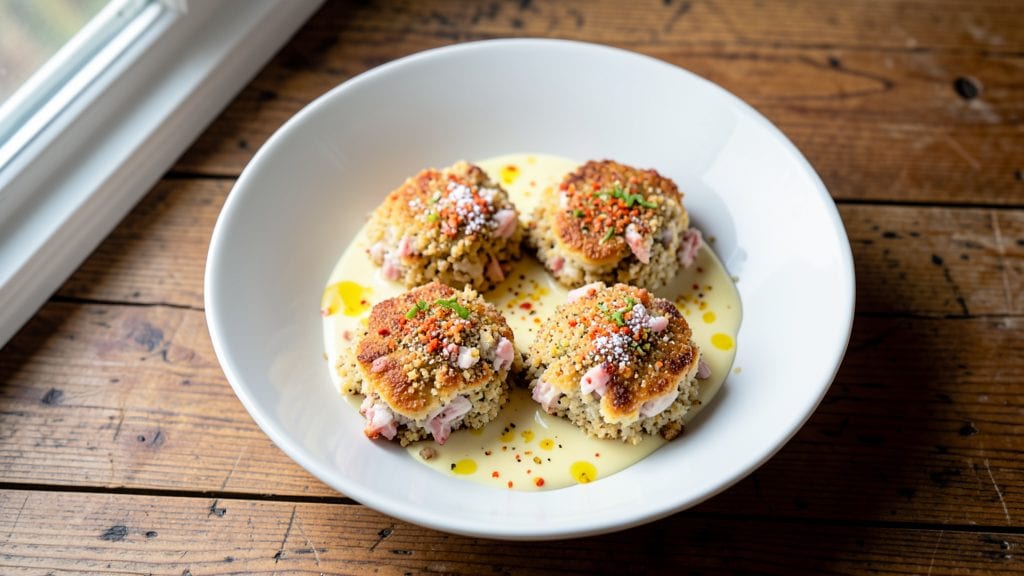
This traditional crab cake recipe delivers the old-school crispy cornmeal crust and tender crab filling that seafood lovers crave. The secret lies in properly draining the crabmeat and balancing Old Bay seasoning with just enough mayo to bind without overpowering the sweet crab flavor.
After years of perfecting the technique, I’ve nailed the ratio of breadcrumbs to cornmeal for that signature crunch that holds up even when served with tartar sauce.
The key to authentic crab cakes begins with fresh blue crab or high-quality lump crabmeat—never substitute imitation for that briny, delicate sweetness. A light hand with the mayo ensures the filling stays moist without turning greasy, while the cornmeal crust provides the crispy exterior that makes these worth the effort.
Pan-frying in butter creates a golden-brown crust, though baking works for a lighter variation if you prefer.
What you’ll end up with are crispy, golden crab cakes that hold their shape perfectly, with a tender interior packed with Old Bay-kissed crab and herbs. The cornmeal crust stays crunchy even when dipped in tartar sauce, and the flavor is pure coastal charm—savory, slightly sweet, and perfectly seasoned.
These are the kind of crab cakes that make weeknight dinners feel like a seaside feast.
Serve with lemon wedges, a side of crisp coleslaw, or steamed vegetables to complete the meal. For a modern twist, try air-frying for a lighter crust or gluten-free breadcrumbs for dietary flexibility. Let’s get cooking—these disappear fast once they hit the table.
Ingredients for traditional crab cake
Quality crabmeat, crispy cornmeal crust, and Old Bay—just the essentials for authentic crab cakes.
| Ingredient | Amount | Notes |
|---|---|---|
| Fresh Blue Crabmeat 🦀 | 1 ½ lbs | Lump or chunk style, fresh or high-quality frozen |
| All-Purpose Breadcrumbs 🍞 | ½ cup | Panko for extra crispiness |
| Fine Yellow Cornmeal 🌽 | ¼ cup | For signature crust texture |
| Mayonnaise 🥛 | ¼ cup | Full-fat preferred for binding |
| Old Bay Seasoning 🌶️ | 1 tbsp | Classic Maryland-style blend |
| Fresh Lemon Juice 🍋 | 1 tbsp | Brightens crab flavor |
| Fresh Chives 🌿 | 2 tbsp | Finely chopped for garnish |
| Unsalted Butter 🧈 | ½ cup | For pan-frying, melted |
| Large Eggs 🥚 | 1 whole | Lightly beaten for binder |
| Diamond Crystal Kosher Salt 🧂 | ½ tsp | For seasoning, not iodized |
| Black Pepper 🌶️ | ¼ tsp | Freshly cracked for heat |
| Extra-Virgin Olive Oil 🫒 | 1 tbsp | For brushing crust |
The crabmeat is non-negotiable—fresh blue crab or high-quality lump crabmeat from Whole Foods or Trader Joe's delivers the best texture. Look for bright, briny sweetness and avoid imitation blends. Blue crab is ideal, but Dungeness works in a pinch. For frozen crab, Sea Towne or Great American Seafood brands thaw overnight in the fridge, wrapped in paper towels to drain excess moisture. The Old Bay seasoning should be freshly ground—check the label for no added fillers, as cheaper brands can dilute the flavor. Penzeys or McCormick are reliable sources for the authentic blend.
No fresh crab? High-quality canned lump crabmeat like Crown Prince or Wild Alaska works, but drain it thoroughly and pat dry with paper towels to mimic fresh texture. Substituting breadcrumbs? Gluten-free almond flour at three-quarters the amount adds crunch without gluten, though texture differs. The cornmeal must be fine yellow—stone-ground varieties create a grittier crust. For extra richness, add 1 tbsp of melted butter to the breadcrumb mix. The mayo should be full-fat—light versions can make the filling dry. If you prefer a lighter option, Greek yogurt at half the amount works but alters the traditional flavor profile.
Crab cakes keep best when formed and refrigerated on a tray for up to 2 hours before cooking to maintain shape. Store leftovers in an airtight container for 2 days or freeze for 3 months—wrap individually in parchment to prevent sticking. Reheat in a 350°F oven for 10-12 minutes until crispy. For meal prep, assemble crab cakes ahead but cook immediately—the crust loses crispness when reheated. Serve with lemon wedges and tartar sauce for optimal presentation, as both enhance the coastal flavors.
Why You'll Love This Recipe
- No-Fuss Mixture: I swear by the 10-minute mix—just fold the crabmeat with mayo, breadcrumbs, and Old Bay until it holds. No chopping, no fancy techniques, just a bowl and a spoon. Honestly, the hardest part is deciding whether to pan-fry or bake.
- Old Bay Magic: That classic spice blend isn’t just seasoning—it’s the soul. The crispy cornmeal crust gives way to a briny, zesty bite that makes every forkful feel like a Maryland coastline hug.
- Weeknight to Party: Same recipe, endless uses. Toss them on a sheet pan for a lazy Tuesday dinner, or arrange them on a platter for a summer BBQ. My college friends still ask for these—no one suspects how simple they are.
- Leftovers? Better.: These stay perfect for days in the fridge, and they reheat like a dream (pan or air fryer, no judgment). I’ll be real: I make a double batch, freeze half, and thank myself later when I’m craving them in January.
Step-by-step instructions for traditional crab cakes
Here's the classic method for achieving that signature crispy cornmeal crust and tender crab texture.
Prepare the Crab Mixture
In a large mixing bowl, combine the 1.5 lbs fresh blue crabmeat with the 0.25 cup mayonnaise, 1 tbsp fresh lemon juice, 1 tbsp Old Bay seasoning, 0.5 tsp Diamond Crystal kosher salt, and 0.25 tsp black pepper. Using your hands or a rubber spatula, gently mix until just combined—avoid overworking the crab, as this can make the cakes dense. The mixture should hold together when pressed but still retain some texture.
This step is critical for maintaining the crab's natural sweetness while creating a binder that holds the cakes together during frying. If using frozen crabmeat, make sure it's completely thawed and drained before mixing. The mixture should be cool but not cold—room temperature ensures even cooking.
Form the Cakes and Create the Crust
In a separate bowl, mix together the 0.5 cup all-purpose breadcrumbs and 0.25 cup fine yellow cornmeal. Lightly brush your hands with the 1 tbsp extra-virgin olive oil to prevent sticking, then shape the crab mixture into 4 equal portions (about 4 ounces each). Roll each portion in the breadcrumb-cornmeal mixture, pressing firmly to create an even, ¼-inch thick crust on all sides. Place the formed cakes on a plate and refrigerate for 30 minutes to firm up.
The cornmeal is essential here—it creates that signature crispy texture while the breadcrumbs add structure. Don't skip the chilling step; it helps the cakes maintain their shape during frying. If the mixture feels too wet to handle, add 1 tablespoon more breadcrumbs until it holds together.
Pan-Fry to Golden Perfection
Melt the 0.5 cup unsalted butter in a large skillet over medium heat until it foams but doesn't brown. Add the crab cakes and cook for 3-4 minutes per side until they develop a deep golden brown crust and are cooked through to 165°F internally. Avoid moving them too much while frying—let them develop an even crust without breaking apart.
Here's the thing—traditional crab cakes should be golden, not browned. If the butter starts to smoke or brown, reduce the heat slightly. You'll know they're ready when the crust is crisp and the edges pull away cleanly from the pan. Drain on a wire rack or paper towels to remove excess butter.
Garnish and Serve Immediately
While the cakes are still hot, brush the tops lightly with any remaining melted butter from the pan. Sprinkle evenly with the 2 tbsp finely chopped fresh chives and serve immediately with lemon wedges and tartar sauce. These crab cakes are best enjoyed fresh out of the pan when the crust is at its crispest and the crab is still warm and tender.
Never let them sit too long before serving—they'll lose their crispness quickly. The chives add a bright, fresh finish that cuts through the richness of the crab and butter. For an authentic Maryland touch, serve with a side of crisp coleslaw or steamed vegetables to balance the meal.
Pro Tips For Making Traditional Crab Cake
- Chill the Mixture: After mixing everything, pop your crab cake batter in the fridge for 15-20 minutes. I used to skip this, and the cakes always fell apart when frying—cold mayo and cornmeal need time to firm up, or you’ll regret it.
- Press, Don’t Pack: When forming the cakes, press the mixture gently into the pan—not too tight, or they’ll turn dense. My first batch came out like hockey pucks because I squeezed too hard. Aim for a loose, slightly crumbly texture.
- Fry in Batches: Crowd the pan, and your crab cakes will steam instead of brown. Use medium-high heat and fry just 2-3 at a time—this keeps the oil hot and gives you that perfect golden crust. (Yes, even if you’re impatient like me.)
- Toast the Cornmeal: Lightly toast the fine yellow cornmeal in a dry pan for 2-3 minutes before mixing it in. It adds a nutty depth and prevents the cakes from getting gummy. I was skeptical until I tried it—now it’s non-negotiable.
Best sauces and condiments for traditional crab cake
Classic Tartar Sauce
This is the gold standard for crab cakes—creamy, tangy, and perfectly balanced. Mix ½ cup mayonnaise with 1 tbsp Dijon mustard, 1 tbsp fresh lemon juice, 1 tbsp finely chopped pickles, 1 tbsp chopped fresh dill, and ½ tsp Old Bay seasoning.
For extra richness, add 1 tbsp sour cream. The pickles add just enough crunch to cut through the buttery crab cakes. 🥒
Spicy Remoulade
For heat lovers, swap tartar sauce for a spicy remoulade. Blend ½ cup mayonnaise, 1 tbsp hot sauce (like Crystal or Tabasco), 1 tbsp capers, 1 tbsp chopped red onion, 1 tsp smoked paprika, and 1 tsp Worcestershire sauce.
This sauce adds a smoky, fiery kick that pairs perfectly with the sweet crab. Adjust heat to taste—start with ½ tsp hot sauce if you're sensitive.
Lemon Aioli
A bright, citrusy alternative that brightens the rich crab flavor. Whisk ½ cup mayonnaise with 2 tbsp fresh lemon juice, 1 tbsp lemon zest, 1 minced garlic clove, ½ tsp salt, and ¼ tsp black pepper.
For extra depth, add 1 tsp chopped tarragon. Serve warm with the crab cakes—this sauce elevates the dish with its zesty, herby notes. ✨
Buttery Garlic Sauce
For a decadent twist, melt 2 tbsp unsalted butter in a small saucepan over low heat, then whisk in 1 tbsp lemon juice, 1 minced garlic clove, and 1 tsp chopped parsley.
Keep warm until serving—this sauce adds a luxurious, garlicky richness that complements the crispy crust beautifully. Perfect for special occasions or when you want to impress guests.
Sweet and Tangy Mango Dip
For a tropical twist, blend ½ cup sour cream, 2 tbsp mango chutney, 1 tbsp lime juice, and ½ tsp ground cumin. This sweet-tangy dip balances the savory crab cakes with a fruity contrast.
Use store-bought mango chutney like Mango Madness for convenience, or make your own by blending 1 ripe mango, 1 tbsp lime juice, and 1 tsp honey. 🥭
Extra-Virgin Olive Oil
Sometimes, less is more. A simple drizzle of high-quality extra-virgin olive oil (like California Olive Ranch) with a sprinkle of flaky sea salt and freshly cracked black pepper lets the crab shine without overpowering.
This minimalist approach highlights the natural sweetness of the crab and the crispy crust. Ideal for those who prefer to let the main dish take center stage.
Nutrition facts
Frequently asked questions
Can I make these crab cakes ahead of time?
Form the cakes and refrigerate them on a tray for up to 2 hours before cooking to maintain shape. For longer prep, assemble the mixture but don't shape them—store in an airtight container for 1 day. Cook immediately after shaping, as reheating makes the crust soggy. Freeze uncooked cakes for 3 months by wrapping individually in parchment.
What's the best way to handle crabmeat without overworking it?
Use a gentle hand when mixing—just combine ingredients until barely bound. Overmixing releases crab juices, making cakes dense. For frozen crab, thaw overnight in the fridge and drain thoroughly on paper towels. If the mixture feels too wet, add 1 tbsp more breadcrumbs until it holds when pressed lightly.
Why did my crab cakes fall apart when frying?
This usually happens from one of three issues: underchilling (skip the 30-minute rest), too much mayo in the filling, or wet crabmeat. Double-check your ratio—0.25 cup mayo for 1.5 lbs crabmeat is perfect. Also ensure your pan isn't too hot (use medium heat) and don't move the cakes until they develop a crust.
Can I bake these instead of pan-frying?
Yes! Preheat oven to 400°F and bake on a parchment-lined tray for 12-15 minutes until golden. Brush with melted butter halfway through for crispiness. For extra crunch, broil for 1-2 minutes at the end. Baked cakes are lighter but slightly less crisp than pan-fried—great for meal prep or when you want a healthier option.
What's the secret to the perfect cornmeal crust?
The magic is in the cornmeal-to-breadcrumb ratio (1:2) and pressing firmly when coating. Use fine yellow cornmeal (not stone-ground) for smooth texture. Brush your hands with olive oil before shaping to prevent sticking. Chill the cakes 30 minutes before cooking—the cold helps the crust set properly for that signature crunch.