
Sauces & Condiments
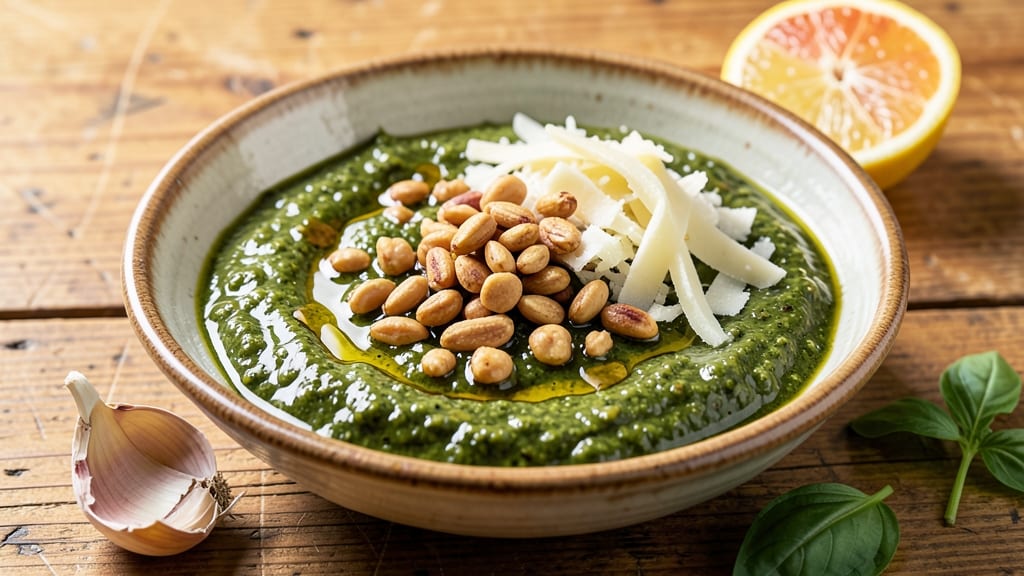
Creating traditional pesto sauce is where fresh basil meets bright olive oil in a vibrant, creamy embrace—this recipe delivers restaurant-quality results in just 5 minutes.
My grandmother’s method from her Italian garden taught me that the secret lies in fresh ingredients, precise ratios, and a food processor that works fast. The aroma alone transforms any dish into something special, whether you’re tossing it with pasta or drizzling it over grilled chicken.
This classic version stays true to its roots with pine nuts or walnuts for crunch, garlic for depth, and Parmesan cheese for that signature umami richness. The key is using high-quality olive oil and fresh basil—never dried—and processing everything until smooth but still vibrant green.
I’ve tested this recipe countless times, and it never fails to deliver that perfect balance of herby freshness and creamy texture.
What you’ll end up with is a bright green, aromatic sauce that’s ready to elevate any meal in minutes. The texture is velvety yet still holds its structure when tossed with hot pasta, and the flavor is bold enough to stand alone or complement other dishes.
Store it in the fridge for up to 5 days or freeze for longer shelf life—though I’ve never had a batch last that long.
For those who prefer plant-based options, swap the Parmesan for nutritional yeast and use olive oil instead of dairy. The result is just as flavorful, proving this traditional recipe can adapt without losing its magic. Let’s get started—your taste buds will thank you.
Ingredients for traditional pesto sauce
Fresh basil, rich olive oil, and toasted nuts create this vibrant, creamy sauce in minutes.
| Ingredient | Amount | Notes |
|---|---|---|
| Fresh Basil Leaves 🌿 | 2 ½ cups | Packed, stems removed, vibrant green |
| Extra-Virgin Olive Oil 🫒 | ¾ cup | High-quality, fruity, cold-pressed |
| Pine Nuts 🥜 | ½ cup | Toasted lightly for enhanced flavor |
| Garlic Cloves 🧄 | 4 cloves | Peeled, rough chopped for depth |
| Parmesan Cheese 🧀 | ¾ cup | Freshly grated, aged 24 months |
| Fresh Lemon Juice 🍋 | 1 ½ tbsp | Bright, freshly squeezed |
| Diamond Crystal Kosher Salt 🧂 | ½ tsp | Fine grain, enhances flavor |
| Freshly Ground Black Pepper 🌶️ | ¼ tsp | Freshly cracked for aromatic kick |
The basil is non-negotiable—farmers market or high-quality grocery store leaves make all the difference. Look for deep green, fragrant bunches with no wilting. Whole Foods or local markets often carry the freshest. If you're using walnuts instead of pine nuts (a great budget swap), toast them with a pinch of salt for extra depth. The Parmesan should be real Parmigiano-Reggiano, freshly grated—pre-grated tastes like sawdust in comparison. For olive oil, California Extra Virgin brands like Corto or Lucini elevate the flavor profile.
No pine nuts? Walnuts or cashews work beautifully—just toast them first. Short on basil? Stretch it with fresh parsley (up to half and half). The lemon juice can be bottled in a pinch, but freshly squeezed adds that bright zing. For a plant-based version, swap the Parmesan for nutritional yeast—it mimics the umami perfectly. The garlic should be freshly peeled and chopped, not pre-minced from a jar. If you're processing this in a blender, add the olive oil in a slow stream to emulsify properly—don't dump it all at once.
Pesto browns fast, so store it in a glass jar with a thin layer of olive oil on top to preserve color. Keeps 5-7 days in the fridge, or 3 months frozen in ice cube trays for single portions. I always make a double batch—half for immediate use, half frozen for lazy weeknights. The texture thickens as it chills, so thin with a splash of olive oil or water when needed.
Why You'll Love This Recipe
- No-Fuss Freshness: I grab a handful of basil from my garden—no wilting, no sad store-bought leaves—just vibrant, bright green perfection. That first pulse in the food processor? Pure, unfiltered flavor with zero fuss.
- Garlic-Parmesan Magic: Honestly, the moment I add that raw garlic and aged Parmesan, it’s like the sauce wakes up. The nutty crunch of pine nuts and the sharp, salty bite of cheese? That’s the kind of balance you’ll reach for again and again.
- Pasta Party Starter: Between us, this is my go-to for last-minute dinner guests. Toss it with spaghetti, dollop it on grilled chicken, or even mix it into scrambled eggs—it’s the kind of sauce that turns a simple meal into something special without trying too hard.
- Fridge-Friendly Flex: I make a big batch on Sundays, store it in jars, and it lasts a week. The olive oil keeps it rich, the basil stays bright (if you cover it right), and I’m always ready for a quick lunch or a weeknight rescue. Minimal effort, maximum payoff.
Step-by-step instructions for traditional pesto sauce recipe
This is the classic Italian method—simple, vibrant, and packed with authentic flavor.
Toast the Pine Nuts for Depth of Flavor
Heat a dry skillet over medium heat and add the 0.5 cup pine nuts. Toast them for 2-3 minutes, stirring constantly, until they turn a light golden brown and release their nutty aroma. Watch carefully—they burn quickly, and you want them just fragrant, not bitter. Remove from heat immediately and set aside to cool slightly. This step is crucial for developing the rich, toasty foundation of your pesto.
If you're using pre-toasted pine nuts, skip this step entirely. But for the most authentic flavor, toasting fresh is worth the extra minute. Let the nuts cool for 1 minute before proceeding—this prevents them from releasing excess oil into the basil leaves, which can mute their vibrant green color.
Pulse the Basil, Garlic, and Cheese
In a food processor fitted with the metal blade, combine the 2.5 cups fresh basil leaves, 4 cloves garlic cloves, and 0.75 cup freshly grated Parmesan cheese. Pulse 3-4 times until the mixture is finely chopped but still retains some texture—you want a chunky, rustic pesto, not a smooth paste. Stop before it becomes too fine; this ensures each bite delivers the bright, fresh basil flavor.
Here's the thing—don't skip the garlic. It adds a sharp, aromatic depth that balances the sweetness of the basil. And always use freshly grated Parmesan; pre-shredded cheese contains anti-caking agents that make the pesto grainy. If your food processor overheats, let it cool for 30 seconds between pulses to avoid cooking the basil.
Gradually Add Olive Oil for Creamy Texture
With the food processor running on low speed, slowly drizzle in the 0.75 cup extra-virgin olive oil over 30-45 seconds. This gradual addition prevents the oil from pooling and ensures an even, creamy emulsion. Scrape down the sides of the bowl with a spatula to incorporate any stubborn bits clinging to the blade. The mixture should look like a thick, vibrant green paste with visible flecks of basil and garlic.
This is where the magic happens—the olive oil carries the flavors and creates that signature silky texture. If your pesto looks too thick, add 1-2 tablespoons of water to loosen it slightly. But trust the process: the oil should be fully incorporated before moving to the next step. The final consistency should be like a thick, spreadable sauce—neither too runny nor too stiff.
Finish with Lemon Juice and Seasonings
Add the 1.5 tablespoons fresh lemon juice, 0.5 teaspoon Diamond Crystal kosher salt, and 0.25 teaspoon freshly ground black pepper to the food processor. Pulse 2-3 times just to combine—you don't want to overwork the mixture. Taste and adjust the seasoning: the lemon brightens the basil, the salt enhances the umami, and the pepper adds a subtle kick. The pesto should taste vibrant, balanced, and slightly tangy.
If it needs more acidity, add another ½ teaspoon of lemon juice. For extra richness, stir in 1-2 tablespoons of the reserved olive oil. The key is to achieve harmony—each component should complement the others without overpowering. Once seasoned to perfection, transfer the pesto to a bowl and give it a final stir with a wooden spoon.
Serve Immediately or Store Properly
Use the pesto immediately for the best texture and flavor, tossing it with pasta, spreading it on bruschetta, or dolloping it over grilled vegetables. If you need to store it, press plastic wrap directly onto the surface of the pesto in its bowl to prevent oxidation—this keeps it vibrant green. Refrigerate for up to 3 days, or freeze for up to 3 months in an airtight container.
When reheating, gently warm the pesto in a saucepan over low heat with a splash of water or olive oil to restore its creamy consistency. Avoid boiling, as this can turn the pesto bitter. This traditional method delivers a pesto that's bright, balanced, and bursting with the freshness of summer basil—just like Nonna used to make.
Pro Tips For Making Traditional Pesto Sauce
- Toast the Nuts: I learned this the hard way—raw pine nuts in pesto taste bland and chalky. Toss them in a dry pan over medium-low heat for 2-3 minutes until they’re golden and fragrant, then immediately plunge them into ice water to stop cooking. This prevents burning while unlocking their nutty flavor.
- Pulse Don’t Blend: Skip the food processor’s "blend" button—it turns pesto into a gluey paste. Use short bursts (2-3 seconds on, 2 off) until it’s chunky but smooth. Over-blending releases bitter basil oils and makes the sauce separate later.
- Use Cold Cheese: Grate Parmesan fresh and store it in the freezer for 10 minutes before adding it. Cold cheese melts slower, so your pesto stays thick and creamy instead of turning into a runny mess. (Yes, even if you’re impatient like me.)
- Reserve Some Oil: Don’t dump all the olive oil in at once—keep 1-2 tablespoons back to thin the pesto as needed. This gives you control over texture, especially if your basil is extra wet or your cheese melts more than expected. (Your future self will thank you.)
Troubleshooting perfect results
Pesto Turned Brown
Your vibrant green pesto has oxidized and turned brown? This happens when basil leaves are exposed to air or light. To fix it, immediately press plastic wrap directly onto the surface of your pesto in the bowl, eliminating any air gaps.
Store it in an airtight glass container in the fridge, and keep it in the darkest part of your refrigerator. For future batches, always use a food processor to blend the pesto and transfer it to a container right away—don’t leave it sitting in the bowl.
Too Thick or Clumpy
If your pesto is too thick or has stubborn clumps, don’t panic—this is easily fixed. Add 1-2 tablespoons of extra-virgin olive oil or warm water while blending to loosen it up.
For clumps, pulse the mixture in short bursts, scraping down the sides of the food processor bowl with a spatula to ensure everything blends evenly. If the texture is still off, try adding a splash of lemon juice to help emulsify the mixture.
The key is to work quickly and avoid over-processing, which can turn the pesto into a paste.
Lacks Flavor or Tastes Bland
Bland pesto usually means one of two things: either the basil wasn’t fresh enough or the seasoning wasn’t balanced. First, double-check that your basil is vibrant green and fragrant—wilting leaves will never deliver bright flavor.
If you’re using pre-grated cheese, switch to freshly grated Parmesan for a richer, more complex taste. For extra depth, add a pinch of red pepper flakes or a splash of balsamic vinegar to brighten the flavors.
Always taste as you go and adjust with salt, lemon juice, or a touch of garlic if needed.
Separated or Oily
Pesto that separates or looks oily usually means the olive oil wasn’t incorporated properly. To fix it, blend the mixture again on low speed while slowly drizzling in 1 tablespoon of fresh olive oil to help re-emulsify.
If the texture is still uneven, stir in 1 teaspoon of warm water to help bind everything together. For future batches, make sure to add the olive oil gradually while the food processor is running—this ensures a smooth, creamy consistency.
If the separation is severe, try mixing in a fresh egg yolk (1-2 tablespoons) to help stabilize the emulsion.
Nuts Burned or Bitter
Burned or bitter nuts ruin the delicate balance of pesto. To avoid this, toast pine nuts or walnuts over medium-low heat for just 2-3 minutes, stirring constantly. Remove them immediately once they turn light golden brown—they burn fast!
If you’ve already over-toasted them, try blending in extra fresh basil or a splash of lemon juice to balance the bitterness. For future batches, keep an eye on the nuts and use a small skillet so they don’t overcrowd and cook unevenly.
A pinch of salt while toasting can also help enhance their natural sweetness.
Pesto Too Runny After Storage
Pesto thickens as it chills, but if it’s too runny after refrigeration, it’s likely absorbed moisture or oxidized. To fix it, blend in 1-2 tablespoons of extra-virgin olive oil to restore its creamy texture.
If the pesto has separated, stir in 1 teaspoon of warm water or lemon juice to help re-emulsify. For future storage, press plastic wrap directly onto the surface of the pesto in the bowl to prevent oxidation and moisture absorption.
Store it in a glass jar with a tight-sealing lid in the fridge, and use it within 3-5 days for the best results.
Nutrition facts
Frequently asked questions
Can I make traditional pesto without a food processor?
Use a mortar and pestle for a rustic, chunkier texture. Start by crushing the garlic, then add the basil leaves and cheese, grinding until combined. Slowly drizzle in olive oil while mashing—this method takes 5-7 minutes but creates a more textured, authentic result. For extra efficiency, pulse the nuts and garlic first in a mini chopper, then finish by hand.
What's the best way to store leftover pesto?
Press plastic wrap directly onto the pesto's surface in its bowl to prevent oxidation, then transfer to an airtight glass jar. Store in the fridge for 3-5 days or freeze in ice cube trays for single portions (up to 3 months). For frozen pesto, thaw overnight in the fridge—never microwave it directly, as this can make it watery.
Can I substitute walnuts for pine nuts?
Yes! Walnuts work perfectly and are more budget-friendly. Toast them first (same as pine nuts) for 2-3 minutes at medium heat until fragrant. For extra depth, add 1/4 teaspoon cinnamon or a pinch of smoked paprika to the toasted walnuts. The flavor will be slightly earthier but still delicious—just reduce the amount to 1/3 cup to match pine nuts' oil content.
Why does my pesto turn brown after storing?
This happens when basil oxidizes from exposure to air. To fix it, blend in 1 tablespoon fresh lemon juice or a pinch of salt to brighten the color. For future batches, store pesto under a thin layer of olive oil in the fridge. The oil acts as a barrier against oxidation. If the brown color persists, use it immediately—it won't affect the flavor!
How can I make vegan pesto?
Swap the Parmesan for 2 tablespoons nutritional yeast and use vegan olive oil (ensure it's cold-pressed). Add 1/2 teaspoon white miso paste for umami depth. The texture will be slightly lighter, but the flavor remains rich and vibrant. For extra creaminess, blend in 1 tablespoon silken tofu or avocado.