
Soups & Stews
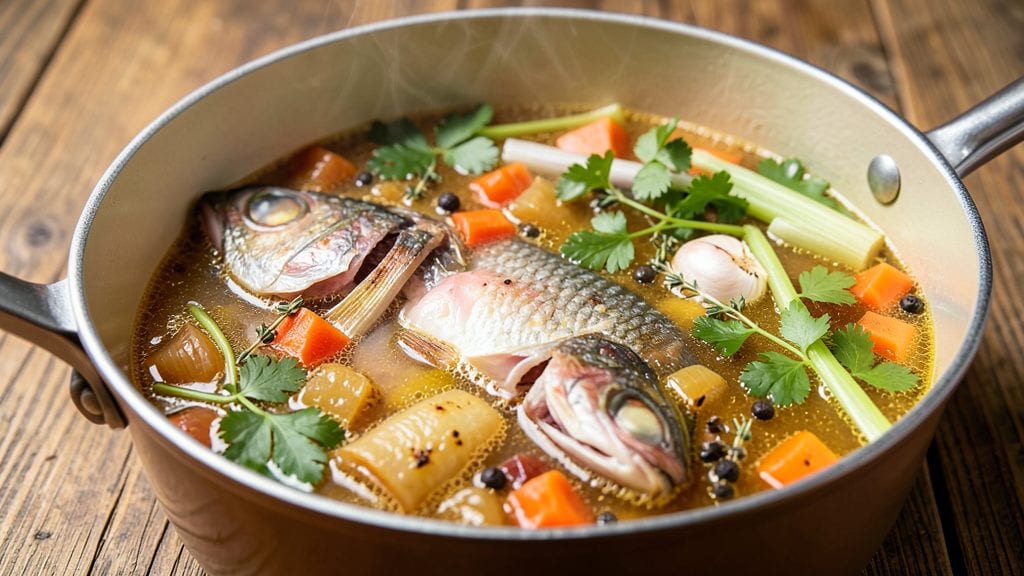
Creating a fish stock recipe that captures the deep umami richness of the sea is where home cooking meets professional technique. Standing on a step stool in my grandmother’s kitchen in Sicily, I learned how to transform scraps into something extraordinary—this is that process, refined over years of testing.
The key lies in slow simmering, where bones and aromatics release their essence into a clear, fragrant liquid that elevates soups, risottos, and sauces to restaurant-quality depth.
This method transforms fish heads, frames, and trimmings—often discarded—into a versatile base that’s far superior to store-bought versions. With just one hour of active time (plus simmering), you’ll extract maximum flavor using onions, celery, carrots, and herbs that form the aromatic backbone.
The secret? A long, gentle simmer that coaxes out every nuance without clouding the broth, resulting in a liquid so pure it’s almost crystalline yet packed with savory intensity.
By the end, you’ll have a clear, umami-rich stock that freezes beautifully for up to three months, ready to transform any dish. Whether you’re making bisque, braising fish, or deglazing pans, this stock adds a layer of sophistication that’s impossible to replicate.
The process is methodical but straightforward—no shortcuts, just precision—and the results speak for themselves.
Use it as a foundation for seafood soups, risottos, or even as a cooking liquid for poached fish. The beauty of homemade stock lies in its versatility and the pride of knowing you’ve created something from scratch.
Let’s get started—your kitchen will never smell as good as it will after this.
Ingredients for fish stock
Twelve ingredients transform scraps into a crystal-clear, umami-rich foundation for seafood dishes.
| Ingredient | Amount | Notes |
|---|---|---|
| Fish Heads and Bones 🐟 | 2 lb | Cleaned, scaled, and crushed |
| Yellow Onion 🧅 | 1 whole | Chopped, medium size |
| Celery Stalk 🥬 | 3 whole | Trimmed, cut into chunks |
| Carrot 🥕 | 2 whole | Peeled, cut into chunks |
| Garlic Cloves 🧄 | 6 cloves | Peeled, smashed |
| Fresh Parsley 🌿 | ½ cup | Stems included, chopped |
| Fresh Thyme 🌿 | 2 sprigs | Stems included |
| Bay Leaves 🍃 | 2 whole | Dried, high quality |
| White Wine 🍷 | ½ cup | Dry, not sweet |
| Water 💧 | 8 cups | Filtered preferred |
| Lemon Juice 🍋 | 2 tbsp | Freshly squeezed |
| Salt 🧂 | 1 tsp | Diamond Crystal kosher |
| Black Peppercorns 🌶️ | 10 whole | Crushed lightly |
The fish scraps are non-negotiable for depth—heads and bones pack the most flavor. Local fish markets often give these away for free or cheaply. If you're using store-bought, avoid frozen scraps—they yield murky stock. For aromatics, organic produce has more flavor, but regular grocery store veggies work fine. The key is freshness: onions, celery, and carrots should smell vibrant, not wilted. I always double-check the fish for any remaining scales or guts—those can make the stock bitter. For herbs, fresh is best, but dried thyme works in a pinch at half the quantity.
No fish heads? Shellfish shells (shrimp, crab) add a briny note, but you'll need 4 cups for equivalent flavor. White wine can be swapped for dry vermouth or extra water plus 1 tbsp lemon juice. If you're avoiding alcohol entirely, add an extra splash of lemon juice. The bay leaves should be high-quality dried—cheap ones can turn the stock bitter. For the veggies, charred slightly in a dry pan first (3 minutes per side) adds a smoky depth that's worth the extra minute. And trust me on the kosher salt—it dissolves completely, unlike table salt.
This stock peaks after 2 hours of simmering, but never boils vigorously—just a gentle bubble. Strain through a fine-mesh sieve lined with cheesecloth for crystal clarity. It keeps 5 days in the fridge or 3 months frozen in ice cube trays. The frozen cubes are perfect for quick additions to sauces or grains. For extra richness, freeze any fat that rises to the top—it's pure flavor gold for finishing dishes like seafood risotto or poached fish.
Why You'll Love This Recipe
- No-Waste Magic: I swear by this stock—it turns scraps into liquid gold. Those fish heads and bones? Packed with flavor, not waste. My local fishmonger saves me the bones from filleting, and I’m left with a pot that smells like a coastal breeze.
- Umami Bomb: The carrot and celery sweeten as they simmer, while the garlic and onion deepen into something rich and savory. Honestly, it’s the kind of depth you’d pay extra for in a restaurant—except here, you’re the chef.
- Freezer-Friendly Staple: I make a big batch on Sundays and freeze it in ice cube trays. A cube or two in soups, stews, or even risotto? Instant upgrade. Between us, that’s how I keep my weeknight cooking from feeling boring.
- Budget Booster: Fish bones are often free or cheap at markets, and this stock stretches like nothing else. I’ve used it to turn simple white fish into a restaurant-worthy dish—proof that good cooking isn’t about spending more, just smarter.
Step-by-step instructions for fish stock
Here's how to craft a deeply flavorful fish stock that captures every layer of umami from your ingredients.
Prepare and Toast the Aromatics
In a large stockpot, combine the chopped yellow onion, trimmed celery stalks, peeled and chunked carrots, smashed garlic cloves, crushed black peppercorns, and fresh thyme sprigs. Toast over medium heat for 5-7 minutes until the vegetables soften slightly and release their natural oils. You'll notice the aromas intensify—this step develops the stock's foundational flavors.
I like to stir occasionally to prevent burning, especially the garlic which can scorch quickly. The vegetables should be fragrant but not browned. This gentle toasting extracts maximum flavor without creating bitterness that would overpower your stock.
Add Fish and Liquid Components
Add the crushed fish heads and bones to the pot, followed by the 2 whole bay leaves. Pour in the 0.5 cup white wine and let it simmer for 2 minutes to deglaze the pot and dissolve any fond. This step removes any raw fishy flavors that might linger.
Next, add the 8 cups water and bring the mixture to a full boil. Once boiling vigorously, reduce heat to maintain a gentle simmer. The liquid should bubble steadily but not violently. This simmering process extracts collagen from the bones and fish, creating the rich, gelatinous texture that makes great stock.
Simmer and Skim
Simmer uncovered for 45-60 minutes, maintaining a gentle bubble. During this time, skim off any foam or impurities that rise to the surface using a fine-mesh skimmer or ladle. This ensures your final stock will be crystal clear and free of any cloudiness.
Here's the thing—don't rush this step. The longer the stock simmers gently, the deeper the flavor. I've found that 45 minutes gives you a beautifully balanced fish stock with perfect clarity and richness. The stock should reduce slightly, concentrating its flavors.
Finish and Strain
Remove the pot from heat and stir in the 0.5 cup chopped fresh parsley and 2 tablespoons lemon juice. Let the stock steep for 10 minutes off the heat. This final infusion brightens the stock and adds fresh herbal notes that balance the deep umami flavors.
Strain the stock through a fine-mesh sieve or cheesecloth-lined colander into a clean bowl or pitcher. Press gently on the solids to extract every last bit of flavor. The strained stock should be clear with a beautiful golden hue and rich, fishy aroma that promises depth of flavor in any dish.
Cool and Store
Let the stock cool to room temperature, then transfer it to airtight containers. I like to use glass jars for storage as they preserve the stock's quality longer. The stock will continue to develop flavors as it cools, becoming even more complex and aromatic.
This homemade fish stock keeps beautifully in the refrigerator for up to 5 days or can be frozen for up to 3 months. When ready to use, simply reheat gently—never boil—to preserve its delicate flavors. This rich, umami-packed stock will elevate any soup, sauce, or risotto you prepare.
Pro Tips For Making Fish Stock
- Char the Bones First: Toss the fish heads and bones in a dry skillet over high heat until they’re deeply browned—almost black in spots. This step unlocks flavors that simmering alone can’t access, and yes, even if it looks messy, it’s worth the extra 5 minutes.
- Skip the Whole Celery: Cut the celery stalk lengthwise and slice it into thick half-moons instead of dicing it small. Thicker pieces release flavor more steadily and don’t turn to mush, which means cleaner stock and less bitterness.
- Don’t Boil It Dry: After the initial char and simmer, keep the liquid topped up—never let it drop below the bones. I learned this the hard way when my stock turned bitter and cloudy because I walked away for "just a minute." Use cold water, not hot, to avoid shocking the pot.
- Toast the Garlic Lightly: Smash the garlic cloves flat with the side of your knife before adding them to the pot, then let them sit in the hot stock for 2–3 minutes until fragrant but not browned. Over-toasting turns them bitter, and under-toasting means wasted flavor—find that sweet spot.
Storing and reheating your fish stock
Refrigerator Storage
Transfer your cooled fish stock to airtight glass jars or BPA-free plastic containers—I prefer Le Parfait glass jars for their airtight seals. Store in the fridge at 40°F or below where it’ll keep its vibrant flavor for up to 5 days.
The clear, golden liquid will actually deepen in complexity as it rests, making it even more delicious for your next seafood dish. 💧
Freezer Preservation
For long-term storage, freeze your fish stock in ice cube trays or silicone molds—this makes it easy to grab just what you need for sauces or grains. Once frozen, transfer the cubes to heavy-duty freezer bags, squeezing out excess air to prevent freezer burn.
Label with the date—it’ll stay flavorful for up to 3 months. The cubes thaw quickly in the fridge or even at room temperature. ❄️
Reheating Gently
Never boil your fish stock when reheating—gentle heat preserves its delicate flavors. Warm it in a saucepan over low-medium heat until just steaming (165°F internal temperature). For quick use, microwave in 30-second bursts, stirring between each, until heated through.
I like to add a splash of white wine or lemon juice while reheating to refresh the flavors. 🔥
Fat Extraction Tip
If fat rises to the top while cooling, don’t discard it—this is pure flavor gold! Scoop it into a small jar and freeze. Use it later to finish seafood risottos, poached fish, or soups for an instant umami boost.
Just 1 teaspoon of this fish fat elevates any dish to restaurant quality. 💫
Reviving Cloudy Stock
If your stored stock appears cloudy, don’t worry—it’s not ruined. Strain it through a fine-mesh sieve lined with cheesecloth or a coffee filter for crystal clarity.
For extra brightness, add 1 tablespoon fresh lemon juice per quart while reheating. This trick works wonders for stock that’s been stored too long. ✨
Portioning for Convenience
Divide your stock into 1-cup portions in glass jars before freezing. This way, you can thaw just what you need without defrosting the entire batch. Label each jar with the date and intended use—whether it’s for bisque, braising, or deglazing.
I keep a stash in my freezer specifically for seafood soups and risottos to save time during busy weeknights. 📅
Nutrition facts
Frequently asked questions
Can I use frozen fish scraps instead of fresh?
Fresh fish scraps yield the clearest, most flavorful stock, but you can use frozen scraps in a pinch. Thaw them completely first and pat dry to prevent excess water from diluting the stock. For best results, use scraps that were frozen immediately after cooking—older frozen scraps can develop off-flavors.
What's the best way to remove fishy odors from the stock?
The white wine and lemon juice in this recipe work together to neutralize any strong fish flavors. If your stock tastes too fishy, try adding 1 extra tablespoon of lemon juice or a splash of white wine vinegar while simmering. For stronger odors, use more aromatics like onions and celery.
How do I know when the stock is done simmering?
Your stock is ready when it's reduced by about 20% and has a rich, golden color. The simmering time should be 45-60 minutes—don't rush it! The stock should smell deeply aromatic with no raw fish odor. If it's still cloudy, simmer 10 more minutes and strain again through cheesecloth for crystal clarity.
Can I make this stock without alcohol?
Replace the white wine with ½ cup extra water plus 1 tablespoon lemon juice for the same brightening effect. The acidity helps balance the umami flavors while keeping the stock clean and clear. For extra depth, add a pinch of salted capers or anchovy fillets (removed after simmering) for umami without alcohol.
What's the difference between fish stock and fish broth?
Fish stock is made from bones and scraps, simmered long for maximum flavor extraction and clarity. Fish broth typically uses meatier fish pieces (like fillets) and simmers for 20-30 minutes, resulting in a richer, cloudier liquid. This recipe makes a true stock—perfect for delicate dishes like consommé or poaching.