
Side Dishes
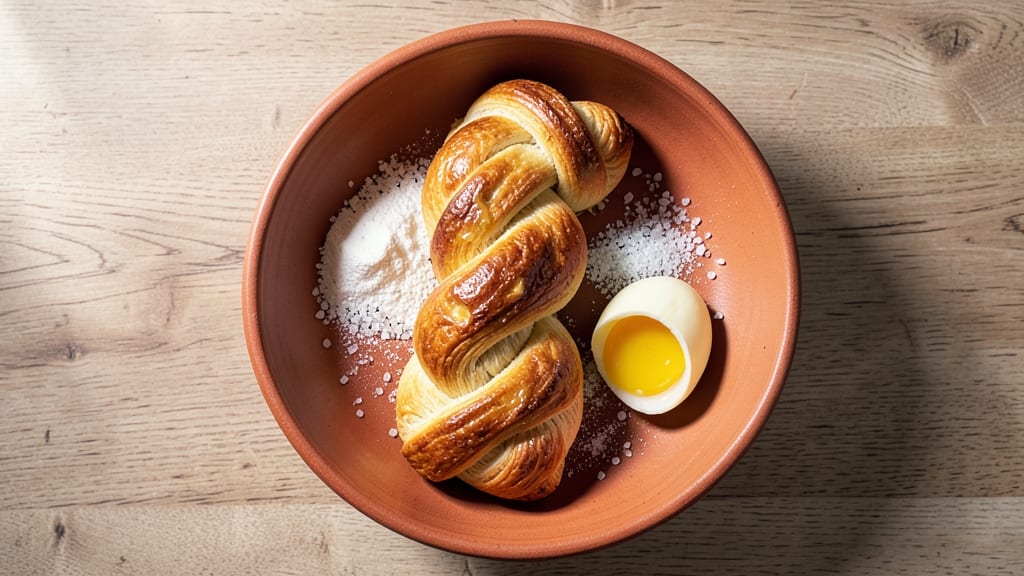
Creating a plaited bread recipe with a golden crust isn't just about following steps—it's about mastering the art of dough that stretches, braids, and bakes into a showstopping loaf. This rustic braided loaf delivers a crispy, caramelized exterior with a soft, airy interior, perfect for sandwiches or serving alongside soups.
The secret lies in precise kneading, strategic proofing, and high-heat baking to achieve that coveted golden crust.
This recipe builds on traditional techniques while simplifying the process for home bakers. You'll work with a straightforward dough enriched with butter and eggs for tenderness, then shape it into three equal strands for classic braiding.
Proofing at room temperature ensures even rising, while a steam bath during baking creates that signature golden crust. The result? A loaf that looks impressive and tastes even better.
What sets this plaited bread apart is how the braided design creates visual appeal while maintaining a tender crumb. The dough's elasticity from proper kneading allows for clean, tight braids that hold their shape during baking.
With just a few key ingredients and careful technique, you'll achieve professional-quality results that taste homemade. The golden crust develops a satisfying crunch, while the interior remains soft and flavorful.
Whether you're baking for a family gathering or simply craving fresh bread, this recipe delivers consistent results every time. The braided design makes it ideal for special occasions, while the simple dough works well for beginners.
Once mastered, you can experiment with variations like adding seeds or herbs to the dough. Let's get started on creating this beautiful, flavorful loaf.
Ingredients for plaited bread
Mastering this braided loaf starts with precise ingredients for that signature golden crust and tender crumb.
| Ingredient | Amount | Notes |
|---|---|---|
| All-Purpose Flour 🌾 | 5 cups | High-protein for elasticity |
| Unsalted Butter 🧈 | ½ cup | Cold, cubed for dough |
| Large Eggs 🥚 | 2 whole | Room temperature for even mixing |
| Granulated Sugar 🍚 | ¼ cup | Enhances browning |
| Instant Yeast 🍞 | 2 ¼ tsp | Freshly opened for potency |
| Diamond Crystal Kosher Salt 🧂 | 1 ½ tsp | Fine grain for even distribution |
| Whole Milk 🥛 | ½ cup | Warmed to 110°F |
| Large Egg Yolks 🥚 | 1 whole | For egg wash |
| Water 💧 | 1 tbsp | For steam bath |
| Cornmeal 🌽 | ¼ cup | For dusting work surface |
The flour is non-negotiable—King Arthur or Bread Flour ensures the gluten development needed for tight braids. King Arthur has a slightly higher protein content, ideal for rustic loaves. Unsalted butter should be European-style if possible (like Plugrá), as it has a higher fat content for richer flavor. Eggs must be room temperature—cold yolks can weaken the dough's structure. The yeast should be freshly opened (not a year-old jar from your pantry) to ensure proper rising. For milk, whole milk provides the best flavor and tenderness, but 2% works in a pinch if that's what you have. Diamond Crystal kosher salt is preferred for its fine grain, which dissolves evenly in the dough.
No instant yeast? Active dry yeast works, but you'll need to dissolve it in warm milk first. Short on butter? Vegetable shortening maintains the same texture, though flavor will differ. The cornmeal isn't just for dusting—it adds a subtle sweetness to the crust. For the egg wash, add a pinch of salt to balance sweetness. If you're making this ahead, you can pre-shape the dough and refrigerate it overnight for deeper flavor development. The braided design relies on even tension—don't pull too tightly, or the loaf may crack. For a herb-infused variation, mix 1 tbsp fresh rosemary or thyme into the dough before shaping.
Dough keeps best in the fridge for up to 24 hours, wrapped tightly in plastic. For longer storage, freeze the shaped loaf (before proofing) for up to 3 months. Thaw overnight in the fridge before proofing. The golden crust develops best when baked immediately after shaping, but you can proof the loaf overnight in the fridge for a slower rise and more complex flavor. Once baked, store at room temperature for 2-3 days wrapped in a clean kitchen towel. For maximum crispiness, reheat slices in a 350°F oven for 5 minutes before serving.
Why You'll Love This Recipe
- Same dough, endless uses: toast it for breakfast, serve with soup, or slice for sandwiches. (Yes, even on a Tuesday night.) It’s my go-to for any gathering.
- No-Knead Magic: I swear by this dough—just mix, rest, and shape. The instant yeast means no waiting around for proofing; it’s ready to braid while you sip your coffee.
- Buttery Sweet Crunch: That sugar in the dough caramelizes just right, giving every bite a golden crust with a tender pull. Honestly, the butter makes it taste like a bakery’s secret.
- Weeknight to Party: Same dough, endless uses: toast it for breakfast, serve with soup, or slice for sandwiches. (Yes, even on a Tuesday night.) It’s my go-to for any gathering.
Step-by-step instructions for braided rustic loaf
A perfect plaited loaf begins with precise technique and patience. Follow these steps to create an elegant braid with a crisp golden crust.
Prepare the Dough with Cold Butter and Yeast
In a large mixing bowl, combine the 5 cups all-purpose flour, 1.5 tsp diamond crystal kosher salt, and 2.25 tsp instant yeast. Create a well in the center and add the 0.5 cup cold cubed unsalted butter and 0.25 cup granulated sugar. The cold butter should remain in chunks for proper dough development.
Gradually pour in the 0.5 cup warmed whole milk (110°F) and 2 whole large eggs that have been brought to room temperature. Mix using a wooden spoon or dough whisk until a shaggy dough forms. The dough will be sticky at this stage, but don't add extra flour—this is essential for a tender crumb.
Knead Until Elastic and Smooth
Turn the dough onto a lightly cornmeal-dusted surface and knead for 8-10 minutes by hand, or use a stand mixer with a dough hook attachment for 5-6 minutes on medium speed. You're aiming for a smooth, elastic dough that springs back when pressed. The gluten development is crucial for that beautiful braided structure.
During kneading, the dough should become less sticky and more cohesive. If it's still too wet, add 1 tablespoon of flour at a time until it reaches the perfect consistency. Shape the dough into a round ball, place it back in the bowl, cover with a damp towel, and let it rise in a warm place for 1-1.5 hours or until doubled in size.
Shape and Braid the Dough
Once the dough has risen, punch it down to release air and divide it into three equal pieces. Roll each piece into a 12-inch rope, about 1.5 inches in diameter. Here's where precision matters: lay one rope horizontally on a parchment-lined baking sheet, then place the second rope diagonally over the first, and finally weave the third rope under and over the other two to create the classic braid.
Tuck the ends under the loaf to secure the braid. Brush the top with a mixture of 1 whole large egg yolk and 1 tablespoon water for a golden finish. Cover loosely with a towel and let it rise for another 30-45 minutes until puffy. The braid should hold its shape without collapsing.
Bake with Steam for Maximum Crisp
Preheat your oven to 375°F. Place a small baking dish filled with 1 tablespoon water on the lower rack to create steam. This is key for that crisp golden crust. Bake the braided loaf for 25-30 minutes until the crust is deeply golden brown and sounds hollow when tapped on the bottom.
For the final touch, brush the crust with additional egg wash if needed. Let the loaf cool on a wire rack for at least 30 minutes before slicing. The internal temperature should reach 190°F for a perfectly baked loaf. The aroma alone will tell you it's ready—warm, buttery, and irresistibly rustic.
Pro Tips For Making Plaited Bread
- Weigh Your Butter: Don’t eyeball that butter—this recipe needs precision. Use a kitchen scale for the 85g (or whatever your recipe calls for), then cut it into tiny cubes the size of a pea. That way, it melts evenly into the dough without leaving greasy pockets, and your bread stays light instead of dense.
- Let the Dough Rest: Skip the urge to braid it right after shaping—give it 10 minutes under a damp towel. This lets the gluten relax, so your plaits stay smooth and don’t snap when baking. (Yes, even if you’re impatient like me.)
- Brush with Egg Wash: Don’t just slap an egg on top before baking—whisk it first, then use a pastry brush to coat the braided loaf all over, including the sides. The sugar in the wash caramelizes into a glossy crust, not just a sad, flat top. Trust me, it’s worth the extra 30 seconds.
- Preheat the Pan: Cold pans = sad bread. Place your braided loaf in a hot baking dish (425°F/220°C) and let it sit for 2 minutes before sliding it in. This ensures the bottom sets immediately, preventing a gummy base. (I learned this the hard way after pulling out a loaf that looked perfect but tasted like glue.)
Regional styles of this dish
French Brioche Braid
In France, brioche is elevated to artistry with its signature braided shapes, often served during Easter or holidays. This version uses a richer dough with 1 extra egg yolk and ¼ cup melted butter folded into the final knead. The secret?
Proof the dough at 75°F for a longer, slower rise—up to 2 hours—to develop maximum tenderness. Brush with vanilla-infused egg wash (add 1 tsp vanilla extract to the egg wash) and bake at 350°F for 35-40 minutes.
The result is a buttery, airy loaf with a caramelized crust that melts in your mouth. 🥖
Italian Panettone Braid
Northern Italy’s Panettone traditionally features candied fruits and raisins, but this braided adaptation keeps the spirit while simplifying the shape. Replace ½ cup of flour with ½ cup dried cranberries and ¼ cup candied citrus peel, folded into the dough after the first rise.
Shape into a loose braid (less tension than classic) and proof for 45 minutes. Bake at 325°F for 40-45 minutes to prevent over-browning. The sweet-tart contrast makes this perfect for breakfast or dessert. 🍊
Jewish Challah Braid
Challah’s signature braid is a staple in Jewish traditions, often served on Shabbat or holidays. Use whole milk (or 2% milk) and replace 1 tbsp sugar with 1 tbsp honey for depth. The dough should be slightly wetter—add 1 extra tbsp water if needed.
Braid 3 strands tightly, but leave the ends loose for tucking. Proof for 1 hour, then bake at 375°F for 25 minutes. Brush with egg wash mixed with 1 tsp poppy seeds for texture and tradition. 🕎
German Zopf Braid
Germany’s Zopf (braided bread) often includes cardamom or anise seeds for warmth. Replace ½ tsp salt with ½ tsp salt + 1 tsp ground cardamom in the dough. Shape into a 4-strand braid (two ropes crossed over two more) for a denser weave.
Proof for 50 minutes, then bake at 350°F for 30-35 minutes. The cardamom adds a subtle floral note that pairs beautifully with butter. 🌿
Moroccan Msemen Braid
For a North African twist, swap ½ cup flour for ½ cup semolina and add 1 tsp ground cumin to the dough. Use olive oil instead of butter (replace ½ cup butter with ½ cup olive oil).
Shape into a loose, 2-strand braid and proof for 40 minutes. Bake at 375°F for 20-25 minutes. Serve warm with honey or spiced tea for a fragrant, savory-sweet loaf. 🌶️
Nutrition facts
Frequently asked questions
How do I fix my braided dough if it collapses during proofing?
If your braid loses shape, gently reshape it by carefully pulling the strands back into place. Cover with a damp towel and let it proof for 15-20 minutes more. The key is to avoid over-proofing—your oven should be preheated while the dough proofs to ensure it bakes immediately after shaping. A warm oven helps maintain structure.
Can I make this braided loaf without a stand mixer?
This recipe works perfectly by hand. Knead the dough for 8-10 minutes on a lightly floured surface until smooth and elastic. The extra effort develops gluten for that signature braided texture. For best results, use King Arthur or bread flour—they require slightly less kneading time.
What’s the best way to store leftover braided bread?
Wrap the cooled loaf in a clean kitchen towel and store at room temperature for 2-3 days. For longer storage, freeze the baked loaf (unwrapped) for up to 3 months. To revive, reheat slices in a 350°F oven for 5 minutes or toast in a toaster. The golden crust stays crispy when reheated properly.
Why did my crust turn out pale instead of golden?
A pale crust usually means insufficient steam or underbaking. For next time, place a baking dish with 1 tbsp water on the oven rack before baking. Also ensure your oven reaches 375°F—use an oven thermometer if needed. Brush with egg wash twice (once before proofing, once after baking) for extra color.
Can I add seeds or herbs to the dough?
Yes! Fold in 1 tbsp seeds (sesame, poppy, or sunflower) or 1 tbsp chopped herbs (rosemary, thyme) during the final kneading stage. For maximum flavor, toast seeds lightly before adding. Avoid overloading—too many additions can weaken the braided structure.