
Sauces & Condiments
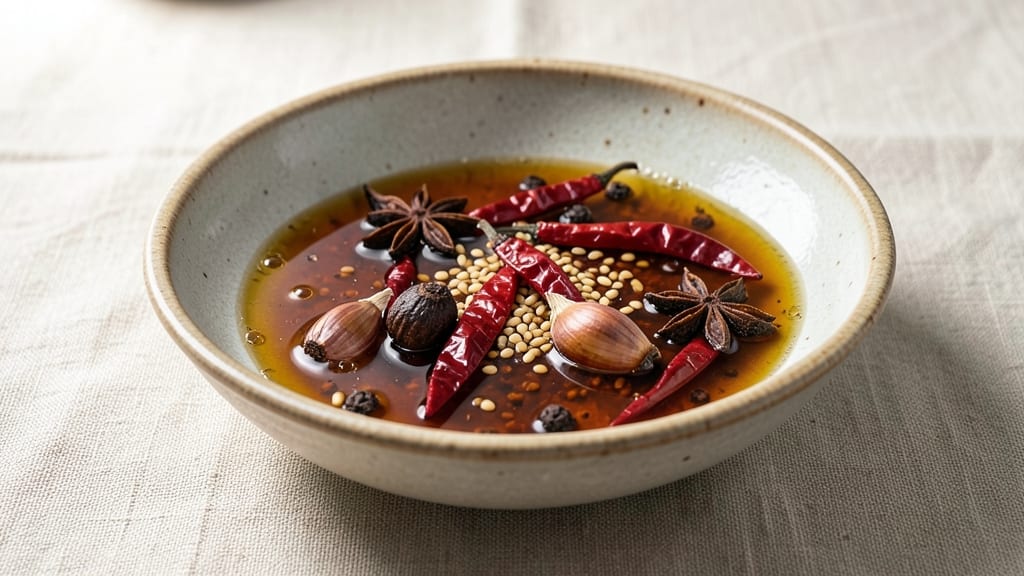
This Sichuan chili oil recipe transforms ordinary dishes into bold, aromatic masterpieces with its signature fiery kick and nutty depth. The secret lies in balancing Sichuan peppercorns, dried chilies, and garlic in high-heat oil until the flavors meld into a fragrant, spicy infusion.
I perfected this version after years of experimenting with commercial brands that lacked the complexity of homemade—now you can achieve that same restaurant-quality depth in your kitchen.
The process is straightforward but requires precision: toast the spices until fragrant, then steep them in oil just long enough to extract their essence without burning. Strain carefully to remove seeds and skins, leaving behind a vibrant red oil with layers of heat and aroma.
This versatile sauce elevates everything from stir-fries to dumplings, adding both color and intensity with just a few drops.
What you’ll end up with is a rich, spicy condiment that’s far more nuanced than store-bought versions—think smoky, citrusy heat with a lingering numbing sensation from the Sichuan peppercorns. The oil keeps for months in a cool, dark place, making it a pantry staple for anyone who loves bold flavors.
Whether you drizzle it over noodles or use it as a marinade, this sauce will become your go-to for adding depth to any dish.
For those who prefer milder heat, simply reduce the chili quantity or strain out some of the smaller flakes. The possibilities are endless—try it on fried rice, as a dip for spring rolls, or even as a finishing touch for grilled meats. Here’s how to make it perfectly every time.
Ingredients for sichuan oil
Nine bold ingredients for a sauce that delivers restaurant-quality heat and aroma.
| Ingredient | Amount | Notes |
|---|---|---|
| Sichuan Peppercorns 🌶️ | 1 ½ tbsp | Whole, toasted until fragrant |
| Dried Red Chilies 🌶️ | 2 tbsp | Dried guajillo or arbol chilies |
| Garlic Cloves 🧄 | 6 cloves | Peeled, lightly crushed |
| Sesame Oil 🫒 | 1 ½ cups | Light or toasted, high smoke point |
| Neutral Oil 🫒 | ½ cup | Avocado or grapeseed oil |
| Star Anise 🌿 | 1 whole | Lightly crushed for aroma |
| Cumin Seeds 🌿 | 1 tsp | Toasted until aromatic |
| Salt 🧂 | ½ tsp | Diamond Crystal kosher salt |
| Dried Ginger 🌿 | 1 tsp | Ground, for subtle warmth |
| Soy Sauce 🍶 | 1 tbsp | Dark soy for color depth |
The Sichuan peppercorns are non-negotiable—they deliver that signature numbing heat and citrusy aroma. Buy them whole from Asian markets or online (like Penzeys), never pre-ground. Toast them in a dry pan until fragrant—about 2 minutes—before adding to the oil. Dried chilies? Guajillo for mild heat, arbol for fire. Remove stems and seeds unless you want extra heat. Garlic should be freshly peeled—pre-minced garlic burns easily. Sesame oil is key: light sesame oil for neutral flavor, toasted for extra depth. Store both in a cool, dark place—light and heat degrade the flavor fast.
No Sichuan peppercorns? Substitute with a mix of black pepper and cayenne (1 tbsp each), but you’ll miss the numbing effect. Swap dried chilies for red pepper flakes at half the amount—just strain carefully to avoid grit. Short on sesame oil? Toasted sesame oil from Trader Joe’s works, but neutral oil like avocado is better for high-heat cooking. Star anise is optional but adds complexity—skip it if you’re sensitive to licorice notes. For a milder version, reduce chilies by half or strain out the smaller flakes. Soy sauce adds umami and color—dark soy gives the deepest red hue, but regular works too.
This oil keeps for 6-12 months in a clean, airtight jar in a cool, dark pantry. The longer it sits, the more complex the flavors become—let it infuse for at least 24 hours before using. Strain through a fine-mesh sieve or cheesecloth to remove all seeds and skins. For extra smoothness, strain twice. Use within 3 months if you refrigerate it, but it’s best at room temperature. A little goes a long way—start with 1/4 tsp per serving and adjust to taste. Freeze extras in ice cube trays for easy portioning.
Why You'll Love This Recipe
- No-Fuss Foundation: I swear by this for nights when I’ve got zero energy—just toast the peppercorns and chilies in oil until they sing, then crush them with garlic. Five minutes, one pan, and you’ve got the base for half my week’s meals.
- Tingling Magic: That first hit of numbing heat from Sichuan peppercorns? It’s like a flavor explosion in your mouth—smoky, citrusy, with a little kick. Honestly, it’s the only oil I’ll use when I want dishes to actually taste special.
- Pantry Powerhouse: This stuff doesn’t just sit there—dump it on stir-fries, drizzle over noodles, or even mix into mayo for sandwiches. I keep a jar in my fridge because it turns boring meals into “I went out” vibes without the effort.
- Lasts Like Crazy: A little goes a long way, and it keeps for months. Between us, I’ve made this once and used it for weeks—no waste, no stress. Plus, the cost? Peanuts. For the flavor you get, it’s the best investment in my kitchen.
Step-by-step instructions for Sichuan chili oil
Here's how to craft this aromatic, complex oil with layers of heat and nutty depth.
Toast the Aromatics and Spices
In a dry skillet over medium heat, toast the 1.5 tablespoons Sichuan peppercorns and 1 teaspoon cumin seeds for 2-3 minutes until fragrant and lightly browned. You'll smell their distinctive aromas—citrusy and peppery notes from the Sichuan peppercorns, warm and earthy from the cumin. Remove immediately and set aside to cool slightly.
In the same skillet, add the 2 tablespoons dried red chilies and 1 whole star anise (lightly crushed between your palms). Toast for 30 seconds until the chilies darken slightly and release their deep, smoky aroma. This step develops the complex flavors that make this oil so special—don't rush it, but don't let anything burn. Transfer to a small bowl and let cool completely.
Infuse the Oils with Heat and Depth
In a heavy-bottomed saucepan, combine the 1.5 cups sesame oil, 0.5 cup neutral oil, and the toasted spices. Bring to a gentle simmer over low heat—you're looking for a barely perceptible bubble at the surface, not a vigorous boil. Keep the heat low to prevent the oil from smoking, which would ruin the delicate flavors.
Add the 6 cloves garlic cloves (lightly crushed), 1 teaspoon dried ginger, and 0.5 teaspoon salt. Let the mixture infuse for 8-10 minutes until the garlic turns translucent and the oil takes on a golden hue. The ginger will dissolve completely, adding subtle warmth. Stir occasionally to distribute the spices evenly—this ensures balanced flavor in every drop.
Build Complexity with Soy Sauce
Remove the pan from heat and stir in the 1 tablespoon soy sauce. This step is crucial—it adds depth, umami, and a touch of color to the oil. Let the mixture sit off heat for 5 minutes to allow the soy sauce to fully integrate. You'll notice the oil darkens slightly and develops a richer aroma.
Strain the oil through a fine-mesh sieve or cheesecloth into a clean, heatproof container. Press gently on the solids to extract every last drop of infused oil—this ensures maximum flavor in your final product. The strained oil should be deep red with flecks of spice, ready to transform any dish with its fiery, nutty character.
Cool and Store Properly
Let the oil cool completely at room temperature. This step is essential—cooling slowly allows the flavors to fully meld and prevents spoilage. Once cooled, transfer to an airtight jar or bottle. Store in a cool, dark place for up to 3 months—the oil's flavors will continue to develop and deepen over time.
Use this oil sparingly at first—its intense flavors pack a punch. Drizzle over noodles, stir-fries, or dumplings, or use as a marinade for meats. The balance of heat, nutty Sichuan peppercorn, and umami from the soy sauce makes this oil a versatile staple in any kitchen.
Pro Tips For Making Sichuan Oil
- TOAST PEPPERCORNS LOW: I learned this the hard way—blasting Sichuan peppercorns on high heat turns them bitter. Use medium-low and stir constantly until they just start to pop and smell like citrus. Over-toasting ruins the aroma, and you’ll end up with a harsh, chemical taste instead of that signature numb-spicy kick.
- CRUSH CHILIES UNEVENLY: Skip the food processor for dried red chilies—hand-crushing them irregularly releases more oil and flavor. The rough edges hold onto the seeds longer, giving you a deeper, smokier base. (Yes, it’s tedious, but your oil will taste like it came from a street stall.)
- GARLIC IN BATCHES: Don’t dump all the garlic at once—add it in two waves. First, fry half until golden, then remove and set aside. The second batch won’t burn as quickly, and you’ll get that nutty, caramelized depth without sacrificing the fresh, pungent kick. Trust me, your oil will thank you.
- COOL IT FAST: Pour the hot oil into a heatproof bowl and dunk it in an ice bath for 10 minutes. This stops the cooking process immediately, preserving the bright, fresh flavors instead of letting them mellow into something dull. (Your future self will curse you if you skip this.)
Flavor customization for this sichuan oil
Spice Level Control
Adjust the heat by modifying the chili quantity—use 1 tbsp dried guajillo chilies for mild warmth or 2 tbsp arbol chilies for intense fire. For an extra kick, add ½ tsp cayenne pepper to the oil after straining.
I like to keep a small jar of extra-hot version for spicy noodle dishes and a milder batch for dipping sauces. 🌶️
Numbing vs. Heat Balance
The Sichuan peppercorns deliver that signature numbing sensation—use 1 tbsp whole peppercorns for subtle tingling or 2 tbsp for bold effects. If you want more heat without numbness, add ½ tsp black pepper alongside the Sichuan peppercorns.
For a balanced profile, I recommend a 2:1 ratio of Sichuan peppercorns to dried chilies.
Citrusy Twist
Add 1 tsp lemon zest or ½ tsp orange zest to the oil after straining for a bright, citrusy note that cuts through the richness. This works especially well with milder chili blends—the acidity enhances the Sichuan peppercorn's natural citrus undertones.
I drizzle this version over cold noodles or use it as a finishing oil for seafood dishes.
Herb-Infused Variations
Swap out star anise for 1 tsp coriander seeds (toasted) for a sweeter, floral aroma. For a garlic-forward version, double the garlic to 12 cloves and add 1 tsp minced ginger while infusing.
I love this variation for stir-fried greens or as a marinade for tofu. Always toast the herbs/seeds first to unlock their full flavor potential.
Smoky Depth Boost
For a campfire-inspired oil, add ½ tsp smoked paprika or 1 tsp liquid smoke (just ¼ tsp) to the cooled oil. This works beautifully with darker chilies like ancho for a rich, smoky-sweet profile.
I use this variation as a glaze for grilled meats or drizzled over charred vegetables. The smokiness pairs perfectly with the Sichuan peppercorn's citrusy bite.
Sweet-Spicy Fusion
Balance the heat with 1 tsp honey or ½ tsp brown sugar stirred into the warm oil before straining. This creates a sweet-spicy contrast that’s perfect for dipping sauces or drizzling over fruit-based dishes like mango salsa.
For extra depth, add ½ tsp vanilla bean paste while infusing—the vanilla enhances the Sichuan peppercorn's natural sweetness. ✨
Nutrition facts
Frequently asked questions
Can I make this oil without Sichuan peppercorns?
Yes, but you'll miss the signature numbing sensation! Substitute with 1 tbsp black pepper and ½ tsp cayenne for heat, though the flavor won't be identical. For a milder alternative, use 1 tsp fennel seeds (toasted) to mimic some of the aromatic complexity. The oil will still be delicious but lose that signature Sichuan "ma la" effect.
How do I adjust the spice level?
For milder heat, reduce dried chilies to 1 tbsp or use guajillo instead of arbol. For extra fire, add ½ tsp cayenne after straining. Pro tip: Strain out smaller chili flakes for a smoother finish. Always taste the oil before using—it's more potent than it looks!
What's the best way to store leftover oil?
Keep in a clean, airtight jar in a cool, dark place for up to 6 months. For longer storage, refrigerate (up to 1 year) but let it come to room temperature before using. Never store in the fridge if you plan to use it within 3 months—the flavors develop better at room temp. Freeze in ice cube trays for easy portioning.
Can I use this oil in cooked dishes?
While it's fantastic as a finishing oil, this spiced oil works beautifully in stir-fries, marinades, or sauces. Add 1-2 tsp per pound of protein when stir-frying, or use 1 tbsp per cup of sauce. Just remember it's potent—start with less and adjust. The high smoke point makes it safe for frying too!
Why does my oil look cloudy after straining?
Cloudiness usually means unstrained spices or garlic particles. Double-strain through a fine-mesh sieve followed by cheesecloth for crystal-clear oil. If it's still cloudy, let it sit for 24 hours—sediment will settle at the bottom. For immediate use, simply pour off the clear oil from the top. This won't affect flavor but may look less polished.