Appetizers
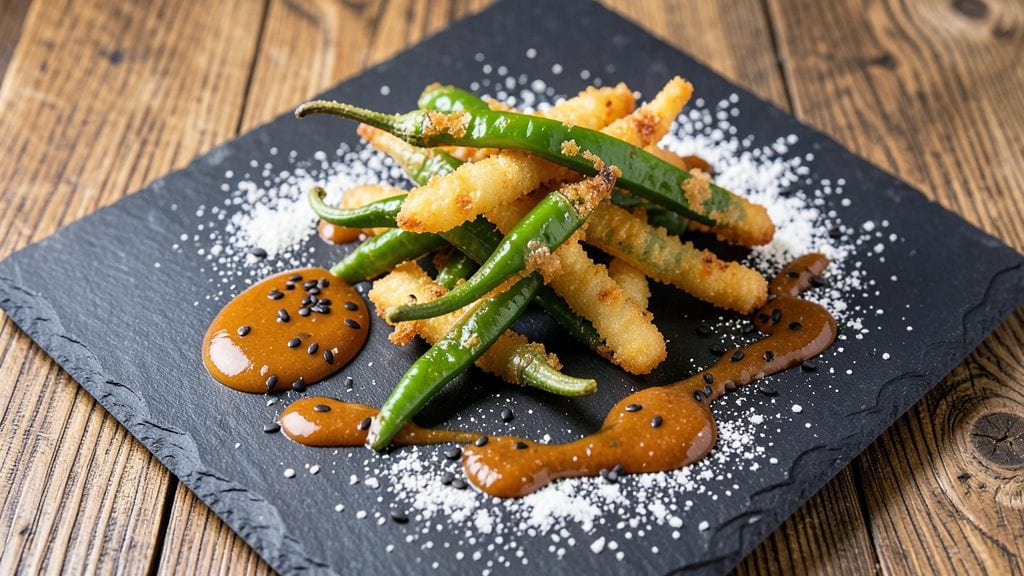
Shishito tempura transforms humble green peppers into a restaurant-worthy appetizer that's crispy, addictive, and perfect for sharing.
I first discovered this Japanese izakaya classic during a trip to Tokyo, where it became my go-to snack with cold beer—now I recreate it at home with the same golden, shatteringly crisp edges every time.
The secret lies in the light batter and precise frying technique that keeps the peppers tender inside while creating that irresistible crunch.
This recipe delivers restaurant-quality results with just five key ingredients: shishitos, flour, ice-cold water, cornstarch, and a simple tentsuyu dipping sauce. The batter is foolproof—no fancy equipment needed—and the frying process takes less than 10 minutes once you've prepped the peppers.
What makes it special is how the delicate shishitos maintain their natural sweetness while soaking up the umami-rich sauce, creating a perfect balance of textures and flavors.
Imagine golden shishitos sizzling in hot oil, their edges crisp enough to stand up to a toothpick while staying tender inside. The tentsuyu sauce—made with soy sauce, mirin, and dashi—adds that signature umami depth that makes every bite worth it.
This dish is perfect for game day, dinner parties, or whenever you crave something crispy and satisfying that doesn't require heavy prep.
Pair with a cold beer or sake to complete the izakaya experience. The key is keeping everything hot and serving immediately—these disappear faster than you can say "more batter!" Let's get frying.
Ingredients for shishito tempura
Five ingredients transform these peppers into addictive, crispy bites that disappear faster than you can fry them.
| Ingredient | Amount | Notes |
|---|---|---|
| Shishito Peppers 🌶️ | 1 ½ lb | Fresh, slender green peppers |
| All-Purpose Flour 🌾 | ¾ cup | Light, sifted for smooth batter |
| Cornstarch 🌾 | ¼ cup | For extra crispiness |
| Ice-Cold Water 💧 | 1 ½ cups | Critical for light batter |
| Vegetable Oil 🫒 | 2 cups | High smoke point preferred |
| Soy Sauce 🍶 | ½ cup | For tentsuyu sauce |
| Mirin 🍶 | ¼ cup | Sweet rice wine |
| Dashi Powder 🍵 | 1 tbsp | Instant for convenience |
| Salt 🧂 | ½ tsp | Kosher or sea salt |
| Lemon Wedges 🍋 | 2 whole | For serving |
| Sesame Seeds 🌰 | 1 tbsp | Toasted for garnish |
Shishitos are the star—look for bright green, slender peppers at Asian markets or the produce section. Whole Foods or Trader Joe's usually carry them, but if you can't find them, regular bell peppers work in a pinch (just slice them thinner). Avoid any peppers with soft spots or yellowing—freshness is key for that perfect crunch. Pro tip: Pat them dry before battering, or they'll steam instead of fry crispy. I always buy extra because these vanish fast when guests arrive!
No mirin? Dry sherry plus 1 tsp sugar works perfectly—trust me, I've done it. The dashi powder is a game-changer if you're short on time, but homemade dashi with kombu and bonito flakes takes this to restaurant level. For the batter, ice-cold water is non-negotiable—room temp water makes the batter gummy. And if you're worried about oil splatter, a splash of vodka in the batter (1 tbsp) cuts grease. The sesame seeds? Toast them in a dry pan for 30 seconds—they add so much flavor!
Keep the batter ice-cold until use—it thickens fast. Fry in batches of 4-5 peppers so the oil stays hot (350°F). These are best served immediately, but if you must hold them, keep warm in a 200°F oven on a wire rack (not a plate—traps steam). The tentsuyu sauce keeps 5 days refrigerated, but the peppers? 30 minutes max—after that, they're soggy. Double the batter if you're feeding a crowd—you'll need it!
Why You'll Love This Recipe
- Here’s what sold me: fry up a big batch, let them cool, and store them in the fridge for days. Reheat in a skillet for 30 seconds, and they’re crispy again—no sad, soggy tempura here. Plus, shishitos are cheap, and a single bag stretches into multiple meals. Budget win, flavor win.
- No Special Skills Needed: I swear, you don’t need to be a tempura master—just mix flour, cornstarch, and ice water until it’s smoother than my excuses for skipping the gym. The secret? Keep everything ice-cold, and those shishitos fry up crispier than my patience on a Monday.
- Crunch That Won’t Quit: That first bite—golden, shatteringly crisp outside with a silky peppery center? It’s the kind of texture that makes you pause mid-sip of beer (or wine, no judgment). The cornstarch gives it that addictive crunch, and the shishitos? They’re mild enough for picky eaters but pack just enough heat to keep things interesting.
- Party in a Basket: Serve them in a basket with a squeeze of lemon and a bowl of spicy mayo, and suddenly you’re the hero of game night, dinner parties, or even a lazy Sunday brunch. Between us, I’ve used them as a snack for a book club, a side for sushi night, and even as a topping for grain bowls—versatile little devils.
Step-by-step instructions for shishito tempura
Here's how to achieve that perfect golden crust and light, airy interior every time.
Prepare the Shishito Peppers
Start by rinsing the 1.5 lb shishito peppers under cold water and patting them completely dry with paper towels. Remove the stems and any seeds, then slice each pepper lengthwise into ½-inch thick strips. You'll end up with about 12-15 strips—keep them whole for easier handling during frying.
Arrange the pepper strips on a wire rack set over a baking sheet. Let them air-dry for 10-15 minutes at room temperature. This step is crucial—it removes excess moisture so the batter adheres properly and creates that signature crispy texture. If you skip this, your tempura will turn greasy instead of light and airy.
Make the Light, Crispy Batter
In a medium bowl, whisk together the 0.75 cup all-purpose flour and 0.25 cup cornstarch until completely combined. The cornstarch is what gives tempura its extra crispiness, so don't skip it. Gradually whisk in the 1.5 cups ice-cold water until you have a smooth, thin batter with no lumps. The batter should be the consistency of heavy cream—thin enough to coat the peppers lightly but thick enough to hold its shape.
Let the batter rest for 10 minutes at room temperature. This resting time allows the flour to fully hydrate and the batter to reach the perfect temperature for frying. If you use warm water or skip this step, your tempura will absorb too much oil and turn soggy instead of crispy.
Heat the Oil and Fry the Peppers
Fill a deep skillet or Dutch oven with 2 cups vegetable oil and heat it over medium heat until it reaches 350°F. Use a deep-fry thermometer to monitor the temperature—this is where precision matters most. If the oil is too hot, the peppers will burn before they cook through; if it's too cool, they'll absorb too much oil and lose their crispiness.
Working in batches (don't overcrowd the pan), dip each pepper strip into the batter, letting any excess drip off before carefully sliding it into the hot oil. Fry for 1-2 minutes per side until they turn a beautiful golden brown color. You'll know they're ready when they float to the surface and release easily from the oil. Transfer them to a paper towel-lined plate to drain.
Make the Tentsuyu Dip
While the tempura cooks, combine the 0.5 cup soy sauce, 0.25 cup mirin, and 1 tbsp dashi powder in a small saucepan. Bring to a gentle simmer over low heat and cook for 3-4 minutes until slightly reduced and fragrant. This dip should have a glossy sheen and a perfect balance of salty, sweet, and umami flavors. Taste and adjust seasoning with a pinch of the 0.5 tsp salt if needed.
Let the tentsuyu cool slightly before serving. The warm tempura pairs best with a slightly cooled dip—it lets the flavors meld perfectly without overwhelming the delicate crispiness of the peppers. Keep the dip warm in a small sauceboat on the table for dipping.
Serve Immediately with Garnishes
Transfer the fried shishito tempura to a serving platter and sprinkle generously with 1 tbsp toasted sesame seeds. The seeds add a nutty crunch that contrasts beautifully with the crispy peppers. Serve each portion with 2 whole lemon wedges on the side for squeezing over the top.
This dish is best served immediately while the tempura is still crispy and the oil is hot. The contrast of the warm, golden peppers with the cool lemon and rich tentsuyu creates an unforgettable combination. Dig in right away—tempura loses its crispiness fast once it cools!
Pro Tips For Making Shishito Tempura
- Dry the Peppers Thoroughly: Wet peppers steam instead of crisp up—no one wants soggy tempura. Pat each pepper really dry with a kitchen towel before dredging, especially near the stem. I learned this the hard way when my first batch turned out like sad, limp fries.
- Use a 1:1 Flour-to-Cornstarch Mix: Skip the math—just measure equal parts flour and cornstarch (1:1) for the batter. The cornstarch gives that signature crunch, while flour helps bind. I was skeptical until I tried it; the texture is noticeably better than flour alone.
- Keep Oil at 350°F (175°C): Too hot, and the batter burns before the pepper cooks inside. Too cool, and it absorbs oil like a sponge. Use a thermometer—350°F is the sweet spot where the outside crisps and the inside stays tender. (Yes, even if you’re impatient like me.)
- Double-Dredge for Extra Crunch: This isn’t the prettiest method, but it works: Dip peppers in batter, let excess drip off for 10 seconds, then dip again. The second coat seals in crispiness. I skip this when I’m lazy, but the dish is noticeably better when I don’t.
Storing and reheating your shishito tempura
Refrigerator Storage
Shishito tempura is best served fresh, but if you must store leftovers, act quickly. Place fried peppers on a wire rack in a single layer to prevent sticking, then transfer to an airtight container.
They'll keep in the fridge for up to 24 hours, but the texture degrades fast—expect them to lose crispiness after 6 hours. I store the tentsuyu sauce separately in a small jar, where it lasts 5 days refrigerated. 🥬
Freezer Preservation
For longer storage, freeze the tempura immediately after frying on a parchment-lined tray for 1 hour to prevent clumping. Transfer to a freezer bag with excess air removed, and store for up to 1 month.
Thaw in the fridge overnight before reheating. The sauce freezes well too—just reheat gently on the stove. Pro tip: Freeze sauce in ice cube trays for single-serving portions. ❄️
Reheating Methods
To revive crispiness, reheat frozen tempura in a 375°F oven for 8-10 minutes on a wire rack. For fridge leftovers, use an air fryer at 350°F for 3-4 minutes—this mimics frying better than a microwave.
Avoid reheating in oil, as it makes them greasy. The tentsuyu sauce reheats beautifully in a small saucepan over low heat for 2-3 minutes. 🔥
Serving After Storage
Always serve reheated tempura with fresh lemon wedges and extra tentsuyu sauce. The acidity cuts through any lost crispiness, and the warm sauce revives the flavors. For extra crunch, sprinkle with toasted sesame seeds right before serving.
Remember: tempura's magic lies in its freshness—these reheated versions won't match the original, but they're still delicious. 💫
Batch Prep Tips
If making for a crowd, fry in two batches and keep the second batch warm in a 200°F oven on a wire rack while finishing the sauce. Double the batter recipe but keep it ice-cold in the fridge until needed.
For parties, assemble everything except the final frying step—this way, you can fry to order and keep the tempura at peak crispiness. 🍻
Nutrition facts
Frequently asked questions
Why do shishito tempura need to air-dry before frying?
The 10-15 minute air-dry removes surface moisture so the batter adheres properly and creates that signature crispy texture. Wet peppers steam instead of fry, resulting in greasy, soggy tempura. Think of it like patting dry chicken before breading—same principle!
Can I make the batter ahead of time?
No—tempura batter must be ice-cold when used. If you prep it early, refrigerate it in the bowl (covered) for up to 2 hours, then let it sit at room temp for 10 minutes before using. Never use warm batter, or the peppers will absorb too much oil and lose crispiness.
What if my tempura turns out greasy instead of crispy?
Greasy tempura usually means one of three things: oil too cool (keep it at 350°F), peppers not dry enough (pat thoroughly), or overcrowding the pan. Fry in small batches of 4-5 peppers max, and use a thermometer—this is the #1 tempura mistake!
Can I use regular bell peppers instead of shishitos?
Yes, but slice them thinner (¼-inch) since they're thicker. Shishitos' delicate flavor shines in tempura, but bell peppers work well too—just reduce frying time to 45 seconds per side to avoid burning. For extra flavor, add a pinch of garlic powder to the batter.
How do I keep the tentsuyu sauce from getting too salty?
Start with ½ cup soy sauce and taste before adding salt. The mirin and dashi already contribute umami, so you may not need extra salt. For a sweeter dip, add 1 tsp sugar or ½ tsp honey to the sauce. Balance is key—aim for salty, sweet, and savory all at once!