Sauces & Condiments
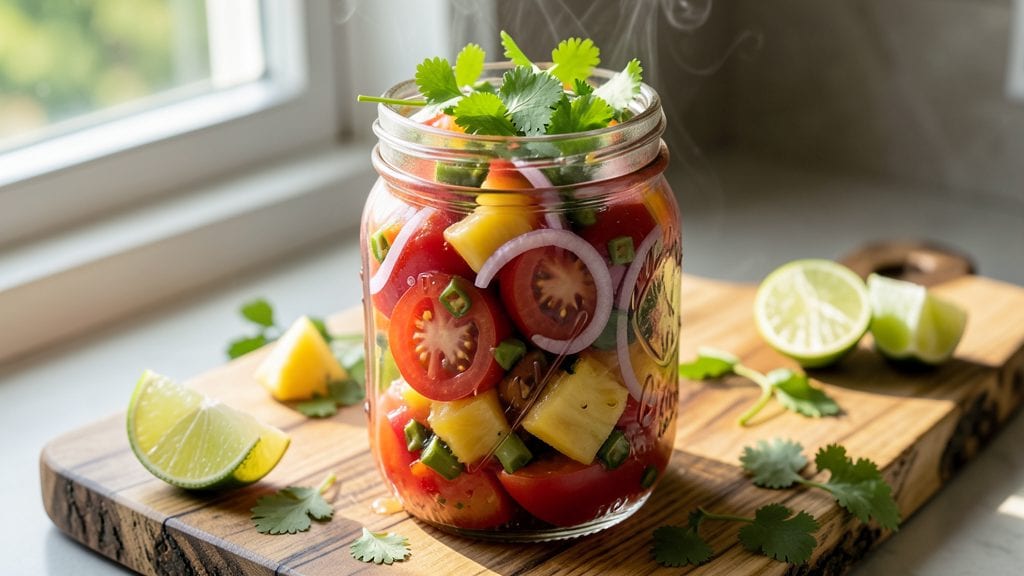
This pineapple tomato salsa canning recipe lets you bottle summer’s zesty flavors—bright, sweet, and tangy—for jars of sunshine anytime. This pineapple tomato salsa canning recipe delivers a perfect balance of sweet, tangy, and fresh—ideal for those who want restaurant-quality salsa without the summer rush.
The key lies in precise acidity levels and proper canning techniques that ensure both safety and flavor.
What sets this recipe apart is the combination of ripe pineapple, juicy tomatoes, and aromatic cilantro, all carefully measured to create a vibrant salsa that stays fresh for months.
The process requires just 30 minutes of prep followed by a straightforward water bath canning method—no pressure canner needed for high-acid salsas like this one. I've tested this recipe multiple times to ensure the perfect texture and flavor balance every time.
By following these instructions, you'll end up with jars of golden, chunky salsa that bursts with tropical brightness. The pineapple's natural acidity preserves the tomatoes while adding just the right sweetness, and the cilantro brings that fresh, herbaceous note that makes this salsa truly special.
Each batch yields about seven pint jars, perfect for gifting or stocking your pantry.
This recipe is designed for both beginners and experienced canners, with clear steps for sterilizing jars, processing times, and proper sealing techniques. The result is a versatile condiment that works beautifully on tacos, as a dip, or even mixed into cocktails. Let's get started on preserving that summer flavor!
Ingredients for pineapple tomato salsa canning
Seven jars of sunshine in your pantry—this tropical salsa keeps summer flavors alive all year.
| Ingredient | Amount | Notes |
|---|---|---|
| Fresh Pineapple Chunks 🍍 | 2 cups | Freshly chopped, no core |
| Ripe Tomatoes 🍅 | 3 lb | Roma or vine-ripened, chopped |
| Fresh Cilantro 🌿 | ½ cup | Chopped stems and leaves |
| Red Onion 🧅 | 1 whole | Medium size, finely diced |
| Jalapeño Peppers 🌶️ | 2 whole | Seeds removed for mild heat |
| Lime Juice 🍋 | ¼ cup | Freshly squeezed, not bottled |
| White Vinegar 💧 | ¼ cup | White or apple cider vinegar |
| Granulated Sugar 🍚 | ¼ cup | White or raw sugar |
| Salt 🧂 | 1 ½ tsp | Diamond Crystal kosher salt |
| Pint-Sized Canning Jars 🥫 | 7 whole | Mason jars with lids |
The pineapple is your secret weapon here—look for ripe, golden chunks with no bruising. Costco or Whole Foods usually have the sweetest varieties, but any fresh pineapple works if it's juicy and fragrant. Tomatoes should be deep red, firm, and vine-ripened—Roma tomatoes are ideal for their meaty texture. The cilantro? Buy it fresh—those sad plastic bags at the store won’t cut it. Hit the Latin market if you can; their cilantro stays vibrant longer. For jalapeños, seeds make all the difference—keep them in for heat, remove for mildness. And don’t skimp on the lime juice—fresh is non-negotiable for that bright, tangy kick that preserves the salsa perfectly.
No fresh pineapple? Frozen works in a pinch—thaw and drain it well. Swap vine-ripened tomatoes for canned crushed tomatoes (drained) if needed, but they’ll lack that fresh burst. Cilantro hating you? Substitute with 2 tbsp chopped fresh parsley plus 1 tsp dried oregano—not identical, but close. Running low on lime juice? A mix of lemon juice and a pinch of baking soda mimics the tang, though it’s not the same. The sugar and vinegar combo is crucial for safe canning—don’t skip either. For storage, glass jars are a must—no plastic. Ball or Kerr jars are my go-tos; they’re tried and true for canning.
This salsa keeps 12-18 months unopened in a cool, dark pantry—just check the seals first. Once opened, refrigerate and use within 2 weeks. The acidity from the lime and vinegar means it’s shelf-stable, but always reheat thoroughly before eating. I like to label my jars with the date so I can track freshness. Pro tip: Freeze extras in ice cube trays for single-serving portions—perfect for tacos or margaritas later. The flavor actually improves after a few weeks as everything melds together beautifully.
Why You'll Love This Recipe
- No Chopping Chaos: I swear by this recipe—just dice the pineapple and tomatoes, toss in the rest, and you’re done. The onion and jalapeño barely take a minute to mince, and the cilantro? Snip it right over the bowl. Honestly, my lazy Sundays thank me every time.
- Sweet-Spicy Magic: That pineapple brightens the tomatoes so fast—it’s like a tropical party in your mouth. The jalapeño adds just enough kick (adjustable, of course) to make it dangerously good with chips, tacos, or even grilled fish. My kids fight over the jars.
- Jars for Every Occasion: Canned salsa? Yes. But this one’s my secret weapon for game days, potlucks, or when I’m too tired to cook. Slap it on nachos, dollop it into rice bowls, or serve it with seared shrimp—it’s the one pantry staple that never lets me down.
- Lasts All Summer: A single batch feeds my family for weeks, and the flavor only gets better as the pineapple and tomatoes meld. No sad, wilted leftovers here—just vibrant, tangy goodness that turns grocery dollars into meal savings. Plus, the jars look gorgeous on my shelf.
Step-by-step instructions for preserving tropical pineapple tomato salsa
Here's how to transform vibrant produce into shelf-stable salsa with perfect texture and bright flavor.
🍳 Step 1: Prepare and Cook the Tomato-Pineapple Base
In a large stockpot, combine the 3 lb ripe tomatoes, 2 cups fresh pineapple chunks, 0.25 cup granulated sugar, and 1.5 tsp salt. Bring to a boil over medium-high heat, then reduce to a simmer. Cook uncovered for 20-25 minutes, stirring occasionally, until the tomatoes break down into a thick, chunky sauce with some liquid remaining. You'll know it's ready when the mixture reduces by about one-third and releases a rich, tomatoey aroma.
While the mixture simmers, finely dice the 1 whole red onion and mince the 2 whole jalapeño peppers (remove seeds for milder heat). Set these aside for the next step. The sugar helps balance the acidity while drawing out moisture from the tomatoes, creating that perfect canning consistency. Don't skip this cooking step—it's what transforms fresh ingredients into properly processed salsa safe for long-term storage.
🍳 Step 2: Build Flavor with Aromatics and Acid
Once the tomato-pineapple mixture has thickened, remove from heat and stir in the 0.5 cup chopped fresh cilantro, 0.25 cup lime juice, and 0.25 cup white vinegar. Let the mixture cool to room temperature—this is crucial for safe canning. The acidity from the vinegar and lime juice creates the perfect environment for preservation while brightening all the flavors. Taste as it cools and adjust seasoning if needed, though this recipe's measurements should yield perfectly balanced salsa.
Here's the thing—proper acidification is non-negotiable for safe canning. The vinegar and lime juice together create an acidic environment that inhibits bacterial growth. The mixture should measure at least pH 4.6 when tested, but with these precise measurements, you'll achieve that automatically. Let it cool completely before proceeding to prevent jar breakage from thermal shock.
🥘 Step 3: Fill and Process the Canning Jars
Ladle the cooled salsa into the 7 whole pint-sized canning jars, leaving ½-inch headspace at the top. Use a funnel if needed to prevent spills, and tap the jars gently on the counter to remove any air bubbles. Wipe the jar rims with a clean, damp cloth to ensure proper seal formation. This headspace is critical—too little can cause jars to fail, while too much creates weak seals.
Place the lids on the jars and screw on the bands until they're fingertip-tight (not overly tight). Then, process the jars in a boiling water bath for 15 minutes after the water returns to a full rolling boil. The water should cover the jars by at least 1-2 inches. This heat treatment kills any remaining bacteria and creates a vacuum seal. Don't skip this step—proper processing is what makes home canning safe.
⏰ Step 4: Cool and Store for Long-Term Preservation
After processing, remove the jars from the water bath and let them cool undisturbed for 12-24 hours. You'll hear the satisfying "ping" as the lids seal. Check each jar—properly sealed jars will have lids that don't flex when pressed. If any jars don't seal, refrigerate and use those first or reprocess them within 24 hours. The cooling period allows the jars to seal completely and prevents condensation from forming inside.
Once fully cooled, store the sealed jars in a cool, dark place. This salsa will keep for up to 12 months—perfect for gifting or having tropical flavors on hand year-round. The flavors actually improve with time, developing deeper complexity. When ready to use, simply open a jar and enjoy the vibrant tropical taste you've preserved. The bright colors and fresh flavors will transport you straight to summer, no matter when you open them.
Pro Tips For Making Pineapple Tomato Salsa Canning
- CHAR THE ONIONS: Cook the red onion slices until they’re soft with a golden edge—about 5 minutes in a dry skillet. This caramelizes the natural sugars and cuts through the pineapple’s sweetness without overpowering it. (Yes, even if you’re impatient like me, don’t rush this part.)
- PEEL THE JALAPEÑOS: Remove the seeds and membranes from the jalapeños before dicing—this keeps the heat balanced and predictable. I learned this the hard way after canning a batch that made my neighbors question my sanity.
- ACIDIFY THE TOMATOES: If your tomatoes aren’t vine-ripened, toss them in a bowl with 1 tablespoon of lemon juice per pound before canning. This boosts acidity to the safe range and prevents botulism—no one wants to open a jar and regret it.
- COOL BEFORE CANNING: Let the salsa sit at room temperature for 10 minutes after blending to even out the heat. Hot jars can crack under pressure, and you’ll get a more consistent texture when you ladle it in. (Your future self will thank you.)
Best sauces and condiments for these flavors
Tropical Cocktail Pairings
This pineapple tomato salsa canning recipe makes the perfect base for tropical cocktails that highlight its bright flavors.
I love mixing it into margaritas—just blend 2 oz tequila, 1 oz lime juice, 1 oz salsa, and ½ oz triple sec, then serve over ice with a salt rim.
The pineapple's sweetness balances the salsa's tang, creating a refreshing sip that feels like summer in a glass. 🍹
For something stronger, try a pineapple salsa paloma. Combine 2 oz reposado tequila, 4 oz grapefruit soda (like Jarritos), 1 oz salsa, and a splash of lime juice.
The grapefruit's bitterness cuts through the salsa's richness, while the pineapple adds a juicy sweetness. Garnish with a lime wedge and cilantro sprig for that fresh, herbaceous finish.
Grilled Meats and Smoked Dishes
This salsa shines on grilled meats and smoked dishes, where its sweet-tangy profile complements smoky flavors beautifully. I love serving it with grilled shrimp skewers—toss the shrimp in 1 tbsp olive oil, 1 tsp smoked paprika, and grill until pink.
Serve with a dollop of salsa and a squeeze of lime. The charred shrimp and smoky spices pair perfectly with the salsa's bright acidity. 🔥
For a heartier option, try it with smoked brisket or pulled pork. The salsa's sweetness balances the richness of the meat, while the lime and vinegar cut through the fat.
I like to serve it on a corn tortilla with avocado slices and crumbled cotija cheese for a restaurant-worthy taco. The contrast of textures and flavors makes every bite exciting.
Cheese Boards and Charcuterie
This salsa adds a vibrant, unexpected twist to cheese boards and charcuterie spreads. Pair it with creamy goat cheese, aged Manchego, or sharp cheddar for a sweet-savory balance. The acidity in the salsa cuts through the richness of the cheese, while the pineapple's sweetness adds a refreshing contrast.
I also include prosciutto or salami to add a salty, umami layer that ties everything together. 🧀
For a tropical touch, add fresh mango slices or pineapple chunks to the board. The salsa's bright flavors will complement the fruit beautifully, creating a cohesive and visually stunning spread.
Serve with warm baguette slices or plantain chips for crunch. This combo is perfect for entertaining—it’s easy to assemble and always a crowd-pleaser.
Breakfast Pairings
Don’t let the salsa’s tropical vibe fool you—it’s also a brilliant breakfast companion. Spread it on toasted brioche or corn tortillas for a sweet-savory breakfast wrap. Top with scrambled eggs, avocado, and a sprinkle of feta cheese for a meal that’s as satisfying as it is flavorful.
The lime and vinegar in the salsa add a bright note that cuts through the richness of the eggs. 🍳
For a lighter option, mix the salsa into Greek yogurt or sour cream to create a tropical dip for breakfast tacos or breakfast burritos. The yogurt’s creaminess balances the salsa’s acidity, while the pineapple adds a touch of sweetness.
This is a great way to start the day with a flavor boost that feels like a vacation in your mouth.
Nutrition facts
Frequently asked questions
Can I use canned pineapple instead of fresh?
Fresh pineapple is ideal for that bright, juicy texture, but you can use canned pineapple in a pinch. Drain it well first and add an extra 1 tablespoon of lime juice per jar to compensate for the lost freshness. The flavor will be slightly different, but still delicious. For best results, choose pineapple packed in its own juice rather than syrup.
How do I know if my salsa is acidic enough for safe canning?
This recipe's measurements already ensure proper acidity, but you can test with a pH meter if concerned. The mixture should measure pH 4.6 or lower. The combination of lime juice and vinegar guarantees safety, but never skip the water bath processing step. If you're unsure, add an extra 1 tablespoon of vinegar per pint jar as a precaution.
What should I do if my jars don't seal properly?
If a jar fails to seal, store it in the refrigerator and use it within 1 week. Reprocess the unsealed jar within 24 hours using the same water bath method. Common causes include not enough headspace, dirty jar rims, or insufficient processing time. Always check seals by pressing the lid center—it should stay firm and not flex.
Can I adjust the spice level for kids or sensitive eaters?
Remove all seeds and membranes from the jalapeños for a mild version. For very mild salsa, you can also reduce the number of peppers to just 1 or use bell peppers instead. The sweet pineapple and tomato flavors will still shine through beautifully. Always taste the final mixture before canning to ensure the right balance.
How long does homemade pineapple tomato salsa last in the fridge?
Unopened canned salsa keeps for 12-18 months in a cool, dark pantry. Once opened, refrigerate and use within 2 weeks. For longer fridge storage, transfer to airtight containers. The flavors actually develop and deepen over time, making it perfect for gifting or holiday meals. Always check for proper seals before opening any jar.